





Perakende KPI nedir?
Think of KPIs as the heartbeat of a retail business. Just like doctors check pulse and blood pressure to see if someone is healthy, retailers track KPIs to understand how the store is performing.
They cover essentials such as:
- Conversion rate → how many visitors actually buy
- Customer retention → how often shoppers return
- Inventory turnover → how quickly stock sells and gets replaced
Together, these numbers show whether a store is thriving or struggling. Independent research highlights sales per square foot, gross margin ROI, average transaction value, and conversion rate as some of the most reliable benchmarks for retail success (Source: Tableau, Key Retail Metrics).
Why are KPIs Important in Retail?
Running a store without KPIs is like driving at night with no headlights — you’re moving, but you can’t see where you’re going.
KPIs switch the lights on. They show whether:
- Sales are climbing or stalling
- Customers are coming back or drifting away
- Inventory is flowing or piling up on the shelves
Example: If average transaction value suddenly dips, it’s a red flag that cross-sell promotions aren’t working.
And as Solink notes, tracking metrics like customer lifetime value and retention rate helps retailers build stronger relationships — which is far more cost-effective than constantly chasing new customers (Source: Solink, Customer Retention & Lifetime Value).
How Do KPIs Guide Decisions?
KPIs don’t just report numbers, they give direction.
If conversion rate drops → maybe the store layout, online checkout, or staff training needs improvement.
If inventory turnover slows → it could mean overstocking or poor demand forecasting.
ArcherPoint adds that priorities change with maturity:
- Newer retailers focus on sales growth and margins.
- Established retailers also track retention, efficiency, and returns to fine-tune operations (Source: ArcherPoint, Retail KPI Strategy).
What are 25 Key Retail KPIs to Track?
Retailers operate in a complex environment where sales, customers, inventory, and employees all matter. That’s why experts recommend monitoring a balanced set of KPIs that cover both financial performance and operational efficiency.
1. Sales KPIs

Measure revenue generation and growth.
- Total Sales Revenue = Σ(All transactions) → foundation metric.
- YoY Growth = (This year – Last year) ÷ Last year → tracks annual trend.
- Sales per Square Foot = Sales ÷ Store size → space efficiency.
- Sales per Employee = Sales ÷ Employees → workforce productivity.
- ATV (Average Transaction Value) = Sales ÷ Transactions → spend per purchase.
- Basket Size = Items sold ÷ Transactions → quantity per basket.
- Conversion Rate = Purchases ÷ Visitors → sales efficiency.
Example: A bookstore running “buy 2 get 1 free” raises both basket size and ATV, boosting profits without new traffic.
2. Customer KPIs

Track loyalty and satisfaction.
- Retention Rate = (End customers – New customers) ÷ Start customers
- Customer Lifetime Value (CLV) = Avg. spend × Frequency × Lifespan
- Net Promoter Score (NPS) = % Promoters – % Detractors
- Customer Acquisition Cost (CAC) = Marketing spend ÷ New customers
- Repeat Purchase Rate = Repeat customers ÷ Total customers
Example: Bain & Company found a 5% retention lift can increase profits by 25%–95% (Source: Bain & Company, Customer Retention and Profitability).
3. Inventory KPIs

Show stock efficiency and control.
- Inventory Turnover = COGS ÷ Avg. inventory
- Sell-Through Rate = Units sold ÷ Units received
- Stock-Out Rate = Stockouts ÷ Total products
- Shrinkage = (Recorded – Actual stock) ÷ Recorded
- GMROI = Gross margin ÷ Inventory cost
Example: Fashion retailers track sell-through to avoid end-season markdown losses.
4. Financial KPIs

Measure profitability and sustainability.
- Gross Profit Margin = (Sales – COGS) ÷ Sales
- Net Profit Margin = Net profit ÷ Sales
- Operating Expense Ratio = Expenses ÷ Sales
- Return on Assets (ROA) = Net income ÷ Assets
Example: Monitoring expense ratios helps ensure rent and payroll don’t eat margins.
5. Employee KPIs

Assess workforce performance.
- Employee Turnover = Employees left ÷ Avg. employees
- Employee Productivity = Sales ÷ Employees (or hours)
- Employee Satisfaction = Survey score
Example: Gallup shows engaged employees can lift sales by 20% (Source: Gallup, Employee Engagement Impact).
6. Traffic & Engagement KPIs

Bridge online and offline performance.
- Foot/Digital Traffic = Number of visitors
- Traffic Conversion = Purchases ÷ Visitors
Example: High online traffic with low conversion signals checkout friction.
Why Track All 25?
- Sales KPIs → show growth
- Customer KPIs → ensure loyalty
- Inventory KPIs → protect cash flow
- Financial KPIs → safeguard profitability
- Employee KPIs → strengthen service
- Traffic KPIs → highlight opportunities
Together, they give a 360° view of retail health, helping managers make smarter, data-driven decisions.
How to Choose the Right Retail KPIs
Not every KPI is equally useful. The goal is focus, not overload.
- Match metrics to the goal
- Expansion → track growth & acquisition
- Efficiency → track turnover & expense ratios
- Make metrics SMART
- Specific, Measurable, Achievable, Relevant, Time-bound
- Prioritize
- Begin with GMROI, Retention rate, Net profit margin
- Choose sector KPIs
- Fashion: sell-through, markdown %, turnover
- Grocery: shrinkage, stock-out, basket size
- Ecommerce: traffic, conversion, CAC
- Set review cadence
- Minimum: quarterly
- Increase cadence during seasonal peaks or when expanding
Key Takeaway
Choosing KPIs isn’t about tracking everything — it’s about tracking what matters. Retailers who align KPIs with strategy, keep them SMART, and review regularly achieve more sustainable growth.
Technology and Retail KPI Tracking
- POS systems → capture real-time sales, customer, and inventory data
- Analytics platforms → visualize trends, highlight patterns
- Ecommerce integration → ensures online and offline KPIs are consistent
Source: McKinsey, Advanced Analytics in Retail
Conclusion
Choosing the right KPIs helps retailers focus on what truly drives growth and efficiency. Numbers alone don’t guarantee success — it’s how you use them that matters.
With FieldPie, KPI tracking becomes actionable. Real-time dashboards, smart scheduling, and mobile reporting turn insights into measurable results, helping teams stay organized and boost performance.
Book a demo today and see how FieldPie turns data into growth.
Sektör İpuçları Anında Mailinize Gelsin.
FieldPie'nin ücretsiz demosunu edinin. AI ile güçlenin
ÜCRETSİZ DENEYİNTable of Contents
FieldPie'nin Ücretsiz Demosunu Alın — Yapay Zeka ile Gücünüzü Artırın
İşinizi yönetmenin ne kadar kolay olabileceğini görmek için FieldPie'yi 14 gün boyunca deneyin.
ÜCRETSİZ DENEYİNİlginizi Çekebilecek Diğer İçerikler
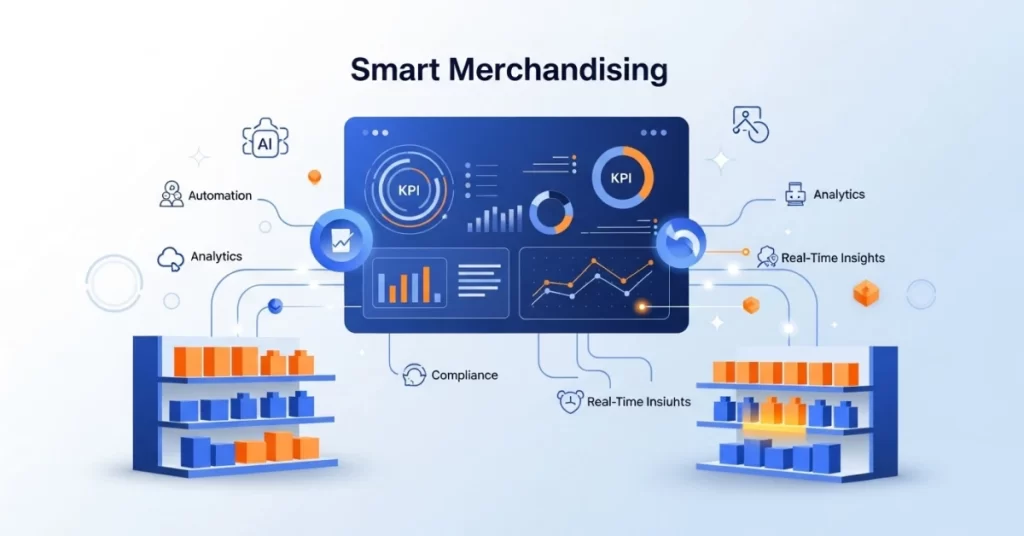
Daha Yüksek Satışlar için Akıllı Ürün Sunumu
Akıllı mağazacılık, rekabet gücünü korumak, markaların satışlarını artırmak ve müşteri deneyimini iyileştirmek için artık vazgeçilmez bir unsurdur. Kağıt kontrol listeleri…

Otel Gizli Denetimleri: Kalite ve Deneyimi İyileştirme
Gizli Otel Denetimi nedir? Gizli (veya gizli misafir) denetimleri, eğitimli denetçilerin normal misafir gibi davranarak otel konaklamasının her aşamasını deneyimledikleri…

Akıllı Saha Satışları, Otomasyon
Kör Ziyaretlerden Akıllı Saha Satış Stratejilerine
Artık saha satışları sadece daha çok çalışmakla değil, daha akıllı çalışmakla da ilgilidir. Veri veya yönlendirme olmadan bir müşteriden diğerine…

Merchandiser nedir? Görevleri, sorumlulukları, maaşı ve kariyer gelişimi
Herhangi bir mağazaya girin ve ürünlerin nasıl düzenlendiğini ve sergilendiğini gözlemleyin — bu, bir mağaza düzenleyicisinin işidir. Mağaza düzenleyicileri, gördüğünüz…

Sadakati Artıran Teşekkür Mesajları
Sadece İyi Davranışlardan Daha Fazlası Müşterilere teşekkür mesajları göndermek nezaketten daha fazlasıdır; sadakat oluşturmak, tavsiye edilmeyi teşvik etmek ve uzun…

Satış için Yapay Zeka: Nihai Stratejik Kılavuz
Bu kılavuz, her kanal ve gelir akışında satışlar için yapay zekanın gücünden nasıl yararlanabileceğinizi gösterir. Verimliliği artırmak, performansı yükseltmek ve…

Ayrıntılı Fatura Nedir? Avantajları ve Örnekleri
Ayrıntılı Fatura Nedir? Ayrıntılı faturada, tek bir toplam tutar yerine her bir ürün veya hizmetin maliyeti ayrı ayrı listelenir. Örneğin,…

Başarı için 7 Denetim Görev Yönetimi Stratejisi
Denetimler her zamankinden daha karmaşık hale geldi. Sıkı teslim tarihleri, daha katı kurallar ve müşteri talepleri, denetim görev yönetiminin önemli…

AI ile Raf Açığını Kapatmak: Bir ABD FMCG Vaka Çalışması
AI Destekli Fotoğraf Denetimleri Satışları ve Görünürlüğü Nasıl Artırdı? Bu vaka çalışması, önde gelen bir FMCG markasının FieldPie'yi kullanarak raf…

Markaların Gerçekten Kullandığı En İyi 4 Merchandising Uygulaması
Perakende Satışların Gerçekleştirilmesi, Uyumluluk ve Gelir Etkisini En Üst Düzeye Çıkarmak İçin Sahada Test Edilmiş Stratejiler Merchandisingde, strateji kusursuz saha…