



What Are Trade Promotions?
Trade promotions are strategic B2B marketing investments that manufacturers use to incentivize retailers, distributors, and wholesalers to prioritize their products in-store. These incentives operate behind the scenes, shaping retailer decisions through financial and execution-based advantages.
Common trade promotion mechanisms include:
- Temporary price reductions
- Volume-based discounts
- Display and promotional allowances
Examples such as off-invoice discounts, performance-based rebates, and in-store allowances help brands secure visibility and shelf priority. Research shows that CPG companies allocate roughly 20% of net sales to trade promotions, making effective execution critical for ROI.
Why Trade Promotions Matter in Retail Marketing
Trade promotions play a critical role in retail marketing by helping manufacturers secure shelf access and retailer support in competitive environments.
From a financial perspective:
- 15–20% of CPG revenue is typically spent on trade promotions
- Yet only 16% of promotions generate positive ROI, highlighting execution and planning gaps
When managed effectively, trade promotions deliver mutual value—improving retailer margins and traffic while strengthening manufacturer sales performance.

3 Real Trade Promotion Examples That Drive Sales
Trade promotion strategies are best understood through core mechanisms that influence pricing, visibility, and execution:
- Volume discounts increase order size and stock depth
- Promotional allowances fund displays and advertising, often driving 15–25% sales lift
- Slotting fees and performance rebates secure shelf space and execution focus
- Co-op advertising shares marketing costs and frequently delivers high ROI
Together, these mechanisms support both retailer profitability and manufacturer growth.
Display and Visibility Promotions
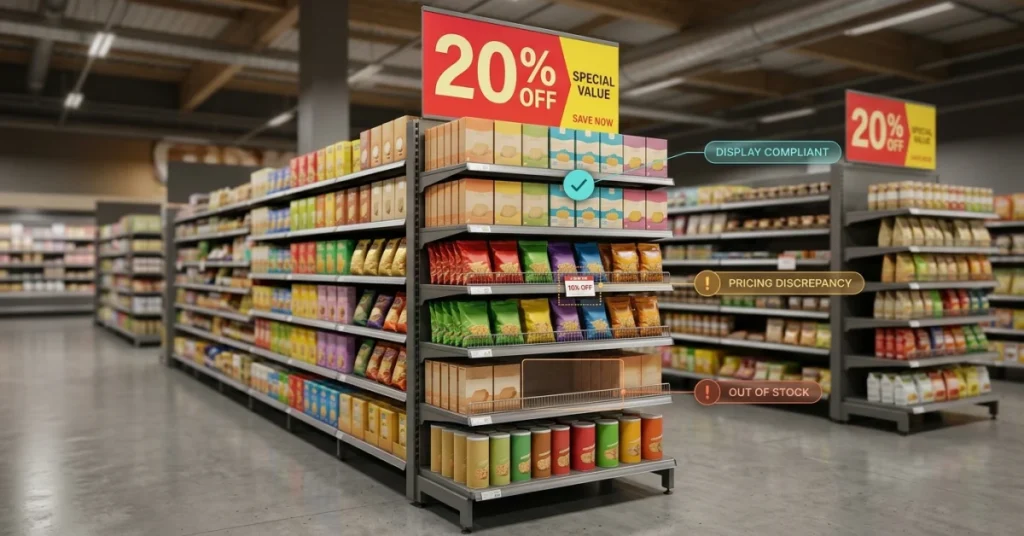
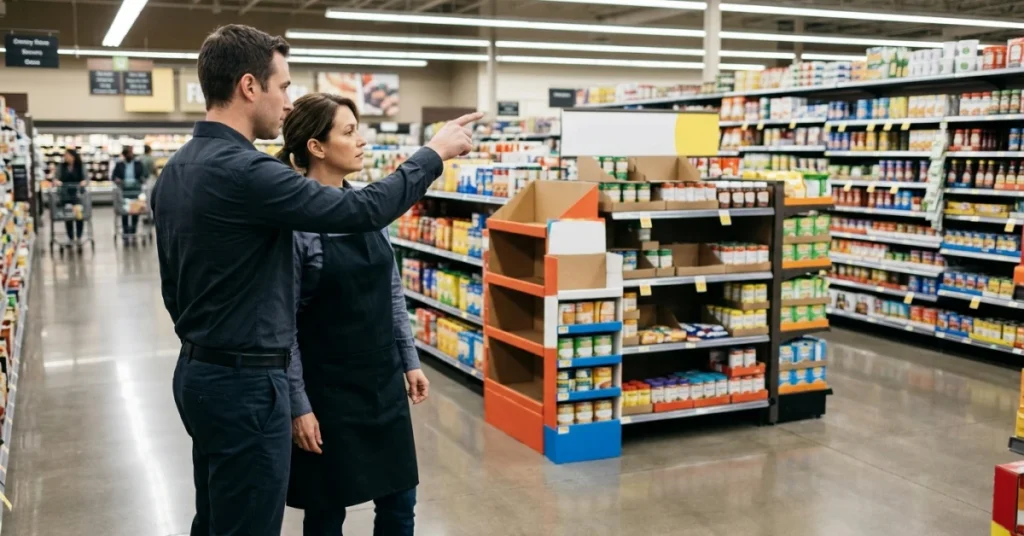
Display-driven promotions enhance product visibility at key decision points. End caps, shelf talkers, and point-of-purchase materials can increase sales velocity by up to 30% during promotional periods.
Securing premium placement typically requires:
- Slotting fees
- Display allowances
- Volume commitments
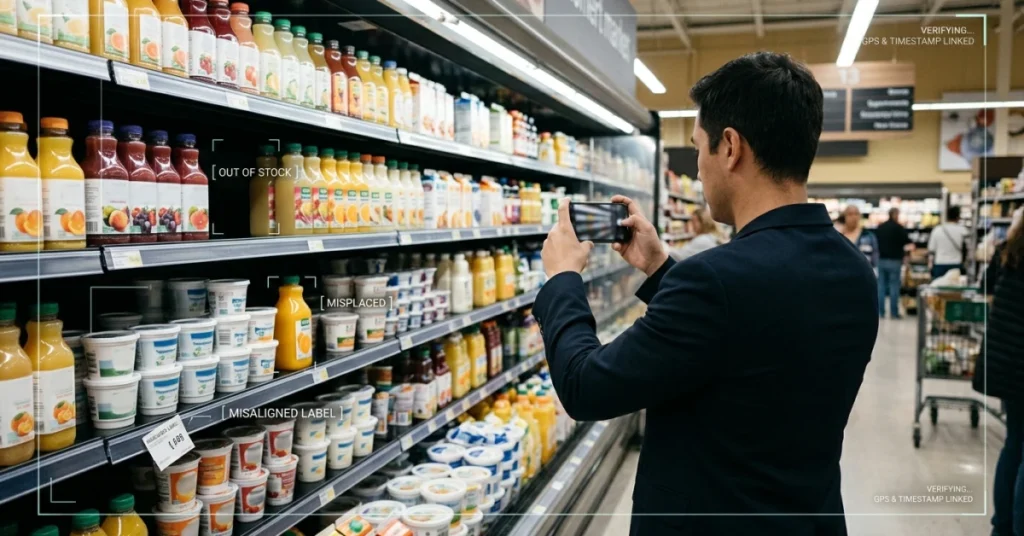
Results depend heavily on execution quality. Poor setup or maintenance can significantly reduce ROI, making display compliance and monitoring essential.
Price and Incentive Promotions
Price-driven incentives such as coupons, rebates, bundle offers, and premium gifts increase perceived value and encourage higher basket sizes.
Key impacts include:
- 30–40% higher redemption rates for digital coupons versus paper
- Stronger ROI through data-driven targeting
- Increased impulse purchases through effective in-store visibility
Cost control and strategic incentive selection are critical to protect margins while maintaining brand value.
Trial and Experience Promotions
Sampling and demonstrations reduce purchase risk by allowing consumers to experience products firsthand.
- Demonstrations typically run in-store, at trade shows, or brand events
- Sampling programs provide trial-size products and generate immediate feedback
When combined with rebates or coupons, these promotions address both trial barriers and price sensitivity, making them especially effective in sensory-driven categories.
Core Types of Trade Promotions
Trade promotions span multiple categories that influence retailer behavior and consumer demand. Understanding these core types helps manufacturers assemble the right promotional mix for specific objectives.
- Price-based promotions (temporary price reductions, off-invoice allowances, volume discounts) drive short-term demand through direct financial incentives.
- Performance-driven programs such as sales contests motivate retail teams using tiered rewards and recognition.
- Display and merchandising support—including slotting fees and end-cap placements—enhance visibility, with industry benchmarks showing 15–25% sales lift during display-driven promotions.
- Cooperative advertising shares marketing costs with retailers, extending reach while leveraging local market insight.
These categories form the structural foundation for multi-objective trade promotion strategies.
Best Practices for High-Performing Trade Promotions
High-performing trade promotions start with clear, measurable objectives aligned to both manufacturer and retailer goals.
Key foundations include:
- Defining volume vs. profitability targets
- Aligning promotions with retailer priorities such as category growth
- Applying 15–25% discount depth without eroding brand equity
- Coordinating calendars and in-store execution standards
Strong alignment ensures promotions deliver sustainable value rather than short-term spikes.
Data, Execution and Optimization
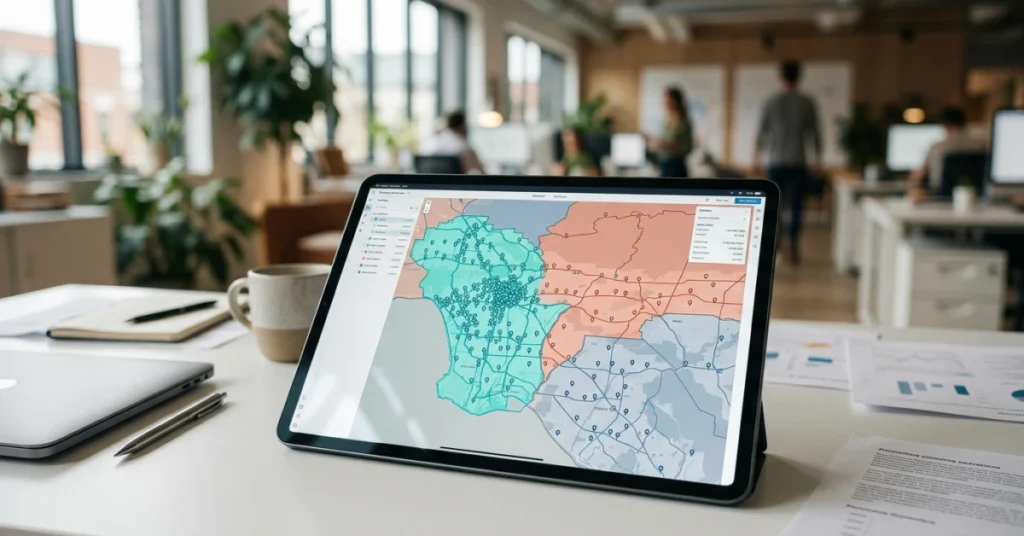
Data-driven planning transforms trade promotions into predictable investments. Forecasting models combining historical data, seasonality, and retailer variables can reach up to 85% accuracy.
During execution, real-time monitoring focuses on:
- Sell-through velocity
- Inventory depletion
- Promotion compliance
If sales exceed forecasts by 25%+, proactive inventory adjustments prevent stockouts.
Post-promotion analysis evaluates:
- Incremental sales lift
- Profit contribution
- Customer acquisition
Brands that apply continuous feedback loops typically achieve 15–20% improvement in promotional efficiency within one year.

FAQs About Trade Promotions
Q: What are the most common trade promotion mistakes?
Insufficient performance tracking, poor timing, misaligned retailer goals, and promotion cannibalization are the most frequent issues.
Q: How can smaller brands compete with limited budgets?
By prioritizing precision over scale—focusing on high-impact retailers, defined segments, and strong execution rather than higher spend.
Q: What ROI defines a successful trade promotion?
Benchmarks show 15–20% incremental lift as a minimum, while optimized campaigns can deliver 300%+ ROI depending on category and targeting.
Q: How far in advance should promotions be planned?
Most effective campaigns require 8–12 weeks of planning; complex mechanics may need longer lead times.
As technology advances targeting and measurement, mastering these fundamentals is key to sustainable trade promotion performance.
Conclusion
Trade promotions deliver results only when supported by clear goals, consistent execution, and real-time measurement. High spend alone is not enough—brands need visibility and control to avoid wasted budget and missed impact. With the right promotion mix and performance tracking, trade promotions become a repeatable growth driver.