


Grow Your Business With FieldPie
FieldPie transforms disorganized store visits into an optimized, data-driven plan. Add locations, priorities, and operation times to instantly create daily, weekly, or monthly routes that minimize detours and ensure every visit happens on time.
Beyond routing, FieldPie helps you optimize your workforce — assigning the right people to the right jobs based on skills, capacity, and availability. The system calculates how many team members are needed to complete tasks within defined timeframes and criteria, helping you plan realistically and execute flawlessly.
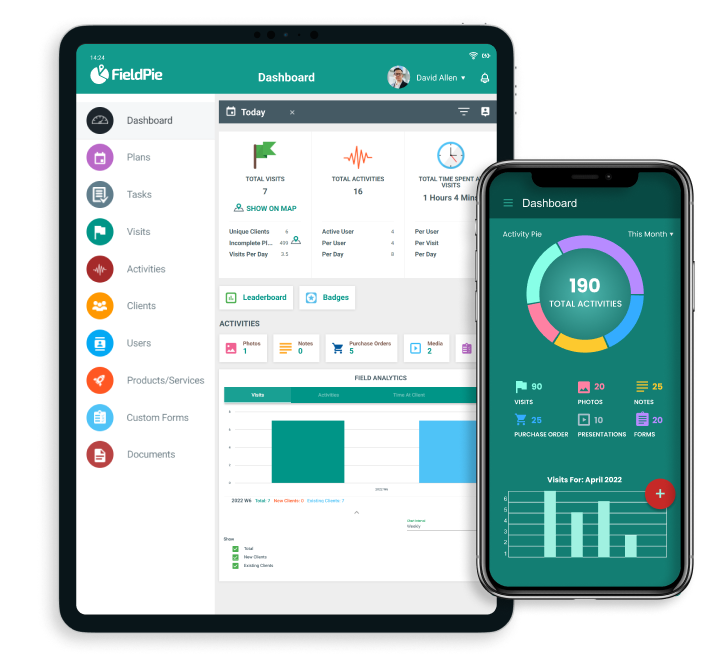
A single live map displays completed and upcoming visits, while photos, notes, and reports flow in automatically as work progresses. The result: fewer miles, faster schedules, and higher operational efficiency across every field operation.
Optimized Routes, Efficient Teams
Optimized Routes, Reduced Travel
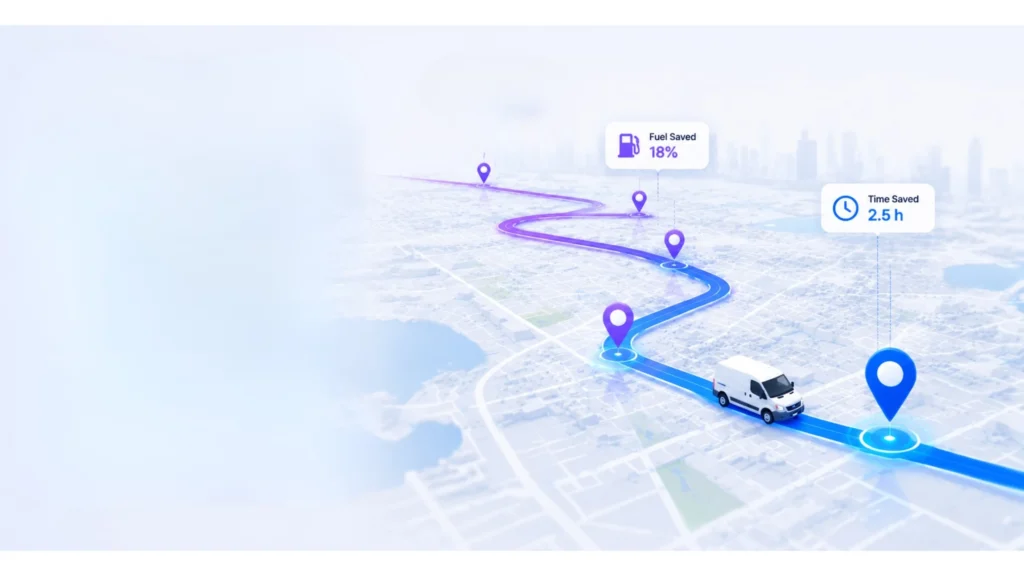
FieldPie’s AI builds short, efficient routes that minimize detours and idle time. Fewer miles driven means lower travel costs, tighter schedules, and more visits completed each day.
Smarter Workforce Utilization
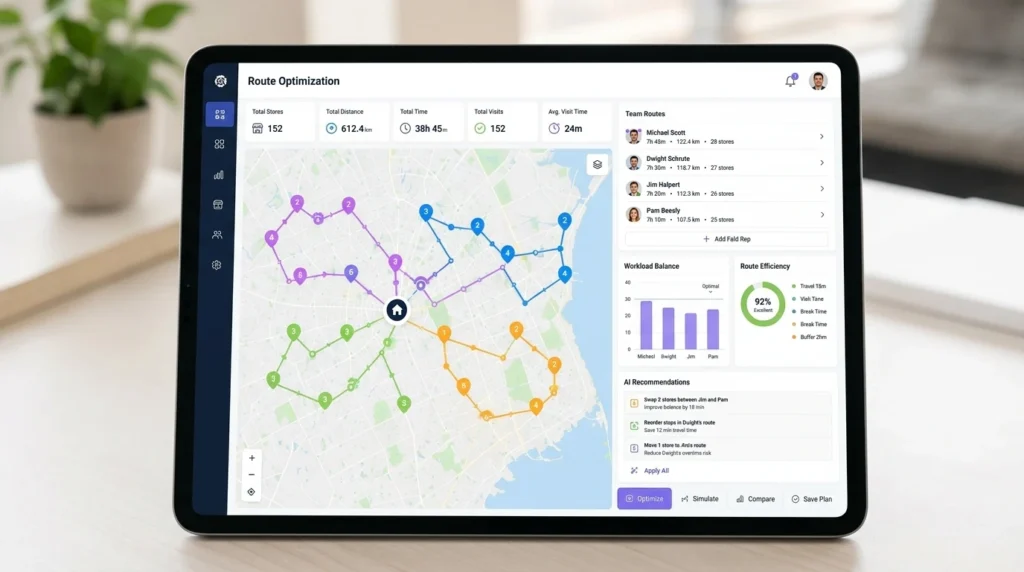
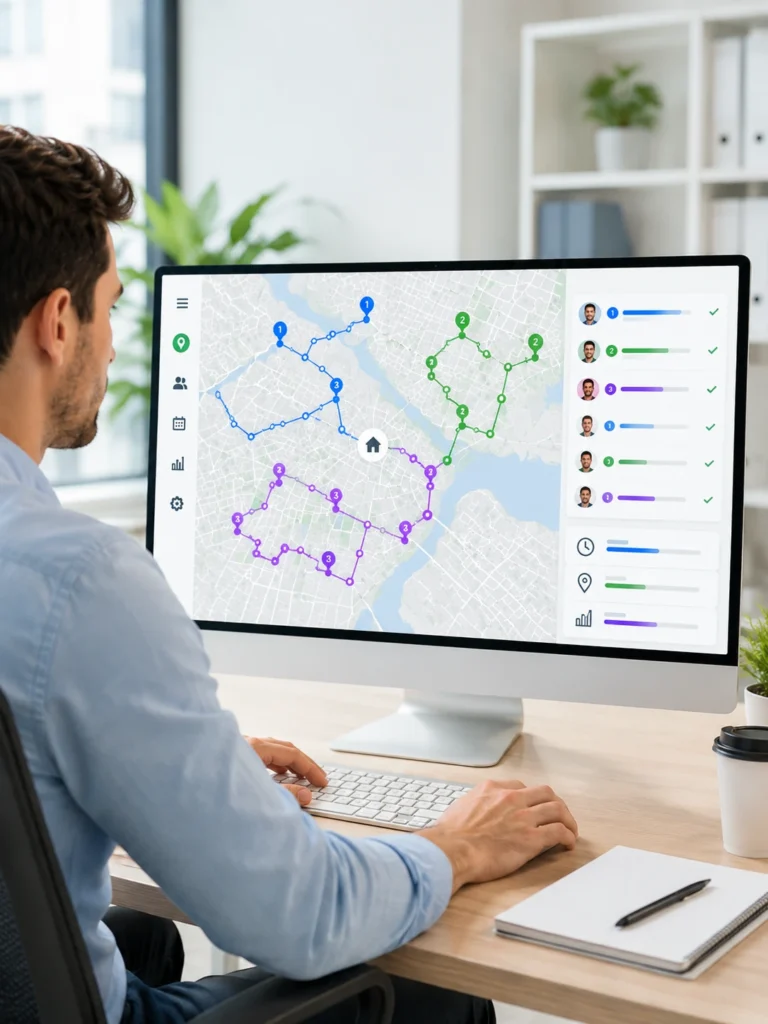
Balance workloads across your team with AI-driven assignments based on location, skill, and capacity. Avoid overloading or underusing team members while keeping routes fair and achievable.
Full Visibility in Real Time
See every visit on a live, interactive map — what’s completed, what’s in progress, and what’s next. Photos, notes, and reports flow in automatically as work progresses, giving managers a clear, real-time view of field activity.
Adaptive Planning That Learns
FieldPie learns from past visit times, team speed, and store efficiency to tighten tomorrow’s plan. It uncovers patterns with suggestions for correction.



AI-Powered Planning and Scheduling
Capacity Planning
Enter store count and target date; FieldPie estimates how many field reps you need, expected visit durations, and total days to complete—then shows trade-offs if you add or remove headcount.
Balanced Workloads
Distributes stores by geography, visit length, and priority so no one is overloaded or underused. Enforces fair routes that also minimize context-switching and deadhead miles.
Prioritization
Bakes in business rules (key accounts, promo weeks, problem stores) so critical visits always land first. If plans slip, it automatically reorders to protect what matters most.
Error-Free Assignments
Prevents double-booking and missed stores, validates skills/permissions, and warns when a plan can’t meet the deadline—before it hits the field.
What Our Clients Say About FieldPie
We manage a large field team, and planning daily routes used to be one of our biggest challenges. Since using FieldPie’s route optimization, travel time has dropped noticeably. The system automatically builds the most efficient routes for every technician and adjusts when schedules change. We’re spending less time on the road and getting more jobs done each day.


The smart routing feature has made scheduling so much easier. It automatically predicts traffic patterns and adjusts routes on the go, which really helps when jobs change at the last minute. I no longer need to call each technician to rearrange their visits — the app does it instantly. It’s like having a full-time dispatcher in my pocket.
FieldPie has improved how we coordinate our daily operations. Our technicians used to waste a lot of time figuring out where to go next, but now everything is mapped out for them. They spend more time on-site and less on the road, which means faster service and happier clients. We’ve seen a big difference in how smoothly each day runs.
Before FieldPie, we used to plan routes manually using maps and spreadsheets. It was slow and easy to make mistakes. Now the AI handles everything in seconds — it calculates the best path, accounts for distance and traffic, and updates in real time. We’ve saved a lot on fuel costs and managed to fit more visits into each day without adding stress to the team.












Award-winning FieldPie Built For You


Latest Blog
Explore our latest tips


Frequently Asked Questions
- How does AI route optimization reduce travel time for field teams?
Traditional route planning puts stops in a logical geographic order — nearby first, then the next cluster. AI route optimization goes further: it solves the entire day’s assignment across the whole team simultaneously, factoring in visit duration, rep skills, working hours, and priority rules at once. FieldPie builds daily routes that minimize backtracking, cluster nearby stores intelligently, and keep every rep within a realistic workload. The output isn’t just a shorter path — it’s a complete team plan that actually fits the day.
- How do I know how many field reps I need to cover all my locations?
This is one of the most common planning questions managers can’t answer without software. FieldPie’s workforce planning tool answers it directly: enter your store count, target visit frequency, and completion deadline — the system calculates the exact headcount required, expected visit durations, and total workdays needed. It also models trade-offs: what happens to coverage if you add or cut one rep. Planning stops being a spreadsheet guess and becomes a data-backed decision.
- How does AI handle last-minute schedule changes in field operations?
When a visit is cancelled, added, or runs over time, the entire day’s plan is affected — and traditionally someone has to call each rep individually to rearrange. FieldPie recalculates affected routes automatically the moment a change occurs, pushes the update to the relevant rep’s app, and adjusts downstream timing. No phone calls, no manual replanning. As one FieldPie customer put it: “I no longer need to call each technician to rearrange their visits — the app does it instantly. It’s like having a full-time dispatcher in my pocket.”
- What's the difference between route planning and route optimization?
Route planning sequences stops geographically — nearby locations appear back-to-back to cut obvious detours. Route optimization solves a harder problem: it assigns the right rep to the right visit, balances workloads across the whole team, respects skills and time constraints, and finds the globally best solution — not just a locally good one. FieldPie does both, and calculates the resulting fuel and time savings automatically so the efficiency gain is measurable, not assumed.
- How does workforce planning software prevent field teams from
being overloaded or underused?Uneven workload distribution is one of the most common inefficiencies in field operations — some reps with 12 stops, others with 4. FieldPie distributes visits by geography, visit duration, rep skill, and daily capacity limits simultaneously. Assignments are balanced automatically. The system enforces daily hour limits and flags unrealistic schedules before they’re published — not after reps are already in the field.
- Can field scheduling software work without an internet connection?
Yes. FieldPie’s mobile app operates fully offline — reps can view their routes, complete forms, capture photos, and record notes with no connectivity. All data queues locally on the device and syncs automatically when the connection returns. This matters in practice: basements, rural locations, shopping malls, and industrial sites all have dead zones. No visit is ever lost or delayed because of a network issue.
- How does AI scheduling decide which rep to assign to which job?
Assignment isn’t just about who is closest. FieldPie factors in required skills per visit type, each rep’s daily capacity, their current location, existing schedule density, and territorial boundaries. High-priority accounts are protected — they get assigned first, before lower-priority visits fill up the day. The result is skill-matched, geographically efficient assignments across the full team, generated in seconds instead of manually allocated over hours.
- How can managers see what their field team is doing in real time?
Every active visit appears on a live map inside FieldPie’s dashboard — completed, in progress, and upcoming, updated as work happens. GPS location, time on site, forms submitted, and photos captured all flow in automatically. Managers get full operational visibility without calling anyone. Exceptions — late arrivals, missed visits, flagged issues — surface automatically so attention goes to problems, not to status checking.
- How does field route optimization software improve over time?
Static routing tools give the same output regardless of what actually happened in the field. FieldPie learns from real visit data — actual durations versus planned, location-level patterns, team speed by territory — and uses that to sharpen future plans. Over time, time estimates become more accurate, workload distribution tightens, and the gap between planned and actual shrinks. The system also surfaces operational patterns managers wouldn’t spot manually, like locations that consistently run over or routes that always finish late.
- What's the real cost of poor route planning for field teams?
Poor routing compounds across every visit, every day. Reps waste time on unnecessary travel between distant stops. Managers waste time manually rebuilding broken schedules. Missed or delayed visits erode customer confidence and create revisit costs. Uneven workloads burn out some reps while underusing others. FieldPie makes the cost visible: route efficiency, travel time per rep, and visit completion rates are all tracked in dashboards — so managers can see exactly where time and fuel are being lost and act on it.