



In today’s fast-paced and digitally transforming business environment, effective field service management (FSM) is no longer optional it’s a strategic imperative. As companies scale and customer expectations rise, leveraging cutting-edge digital technologies becomes essential to stay competitive. This guide dives deep into actionable, high-impact digital strategies that will revolutionize your field service operations in 2025 and beyond.
Keywords included throughout: field service management, real-time data, mobile field service apps, AI in FSM, cloud-based field operations, workforce scheduling optimization, predictive maintenance, FSM software, digital transformation in field service.

Real-Time Data Gathering: The Backbone of Modern FSM
Real-time data is the lifeblood of efficient field service operations. With the rise of IoT devices, mobile sensors, and cloud platforms, field teams can now access, analyze, and act on data the moment it’s captured.
Benefits of real-time data in field service:
-
Faster decision-making on-site
-
Immediate job updates for dispatch and back-office
-
Early detection of asset failure
-
More accurate customer communication
Example: A field technician receives a live update on a critical part’s failure through a mobile FSM app, enabling proactive service.
Internal Link Tip: Learn how FieldPie’s cloud platform enables real-time collaboration and data flow across teams.
Mobile Technologies: Empowering Technicians in the Field
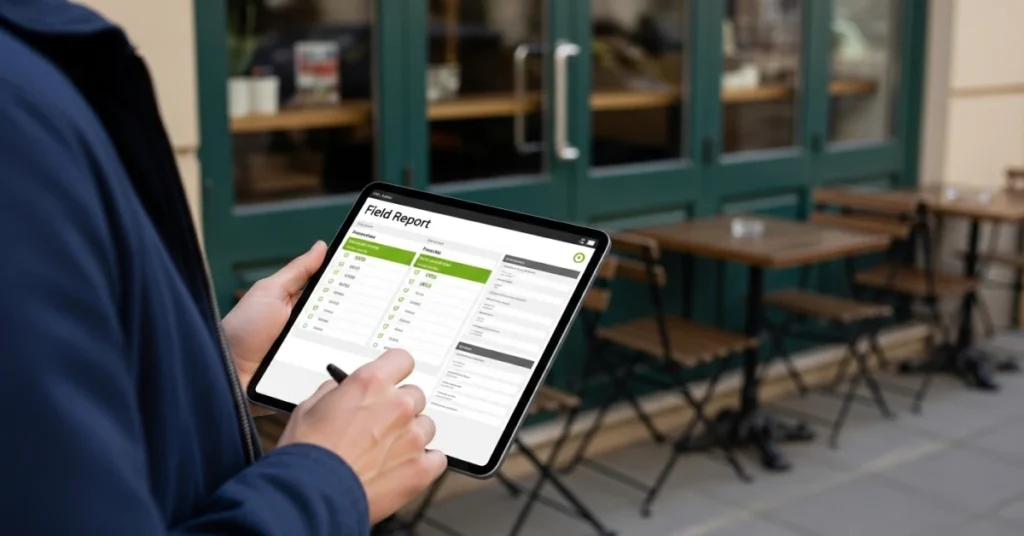
Mobile-first field service is no longer a trend—it’s the standard. Field technicians equipped with smartphones and tablets can:
-
Access customer history and manuals
-
Capture photos and signatures
-
Update job status instantly
-
Use GPS for navigation
Popular features of mobile FSM apps:
-
Offline functionality
-
Push notifications for urgent updates
-
Built-in barcode scanning
Use case: Companies using mobile field service apps report 23% higher task completion rates and 30% fewer revisits.
Looking to upgrade your mobile FSM solution? Explore our mobile features page.
Cloud-Based Field Service Management: Scalable and Secure
Migrating to cloud-based field service platforms offers unmatched flexibility, scalability, and security.
Advantages of cloud FSM:
-
Remote access to job details and documents
-
Easy scalability for seasonal workforce
-
Real-time data syncing between office and field
-
Automatic software updates and backup
Companies adopting cloud FSM tools achieve up to 40% improvement in response times.
Leveraging Artificial Intelligence in Field Operations
AI is transforming field service from reactive to predictive. Here’s how:
-
Predictive Maintenance
-
AI analyzes IoT and historical data to prevent breakdowns
-
Reduces downtime and emergency repairs
-
Smart Scheduling & Dispatching
-
AI-powered FSM platforms match technicians by skill, location, and availability
-
Cuts scheduling time by over 50%
-
Intelligent Chatbots and Virtual Assistants
-
Automate customer communication and job status updates
External Link: See how Gartner forecasts AI-driven FSM platforms to dominate by 2027.
Optimized Workforce Scheduling and Dispatching
Efficient scheduling is critical for customer satisfaction and operational efficiency.
Best practices for workforce optimization:
-
Use dynamic scheduling tools
-
Integrate GPS and traffic data
-
Monitor technician utilization rates
Benefits:
-
Reduce travel time
-
Prioritize urgent jobs
-
Improve SLA compliance
FieldPie’s smart dispatching engine automates job assignment based on multiple variables in real time.
Internal Links to Boost SEO and User Journey
Industry Statistics to Include (Update Periodically)
-
67% of field service organizations plan to invest in mobile FSM tools (Field Technologies Online)
-
AI-powered dispatching increases technician productivity by 35% (Aberdeen Group)
-
75% of service calls could be resolved faster with real-time data access (Service Council)
Final Thoughts: The Future Is Digital
To thrive in 2025 and beyond, organizations must embrace a digital-first mindset in field service operations. By implementing these digital strategies—real-time data collection, mobile tech, cloud platforms, AI, and smart scheduling—you not only future-proof your service operations but also exceed customer expectations.
FAQs (Optimized for Featured Snippets)
What is field service management?
Field service management (FSM) refers to managing resources, technicians, and operations outside the office—often through digital tools.
How does real-time data improve field service?
It enables faster decisions, proactive maintenance, and improved communication across teams.
Why use mobile apps in field service?
They streamline technician workflows, improve efficiency, and enhance customer experience.
How does AI help in FSM?
AI powers predictive maintenance, intelligent dispatching, and resource optimization.
What are the advantages of cloud FSM?
Remote access, real-time collaboration, better data security, and scalability.
Ready to transform your field operations? Request a demo of FieldPie today.
Tags: field service management, FSM software, mobile field service, real-time data, artificial intelligence, predictive maintenance, cloud FSM, workforce dispatching, scheduling optimization, digital transformation