



Master the Art of Managing a Field Sales Team
Managing a field sales team is no easy feat. With your reps constantly on the move, it’s easy to lose visibility, miss follow-ups, and fall behind on performance metrics. But with the right strategy and tools, you can transform your field team into a high-performing sales engine.
Here’s how to boost productivity, streamline communication, and ensure your field reps are always one step ahead:
1. Define Field Sales Success with Clear KPIs
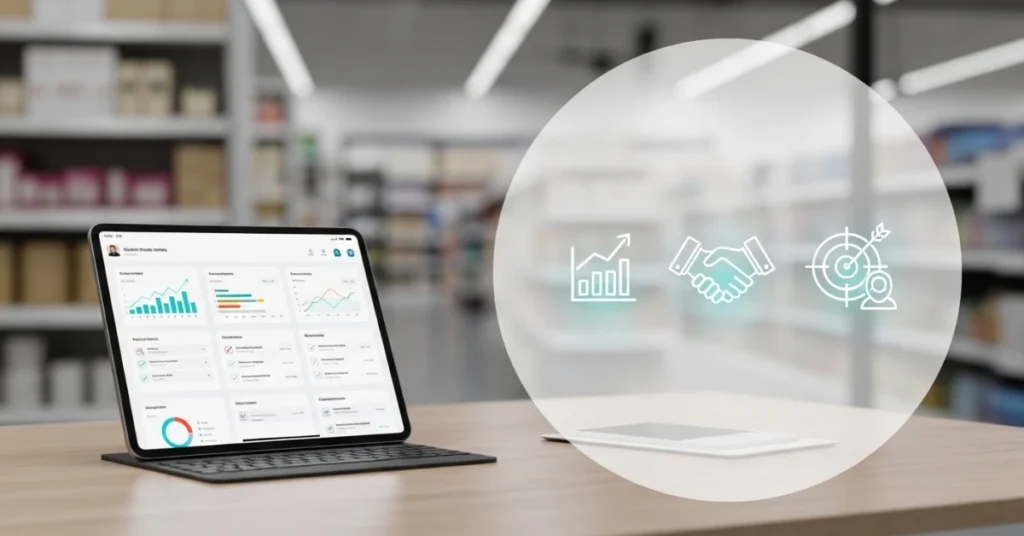
Success starts with clarity. Every field rep should understand their targets—daily visits, conversion rates, follow-ups—and how performance is measured. Use visual dashboards that update in real-time so reps stay focused on what matters.
Bonus Tip: Go beyond generic metrics. Track KPIs like:
- Cost-per-visit
- Conversion rate per route
- Revenue-per-hour-on-site
- On-time arrival rate
These allow you to calculate the true ROI of field operations — a tactic highlighted in McKinsey’s sales operations report.
Source: McKinsey & Company – “The Future of Field Sales”
2. Optimize Field Sales Team Routes
Manual scheduling is a productivity killer. Instead, use smart tools that optimize routes based on traffic, distance, and visit priority. This can reduce fuel costs by 20-30%, according to field service industry benchmarks.
3. Equip Field Sales Team with Mobile Tools
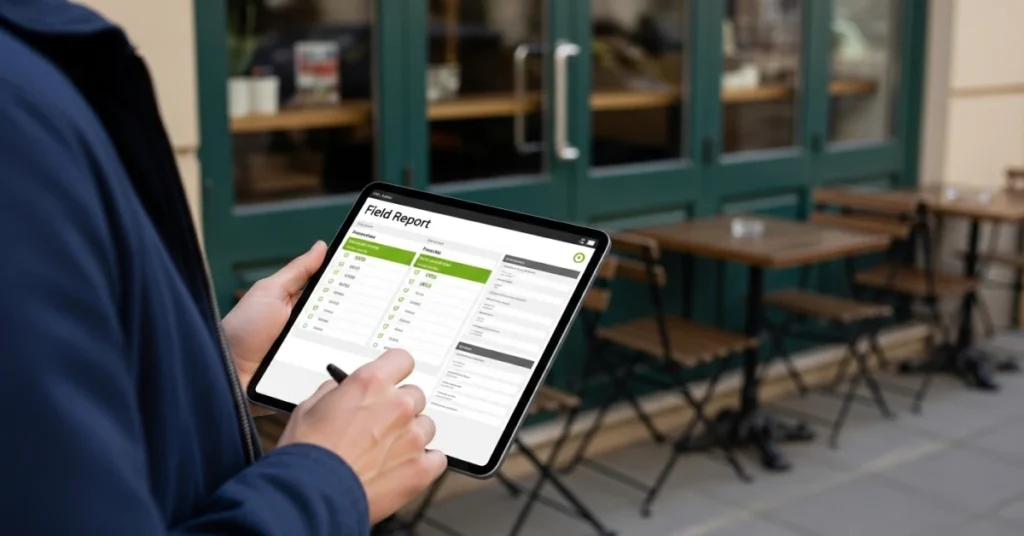
Field reps need on-the-go access to CRM data, customer history, and forms. A mobile-friendly system with offline functionality allows them to stay productive even when there’s no internet — minimizing admin work and improving client interactions.
Pro Tip: Don’t just use forms to track visits. Use them to collect
- Competitive product availability
- Shelf positioning
- Stock levels
- Customer sentiment and objections
This data, when aggregated, feeds directly into BI dashboards and marketing decisions — a trick used by top-performing consumer goods sales teams.
4. Use Real-Time Data for Instant Action
Live tracking isn’t just for monitoring — it’s for reacting.
Example:
When a rep flags a client as “cold” during a visit, your system should trigger:
- a nurturing email sequence,
- a product issue alert to product teams, or
- an upsell prompt to another rep in the area.
This turns reactive management into proactive strategy.
5. Get Feedback from Field Sales Team
Create a culture where field reps actively report what they see.
Use micro-feedback tags like:
- “Price too high”
- “Interest in competitor”
- “Asked about missing feature”
These insights, when logged consistently, become faster than surveys in identifying product or market issues.
Encourage sharing through voice notes, mobile tagging, or short in-app prompts. This grassroots intelligence is often where the next innovation lies.
6. Prioritize Field Sales Team Tasks with AI
Don’t just schedule visits randomly or alphabetically. Use AI tools to analyze past sales behavior, visit outcomes, and customer engagement to suggest the most valuable visits for the upcoming week.
Reps who follow AI-prioritized routes can improve close rates by up to 35%, according to data from Harvard Business Review’s study on AI in B2B Sales.
Source: HBR – “How AI Is Changing Sales”
7. Coach Your Field Sales Team Regularly
Schedule regular performance reviews, ride-alongs, and mini-workshops to ensure reps continue to grow in product knowledge, objection handling, and consultative selling.
The best field managers act not just as bosses — but as coaches.
8. Motivate Field Sales Team with Gamification
Sustaining motivation in a distributed field team can be tough — especially when reps work independently. Gamification adds a layer of healthy competition and real-time recognition.
How to apply:
- Reward reps with badges or points for completing daily goals
- Launch leaderboard-style rankings by territory or team
- Celebrate weekly wins (highest conversions, most on-time visits, etc.)
This approach not only boosts morale but also improves engagement with CRM tools and performance tracking. According to Harvard Business Review, gamified sales teams see up to a 12% increase in productivity.
Source: “HBR – How Gamification Can Boost Employee Engagement”
9. Enable End-to-End Field-to-Office Integration
Collecting data is only half the story — acting on it instantly is where the real impact happens.
Field teams should trigger workflows automatically:
- A low stock note can create a replenishment order
- A service issue can open a ticket in your help desk
- A completed form can update the invoice system or CRM record
10. Tap into Micro-Level Insights with Geo-Based KPIs
All routes aren’t created equal. Instead of evaluating reps only by global KPIs, use location-based metrics to measure local success:
Examples:
- Conversion rate per district
- Campaign performance by region
- Shelf availability or stock issues per area
This level of micro-segmentation helps identify underperforming zones, optimize campaigns locally, and better allocate rep time. It’s a tactic used by top-performing CPG and retail sales leaders to maximize field ROI.
11. Prepare Field Sales Team for Offline Use
Offline functionality shouldn’t be limited to just form access. Field sales teams need to work seamlessly even in low-connectivity areas.
FieldPie ensures all tasks are completed without an internet connection. Once online, all data is automatically synced.
Conclusion
Efficient field sales management comes down to real-time visibility, smart planning, and mobile-first execution.
FieldPie brings all of that into one powerful platform — helping teams plan better routes, collect smarter data, and stay productive even offline.
If you’re ready to simplify field operations and boost performance, FieldPie is built for you.
Book a demo with FieldPie — and see how leading teams save time, sell smarter, and stay connected wherever they go.