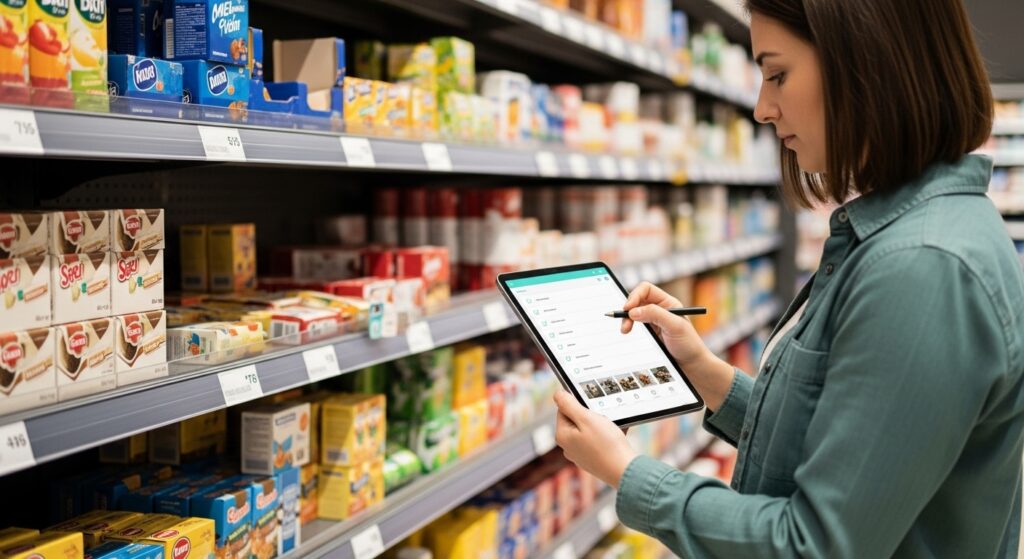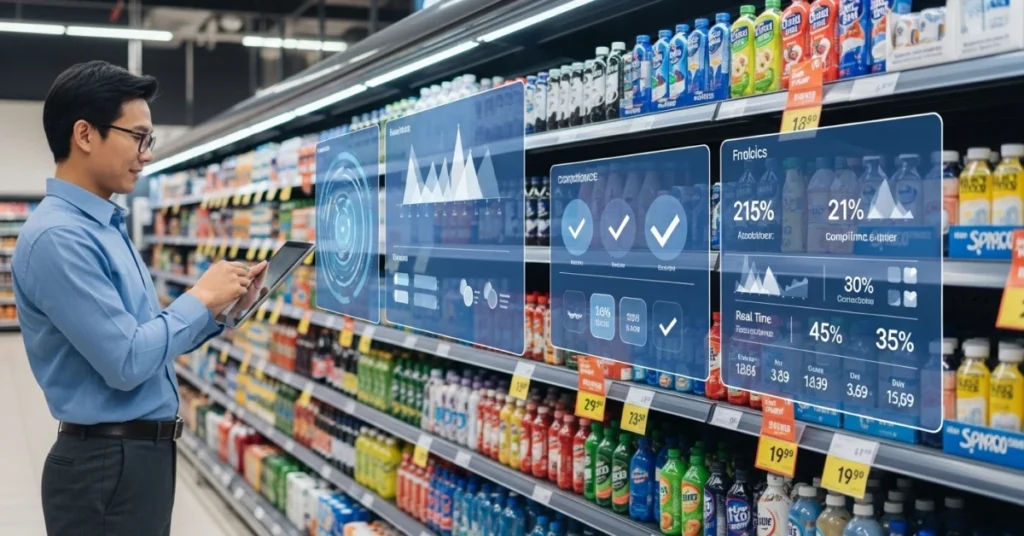



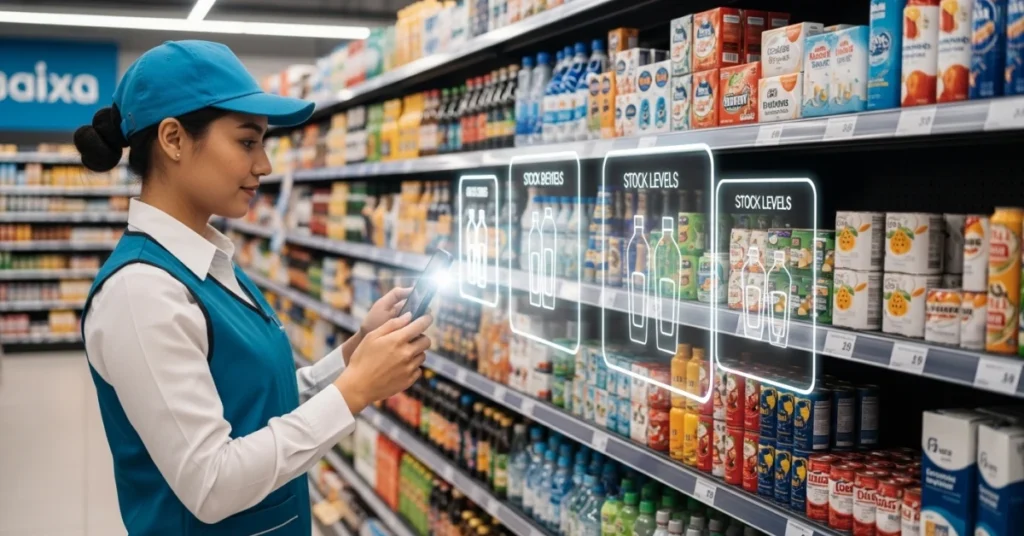
Image recognition for retail transforms large volumes of visual data into real-time, actionable insights. AI-powered computer vision automatically detects products, monitors shelf compliance, tracks inventory levels, and identifies out-of-stock situations—eliminating the need for slow manual audits.
These systems recognize SKUs, detect planogram issues, and analyze shopper behavior while processing thousands of images per second. Driven by rapid retail adoption (Fortune Business Insights), image recognition is transforming both inventory management and customer experience.
How Image Recognition Works in Retail Execution
AI image recognition converts raw visual data into business insights through a simple 3-step process:
| Step | What Happens | Outcome |
|---|---|---|
| Capture & Analyze | Computer vision scans shelf images from mobile apps, cameras, or scanners | Detects products, prices, shelf conditions, and compliance in real time |
| Match & Learn | Images are compared with trained datasets of thousands of SKUs | Machine learning improves accuracy continuously |
| Act Instantly | System flags out-of-stock, pricing errors, and planogram violations | Issues detected within seconds |
The global image recognition market is projected to reach $81.88 billion by 2027. Automation reduces errors and cuts audit time from hours to minutes, enabling faster, data-driven retail optimization.
Why Retailers Need Image Recognition
Traditional retail monitoring cannot keep pace with today’s fast-moving market. Manual audits capture only snapshots, leaving hidden gaps in shelf execution and product availability. Image recognition for retail solves this problem by transforming store images into real-time insights and enabling continuous, automated monitoring.
Key benefits
- Always-on visibility: monitors shelves 24/7
- Eliminates blind spots from weekly/monthly checks
- Ensures consistent product availability and merchandising
As the AI image recognition market grows rapidly, retailers increasingly rely on image recognition for retail to reduce missed sales, improve shelf compliance, and protect the overall customer experience.
The Cost of Poor Shelf Execution
Poor shelf execution creates significant revenue loss beyond empty shelves. Out-of-stock situations cost retailers about 4% of total sales annually, while pricing errors and misplaced products drive additional losses.
Business & brand impact
- Promotional display mistakes can reduce campaign performance by up to 30%
- Weak execution undermines manufacturer investments and vendor partnerships
Customer behavior
- Shoppers expect products exactly where promoted
- 68% abandon purchase when items are not found
Execution failures increase operational inefficiency, as manual corrections delay issue resolution and compound revenue loss.
Core Image Recognition Use Cases in Retail
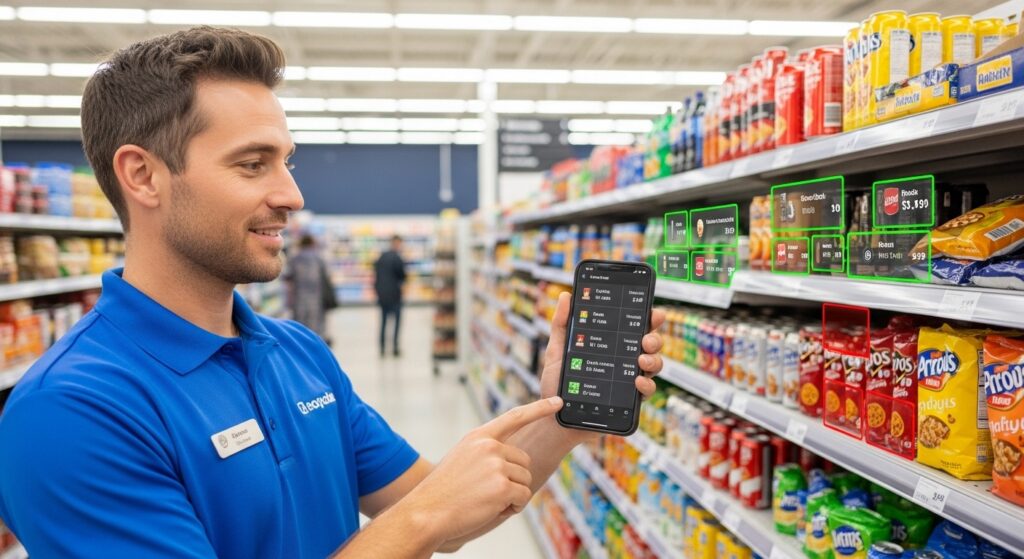
Image recognition for retail improves key retail operations through automated product recognition and visual analysis.
Main applications
- Inventory management → reduces manual counting time by up to 70%
- Price compliance → verifies correct pricing and promotional labels
- Visual merchandising → ensures planogram compliance and correct placement
Customer & data insights
Shopping pattern analysis reveals dwell time and traffic flow. Due to privacy regulations, focus has shifted toward anonymous behavior tracking. Inventory-related applications account for nearly 60% of adoption.
On-Shelf Availability & Out-of-Stock Detection
Real-time monitoring continuously scans shelves to detect gaps, misplaced products, and stock depletion.
Capabilities
- Detects out-of-stock within minutes instead of hours/days
- Identifies empty shelf space and fast-moving items
- Works effectively during peak shopping periods
Advanced algorithms reduce false alerts and can predict stock-outs using consumption patterns, improving availability and revenue.
Planogram & Visual Compliance
Image recognition automates planogram verification and visual compliance.
Detects
- Wrong placement and planogram violations
- Incorrect facings and missing items
- Unauthorized products
The system also checks shelf labels, promotional materials, and brand standards, ensuring consistent execution while reducing manual audits.
Shelf Share & Product Visibility
Image recognition enables advanced shelf share analysis, showing how much space each brand occupies vs competitors.
What it enables
- Measure shelf space %, facings, and visibility
- Detect weak placement and reposition products
- Optimize layout to improve revenue per square foot
Brands with higher visibility typically achieve 15–20% higher sales. Accurate analysis requires accounting for seasonality and promotions.
Image Recognition for Retail’s Business Impact
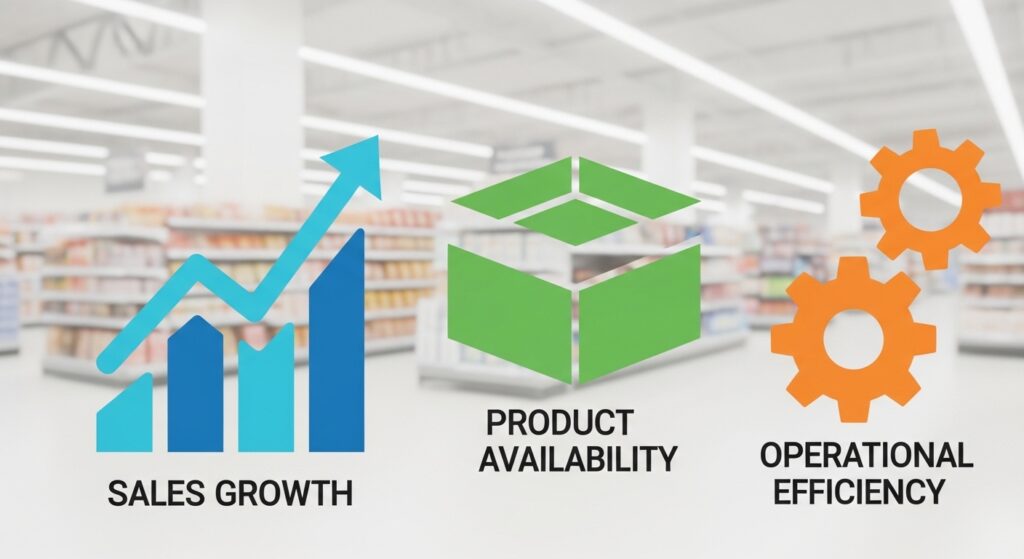
Image recognition for retail delivers measurable business value beyond simple automation. By turning visual data into real-time insights, retailers improve execution quality, reduce operational costs, and protect revenue across their entire store network.
- Up to 70% lower audit costs by replacing manual store checks
- 15–25% higher sales per square foot with strong planogram compliance
- Better shelf availability improves conversion and revenue
- Real-time insights create faster response and competitive advantage
Overall, image recognition for retail enables faster decisions, stronger shelf execution, and more consistent in-store performance—directly improving profitability and operational efficiency.
Increase Sales Through Better Shelf Availability
Consistent product availability directly improves revenue.
Key outcomes
- Detect low stock before shelves empty
- Prevent lost sales and customer switching
- Maintain eye-level placement for high-margin products
- Identify seasonal and promotional demand patterns
Better availability strengthens both sales performance and merchandising decisions.
Improve Operational Efficiency
Image recognition replaces manual processes with automated real-time insights.
Operational impact
- Eliminates manual aisle checks and compliance audits
- Enables predictive replenishment
- Reduces stockouts and overstock simultaneously
- Improves staff productivity and prioritization
This creates a more efficient, data-driven retail environment.
From Shelf Data to Perfect Store
Image recognition for retail transforms basic shelf tracking into full retail optimization. Smart shelves create a continuous feedback loop that improves execution, visibility, and store performance.
When shelf data integrates with retail systems, image recognition for retail enables teams to gain real-time insights, prevent issues early, and maintain consistent in-store execution across all locations.
Detect Execution Gaps Instantly
Image recognition closes the gap between strategy and store execution.
- Detects misplaced products and planogram violations within minutes
- Flags execution gaps across all locations
- Enables fast corrective action during campaigns
- Replaces slow manual audits
Turn Insights into Action
Modern systems automate detection and response, turning insights into real-time action.
- Auto-generate tasks for restocking and fixing issues
- Send real-time alerts with exact location and action
- Provide dashboards for managers
- Continuously improve detection through feedback
Future of Image Recognition in Retail
The AI image recognition market is projected to reach $81.88 billion by 2032, driven by demand for operational precision and better customer experience.
Key trends:
- Edge computing enables instant shelf analysis
- Faster, specialized computer vision models
- AR + image recognition for immersive experiences
- Privacy-preserving AI
Success depends on translating visual intelligence into real operational impact.
Predictive Shelf & Demand Intelligence
Image recognition is evolving from monitoring to predicting demand.
- Detect demand shifts earlier
- Prevent stockouts with proactive replenishment
- Optimize shelf life and product velocity
- Improve forecasting and distribution accuracy
Retailers mastering predictive visual intelligence gain long-term competitive advantage.
Conclusion
Image recognition for retail turns visual data into real-time action—improving shelf availability, compliance, and store performance. With AI-powered execution from FieldPie, retailers fix issues faster, protect revenue, and keep shelves always ready.
📊Turn shelf insights into real-time, flawless execution across every store.