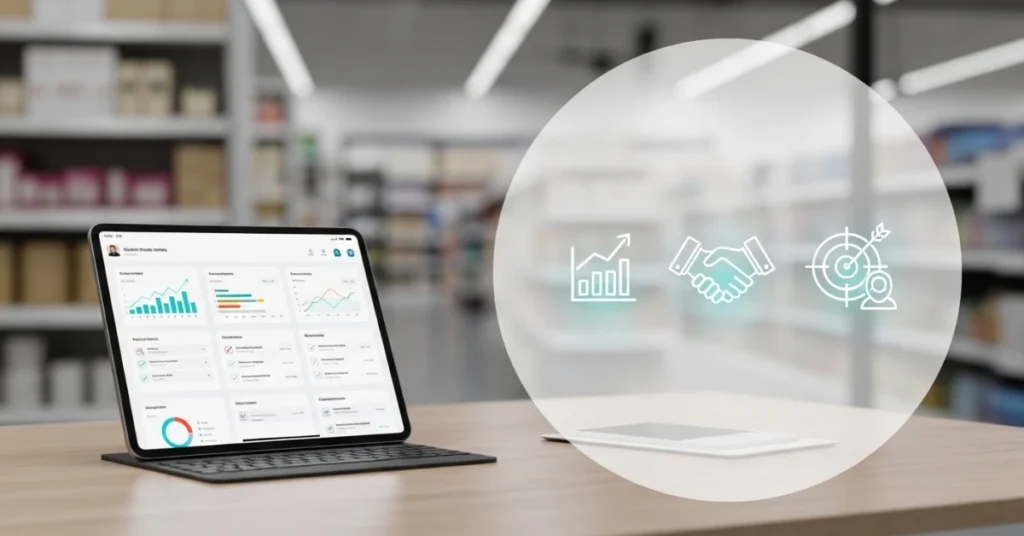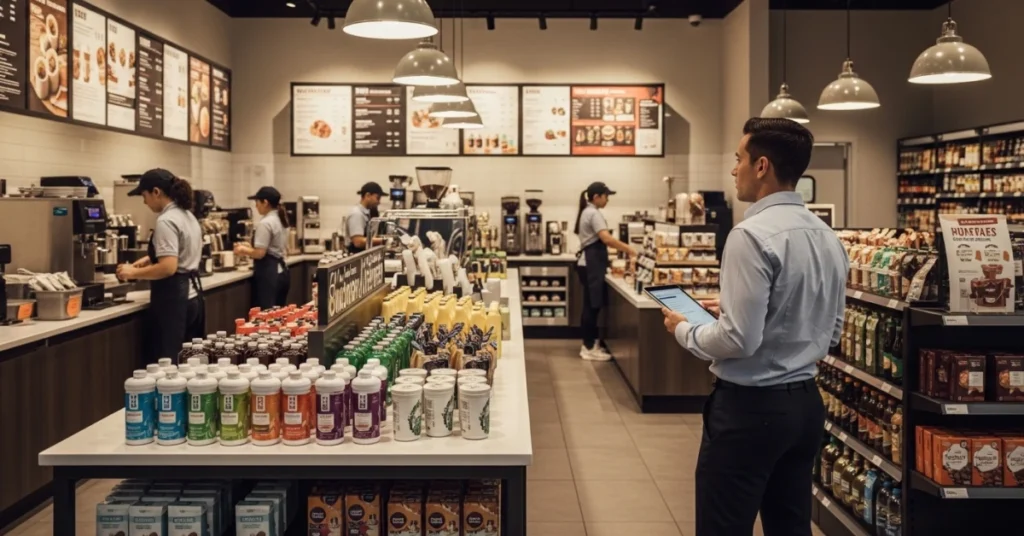




Merchandising strategy is not a single decision—it’s a connected system. From defining the right product mix to executing consistently across stores, successful retailers align assortment, pricing, availability, and shelf placement to influence what customers see, choose, and buy.
This guide explores merchandising as a structured process moving from strategic foundation to real-world execution and scalable governance. When strategy, execution, and measurement work together, shelf space turns into sustainable growth and long-term retail performance.
This article presents merchandising strategy as a connected system, moving from foundation to application and governance—reflecting how strategies are built, executed, and scaled in practice.
Foundation: Defining the Strategic Groundwork

Shelf space is where attention turns into sales. In a crowded and competitive environment, a clear merchandising strategy determines which products are seen, chosen, and profitable.
At its core, merchandising strategy is shaped by assortment, pricing, availability, and execution decisions—guided by shopper behavior and category performance.
What Is a Merchandising Strategy (and What It Is Not)
Merchandising strategy defines which products go where, how they are presented, and how they are commercially supported to drive sales. It aligns assortment, pricing, visuals, and shelf space with real shopper behavior.
Why Merchandising Strategy Matters
Retail today demands precision. What once relied on instinct now requires structure to:
- improve visibility and conversion
- reduce friction in the shopping journey
- ensure consistent execution across locations
When done well, merchandising becomes a competitive advantage—not just an operational function.
Product Assortment & Availability
The goal is the right mix, not maximum variety. Strong assortments balance demand, margins, and category roles, while availability ensures products are present when demand peaks.
Pricing & Promotion Alignment
Merchandising performs best when pricing, promotion, and placement work together. Without alignment, even strong promotions underdeliver.
Application: Turning Strategy into Channel Execution
Merchandising delivers results only when strategy is translated into execution and continuously refined through performance data. Planning alone is not enough.
Merchandising Across Channels
Execution adapts by channel, but the objective stays the same: place products where customers naturally look first.
- Physical retail: space productivity and visual impact
- Digital: visibility, discovery, and relevance
- Omnichannel: consistent performance across touchpoints
Merchandising Strategy for Sales Growth
Merchandising drives growth by aligning three elements:
- Visibility – being noticed
- Accessibility – being easy to find and choose
- Data – guiding placement decisions
Planograms translate strategy into structure, enabling testing and continuous improvement.
🧭 Clear strategy, inconsistent execution?
See how FieldPie turns merchandising plans into verified in-store execution — book a demo.
Governance: Scaling, Measuring, and Sustaining Strategy
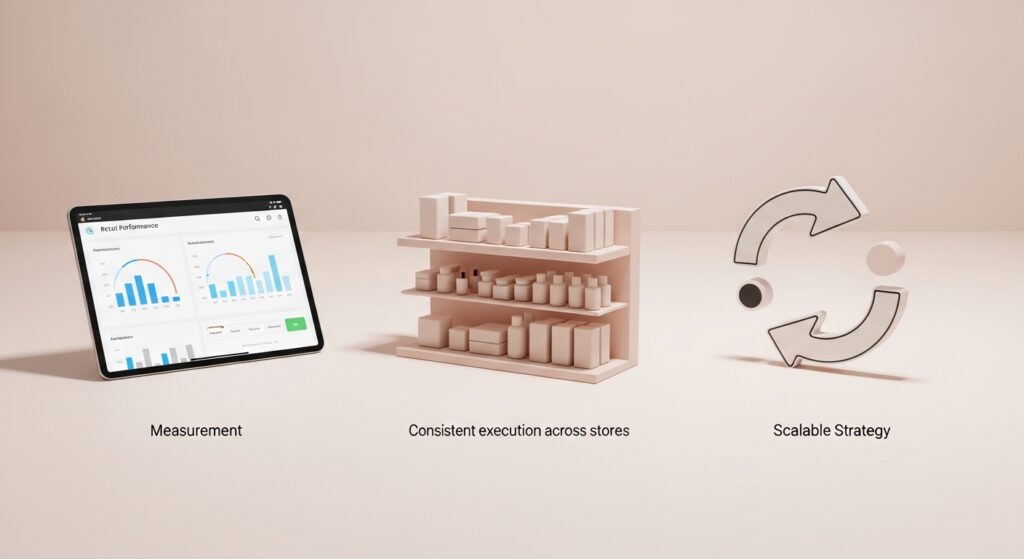
Governance ensures merchandising remains consistent, scalable, and adaptable across locations.
Translating Strategy into Store-Level Actions
Strategy creates value only when it becomes clear, repeatable in-store actions—supported by simple guidelines, defined roles, and practical playbooks.
Measuring Success: Key Merchandising Metrics
Key merchandising metrics show whether shelf strategy works in practice.
- Commercial KPIs track value creation through sales, category growth, and inventory turnover.
- Execution metrics track planogram compliance, availability, and display quality.
Together, they reveal both performance results and execution gaps—supporting continuous improvement.
Common Merchandising Strategy Mistakes
Most failures come from a few patterns:
- treating merchandising as a one-time project
- applying the same rules to all categories
- collecting data without acting on insights
Ignoring competitive shelf dynamics is another common blind spot.
FAQ
What are the 5 R’s of merchandising?
Right Product, Right Place, Right Time, Right Price, Right Quantity—together aligning customer demand with business goals.
What are the 4 pillars of merchandising?
Product, Price, Place, and Promotion—effective only when aligned.
What are the best merchandising strategies?
Data-led placement, category-based organization, and performance-driven planograms with regular review.
What are effective promotion methods in merchandising?
Cross-merchandising, end-cap displays, and digital touchpoints that extend in-store visibility.
Conclusion: Your Merchandising Growth Blueprint
A strong merchandising strategy turns shelf space into growth through clear decisions, consistent execution, and data-driven improvement. By refining one category at a time and tracking the right metrics, retailers unlock sustainable performance gains and long-term competitive advantage.