


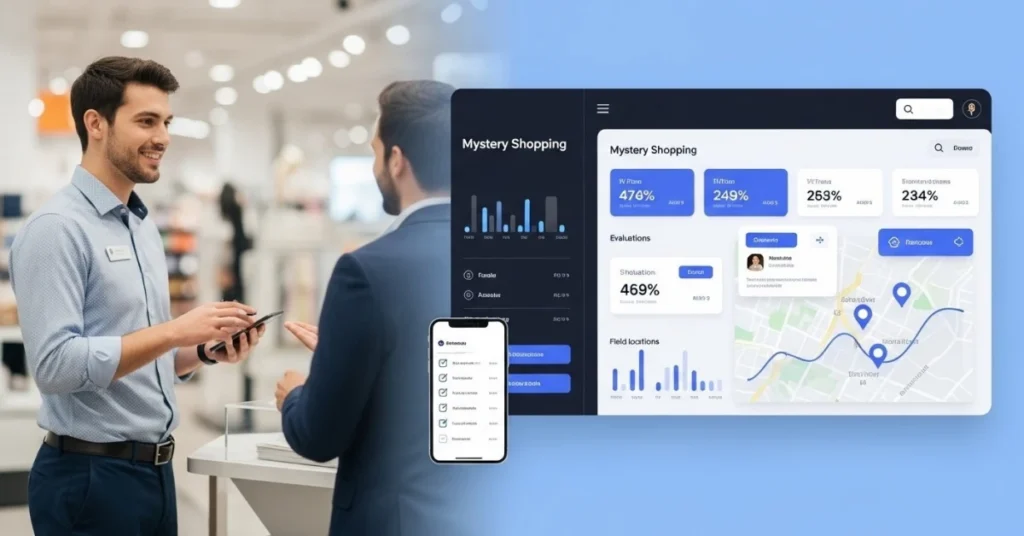
Customer experience is a boardroom priority — yet measuring it consistently across locations remains a challenge. According to the MSPA, 78% of businesses use mystery shopping to capture ground-level operational reality, with 73% reporting improved customer satisfaction as a result.
Unlike surveys, mystery shopping reveals what’s actually happening in the field — from inconsistent staff behavior to brand standards that break down at the location level.
Yet most programs still run on spreadsheets and disconnected tools, leading to delayed evaluations and poor visibility across locations. The right software brings everything into one place — enabling structured, scalable customer experience programs.
This article reviews the best mystery shopping software based on real operational needs, usability, and long-term scalability.
Why Your Business Needs Mystery Shopping Software
Mystery shopping programs operate at scale. Whether you manage a handful of clients or hundreds of locations, you need to coordinate shoppers, maintain evaluation standards, and deliver actionable insights. Here’s why investing in mystery shopping software makes sense:
- Improve visibility and decision-making. Real-time dashboards and location-based analytics help program managers monitor evaluation scores across sites, identify underperforming locations, and respond quickly to service gaps.
- Ensure compliance and accountability. Automated questionnaires, policy-aligned evaluation forms, and audit trails protect program integrity and ensure shoppers follow brand-specific assessment standards. Mobile evaluation tools enable on-site reporting and quality control at scale.
- Reduce errors and save time. Automated shopper scheduling, fee processing, report generation, and client deliverables eliminate manual paperwork and reduce time spent reconciling evaluation data. GPS-verified check-ins and geofencing prevent fraudulent visits and reporting discrepancies.
Businesses that adopt modern mystery shopping software gain a strategic advantage: they run more credible programs, deliver faster insights, and scale without breaking operations.
What These Mystery Shopping Software Solutions Have in Common
Mystery shopping platforms vary in features and focus, yet the tools in this list are built to support efficient multi-location evaluation programs as businesses scale. They typically:
- Replace manual tools (e.g. spreadsheets, paper evaluation forms, email chains) with cloud-based shopper scheduling, form management, and report delivery.
- Centralize multi-location evaluation and program execution, ensuring consistent assessment criteria while giving program managers and clients real-time visibility.
- Connect program operators, field shoppers, and client teams through shared dashboards, mobile apps, and communication channels.
- Provide analytics and reporting to track KPIs, compliance scores, shopper performance, and client-facing metrics for each evaluated location.
By bringing these capabilities into a unified system, mystery shopping software helps providers run more programs, manage larger shopper networks, and scale operations without added complexity.
Top Mystery Shopping Software Solutions
Below are leading mystery shopping platforms built for modern multi-location evaluation programs. Each supports different business sizes, from boutique providers to global enterprise networks.
1. FieldPie
The Best Mystery Shopping Software for Field Evaluation Programs at Any Scale

FieldPie is a modern field execution platform built specifically for the operational demands of mystery shopping providers and multi-location evaluation programs. It supports both growing boutique operations and established enterprise programs—without forcing a trade-off between simplicity and capability.
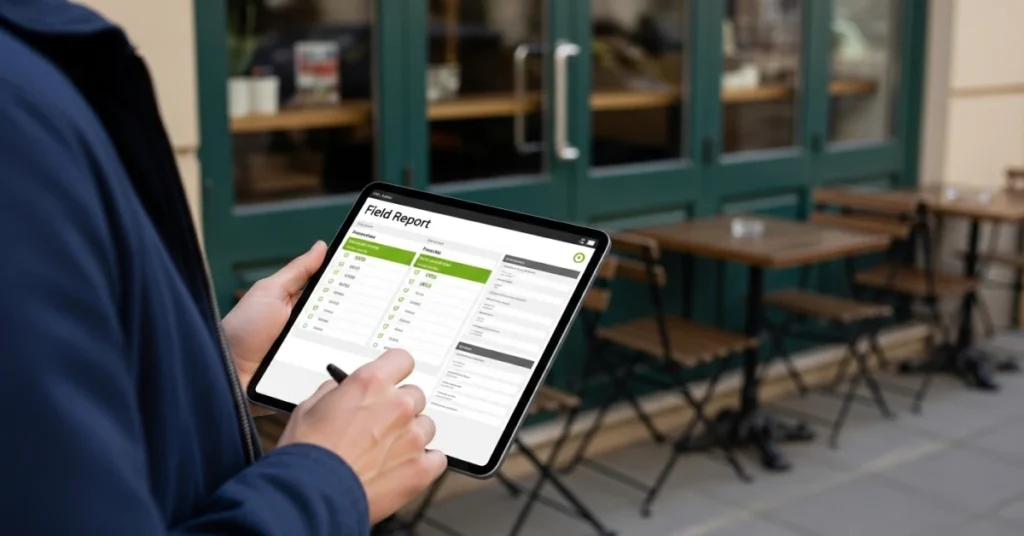
What sets FieldPie apart in a mystery shopping context is how it centralizes program execution without removing local flexibility. Program managers get real-time visibility across all client locations; field shoppers get tools that are fast to learn and easy to operate in the field. Shopper scheduling, evaluation forms, visit workflows, client data, GPS verification, and evaluation history all live in one unified system—reducing the tool sprawl that often undermines program consistency.
FieldPie also handles the practical realities of field evaluation work: shoppers can capture data, photos, signatures, and completed forms without signal, with everything syncing automatically when connectivity is restored. For distributed programs where field conditions vary, this kind of reliability matters.
Core capabilities include:
- Multi-location shopper scheduling and evaluation management in one unified system
- End-to-end evaluation execution — from visit assignment through completion and report delivery
- Smart scheduling & routing — mobile-first workflows designed to keep distributed shopper networks moving efficiently
- Offline-ready operations — full data capture without signal; automatic sync when back online
- Custom forms & evaluations — fully configurable for client-specific questionnaires, compliance checklists, and brand service standards
- Real-time visibility — live visit progress, shopper locations, and field performance across all client locations at a glance
- Flexible roles & permissions — tailored access for field shoppers, program managers, and client-level reporting
- Scalable reporting — clear evaluation insights across the entire program portfolio without enterprise-level complexity
Where FieldPie stands out: FieldPie is built as a long-term platform, not a stopgap tool. It scales naturally with a mystery shopping operation—whether you’re managing three clients or thirty—without requiring constant tool changes or workarounds as programs grow. The platform prioritizes deep operational execution, which often eliminates the need for multiple disconnected systems across a mystery shopping program.
Things to consider: FieldPie prioritizes operational depth over niche vertical add-ons.
2. Lumiform
Lumiform is a digital inspection and audit platform used across a range of industries, including quality assurance and field evaluation programs. It provides a structured approach to form-based data collection and is used by teams that need to standardize checklist workflows across multiple locations or auditors.
Core capabilities include:
- Configurable digital forms and inspection templates
- Mobile app for field data capture, including photo attachments
- Issue tracking and corrective action workflows
- Real-time reporting and analytics dashboard
- Role-based access for teams and managers
- Integration options with third-party tools
Where Lumiform stands out: Lumiform offers a relatively quick setup for teams looking to digitize paper-based inspection or audit processes. Its template library and form builder make it accessible for operations that need to roll out standardized checklists without heavy configuration overhead.
Things to consider: Lumiform is a general-purpose inspection tool and is not purpose-built for mystery shopping workflows. Teams running structured mystery shopping programs may find that auditor management, visit assignment logic, and program-level reporting require additional customization or workarounds to fit their specific needs.
3. GoAudits
GoAudits is a digital auditing and inspection platform designed to help organizations conduct and manage field audits. It is used across industries such as hospitality, retail, and food service for quality checks, compliance audits, and operational inspections.
Core capabilities include:
- Digital audit forms with scoring and weighted criteria
- Mobile app for offline data capture
- Automated PDF report generation upon audit completion
- Corrective action assignment and follow-up tracking
- Multi-location performance dashboards
- Template library for common audit types
Where GoAudits stands out: GoAudits places emphasis on the reporting layer — completed audits automatically generate structured PDF reports, which can reduce the time spent on manual report preparation for client-facing deliverables.
Things to consider: GoAudits is primarily an audit and inspection platform. Mystery shopping operations that require auditor pool management, visit scheduling coordination, or multi-client program structures may find the platform better suited as a data collection tool than a full program management solution.
4. Connecteam
Connecteam is a workforce management platform built for frontline and deskless teams. It covers a broad range of HR and operations functions, including scheduling, communication, task management, and time tracking, and is used by businesses managing distributed hourly or field-based workforces.
Core capabilities include:
- Employee scheduling and shift management
- Task and checklist assignments for field teams
- In-app team communication and announcements
- Time tracking and attendance management
- Digital forms and reports
- Training and onboarding modules
Where Connecteam stands out: Connecteam covers a wide range of workforce management needs in one platform, which can be useful for companies that want to consolidate team communication, scheduling, and basic task tracking under a single tool.
Things to consider: Connecteam is a general workforce management tool rather than a field audit or mystery shopping platform. Programs that require structured evaluation forms, scored visit reports, auditor assignment workflows, or program-level analytics may find its capabilities in those areas limited compared to purpose-built solutions.
5. Xenia
Xenia is an operations management platform aimed at frontline teams in industries such as hospitality, facilities, and multi-location services. It provides tools for task management, inspections, and team coordination, and is designed to give managers visibility into day-to-day operational activity across locations.
Core capabilities include:
- Task creation, assignment, and tracking
- Configurable inspection and checklist forms
- Work order management
- Real-time team activity visibility
- Reporting and operational logs
- Mobile app for field teams
Where Xenia stands out: Xenia offers a combination of task management and inspection capabilities in a single platform, which can work well for operations teams managing recurring checks and maintenance workflows across multiple locations.
Things to consider: Xenia is oriented toward internal operations management rather than external audit or mystery shopping programs. Teams running client-facing mystery shopping programs with structured auditor networks, visit assignment logic, and scored evaluation reporting may find the platform requires significant adaptation to fit those workflows.
Your Strategic Roadmap: How to Choose the Right Mystery Shopping Software
Choosing the right mystery shopping software starts with understanding your programs, growth goals, and daily operational needs. As programs scale, visibility into client data, evaluation history, shopper scheduling, routing, and financial performance becomes as important as core field execution.
Must-Have Features for Mystery Shopping Software
Industry surveys show that commonly used mystery shopping tools focus on evaluation reporting, shopper payment management, and client analytics, highlighting the importance of these capabilities. The most important feature categories typically include:
- Operations and scheduling. Shopper routing, visit assignment, and task management ensure efficient field program execution.
- Compliance and quality assurance. Digital evaluation forms, mobile reporting, and audit trails protect program credibility and brand evaluation standards.
- Multi-location dashboards and analytics. Location-based KPIs highlight service gaps and support data-driven client recommendations.
How to Choose the Right Mystery Shopping Software
Selecting software is a strategic decision focused on long-term fit—not just features. Consider these steps:
- Define your core needs. Map your workflows, program size, industry requirements, and growth plans. Identify which modules (operations, finance, CRM, shopper management) are essential and which could be added later.
- Evaluate ease of use. A simple, intuitive interface ensures fast adoption across program managers and field evaluators. Look for mobile apps and user-friendly dashboards.
- Assess scalability. The platform should support more clients, additional shoppers, and increased evaluation volume as you grow. Cloud-based systems are often more flexible.
- Consider support and training. Strong onboarding, documentation, and responsive support are critical for multi-client networks. Vendors with industry experience can provide best practices.
- Test via trials or demos. Always evaluate the software in real scenarios. Use demos to ensure it meets your operational, financial, and compliance needs.
Conclusion: Choosing Software for Mystery Shopping Operations
The right mystery shopping software doesn’t just solve today’s operational problems—it becomes the foundation your program portfolio grows on. Whether you’re coordinating a handful of client accounts or scaling across regions, the platforms in this list represent the strongest options available for modern mystery shopping operations.
The best choice depends on where your business is today and where it’s headed. Larger programs with complex back-office needs may lean toward Sassie or Intouch Insight. Smaller operations prioritizing ease of adoption might find Shopmetrics or Confero a better fit. But for mystery shopping businesses where field evaluation is central to service delivery—and where real-time visibility, scalability, and program consistency matter most—FieldPie is built for exactly that.
Ready to see how FieldPie works for your mystery shopping program?
FieldPie is designed for mystery shopping operations that can’t afford gaps in field execution. From multi-client shopper scheduling to real-time evaluation visibility and offline-ready mobile tools, FieldPie gives program managers the control they need and field evaluators the simplicity they actually use.
Book a free demo and see how FieldPie fits your program.