


What Does On-Shelf Availability (OSA) Mean in Retail?
On-shelf availability (OSA) measures how often products are available on the shelf when shoppers want to buy them. If a customer encounters an empty shelf, OSA has failed.
OSA reflects how effectively shelf presence converts into sales—not just inventory levels. For example, if a product is available 85% of the time, its OSA is 85%. Stock kept in the backroom or warehouse does not generate sales.
Share of shelf defines how much shelf space a product occupies, directly affecting visibility and purchase likelihood. Empty or understocked shelves lead to lost sales and shoppers choosing competitors.
On-Shelf Availability vs. In-Stock: What’s the Difference?
In-stock means a product is somewhere in the store, such as the stockroom or delivery area. On-shelf availability (OSA) shows whether customers can actually find and buy that product when they want it. A product may be in-stock but still unavailable if it isn’t on the shelf.
For example, your system shows 50 units of a popular snack in-stock, but the shelf is empty because it hasn’t been restocked. On paper, in-stock looks 100%, yet OSA is zero. Customers don’t care where the product is stored—they care about what they can buy.
Key takeaways
- In-stock ≠ customer availability
- OSA reflects real shelf-level sales opportunity
- Empty shelves create lost sales even when inventory exists
- Reliable OSA tracking requires real-time shelf visibility, not just system data
Why Is On-Shelf Availability So Important?
On-shelf availability (OSA) directly affects sales, customer trust, and brand loyalty. Out-of-stock situations reduce sales by 3–4% on average and push customers to switch brands or leave without buying.
Why OSA matters
- Empty shelves cause immediate lost sales
- Shoppers don’t wait—they switch or leave
- Poor OSA increases urgent restocking and shipping costs
Strong OSA separates winning retailers from the rest, while weak OSA signals operational failure and hurts long-term growth.
🧩 Inventory looks fine, shelves still empty?
See how FieldPie turns on-shelf availability data into real-time shelf action — book a demo.
How Do OSA Problems Appear in Retail?
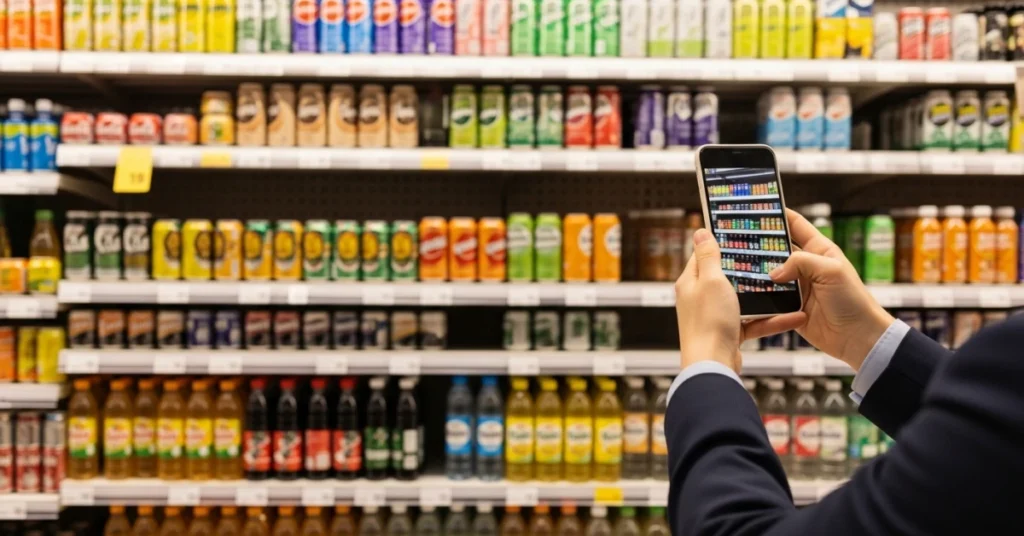
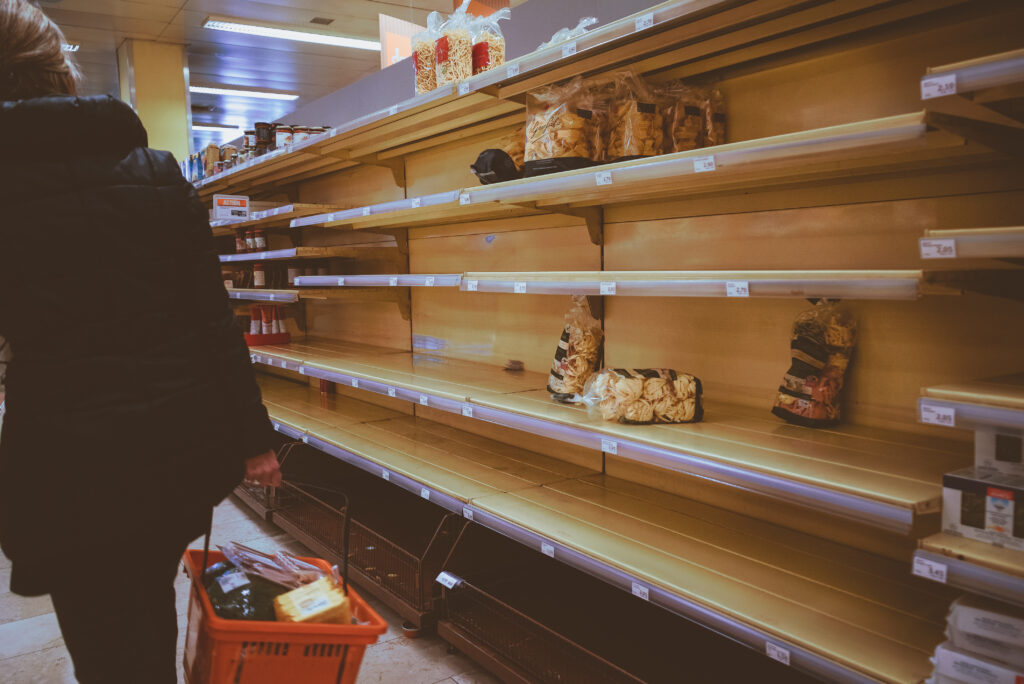
OSA issues show up as empty shelves (stockouts) and subtler problems like partial stockouts, where some SKUs, sizes, or flavors are missing. In these cases, customers either choose substitutes or leave without buying—for example, finding regular Coca-Cola but not Diet Coke.
Common OSA problems
- Stockouts: shelves are completely empty
- Partial stockouts: only certain variants are missing
- Planogram violations: products placed incorrectly, reducing visibility
- Phantom inventory: systems show stock that isn’t actually available
Identifying these patterns is key to improving OSA, as they point to supply chain and in-store execution issues that require systematic fixes.
What Are the Most Common Causes of OSA Issues?
Out-of-stock issues stem from failures across the supply chain, but day-to-day availability is often driven by in-store execution, not logistics alone. Weak inventory planning and slow replenishment cause shelves to empty faster than expected.
Key causes
- Inaccurate demand forecasting and delayed replenishment
- Poor supplier–retailer communication, especially during promotions
- Labor shortages that delay receiving and shelf stocking
- Execution gaps from weak training or poor task prioritization
Even with modern technology, these execution issues turn small disruptions into ongoing OSA problems, keeping shelves empty despite available inventory.
Why Is OSA Data Often Inaccurate?
OSA data often contains inaccuracies that hide real shelf problems. Manual counts done in a rush lead to errors, while factors like lighting, weather, and product placement reduce measurement accuracy.
Common data challenges
- Manual counting errors from rushed store checks
- Environmental factors affecting visibility and accuracy
- Legacy systems that don’t sync with modern tools
- Data delays of 24+ hours between systems and shelves
These gaps create a false sense of availability—systems show products in stock while shelves stay empty—misleading teams and weakening retail performance.
Who Is Affected by Poor On-Shelf Availability?
Poor on-shelf availability (OSA) triggers a chain reaction across retail. Shoppers get frustrated by empty shelves and often substitute, wait, or leave without buying—reducing satisfaction and loyalty.
Who is affected
- Customers: frustration, lost trust, abandoned purchases
- Retailers: lost sales and brand damage
- Suppliers: strained relationships, penalties, reduced shelf space
- Store teams: operational pressure and daily disruption
Because OSA reflects the real shelf experience—not warehouse stock—solving it requires coordinated action across the entire retail ecosystem.
How Can Retailers Improve On-Shelf Availability?
Improving on-shelf availability (OSA) requires the right mix of technology, clear processes, and strong collaboration. Real-time visibility helps teams act before shelves go empty.
What improves OSA
- Digital shelf monitoring and automated inventory alerts
- AI-based forecasting and continuous tracking (IoT, computer vision, mobile scans)
- Vendor-managed inventory to keep stock levels optimized
- Clear replenishment rules and focus on fast-moving items
- Better coordination between stores and distribution centers
When applied consistently, these actions typically deliver measurable OSA improvements within 3–6 months.
Conclusion
On-shelf availability focuses on whether products are visible and available to shoppers at the moment of purchase. When managed consistently, it supports better in-store execution and more reliable retail performance.
When OSA is managed correctly:
- Lost sales are reduced
- Customer experience becomes measurable
- Shelf execution becomes a controllable process
FieldPie helps retail teams gain real-time shelf visibility and identify execution gaps before they impact sales. Book a demo to see how on-shelf availability supports consistent in-store performance.