



Outside sales is built on face-to-face selling. Instead of working from an office, sales reps meet customers in the field, where real relationships are formed and deals take shape.
While digital channels continue to grow, many high-value and complex deals still depend on personal interaction. When trust matters, being there in person makes the difference.
So what makes this approach truly effective—and how can teams do it better today?
Key Characteristics of Outside Sales
This model is defined by independence and presence in the field. Sales reps work beyond the office, managing their own time, priorities, and customer interactions.
Industry insight 🚀
Top-performing teams succeed not by moving faster—but by staying consistent and focused over longer sales cycles.
What sets this model apart:
- Working independently outside the office
- High autonomy in route planning and account prioritization
- Longer sales cycles with multiple visits and follow-ups
- Success driven by trust, relationships, and consistency—not quick wins
Types of Outside Sales

This approach generally falls into two main models based on the target audience, each with distinct sales dynamics, relationship structures, and revenue characteristics.
B2B Outside Sales
This model focuses on selling products or services to other businesses, with reps managing a defined territory and a portfolio of accounts.
Customer relationships are long-term and strategic, with fewer visits but higher deal values and recurring or multi-year contracts.
Common industries include medical devices, industrial equipment, enterprise software, and corporate services, where trust and in-person expertise matter.
B2C Outside Sales (Canvassing)
This approach targets individual consumers and often involves door-to-door sales or scheduled home visits.
Sales cycles are short and frequently closed in a single interaction, requiring resilience and volume-driven execution due to higher rejection rates.
Typical sectors include solar energy, pest control, home cleaning, landscaping, and other residential services where local presence directly impacts conversion rates.
Outside Sales Income Potential
These roles are known for strong earning potential, largely driven by commission-based compensation structures.
Based on U.S. data projected for 2025:
- Average salary: ~$87,000
- Average commission: ~$22,000
- Top earners: $170,000+ annually
Higher income comes with greater responsibility. Professionals are accountable for territory growth, pipeline health, and long-term customer relationships.
How Many Customer Visits Do Field Sales Reps Make Per Day?
On average, a field sales representative completes 5.1 customer visits per day. Top performers operate very differently—the top 10% average 13.9 visits per day, showing how structured planning and discipline dramatically increase output.
Performance is closely tied to visit frequency and consistency over time.
What Percentage of Visits Focus on New Customers?

Not all outside sales visits are dedicated to new prospects.
- Average performers: 18% new customer visits
- Top 10% performers: 38%
- Bottom 10%: 2%
These figures highlight the importance of balancing existing account management with continuous prospecting. Growth stalls when new customer acquisition is neglected.
What Do Outside Sales Representatives Do?
The role of an outside sales representative extends far beyond selling.
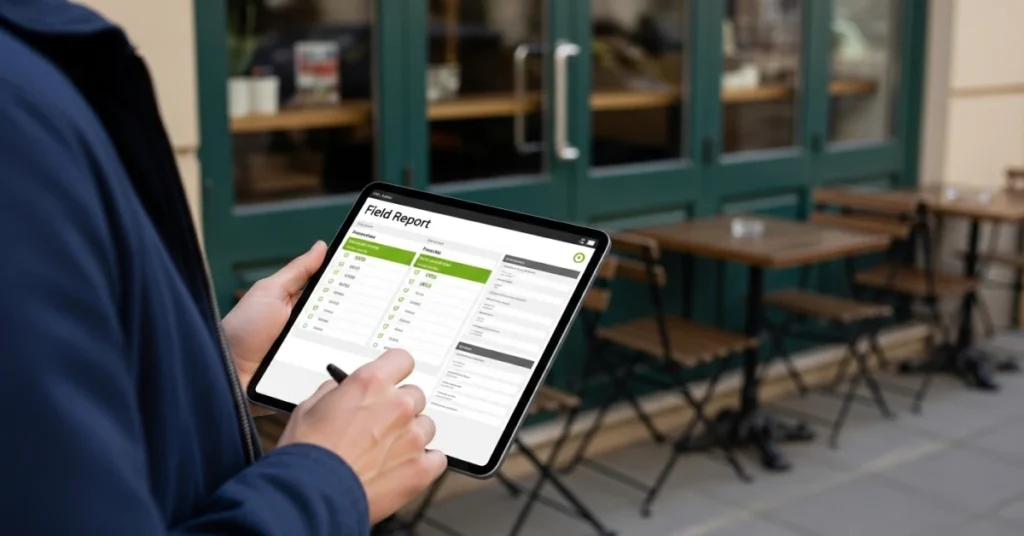
Daily activities include route planning, prospect and customer visits, in-person demos, and presentations. Reps also update CRM systems, record meeting notes, and manage follow-ups. Field conditions are unpredictable. Traffic, cancellations, and urgent customer requests require adaptability and quick decision-making.
Outside Sales Team Structures
Organizations structure their sales teams differently depending on company size.
Large enterprises often use layered models with territory managers, account executives, and technical specialists. Mid-sized companies rely on leaner teams with broader responsibilities.
Small businesses may operate with a few field reps supported by inside sales or operations teams. Regardless of scale, the most effective approach combines strong field execution with internal support.
Essential Tools for Outside Sales
Technology is a critical enabler of effective field selling.
- Mobile CRM: Real-time customer data updates from the field
- Scheduling & calendars: Better appointment management
- Route optimization: Reduced travel time and fuel costs
- AI-powered analytics: Insights into performance trends and customer behavior
- Digital forms: Less paperwork, more accuracy
- All-in-one field sales platforms: Higher efficiency and better coordination
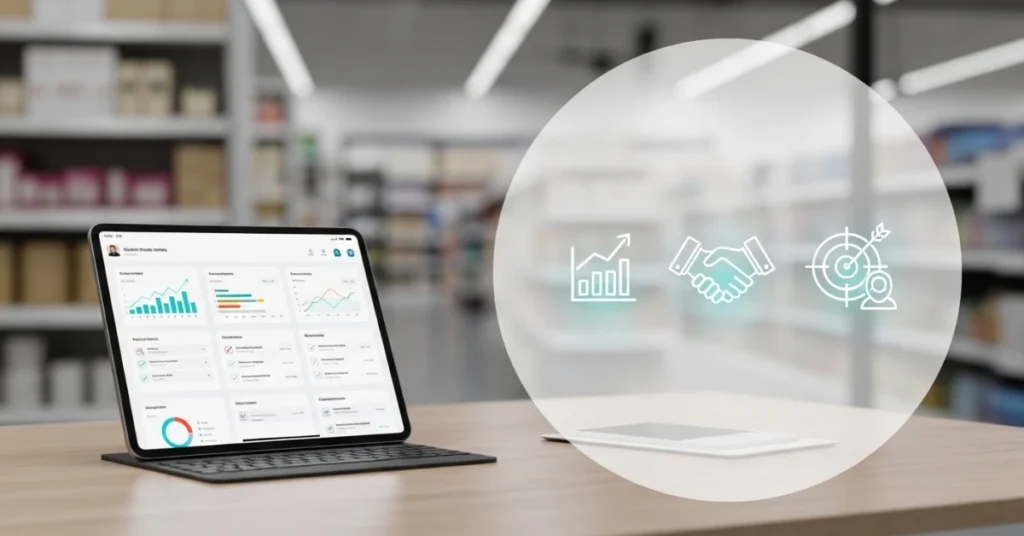
The right technology helps teams sell smarter, move faster, and operate more efficiently.
Industries That Rely on Outside Sales
Outside sales is widely used in industries where in-person interaction adds significant value.
Common examples include construction and equipment rental, medical and pharmaceutical sales, industrial manufacturing, HVAC and electrical distribution, agriculture, food services, telecom, and enterprise technology.
In these sectors, being physically present helps sales professionals better understand customer needs and environments.
How Field Sales Reps Spend Their Time
Research shows that only 33.5% of a field sales representative’s time is spent on actual selling.
The remaining time is consumed by travel, planning, administration, and reporting. High-performing outside sales reps minimize non-selling tasks through better tools and structured workflows.
Efficiency, not just effort, drives consistent success.
How to Improve Outside Sales Performance
Improving performance starts with route and time optimization. Reducing wasted travel time enables more customer interactions.
Increasing visit volume, tracking KPIs, and adopting the right digital tools all contribute to measurable gains. Structure, discipline, and consistency transform daily activity into sustainable growth.
When outside sales teams are supported by data and automation, productivity and revenue rise together.
Conclusion
Outside sales remains a key driver of revenue, even in a digital-first world. When supported by the right tools, teams close bigger deals and build stronger customer relationships.
FieldPie helps outside sales teams plan, track, and perform better in the field.