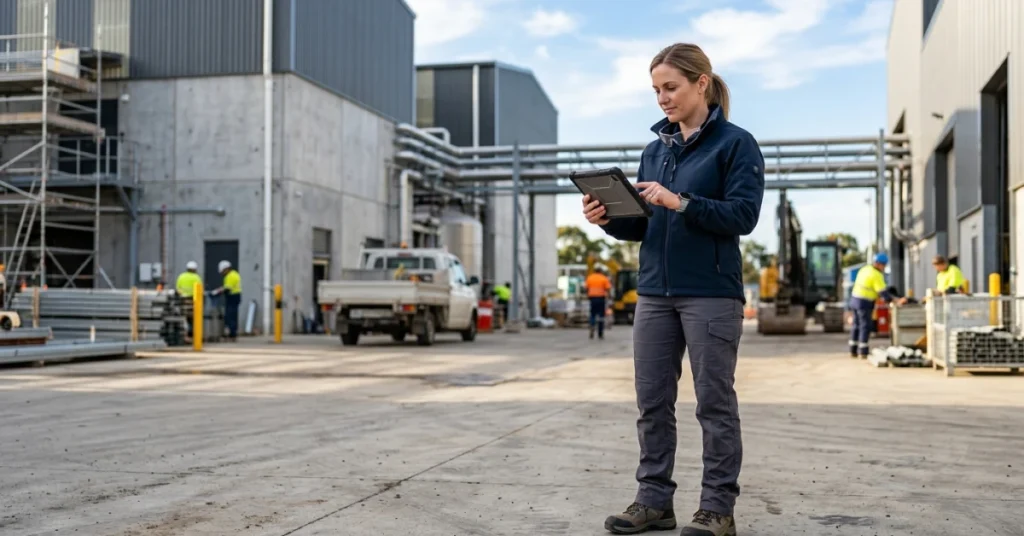



A safety audit is a systematic, documented review of a workplace’s safety management systems, procedures, and physical conditions to verify compliance with regulatory standards and identify gaps before they cause harm. Conducted by qualified auditors, it produces actionable findings that organizations must address within defined timeframes.
Why Safety Audits Are Critical for Risk Reduction
Safety audits are not just compliance exercises — they are one of the most effective ways to identify risks before they lead to incidents, injuries, or regulatory penalties. Organizations that implement structured audit programs consistently reduce workplace accidents, improve operational reliability, and strengthen their compliance posture.
In high-risk industries, failing to conduct regular audits doesn’t reduce costs — it increases exposure. Proactive audits ensure that safety systems are functioning as intended and that gaps are addressed before they escalate.
What Are the Main Types of Safety Audits?
Not all safety audits serve the same purpose. The right approach depends on your industry, risk level, and regulatory requirements.
- Compliance audits ensure legal standards like OSHA or ISO 45001 are met.
- Systems audits evaluate whether the overall safety framework is effective.
- Process audits focus on how tasks are performed in real operations.
- Product audits verify that outputs meet safety specifications.
The goal is not to choose a type — but to ensure every audit delivers actionable insights aligned with real risks.

What Are the 5 Key Components of a Safety Audit?
According to GRC Partners Asia’s analysis of audit frameworks, every effective safety audit must address five core components. Skipping any one of them creates a blind spot that undermines the entire exercise.
1. Documentation Review
Auditors examine written safety policies, standard operating procedures, training records, incident logs, and previous audit findings. If a corrective action was recommended in a prior audit but not implemented, that gap becomes a priority finding.
2. Physical Site Walkthrough
No audit is complete without boots on the ground. Auditors inspect the actual workplace — checking equipment guarding, housekeeping standards, emergency exits, PPE availability, and hazardous material storage.
3. Worker Interviews
This is where auditors learn what is actually happening versus what the paperwork says. Workers should be able to report hazards without fear of reprisal, and their responses often reveal systemic issues that documentation conceals.
4. Risk Assessment Review
Auditors evaluate whether the organization’s hazard identification and risk assessment processes are rigorous. This includes reviewing job hazard analyses (JHAs), Material Safety Data Sheets (MSDS/SDS), and any risk registers maintained by the company.
5. Corrective Action Tracking
An audit that produces findings but no follow-through has zero value. Auditors verify that previous corrective actions were fully implemented and that a tracking system exists to close out new findings on schedule.
How to Conduct a Safety Audit in 8 Steps
The following process is adapted from Altius Group’s evidence-based 8-step framework, which is widely referenced across the health safety consulting community.
Step 1: Define the Audit Scope
Decide which sites, processes, and standards will be audited.
Step 2: Assemble the Audit Team
Select qualified and objective auditors.
Step 3: Develop or Select an Audit Checklist
Use a standardized checklist aligned with regulations.
Step 4: Notify Stakeholders and Schedule the Audit
Notify stakeholders and set the timeline.
Step 5: Conduct the Opening Meeting
Align on scope, purpose, and expectations.
Step 6: Execute the Audit
Review documents, inspect the site, and interview workers.
Step 7: Conduct the Closing Meeting
Share key findings with management.
Step 8: Issue the Audit Report and Corrective Action Plan
Document findings, assign actions, and track completion.
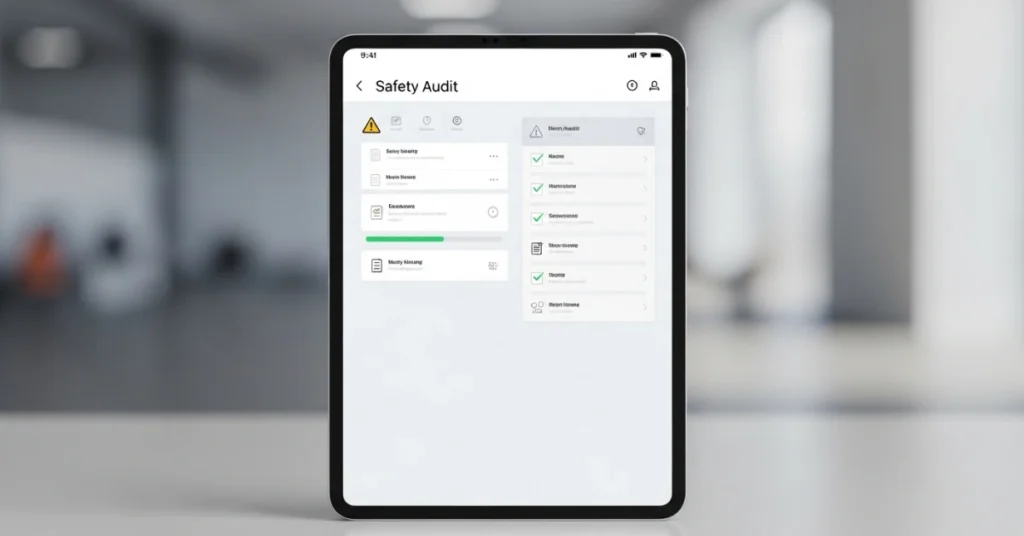
For field teams managing multiple sites simultaneously, a digital field operations platform can automate corrective action assignment, track completion in real time, and flag overdue items before they become regulatory violations.
Safety Audit Checklist: 30 Essential Items
This checklist covers the core areas every safety audit should address. It is not exhaustive — organizations should supplement it with industry-specific requirements.
Management Leadership
- Safety policy is current and approved
- KPIs and goals are defined and tracked
- Responsibilities are clearly assigned
Worker Participation
- Hazard reporting system is in place
- Safety training is completed regularly
- Workers can report issues without risk
Hazard Identification & Risk Control
- Risk assessments are up to date
- High-risk procedures (LOTO, confined space, etc.) are applied
- Controls are implemented and reviewed
Emergency Preparedness
- Emergency plan is current and tested
- Exits are clear and properly marked
- Safety equipment is available and inspected
Equipment & Workplace Conditions
- Machinery safety measures are in place
- Work areas are clean, safe, and well-lit
- Equipment inspections are up to date
Incident & Record Management
- Incidents are properly recorded
- Root cause analysis is completed
- Corrective actions are tracked and closed
💡 Tip
Most teams don’t need 30 checklist items — they need the right ones. Focus on the areas with the highest risk and impact.
What Are the Most Common Safety Audit Findings?
Understanding where organizations typically fail helps teams prioritize their pre-audit preparation. As noted in Avatour’s comprehensive guide to safety audits, the following gaps appear repeatedly across industries:
- Incomplete or outdated documentation — safety procedures that have not been reviewed since their original implementation date
- Training records that cannot be produced — workers received training, but no one kept the sign-in sheet
- Corrective actions not implemented — findings from previous audits remain open months or years later
- Inadequate hazard identification — risk assessments that are superficial or do not reflect actual work conditions
- Worker participation gaps — safety committees exist on paper, but workers do not know how to report hazards
These findings are not isolated to small companies. Large, well-resourced organizations fall into the same traps when safety culture has not been embedded at every level.
How Often Should Safety Audits Be Conducted?
Frequency depends on three factors: regulatory requirements, industry risk profile, and the organization’s safety maturity.
| Organization Type | Recommended Audit Frequency |
|---|---|
| High-hazard (construction, mining, chemical) | Quarterly or semi-annual |
| Medium-hazard (manufacturing, warehousing, healthcare) | Semi-annual or annual |
| Low-hazard (office-based, retail) | Annual |
| Post-incident or regulatory mandate | Immediate or as directed |
| New site or significant process change | Before operations commence |
ISO 45001:2018, the international standard for occupational health and safety management systems, requires organizations to conduct internal audits at planned intervals — and to ensure audit programs consider the risk significance of the processes involved.
For organizations managing distributed workforces, scheduling and tracking audit cycles across multiple locations is significantly easier with purpose-built software than with spreadsheets.
Who Should Conduct a Safety Audit?
The answer depends on the audit type and its purpose.
Internal auditors are appropriate for routine systems audits and pre-audit gap assessments. They understand the organization’s culture and processes but may lack objectivity or technical expertise in specialized areas.
External auditors bring independence, specialized credentials (Certified Safety Professional, NEBOSH Diploma, ISO 45001 Lead Auditor), and benchmark data from comparable organizations. They are the right choice for formal compliance audits and any audit that may be scrutinized by regulators or insurers.
Third-party certification bodies conduct audits specifically to certify conformance with ISO 45001 or other management system standards. These audits carry the highest regulatory and reputational weight.
Workers should be involved in every audit type — not as auditors, but as interviewees and participants. As OSHA’s Safety and Health Program Audit Tool explicitly states, workers must have the authority to initiate a temporary suspension of any work activity they believe to be unsafe.
For organizations building internal audit capability, developing a structured safety training program for field supervisors creates a pipeline of competent internal auditors over time.
How to Build a Safety Audit Program That Actually Works
A single audit is a snapshot. A program is a system. Here is what separates organizations with effective audit programs from those that treat audits as an annual nuisance:
1. Align audit types to risk: High-risk areas need more frequent and detailed audits.
2. Separate auditing from enforcement: Use audits to identify issues, not to enforce discipline.
3. Close the loop, every time: Assign owners, set deadlines, and follow up on every finding.
4. Use findings to drive training: Recurring issues often point to training gaps.
5. Report audit results to leadership: Share audit insights with leadership to drive decisions.
6. Benchmark against peers: Compare results with industry standards to identify gaps.
For health and safety managers responsible for multiple sites, integrating audit data with broader workforce performance metrics provides the executive-level visibility that drives sustained investment in safety.

Frequently Asked Questions (FAQ)
What is the difference between a safety audit and a safety inspection?
A safety audit evaluates the entire safety management system, including policies, procedures, and compliance. A safety inspection focuses on specific conditions or equipment at a given time. Audits are broader, less frequent, and carry greater regulatory weight.
How long does a safety audit take?
It depends on scope and size. A single department audit may take 1–2 days, while a full facility audit can take 1–2 weeks. Well-organized documentation and digital tools can significantly reduce audit time.
What happens if a company fails a safety audit?
A failed audit does not always lead to penalties. However, repeated unresolved findings may be treated as non-compliance. The priority is to fix issues quickly, document actions, and complete a follow-up audit.
Conclusion
Safety audits are not just about compliance — they are a critical tool for reducing risk, improving operations, and preventing incidents before they happen. Organizations that treat audits as a continuous, structured process consistently achieve stronger safety performance and fewer recurring issues.
The key is not just conducting audits, but acting on the findings. Clear processes, focused checklists, and consistent follow-up turn audits from a routine task into a real driver of improvement.
As operations grow and complexity increases, manual audit processes become harder to manage. Using digital tools to standardize audits, track corrective actions, and gain real-time visibility ensures that every audit leads to measurable results — not just documentation.