



Retail loss prevention is the set of strategies, technologies, and operational practices retailers use to reduce inventory shrinkage, theft, fraud, and administrative errors — protecting profit margins and ensuring accurate stock levels across the entire supply chain.
What Is Retail Loss Prevention?
Retail loss prevention encompasses every policy and tool a retailer deploys to stop inventory from disappearing before it can be sold. It covers external theft, employee theft, vendor fraud, and process errors. According to the National Retail Federation’s annual shrink report, shrink costs the U.S. retail industry roughly $112 billion per year — making structured prevention programs not optional, but essential.
Why Does Shrinkage Still Cost Retailers Billions?
Most retail organizations underestimate the complexity of shrinkage. It rarely comes from one source. Industry data consistently shows that losses break down across four distinct categories:
| Loss Category | Share of Total Shrink | Primary Cause |
|---|---|---|
| External Theft (Shoplifting) | ~36% | Opportunistic & organized retail crime |
| Employee/Internal Theft | ~29% | Dishonest staff, collusion, sweethearting |
| Administrative & Process Error | ~21% | Mislabeling, receiving errors, paperwork mistakes |
| Vendor/Supplier Fraud | ~6% | Short shipments, invoice manipulation |
| Unknown/Other | ~8% | Undetected or unclassified losses |
Each category demands a different response. Lumping them together under one generic security policy is one of the most common — and costly — mistakes in the industry.

What Are the Core Pillars of an Effective Loss Prevention Program?
Strong programs don’t rely on a single tactic. They layer multiple defenses across people, processes, and technology. Here are the five foundational pillars every retailer should build on:
1. Physical Security and Surveillance Infrastructure
A visible, well-placed surveillance network is the first line of defense. Modern surveillance systems have moved far beyond passive recording. Today’s AI-powered cameras can detect suspicious behavior in real time, flag unattended bags, and track movement patterns across the sales floor.
Key components include:
- High-definition CCTV cameras covering all entry/exit points, cash registers, and stock rooms
- Electronic Article Surveillance (EAS) tags and pedestals at store exits
- Access control systems limiting back-of-house entry to authorized staff only
- Mirrors and adequate lighting in blind spots
As Pelco’s loss prevention research highlights, layering surveillance with behavioral analytics dramatically increases deterrence — not just detection.
2. Employee Training and Internal Controls
Internal theft represents nearly 30% of all shrink. The most effective countermeasure isn’t surveillance — it’s culture. Staff who understand why loss prevention matters, and who feel invested in the business, are far less likely to steal or cut corners.
Effective internal controls for staff include:
- Mandatory onboarding training covering loss prevention policies
- Clear employee code-of-conduct agreements signed at hire
- Two-employee rules for cash handling and high-value stock movements
- Regular, unannounced cash register audits
- Whistleblower hotlines that allow staff to report concerns anonymously
When management models ethical behavior consistently, it sets the standard the entire team follows. Investing in employee engagement is, in practice, a loss prevention investment.
3. Inventory Management and Stock Accuracy
You cannot prevent losses you cannot measure. Accurate, real-time stock data is the backbone of any serious loss prevention program. Retailers who conduct frequent cycle counts — rather than one annual inventory — catch discrepancies weeks earlier, limiting total exposure.
Smart inventory management practices include:
- RFID-based stock tracking for high-value merchandise
- Regular cycle counts segmented by shrink-risk category
- Automated receiving reconciliation to catch vendor short-shipments
- Perpetual inventory systems that flag sudden, unexplained stock drops
RGIS inventory specialists note that retailers who integrate frequent stocktaking with their loss prevention strategy consistently report lower shrink rates than those who treat inventory management as a separate function.
4. Technology and AI-Driven Analytics
AI is transforming what’s possible in retail loss prevention. Where traditional systems required a human to watch every camera feed, modern AI platforms analyze thousands of data points simultaneously — identifying anomalies that no human team could catch at scale.
Current AI applications in loss prevention include:
- Self-checkout fraud detection (identifying scan avoidance and item substitution)
- Point-of-sale exception reporting (flagging unusual transaction patterns by employee or register)
- Facial recognition and repeat-offender alerts (where legally permissible)
- Predictive analytics identifying high-risk store hours, zones, and staff behaviors
Smart retailers treat AI not as a replacement for trained staff, but as a force multiplier that lets their teams focus on confirmed threats rather than chasing false alarms. For teams managing multiple locations, integrating a field operations management platform ensures that insights from AI tools translate into real-world action across every site.
5. Supplier and Vendor Verification
Vendor fraud is the most underreported loss category in the industry. Short shipments, phantom deliveries, and invoice manipulation can bleed a retailer’s margins for months before anyone notices. Robust receiving practices close this gap.
Best practices include:
- Blind receiving: staff count and record stock before checking the supplier’s invoice
- Cross-referencing purchase orders, delivery notes, and invoices on every shipment
- Rotating receiving staff to prevent collusion with specific drivers or partners
- Periodic third-party audits of vendor invoices and delivery records
How Do You Build a Retail Loss Prevention Checklist?
Translating strategy into daily operations requires a practical checklist that management and staff can execute consistently. Below is a field-ready framework organized by frequency.
Daily Checklist
- Confirm all surveillance cameras are operational and recording
- Verify EAS pedestals are powered and functioning at all exits
- Conduct opening and closing stock checks on high-shrink items
- Review prior day’s POS exception reports for anomalies
- Ensure back-of-house access is restricted and logged
- Brief staff on any active theft patterns or alerts from industry partners
Weekly Checklist
- Audit cash register totals against POS system records
- Review surveillance footage from flagged incidents
- Conduct a spot cycle count on one or more high-risk stock categories
- Verify all EAS tags are properly applied to merchandise
- Check that all staff have completed required loss prevention training modules
- Review and update the approved vendor and partners list
Monthly Checklist
- Run a full shrink analysis by category and department
- Review employee access logs for any unauthorized back-of-house entries
- Conduct a blind receiving audit on at least two vendor accounts
- Test all alarm systems and emergency response procedures
- Review and update loss prevention policies with management
- Benchmark shrink rates against industry averages and prior periods
What Role Does Employee Behavior Play in Loss Prevention?
The relationship between staff behavior and shrink is direct and well-documented. According to DTiQ’s comprehensive retail loss prevention guide, internal theft is often enabled not by malicious planning but by weak controls and a culture that signals low accountability.
Three behavioral factors consistently predict higher internal theft risk:
- Low employee engagement — Staff who feel undervalued are statistically more likely to rationalize theft.
- Inconsistent policy enforcement — When management applies rules selectively, staff quickly identify the gaps.
- Lack of anonymous reporting channels — Without a safe way to report colleagues, honest employees stay silent.
The solution is not surveillance alone. It is building a workplace where staff feel respected, where policies are applied consistently, and where the entire team understands that shrink directly affects wages, hours, and store viability. Retailers who link loss prevention metrics to store-level performance bonuses consistently see stronger engagement and lower shrink.
For multi-location retailers, maintaining consistent standards across sites is a persistent challenge. Using a centralized compliance and audit management tool lets management identify which locations are falling behind on loss prevention practices before losses accumulate.
How Is Organized Retail Crime (ORC) Different From Ordinary Shoplifting?
Organized Retail Crime (ORC) is a structured, professional theft operation — not an opportunistic grab-and-go. ORC groups often use sophisticated techniques: booster bags lined with foil to defeat EAS systems, coordinated distraction tactics, and resale networks that move stolen merchandise through online marketplaces.
The FBI and the Retail Industry Leaders Association (RILA) both classify ORC as a serious federal issue. Key distinctions from ordinary shoplifting:
- Scale: ORC groups typically target multiple stores in a region simultaneously.
- Coordination: Roles are divided — lookouts, boosters, fences — with clear operational structure.
- Merchandise targeting: ORC groups focus on high-value, easily resalable items: razor blades, infant formula, over-the-counter medications, designer apparel.
- Recidivism: The same individuals appear across multiple incidents at different locations.
Combating ORC requires cross-retailer intelligence sharing. Industry bodies like the Loss Prevention Research Council (LPRC) and regional retail crime networks allow partners to share suspect data, surveillance images, and incident patterns — enabling a coordinated response that no single retailer can mount alone.
How Should Retailers Measure Loss Prevention Program Effectiveness?
Measurement transforms loss prevention from a cost center into a managed function. Key performance indicators (KPIs) every loss prevention program should track:
| KPI | What It Measures | Target Benchmark |
|---|---|---|
| Shrink Rate (% of Sales) | Total inventory loss as a share of revenue | Below 1.5% (industry average ~1.6%) |
| Apprehension Rate | Theft incidents resulting in apprehension | Track trend, not absolute number |
| Recovery Rate | Value of stolen merchandise recovered | Maximize; track quarterly |
| Incident Report Accuracy | Completeness and timeliness of filed reports | 100% within 24 hours |
| Training Completion Rate | % of staff who have completed LP training | 100% within 30 days of hire |
| Audit Compliance Score | % of checklist items passed per audit | Target 95%+ across all locations |
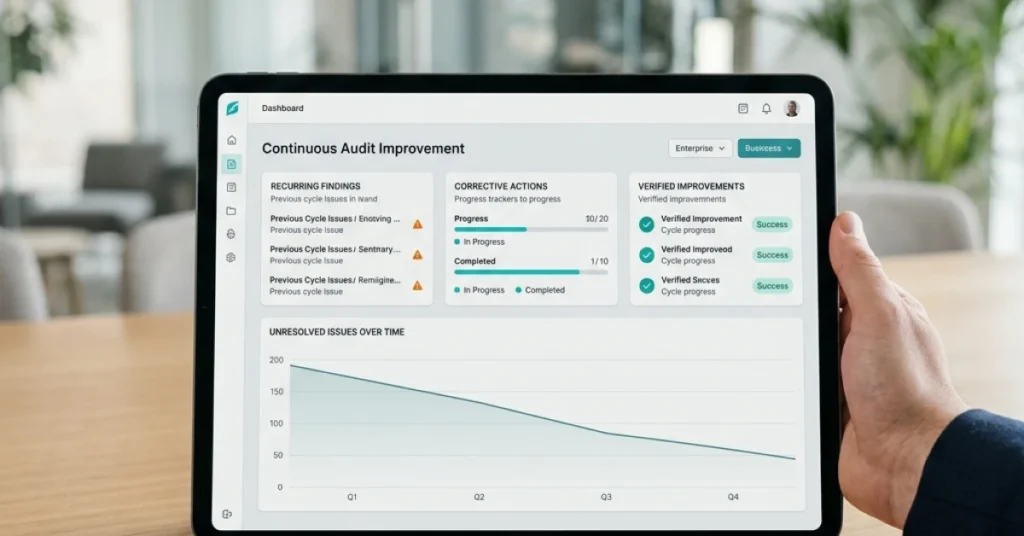
Sharing these insights with senior management and operations partners on a regular cadence keeps loss prevention integrated with broader business strategy — rather than siloed as a security function. When teams use a real-time field reporting tool to capture audit data, these KPIs populate automatically, eliminating manual spreadsheet work.

How Can Multi-Location Retailers Standardize Loss Prevention Across Sites?
Consistency is the hardest problem in multi-location retail. A strong loss prevention policy in the flagship store means nothing if regional locations are running ad hoc practices. The solution is systematic standardization through technology and clear accountability structures.
Effective multi-location management practices include:
- Deploying uniform audit checklists across every location using a digital field management platform
- Assigning dedicated loss prevention staff or regional managers with clear site-level accountability
- Using centralized dashboards to compare shrink rates, audit scores, and incident frequency across the network
- Building a culture where store managers treat loss prevention scores as a core operational metric — not a compliance checkbox
FieldPie’s mobile-first platform allows loss prevention managers to deploy standardized audit templates to field teams across every retail location, capture real-time results, and receive automated alerts when a site falls below threshold — all without a single spreadsheet.
Conclusion
Retail loss prevention is not a security expense — it is a profit protection strategy. Every percentage point of shrink reduction flows directly to the bottom line. In 2026, the retailers winning this fight are those who combine rigorous operational practices with smart technology, invest in staff engagement and training, and treat loss prevention as a continuous, data-driven discipline rather than a reactive measure.
The foundation is consistent execution: daily checklists, trained staff, accurate stock data, and AI-powered surveillance working together. The multiplier is technology that connects field activity to management insights in real time — ensuring that every location, every day, operates to the same standard.