



Brand consistency in retail stores is the practice of delivering a uniform visual identity, messaging, and customer experience across every physical location — ensuring that shoppers encounter the same logo placement, color palette, signage, store layout, and service standards whether they walk into a flagship location or a small-town outlet.
Why Does Brand Consistency in Retail Stores Matter in 2026?
Retail is built on repeat business. Studies consistently show that loyal customers account for the majority of revenue in multi-location retail chains — and that loyalty is anchored in predictability. When your brand identity looks and feels different from one store to the next, customers lose confidence.
According to research published by Brandpoint Services, most retail business comes from repeat customers who return specifically because they trust the experience will be consistent. Break that trust once, and recovery is expensive.
Here’s what inconsistency costs you in practice:
- Lost recognition: Shoppers can’t reliably identify your brand in a crowded retail environment.
- Eroded trust: A store that looks or feels “off” signals poor management.
- Weaker marketing ROI: Every marketing dollar you spend is undermined if the in-store reality doesn’t match the advertised promise.
- Franchise compliance risk: For franchise networks, inconsistency creates legal and reputational exposure.
The business case is clear. Consistent branding across locations strengthens brand recognition, supports customer loyalty, and directly improves revenue per location.
What Are the Core Elements of Retail Brand Consistency?
Achieving consistency isn’t just about logo placement. It spans every sensory and operational touchpoint a customer encounters. The table below maps each element to its execution priority:
| Brand Element | What It Covers | Execution Priority |
|---|---|---|
| Visual Identity | Logo, color palette, typography, signage | Critical |
| Store Layout & Fixtures | Planogram compliance, product placement, displays | High |
| In-Store Communication | Promotional materials, POS displays, digital signage | High |
| Staff Presentation | Uniforms, grooming standards, service scripts | High |
| Customer Service Standards | Greeting protocols, complaint handling, checkout experience | Medium-High |
| Sensory Branding | In-store music, scent, lighting temperature | Medium |
| Digital-Physical Alignment | Pricing, promotions matching online/app experience | Critical |
As Visual ID’s research confirms, a uniform brand identity — including logo placement, color schemes, and signage — ensures customers can easily recognize your brand regardless of which location they visit. Familiarity fosters trust and differentiates your business from competitors.

How Can Retailers Build a Scalable Brand Consistency Framework?
Step 1: Create a Comprehensive Brand Style Guide
Your brand style guide is the non-negotiable foundation. It must include:
- Exact Pantone/CMYK/RGB color codes — not approximations
- Logo usage rules: minimum sizes, clear space, prohibited alterations
- Typography hierarchy: primary and secondary typefaces, weights, and sizes
- Photography and imagery guidelines
- Tone of voice standards for in-store signage copy
The guide should be a living document, version-controlled and accessible to every store manager, vendor, and regional director. A PDF emailed once a year is not a brand management system.
Step 2: Standardize Physical Store Designs
Every new store opening and refit should follow a master store design template. This covers fixture specifications, lighting plans, shelf planograms, and display zone mapping. Retailers with strong execution discipline — like Apple, Starbucks, and Sephora — treat store designs as operational documents, not aspirational mood boards.
For home improvement and specialty retail, where store layouts vary significantly by location size, tiered design templates (Tier 1: flagship, Tier 2: mid-format, Tier 3: small format) allow local adaptation while preserving core brand identity. If you’re scaling a home retail concept, understanding how store layout drives customer behavior is essential before locking in your design standards.
Step 3: Vet and Manage Vendors Rigorously
Signage, fixtures, and marketing materials are only as consistent as the vendors producing them. Establish:
- Approved vendor lists with pre-qualified suppliers for each material category
- Mandatory sample approval processes before full production runs
- Color-matching protocols using physical Pantone swatches, not screen-based approvals
- Clear SLAs covering production quality, delivery timelines, and replacement services
Vendor management is where many retail branding programs quietly fail. A single rogue print supplier producing slightly off-color signage across 50 stores creates a visible inconsistency that undermines months of brand investment.
Step 4: Train Staff on Brand Standards
Your staff are the human face of your brand identity. Training must go beyond product knowledge to include:
- Why brand consistency matters (not just what the rules are)
- Uniform and grooming standards with photographic references
- Service scripts aligned to your brand’s tone — whether that’s warm and conversational or precise and expert
- How to handle off-brand requests from customers or local managers
For multi-location retailers, a digital employee training and onboarding system eliminates the inconsistency that comes from regional trainers interpreting standards differently.
Step 5: Implement Regular Brand Audits
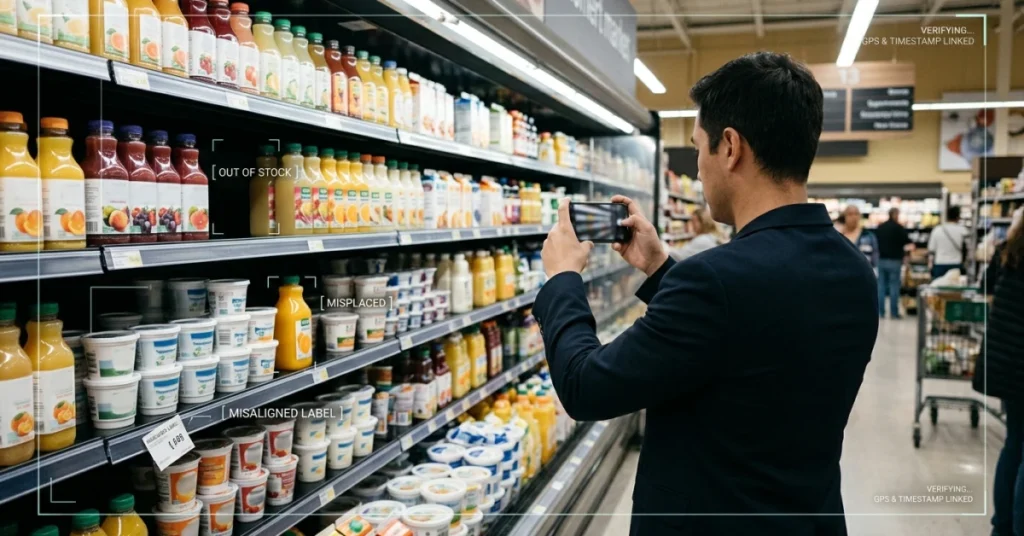
Brand guidelines mean nothing without enforcement. Scheduled and surprise audits — conducted by regional managers or dedicated brand compliance teams — should evaluate:
- Signage accuracy and placement
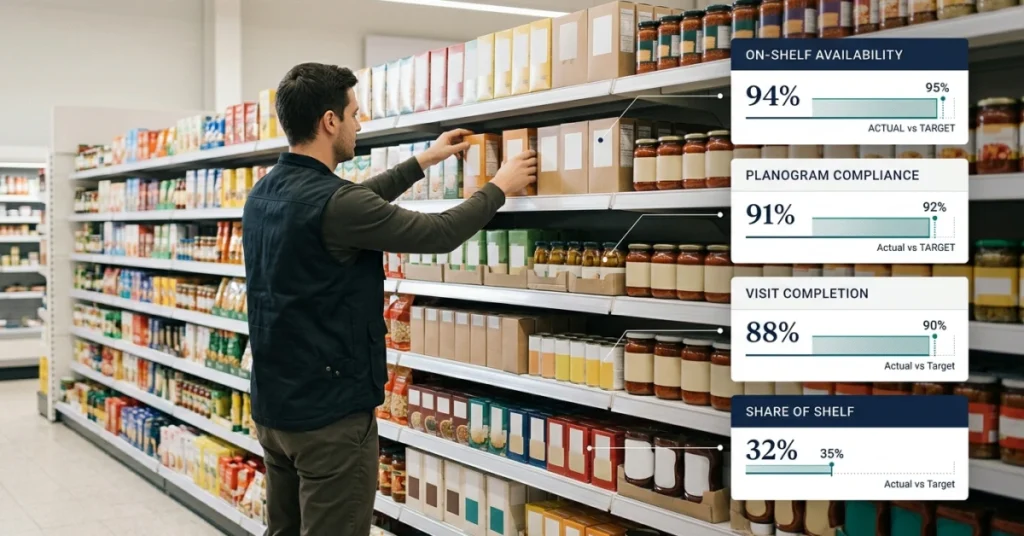
- Planogram compliance
- Uniform and staff presentation
- POS material currency (outdated promotions are a common failure point)
- Digital display content alignment
Audit frequency matters. Monthly is a minimum for high-traffic locations; quarterly is acceptable for lower-volume stores. The audit data should feed into a management dashboard that flags non-compliance by location, region, and category.
How Do Franchise Networks Maintain Brand Standards at Scale?
Franchise management adds a layer of complexity that corporate-owned retail chains don’t face. Franchisees are independent operators — they have financial skin in the game, but they’re also more likely to make local adaptations that deviate from brand standards when they believe it will drive sales.
Effective franchise brand management requires:
- Franchise agreements with explicit brand compliance clauses — including audit rights, corrective action timelines, and financial penalties for persistent non-compliance
- Franchisee brand training programs delivered at onboarding and refreshed annually
- Dedicated franchise support teams who function as brand partners, not just inspectors
- Centralized procurement for brand-critical materials — removing the opportunity for franchisees to source off-spec alternatives
The most successful franchise brands treat consistency as a shared commercial interest, not a top-down mandate. When franchisees understand that brand consistency directly protects their own home investment in the business, compliance rates improve significantly.
For franchise operations teams building out their compliance infrastructure, a franchise audit and compliance workflow tool can systematize what is otherwise a chaotic, relationship-dependent process.
Frequently Asked Questions (FAQ)
What is brand consistency in retail stores, and why does it matter?
Brand consistency in retail stores means delivering the same visual identity, service standards, and customer experience across all locations. It matters because consistent experiences build trust — and trust drives repeat purchases, loyalty, and brand recognition.
How often should retail brands conduct brand compliance audits?
High-traffic or flagship stores should be audited monthly, while lower-volume locations can be reviewed quarterly. Surprise audits are more effective than scheduled ones, and results should be tracked in a centralized dashboard.
How can franchise networks enforce brand consistency without alienating franchisees?
Combine clear rules with strong support. Define audit rights and timelines, but act as a partner — not just an enforcer. Centralized procurement, training, and real-time communication help prevent off-brand decisions.
Conclusion
Brand consistency in retail stores is not a design exercise — it’s an operational discipline that directly determines whether your brand builds equity or erodes it with every customer interaction. The brands that get this right in 2026 treat consistency as a measurable standard: they audit it, track it, and hold their teams accountable to it with the same rigor they apply to sales performance.
The framework is straightforward: build a comprehensive brand style guide, standardize your store designs and vendor relationships, train your staff on the why behind brand standards, and implement technology that gives your management team real-time visibility into execution quality across every location.
Whether you’re managing five locations or five hundred, the principles don’t change — only the tools required to enforce them at scale do.