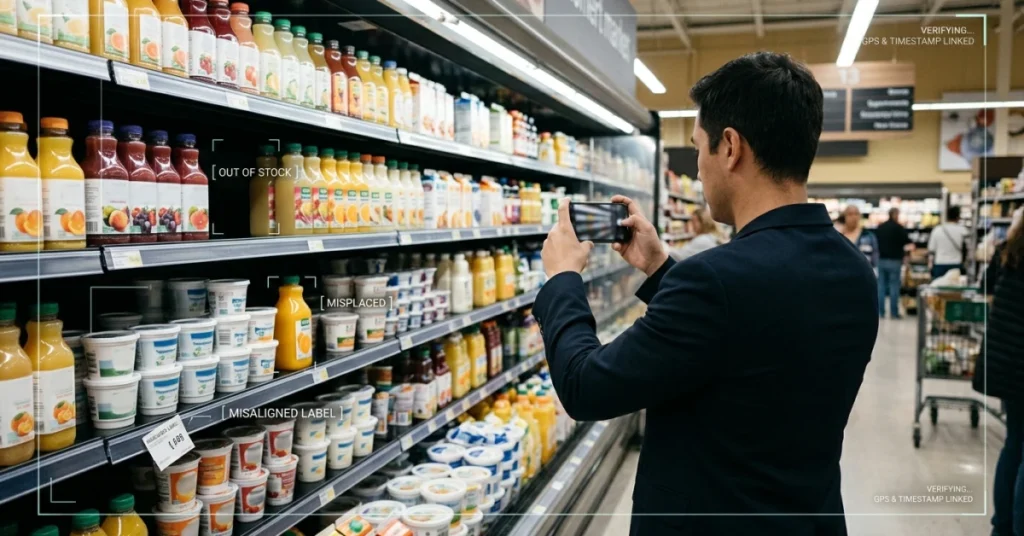




Retail compliance is a business’s full adherence to the laws, regulations, and standards governing retail operations — covering consumer protection, labor laws, product safety, data privacy, environmental rules, and workplace health and safety. It protects consumers, employees, and the company itself from legal and financial risk.
What Is Retail Compliance?
Retail compliance refers to the systematic process by which retail businesses conform to the regulatory requirements set by federal, state, and local authorities — as well as industry-specific standards — across every function of their operations. According to retail compliance guide, this multifaceted framework spans occupational health and safety, consumer protection, labor laws, data privacy, and environmental preservation.
In short: if your store sells it, employs someone, or collects a customer’s data, a regulation almost certainly governs it.
Why Does Retail Compliance Matter in 2026?
The regulatory environment has never been more complex. Globalization, e-commerce growth, and evolving data privacy laws have layered new obligations on top of existing ones. Non-compliance carries serious consequences across the retail industry:
- Financial penalties: OSHA fines can reach $16,131 per violation; repeat violations climb to $161,323.
- Litigation exposure: Class-action suits under consumer protection laws like the FTC Act cost retailers millions annually.
- License revocation: State-level regulatory bodies can suspend or revoke operating licenses.
- Reputational damage: A single publicized violation erodes consumer trust — often permanently.
- Supply chain disruption: Non-compliant fulfillment practices trigger chargebacks and retailer fines from major buyers.
As RILA’s Retail Compliance Center notes, building strong retail compliance programs is no longer optional — it is a baseline business requirement.

What Are the Key Areas of Retail Compliance?
1. Labor Law and Employment Regulations
Labor law compliance is the most operationally intensive area for most retailers. Core obligations include:
- Fair Labor Standards Act (FLSA): Governs minimum wage, overtime pay, and recordkeeping for employees.
- OSHA regulations: Mandate safe working conditions across every store location.
- Equal Employment Opportunity (EEO) laws: Prohibit discrimination in hiring, training, and promotion.
- Family and Medical Leave Act (FMLA): Requires eligible employees to receive up to 12 weeks of unpaid leave.
- State-specific wage laws: Many states — California, New York, Washington — exceed federal minimums, requiring location-by-location policy management.
Retailers operating across multiple locations must track jurisdiction-specific rules simultaneously. A policy compliant in Texas may violate California labor laws.
2. Consumer Protection Laws
Consumer protection regulations require retailers to deal honestly and fairly with customers. Key laws include:
- FTC Act (15 U.S.C. § 45): Prohibits unfair or deceptive trade practices.
- Truth in Lending Act (TILA): Governs credit disclosures for retail financing.
- Magnuson-Moss Warranty Act: Sets standards for written product warranties.
- State lemon laws and return policy requirements: Vary significantly across jurisdictions.
Transparent pricing, accurate advertising, and clear return policies are not just good business — they are legal requirements.
3. Product Safety Regulations
The Consumer Product Safety Commission (CPSC) enforces federal product safety standards. Retailers must:
- Verify that products meet CPSC standards before placing them on store shelves.
- Report known product hazards within 24 hours under Section 15(b) of the CPSA.
- Maintain documentation of supplier certifications.
- Pull recalled items from inventory immediately.
For the retail industry, product safety failures are among the most costly. The CPSC issued 286 recalls in fiscal year 2023, each carrying potential civil penalties up to $15 million per violation series.
4. Data Privacy and Security Compliance
Retailers collect vast amounts of customer data — purchase history, payment information, location data, and loyalty program details. Applicable laws include:
- California Consumer Privacy Act (CCPA/CPRA): Grants California residents the right to know, delete, and opt out of data sales.
- Payment Card Industry Data Security Standard (PCI DSS): Governs how retailers store and transmit cardholder data.
- State-level privacy laws: Virginia (VCDPA), Colorado (CPA), Connecticut (CTDPA), and others are now in effect.
- FTC Safeguards Rule: Applies to retailers offering consumer financing.
A single data breach costs retailers an average of $4.45 million, according to IBM’s 2023 Cost of a Data Breach Report.
5. Environmental Compliance
Environmental regulations affect store operations, packaging, and supply chain practices. Key regulatory frameworks include:
- EPA regulations: Cover waste disposal, hazardous materials handling, and air quality at distribution centers.
- Extended Producer Responsibility (EPR) laws: Now active in California, Oregon, Colorado, and Maine, requiring retailers to fund packaging take-back programs.
- Energy efficiency mandates: Building codes in many jurisdictions require specific lighting and HVAC standards.
- Single-use plastics bans: Active across more than a dozen states.
The RILA Retail Compliance Center provides state-by-state compliance matrices specifically for environmental and packaging regulations — an essential resource for multi-state operators.
6. Fulfillment and Supply Chain Compliance
Fulfillment compliance governs how products move from supplier to shelf to customer. For B2B sellers and vendors, this is especially high-stakes. As Fidelity Fulfilment explains, major retailers impose strict vendor compliance programs with specific requirements for:
- Labeling and barcode standards (GS1, UPC, GTIN)
- Packing and carton specifications
- Advance Ship Notices (ASNs) and EDI transaction sets
- On-time, in-full (OTIF) delivery metrics
- Routing guide adherence
Failure to meet fulfillment requirements triggers chargebacks — typically 2–3% of invoice value per violation — and risks delistment from major retail accounts.
What Are the Biggest Retail Compliance Challenges?
Managing Compliance Across Multiple Locations
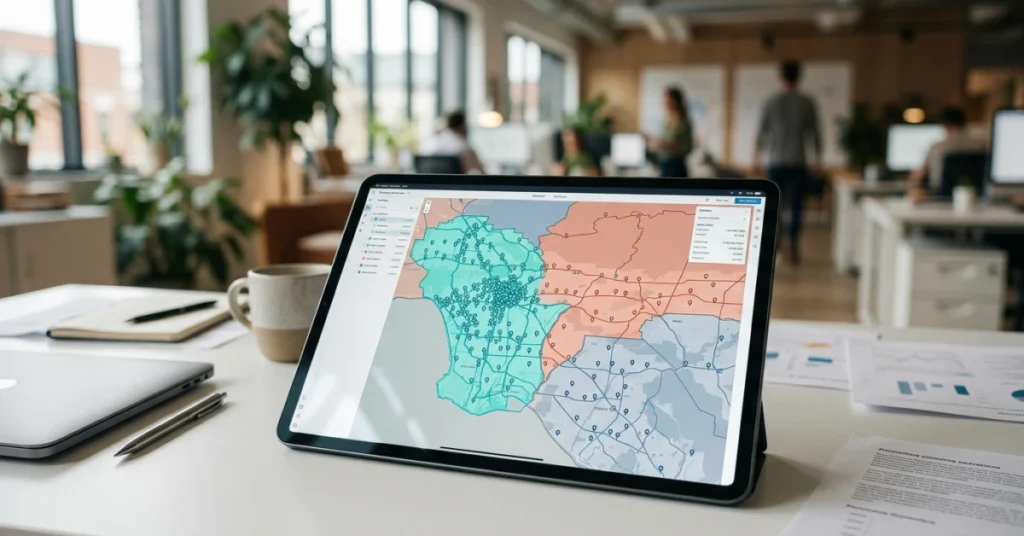
Retailers with stores across state lines face the most complex compliance burden. Minimum wage rates, break requirements, predictive scheduling laws, and data privacy obligations all vary by jurisdiction. Without centralized systems, consistency across locations is nearly impossible.
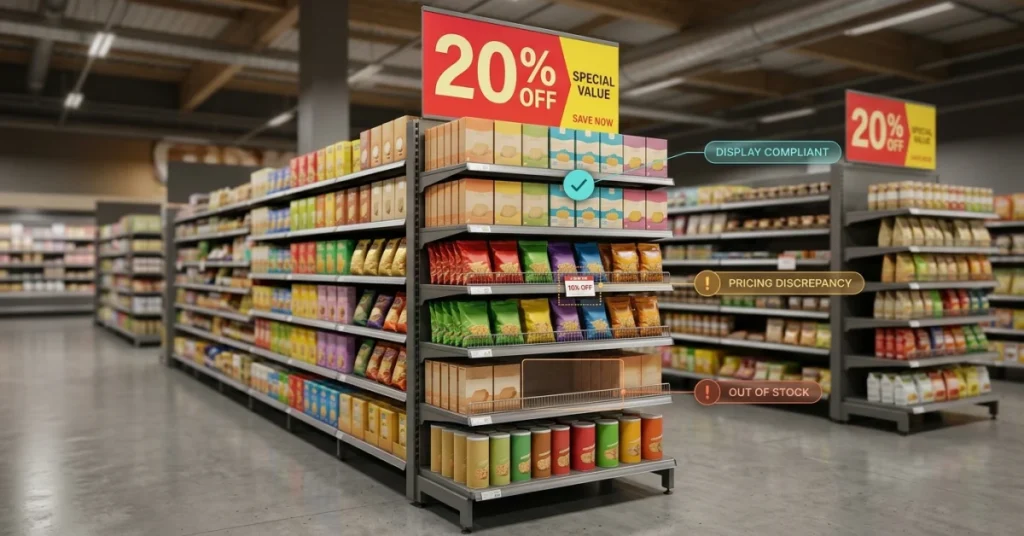
For teams managing distributed operations, a structured store audit and inspection process provides the operational backbone needed to verify compliance at every location systematically.
Keeping Up With Regulatory Change
Regulations change constantly. In 2023 alone, 19 states enacted new consumer data privacy laws or amendments. Retailers without dedicated compliance monitoring miss updates that can trigger immediate liability. Subscribing to regulatory tracking services — or working with legal counsel specializing in the retail industry — is essential.
Employee Training Gaps
Compliance breaks down at the frontline. Employees who don’t understand the rules cannot follow them. According to Axonify’s 2026 retail compliance guide, inconsistent training is one of the leading causes of compliance failures in retail. Effective training must be:
- Role-specific (store associates vs. managers vs. loss prevention)
- Delivered at the point of need — not just during onboarding
- Tracked and documented for regulatory reporting purposes
Investing in ongoing training for employees is not optional — OSHA, EEOC, and state labor boards all require documented training programs as evidence of good-faith compliance.
Fulfillment and Vendor Compliance Failures
Chargebacks from non-compliant fulfillment are a persistent drain on retailer profitability. Common causes include mislabeled cartons, late ASNs, and routing guide deviations. Ware2Go’s retail compliance resource identifies process standardization and technology integration as the most effective tools for reducing fulfillment errors across the supply chain.
For companies managing vendor relationships at scale, an automated vendor compliance tracking system eliminates manual errors and creates an auditable record for every transaction.
Retail Compliance by the Numbers
| Compliance Area | Governing Body | Max Penalty | Key Requirement |
|---|---|---|---|
| Workplace Safety | OSHA | $161,323 per repeat violation | Documented safety training |
| Product Safety | CPSC | $15 million per violation series | 24-hour hazard reporting |
| Data Privacy | FTC / State AGs | Up to $7,500 per intentional CCPA violation | Privacy notice + opt-out |
| Labor Law | DOL / EEOC | Back pay + liquidated damages | Accurate recordkeeping |
| Environmental | EPA | $70,117 per day per violation | Waste and emissions compliance |
| Fulfillment | Retailer programs | 2–3% invoice chargeback | On-time, in-full delivery |
Best Practices for Building a Retail Compliance Program
- Assign clear ownership. Every compliance area — labor, safety, data, environmental — needs a named owner accountable for monitoring and reporting.
- Centralize your policy library. Maintain a single, version-controlled repository of all policies accessible to managers across all locations.
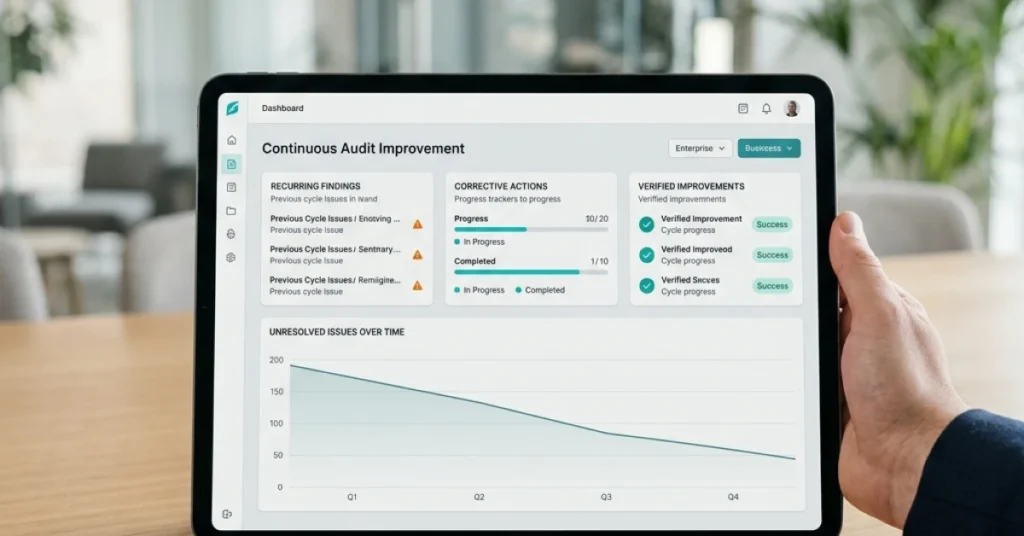
- Conduct regular internal audits. Schedule quarterly compliance reviews at the store level, and annual enterprise-wide audits. Use standardized checklists to ensure consistency.
- Document everything. Regulators assess good-faith compliance efforts. Training records, inspection logs, and incident reports are your primary defense in any enforcement action.
- Build regulatory change monitoring into your calendar. Subscribe to OSHA, CPSC, FTC, and EPA update feeds. Assign someone to review state legislative developments monthly.
- Train continuously, not just at onboarding. Employees need regular refreshers — especially when laws change. Microlearning delivered at the point of need outperforms annual training sessions.
- Treat fulfillment compliance as a profit lever. Chargeback reduction is a direct revenue opportunity. Tighten your routing guide adherence and ASN accuracy to protect margins.
For retailers managing complex multi-site operations, a centralized compliance management platform transforms compliance from a reactive cost center into a proactive risk management function.

Conclusion
Retail compliance in 2026 is not a single checklist — it is a continuous, cross-functional discipline that spans labor law, consumer protection, product safety, data privacy, environmental obligations, and fulfillment standards. The regulatory landscape across the retail industry will only grow more complex as states layer new privacy laws, EPR mandates, and wage requirements on top of existing federal frameworks.
The retailers that win are those who build compliance into their operating model — not bolt it on as an afterthought. That means clear ownership, documented policies, consistent employee training, technology-enabled auditing, and real-time reporting across all locations.
If your compliance program still runs on spreadsheets and paper, the risk is compounding every day. The 2026 checklist above is your starting point — and FieldPie is the platform that makes systematic execution possible at scale.
Frequently Asked Questions (FAQ)
What is retail compliance and why does it matter?
Retail compliance is following all laws and standards in retail operations, including labor, safety, data privacy, and consumer protection. It matters because non-compliance can lead to fines, legal issues, and reputational damage.
What are the most common retail compliance violations?
Common issues include labor law violations, workplace safety failures, incorrect product labeling, data security gaps, and fulfillment chargebacks. Labor and data privacy violations are increasing fastest.
How do retailers manage compliance across multiple locations?
Retailers use centralized policies, digital checklists, employee training, and real-time reporting. Platforms like FieldPie help manage audits and track compliance across all locations from one system.