This guide covers what product inspection is, why it matters, and how it works—from inspection types and checklists to common issues and data-driven quality control across the manufacturing lifecycle.
At the core is the product of inspection, which determines whether products meet quality standards, regulatory requirements, and customer specifications before release.
What Is Product Inspection
Product inspection is the checkpoint between manufacturing and market release, ensuring products meet quality standards, regulatory requirements, and customer specifications while protecting brand reputation and user safety.
It includes visual inspection, dimensional measurement, functional testing, and compliance verification. Predictive AI is expected to transform quality control by 2025, shifting from reactive detection to intelligent defect prevention.
Final inspection confirms specifications, packaging, and documentation before shipment. Inspection data supports process improvement, supplier evaluation, risk management, and decision-making across quality management, production planning, and digital manufacturing, ensuring consistent quality and regulatory compliance.
Types of Product Inspections
Modern manufacturing employs several distinct inspection approaches, each designed to catch quality issues at different stages of the production lifecycle. Understanding these inspection types helps organizations build comprehensive quality systems that prevent defects from reaching customers.
1. Pre-production inspections occur before manufacturing begins, verifying raw materials, components, and production setups meet specifications. This proactive approach identifies potential issues early when corrections are most cost-effective.
2. In-process inspections monitor production during manufacturing, catching deviations as they occur. These real-time checks prevent defective products from advancing through subsequent production stages, minimizing waste and rework costs.
3. Pre-shipment inspection represents the final quality checkpoint, where finished products undergo comprehensive evaluation before leaving the facility. This critical step ensures only compliant products reach customers, protecting brand reputation and reducing return costs.
4. Final random inspections use statistical sampling to verify batch quality without examining every unit. Quality compliance trends in 2026 indicate increased adoption of AI-powered sampling methods that optimize inspection efficiency while maintaining accuracy.
Each quality inspection type serves a specific purpose in ensuring product quality compliance throughout the manufacturing process. Organizations typically implement multiple inspection types to create layered quality systems that catch defects at various stages, significantly reducing the likelihood of quality failures reaching end users.
Why Product Inspection Matters
Product inspection is a core part of modern manufacturing, directly affecting consumer safety and brand reputation. Defective products reaching the market can lead to recalls, regulatory penalties, and loss of customer trust.
Quality control has evolved from a basic checkpoint into a strategic business function. Companies using strong inspection protocols report lower defect rates and higher customer satisfaction. The Product Inspection Services Market Analysis 2026 shows that businesses investing in comprehensive inspection programs achieve 23% better quality outcomes than those with basic oversight.
Different inspection types address risks at various production stages. Pre-production qualification inspection detects design issues before mass production, final inspection prevents substandard products from shipping, and container loading inspection ensures safe handling and protects product integrity and international shipping compliance.
Beyond quality assurance, structured inspection programs generate data for continuous improvement. This data-driven approach turns inspection from reactive detection into a proactive strategy that anticipates and prevents quality issues, supporting long-term operational excellence.
Product Inspection Process
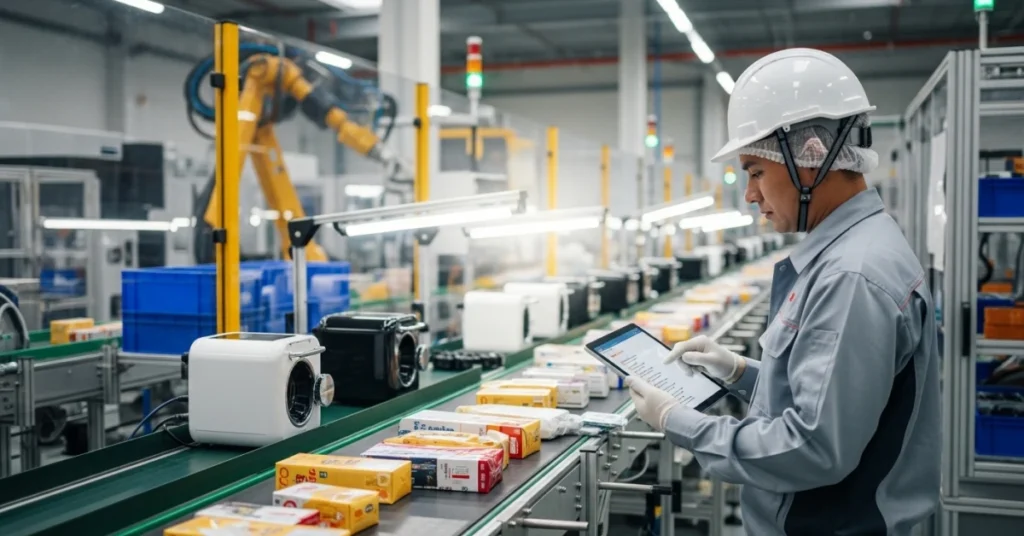
Product inspection follows a structured process across the full manufacturing lifecycle, from raw material receipt to final product release, ensuring consistent quality and operational efficiency.
Key Stages of the Inspection Process
1. Incoming Quality Control
- Evaluates raw materials, components, and subassemblies before production
- Uses a quality control checklist including dimensional verification, material certification, and supplier compliance
- Top Product Quality and Compliance Trends in 2026 shows strong incoming inspection can reduce downstream defects by up to 40%
2. In-Process Inspection
- Conducted at predefined control points during manufacturing
- Includes in-process measurement, assembly verification, and functional testing
- Real-time monitoring systems trigger inspection when process parameters move outside acceptable limits
3. Final Inspection
- Confirms completed products meet all specifications before release
- Verifies dimensional accuracy, performance standards, and regulatory compliance
- Documentation at each stage creates an audit trail for continuous improvement and regulatory reporting
This structured, data-driven inspection process helps detect deviations early, reduce defects, and maintain consistent product quality across manufacturing operations.
🔎 Turn product inspection into real-time quality visibility, faster defect prevention, and stronger compliance across every stage of production.
See it live in a free demo with FieldPie.
Product Inspection Checklist
A comprehensive inspection checklist is the foundation of consistent quality control in manufacturing. It ensures all critical areas are reviewed systematically while reducing the risk of oversight during inspection.
Core Checklist Components
- Material specifications verification
- Dimensional accuracy measurement
- Functional testing protocols
- Safety and compliance checks
- Clear pass/fail criteria with defined tolerance ranges
- Evidence requirements such as photos and measurement data
AQL (Acceptable Quality Limit) plays a critical role in inspection planning. It defines sample sizes and rejection criteria, directly affecting quality assurance performance and production efficiency. Industry analysis shows manufacturers increasingly use statistical sampling methods to balance inspection coverage and cost control.
Reliability and Consistency Controls
Modern inspection checklists also include:
- On-site product testing reliability measures
- Equipment calibration verification
- Environmental condition monitoring
- Retail compliance standards (for products requiring specific presentation or packaging)
These controls ensure consistent testing results across locations and time periods while maintaining regulatory and quality standards.
Even the most detailed checklist cannot prevent every quality issue, but a structured inspection approach significantly reduces risk and improves overall quality control outcomes.
Common Product Inspection Issues
Manufacturing teams often face recurring challenges that can reduce product quality and disrupt inspection processes. Recognizing these issues helps organizations apply proactive controls and maintain consistent standards.
Key Inspection Challenges
1. Inadequate Pre-Production Inspection
- Skipping material verification and supplier audits allows defective components to enter production
- Can increase rejection rates by 15–20% and lead to costly rework
- Strong upstream inspection reduces downstream quality risks
2. Inconsistent Defect Classification
- Incorrect categorization of minor, major, critical defects causes confusion, shipment delays, and customer dissatisfaction
- Critical defects affecting safety or functionality require immediate action
- Minor cosmetic defects may be acceptable within defined tolerances
3. Incorrect Quality Control Method
- Using traditional sampling instead of advanced statistical methods or real-time monitoring reduces inspection effectiveness
- Manufacturing data shows data-driven inspection improves defect detection by 30% compared to manual-only approaches
4. Poor Documentation and Communication
- Weak information flow between inspection stages increases quality risk
- Incomplete records reduce traceability and slow corrective action
Addressing these issues with structured, data-driven inspection practices improves defect detection, strengthens quality control, and ensures more consistent manufacturing outcomes.
Frequently Asked Questions (FAQ)
What is quality inspection vs. quality control?
Quality inspection verifies products, materials, or processes meet defined standards through measurement, testing, and observation, while quality control is the broader system ensuring overall quality requirements.
When should in-process inspection be conducted?
At critical control points across production—incoming materials, key manufacturing stages, assembly, and before packaging—especially where defects are most likely or costly to fix.
How often should inspection procedures be updated?
At least annually or after process changes, new regulations, customer complaints, or quality trends. AI-powered systems enable real-time optimization using predictive analytics.
What is the difference between sampling and 100% inspection?
Sampling uses statistical methods on a representative portion, while 100% inspection checks every unit. Sampling is more cost-efficient but carries defect risk; choice depends on criticality and cost.
How can manufacturers balance inspection cost and quality?
Risk-based inspection and modern compliance monitoring optimize inspection frequency using historical data and supplier performance while maintaining quality standards.
Conclusion
A structured inspection approach helps reduce defects, improve compliance, and maintain consistent product quality across production.
With data and continuous improvement, the product of inspection becomes a strategic driver of reliability, risk control, and long-term operational performance.
Turn inspection data into real-time quality control, faster defect detection, and consistent compliance across every operation. See it live in a free demo with FieldPie.