


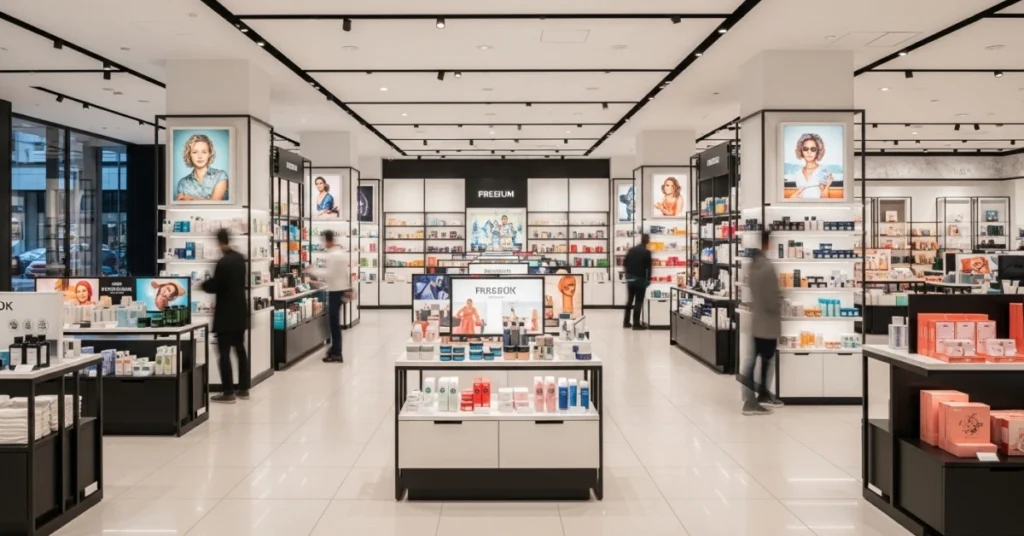
Retail growth comes from turning attention into action. The right mix of promotions, pricing, in-store execution, visual merchandising, and digital strategies can quickly convert browsers into buyers and improve conversion, transaction value, and customer retention.
Retail Sales Ideas That Drive Fast Results
Your retail business loses revenue whenever customers leave without buying. According to Salesforce, 75% of consumers have changed their shopping behavior in recent years. Successful retailers respond with clear strategies that convert visitors into buyers and one-time shoppers into loyal customers. With the right pricing and customer experience approach, sales can improve within weeks. One of the fastest ways to create urgency is strategic discounting.
Ready to transform your retail performance? Let’s explore the most effective strategies starting with one of the fastest ways to increase purchase urgency: strategic discount structures.
1. Percentage & Fixed Discounts
Simple price reductions remain one of the most effective promotion methods. Studies from Harvard Business Review show that clear and easily understood discounts increase purchase likelihood and reduce decision friction.
Key points
- Percentage discounts work better for high-value items
- Fixed discounts feel more concrete for lower-priced products
- Alternating both helps optimize customer response
- Limited frequency prevents discount fatigue and protects margins
Example
- 20% off a $200 product = $40 savings
- “$40 off” often feels more tangible than percentage
Research insight
- HBR pricing studies show clear discount framing increases conversion rates
- NielsenIQ reports that simple price promotions remain among the top drivers of short-term retail sales
Best usage
- Electronics & luxury → Percentage discounts
- Everyday & impulse items → Fixed discounts
- Seasonal rotation improves effectiveness
2. Buy One Get One (BOGO)
BOGO promotions create strong perceived value and quickly increase purchase decisions. Behavioral pricing research shows perceived value often influences buying decisions more than actual savings.
Key points
- Reduces buying hesitation through perceived value
- Flexible structure helps protect profit margins
- Works best for products naturally purchased in multiples
- Should be used strategically to avoid expectation effects
Common structures
- Traditional BOGO
- Buy One, Get One 50% Off
Research insight
- Consumer psychology research shows “free” offers significantly increase purchase probability
- Retail studies indicate perceived value is often stronger than real discount size
Best usage
- Clothing
- Beauty products
- Household essentials
3. Bundle Promotions
Bundles increase average order value while providing clear customer benefit. According to retail performance research, bundling improves both perceived value and basket size.
Key points
- Encourages customers to purchase more items
- Creates a “complete solution” perception
- Strengthens product value when items complement each other
- Works best with logical product pairings
Performance impact
- Bundling can increase average order value by 20–30% (retail analytics data)
Research insight
- McKinsey retail pricing studies show bundles improve both conversion and basket size
- Customer experience research shows curated product combinations increase purchase confidence
Best usage
- Device + accessory bundles
- Outfit combinations
- Complementary product sets
4. Flash Sales & Limited-Time Offers
Flash sales create urgency and generate rapid results within hours or days. Scarcity-based marketing research confirms that time pressure accelerates decision-making.
Key points
- Uses scarcity to speed up purchasing decisions
- Countdown timers increase urgency
- Limited inventory messaging boosts conversions
- Should be used selectively to avoid price-waiting behavior
Performance impact
- Conversion increases of 20–35% during effective flash campaigns
Research insight
- Behavioral economics research shows scarcity significantly increases purchase intent
- Digital commerce studies show urgency messaging improves conversion rates during promotions
Best usage
- Inventory clearance
- Short-term revenue boost
- Customer acquisition
5. Loyalty Rewards
Loyalty programs increase repeat purchases and long-term revenue. According to Salesforce, businesses with strong loyalty programs achieve 12–18% higher annual revenue growth.
Key points
- Converts one-time buyers into repeat customers
- Creates both short-term and long-term value
- Clear rewards improve participation
- Simple redemption strengthens customer experience
Common structures
- 1 point per $1 spent
- 100 points = $10 reward
- Buy 9, get the 10th free
Tier example
- Bronze → 5% reward
- Silver → 7% reward
- Gold → 10% reward + early access
Research insight
- Salesforce loyalty research shows retention programs significantly improve revenue growth
- Customer retention studies show repeat customers spend more over time
Clear rewards, simple structure, and visible value are essential for loyalty success, helping retailers drive both immediate sales and long-term customer growth.
In-Store Sales Ideas to Increase Conversion
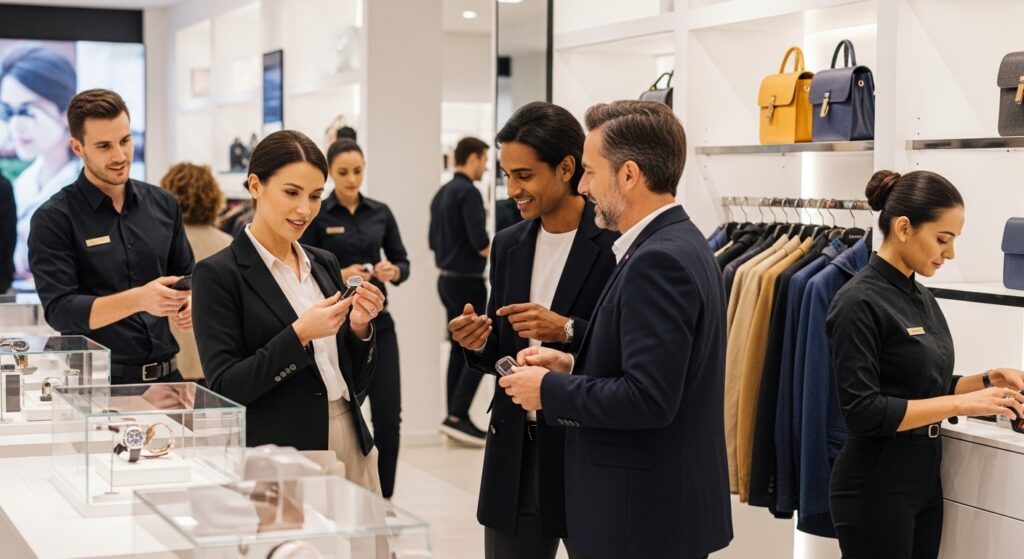
Strategic in-store merchandising converts browsers into buyers by using interactive displays and optimized product placement to guide purchasing decisions. Research shows cross-merchandising near checkout can increase average transaction value by 15–25% when complementary products are positioned together.
Staff training in consultative selling—understanding customer needs and recommending relevant solutions—can raise conversion rates by up to 30% within the first month. Together, these improvements create a strong foundation for advanced engagement strategies, especially hands-on product experiences before purchase.
1. Product Sampling
Product sampling encourages immediate purchases because customers are more likely to buy after trying a product. Interactive demonstrations create emotional connections that traditional displays cannot achieve, helping hesitant visitors become confident buyers.
Strategic sampling works best during peak traffic hours, when more customers can experience the product. High-visibility locations such as store entrances or end caps improve participation, while knowledgeable staff help answer questions and recommend complementary items.
Technology can further improve engagement:
- Tablets showing product benefits
- QR codes linking to tutorials
- Augmented reality experiences
Key success factors
- Choose products with strong sensory appeal
- Create fast “wow” moments
- Use time-limited sampling to generate urgency
- Collect customer data for future marketing
Sampling also supports cross-merchandising by encouraging customers to explore related products.
2. Cross-Merchandising Displays
Cross-merchandising groups complementary products together to increase basket size and introduce customers to related items. When products are positioned logically, customers perceive the purchase as natural rather than forced.
Common product pairings
- Skincare cleanser + moisturizer
- Pasta + sauce
- Phone case + accessories
These placements work because customers already associate the products mentally.
Best practices
- Use customer shopping data to identify effective product combinations
- Highlight complete solutions rather than individual products
- Place displays in high-traffic zones such as end caps and aisle intersections
- Position high-margin complementary items along natural customer flow
Beauty retail often uses this strategy effectively by presenting full skincare routines or coordinated cosmetic sets that guide customers through complete product systems.
The key is understanding customer behavior and offering logical, solution-based product groupings.
3. Checkout & Impulse Promotions
The checkout area is the final chance to increase transaction value. Since customers are already committed to buying, impulse promotions often deliver strong results.
Effective impulse items
- Low-cost, high-margin products
- Travel-size items
- Seasonal accessories
- Gift cards
- Complementary add-ons
These items require little explanation and support quick decision-making.
Technology can improve results:
- Digital POS systems suggest relevant add-ons
- Smart merchandising tools recommend complementary products based on cart contents
- Personalized suggestions increase average transaction value
Success factors
- Keep displays clean and organized
- Avoid slowing down the payment process
- Use visually appealing product placement
- Maintain smooth checkout flow
Well-executed checkout promotions increase incremental sales and support broader visual merchandising strategies that improve total store performance.
Visual Merchandising Ideas That Boost Sales
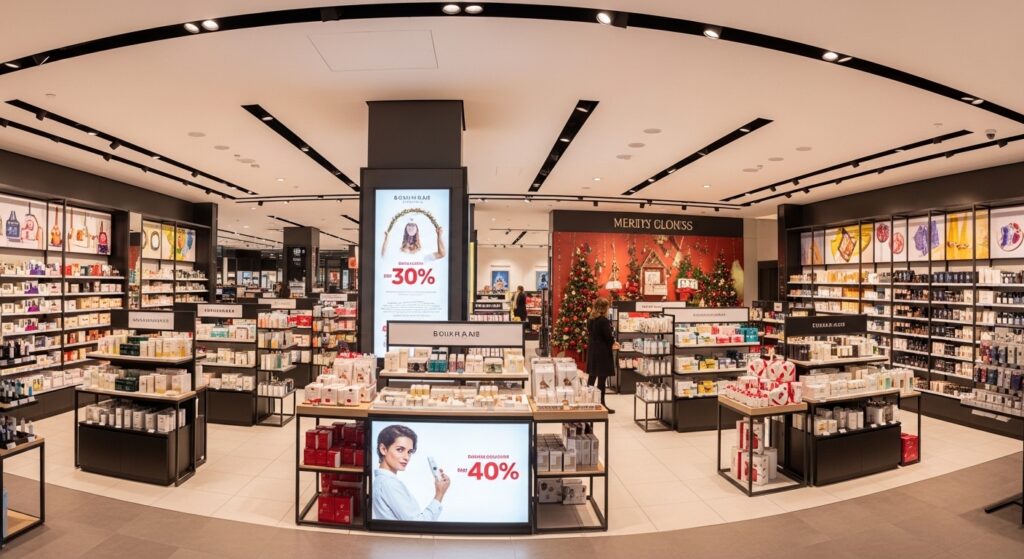
Visual merchandising improves sales by attracting attention and guiding purchasing decisions. Strategic product placement creates a stronger connection between customers and products, helping increase conversion rates.
Color coordination and simple product grouping make browsing easier and guide customer flow. Seasonal and themed displays create urgency by matching current shopping behavior, and research shows effective seasonal merchandising can increase category sales by up to 30%. Understanding how customers visually scan displays, especially eye-level positioning, is the foundation of successful visual merchandising.
1. Eye-Level Product Placement
Products placed at 5–6 feet generate higher purchase rates than those positioned above or below. Retail data shows eye-level products achieve 35–40% higher sales velocity. Since customers naturally focus on easy-to-see items, eye-level shelves represent the most valuable space, making them ideal for premium and high-margin products.
2. End-Cap & High-Traffic Displays
End-caps and high-traffic areas deliver strong visibility and immediate sales impact. Retail analytics shows products in end-cap positions can increase sales by 30–400%. Entrances, checkout zones, and main walkways are effective for impulse items, seasonal products, and new launches. Regular rotation aligned with shopping flow improves results.
3. Seasonal & Themed Displays
Seasonal and themed merchandising increases sales by using emotional and time-based triggers. Holiday displays encourage impulse purchases, while back-to-school and weather-responsive merchandising match real customer needs. Combining product placement with lighting, music, and complementary grouping encourages multi-item purchases and strengthens overall retail performance.
Digital Sales Ideas That Drive Store Traffic
Digital marketing helps increase foot traffic by giving customers clear reasons to visit physical stores. Social media offers, push-notification flash sales, and location-based mobile ads can create immediate traffic spikes. Email campaigns with store-specific promotions can drive 20–30% more same-day visits. Click-and-collect connects online browsing with in-store buying, and integrated digital-physical strategies can increase average transaction value by 15–25%. Geofencing and QR-code offers further help convert nearby customers into store visitors.
1. Local SEO & Google Offers
Local SEO improves visibility in nearby searches and attracts ready-to-buy customers.
- Optimized Google My Business profiles improve local search performance
- Accurate store hours, product photos, and reviews increase visibility
- Google Offers and location-based promotions capture nearby demand
- Google Posts promote flash sales and limited-time deals in search and Maps
2. Social Media Promotions
Social media increases reach and creates urgency around promotions.
- Flash sales on Instagram Stories or Facebook drive quick action
- User-generated content builds trust and expands organic reach
- Live shopping enables real-time demos, interaction, and exclusive discounts
- Platform-specific content with consistent messaging improves results
3. Email & Loyalty Promotions
Email and loyalty programs drive repeat purchases and higher customer value.
- Segmented emails deliver targeted offers based on purchase behavior
- Loyalty members typically spend 23% more than non-members
- Automated emails (abandoned cart, birthday, milestone rewards) bring customers back
- Combining email urgency with loyalty exclusivity improves retention and revenue
Quick Tips for Running Better Promotions
Test small before scaling big – launch promotional campaigns with limited inventory or specific store locations to gauge customer response and operational impact. This approach minimizes risk while providing valuable data on what resonates with your target audience.
Track everything relentlessly using retail performance metrics that go beyond basic sales numbers. Monitor conversion rates, average transaction values, and customer acquisition costs to understand true promotional effectiveness rather than just revenue spikes.
Keep messaging crystal clear – customers should understand your offer within three seconds of seeing it. Avoid complex terms, multiple discounts, or confusing eligibility requirements that create friction at the point of purchase and reduce conversion rates.
1. Set Clear Goals
Define specific, measurable targets before launching any retail sales initiative to ensure your efforts deliver tangible results. According to retail performance metrics research, successful retailers establish clear benchmarks like increasing average transaction value by 15% or boosting conversion rates by 8% within defined timeframes.
Set SMART goals that align with your overall business objectives – whether that’s driving foot traffic during slow periods, clearing seasonal inventory, or building stronger teams through sales incentives. Clear targets transform vague promotional efforts into focused campaigns that your team can execute with confidence and measure with precision.
2. Track and Optimize Results
Continuous monitoring and adjustment separate successful retail campaigns from mediocre ones. Retail sales tracking requires systematic data collection across multiple touchpoints to identify what drives actual customer behavior.
Real-time performance dashboards enable immediate course corrections when promotions underperform or exceed expectations. However, tracking too many metrics can create analysis paralysis – focus on the three to five key indicators that directly correlate with your specific campaign objectives and overall business growth targets.
How to Measure Promotion Success
Track specific metrics that directly connect promotional activities to revenue outcomes rather than relying on general sales figures alone. Retail industry performance metrics show that successful promotions require monitoring conversion rates, average transaction values, and customer acquisition costs alongside traditional sales volume data. This focused measurement approach reveals which promotional tactics generate the highest return on investment and guides future campaign optimization strategies.
1. Conversion Impact
Tracking conversion rates reveals the true effectiveness of your retail sales initiatives beyond simple traffic metrics. Retail industry performance metrics show that successful retailers focus on converting browsers into buyers rather than just attracting foot traffic.
The conversion equation becomes your competitive advantage when you understand which tactics actually move customers from consideration to purchase, setting the foundation for calculating your return on investment.
2. ROI & Profitability
The most successful retail sales strategies deliver measurable returns within the first quarter of implementation. Track gross profit margins alongside revenue growth to ensure promotional activities aren’t eroding profitability through excessive discounting or operational costs.
Focus on initiatives that improve both conversion rates and average transaction values simultaneously – these compound effects create the strongest ROI impact for retail businesses seeking fast results.
Conclusion
Effective retail sales ideas combine strong promotions, smart merchandising, and data-driven optimization. Strategies like discounts, bundles, cross-merchandising, and loyalty programs help convert browsers into buyers while increasing transaction value and customer retention.
The key is testing what works, measuring results, and scaling the most successful tactics. When supported by clear data and consistent store execution, these ideas can quickly turn attention into measurable retail growth.
Strong promotions, optimized store execution, and data-driven tracking are key to fast retail results. Turn these strategies into measurable performance with FieldPie — Book a demo.