



Retail store success is rarely accidental.
Behind every high-performing store lies a system: clear strategy, disciplined execution, and decisions driven by real customer behaviour. While many retailers invest heavily in marketing or expansion, the real difference between average and top-performing stores often comes down to how well daily operations are executed.
In this guide, we explore the core principles that separate thriving retailers from the rest—and how retailers can turn everyday store operations into sustainable growth and long-term retail success.
What Does Retail Success Really Mean Today?
Retail store success is no longer about simply moving inventory. Today, it’s about building profitable, lasting customer relationships in a fast-changing, highly competitive market.
Retailers are shifting from growth-at-all-costs to smarter, more sustainable profitability. But here’s the real challenge: which metrics truly drive long-term success—and which ones merely look impressive on reports?
The difference between surviving and thriving lies in a clear set of principles. Let’s break down the proven foundations that define true retail success today.
7 Proven Principles for Retail Success
Modern retail store success is built on seven core principles that separate thriving retailers from those merely surviving. These are not theories—they are proven strategies that consistently deliver real results.
Retailers with clear strategic frameworks achieve up to 23% higher profitability because they rely on systems, not luck. Each principle reinforces the others: master one to improve performance, master all to unlock sustainable growth and a true competitive advantage.
It all begins with building a strong foundation that guides every decision.
Principle 1: Define a Clear Purpose
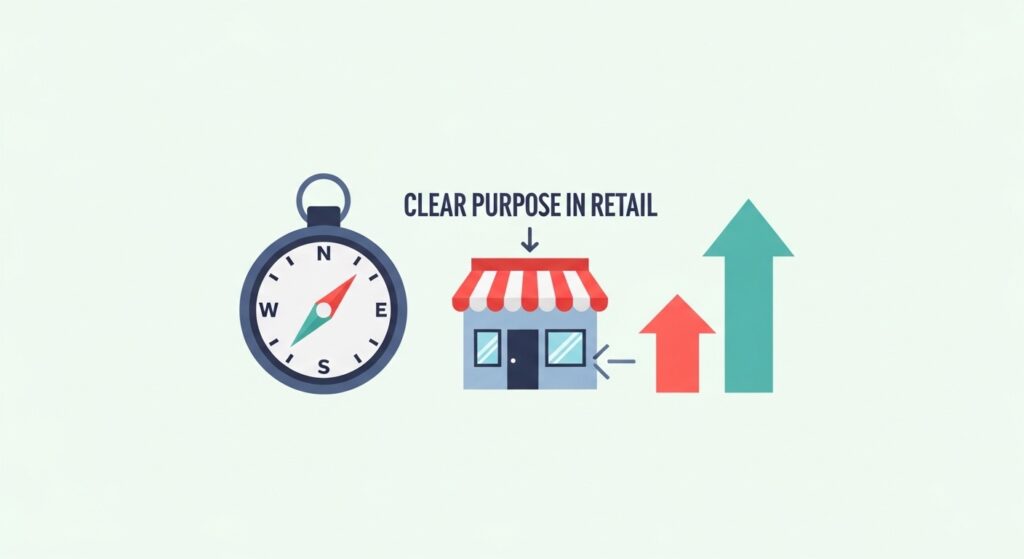
Every successful retail business is built on a clear sense of purpose that goes beyond simply selling products. This principle separates thriving retailers from those merely surviving in today’s competitive market.
A well-defined purpose acts as a North Star, guiding decisions from inventory selection to customer service standards. Industry analysis shows that retailers with clearly articulated missions demonstrate stronger resilience during market volatility and achieve more sustainable retail growth over time.
A strong retail purpose should clearly answer why the business exists beyond profit:
- Solving a specific customer problem
- Serving an underserved community
- Championing clear brand values
- Building authentic brand identity
- Driving long-term customer loyalty
Purpose is not static. As markets evolve and customer needs shift, successful retailers continuously reassess their mission to ensure it still aligns with their audience and real business practices.
With a clear purpose in place, the next step is building the right mindset across the organization.
Principle 2: Build an Ownership Mindset

An ownership mindset turns employees into business partners who take responsibility for customer satisfaction and business outcomes. Retail store success depends on empowering teams to think and act like owners while continuously improving the customer experience.
When employees see how their actions impact profitability and loyalty, they focus on solutions rather than problems. NRF’s 2026 retail predictions highlight that retailers prioritising employee engagement tend to achieve stronger customer retention and better operational performance.
Employee engagement is also strongly linked to financial results. According to Gallup research, organisations with highly engaged employees experience 23% higher profitability compared to those with low engagement levels.
Ownership mindset shows in daily behaviour:
- Proactively solving customer issues
- Maintaining store standards without supervision
- Taking initiative within clear guidelines
- Focusing on value for the customer
To build this culture:
- Communicate clear goals
- Give regular performance feedback
- Reward proactive behaviour
- Explain the “why” behind decisions
Employees who think like owners become brand ambassadors and drive stronger retail performance.
Principle 3: Schedule Around Real Customer Demand
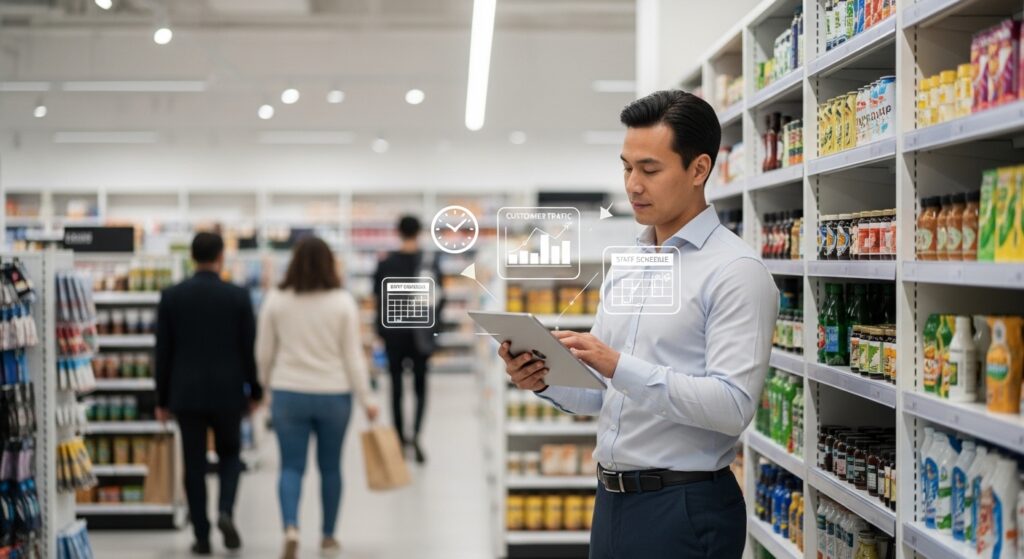
The most profitable stores align staffing with real customer traffic, not guesswork. A data-driven scheduling approach ensures strong coverage during peak hours while avoiding overstaffing during slow periods.
Retail store success depends on understanding when customers actually shop. Traffic analytics reveal patterns by location, season, and day, and smart retailers adjust schedules weekly based on real data—not assumptions.
Demand-based scheduling can reduce labor costs by 15–20% while improving customer satisfaction through better service during busy times.
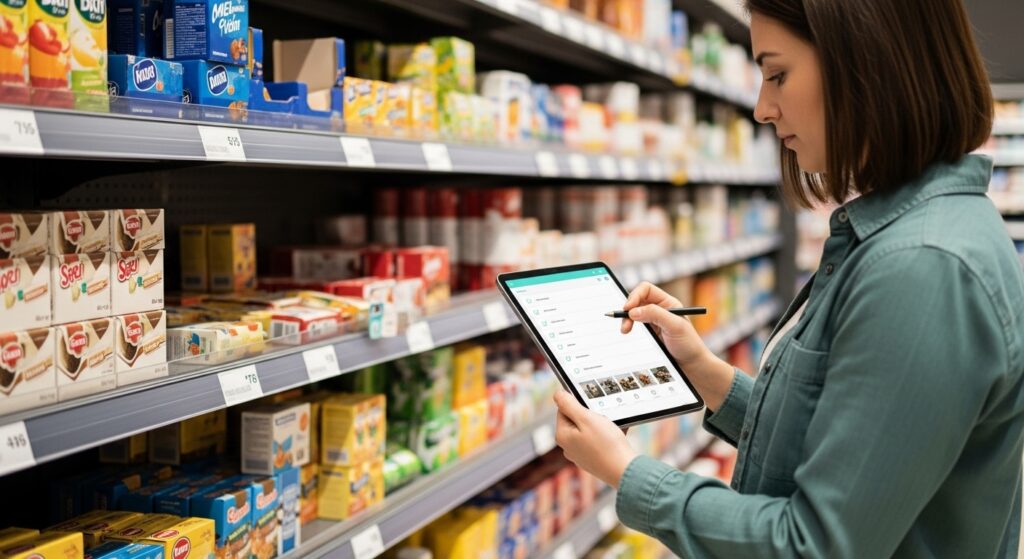
Staffing decisions also influence product availability on the shelf. When stores lack the right coverage during peak hours, restocking delays and operational gaps can quickly lead to empty shelves.
According to IHL Group, global inventory distortion — the combined cost of out-of-stocks and overstocks — still costs retailers more than $1.7 trillion annually. Much of this loss occurs when stores lack real-time visibility into shelf conditions and product availability.
Principle 4: Measure What Drives Outcomes
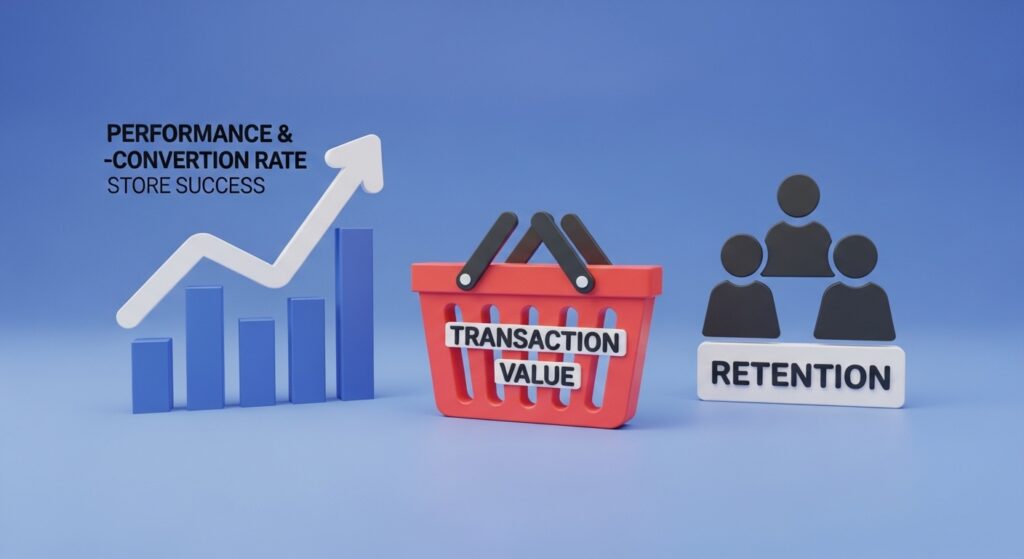
Traditional metrics like total sales often hide the real drivers of profitability. Successful retailers focus on leading indicators—metrics that predict performance, not just report past results.
Track:
- Conversion rate
- Average transaction value
- Customer retention
- Foot traffic patterns
A 25% increase in conversion rate typically delivers more impact than a 10% rise in traffic.
Also monitor employee metrics linked to customer satisfaction:
- Items per transaction
- Checkout time
- Product knowledge
The key is connecting daily operational data to quarterly financial results, enabling proactive decisions instead of reactive fixes.
Principle 5: Act on Real-Time Data
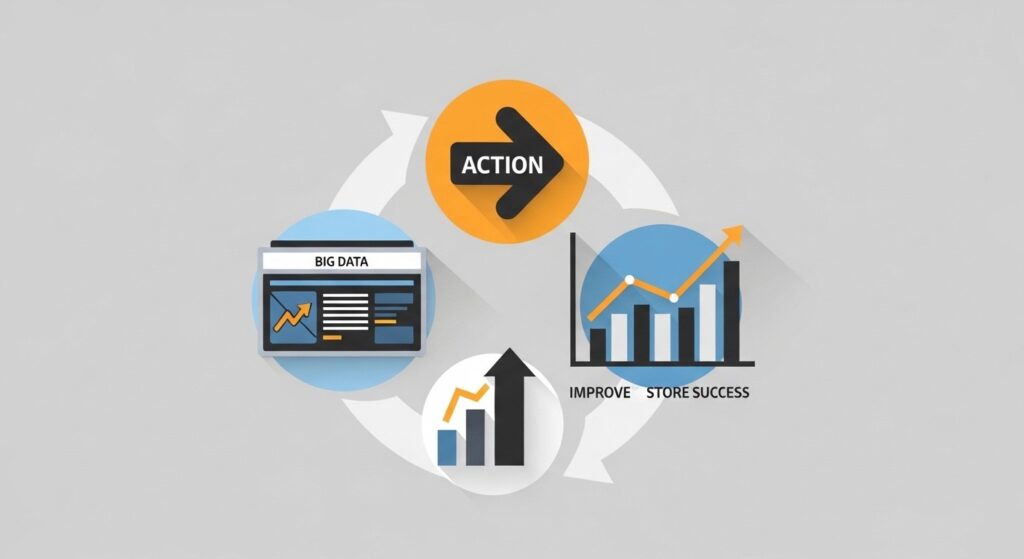
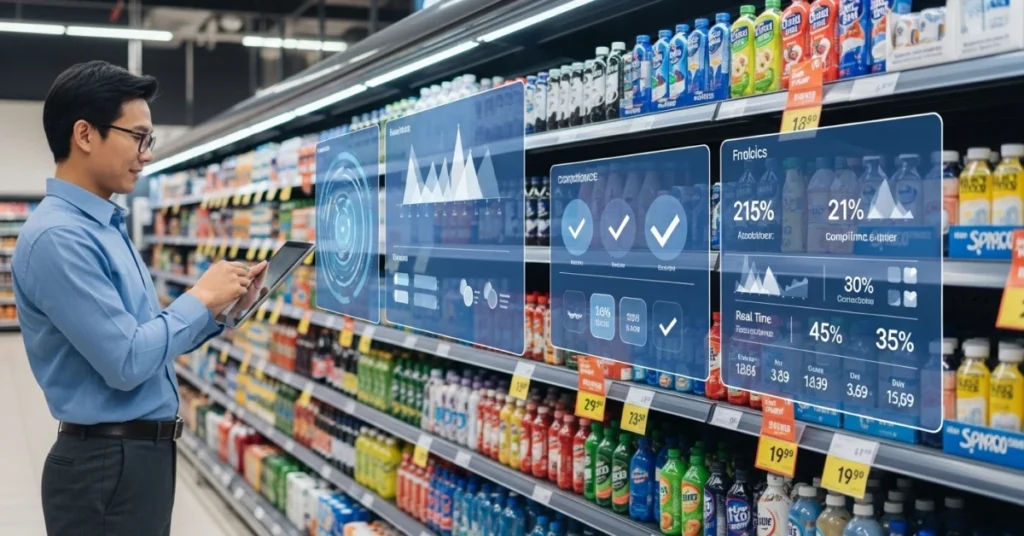
The difference between collecting data and acting on it determines whether insights create results or sit unused. Modern retail generates massive data—from inventory to customer behavior—but success comes from turning it into immediate action.
Real-time responsiveness separates top performers. When foot traffic spikes, successful stores adjust staffing instantly. When inventory alerts appear, they restock immediately—not tomorrow.
High-performing retailers set clear decision triggers tied to data thresholds. For example:
- If conversion rate drops → investigate immediately
- If stock falls below limit → trigger restock
This creates a continuous loop: data → action → new data → smarter decisions, turning information into real competitive advantage.
Principle 6: Empower Frontline Teams

Frontline teams are closest to daily operations and customers, making them critical drivers of retail profitability. When employees are empowered to act and share insights, they create a feedback loop that improves performance across the business.
Top retailers give staff authority to resolve customer issues on the spot instead of escalating minor problems. This boosts customer satisfaction and surfaces recurring pain points that management often misses.
The key is clear boundaries:
- Defined decision guidelines
- Set spending limits for service recovery
- Regular channels to share field insights
When employees see their input valued and used, they shift from task execution to continuous improvement contributors—strengthening customer experience, inventory accuracy, visual merchandising, and operational efficiency.
Principle 7: Put the Customer at the Center

Customer-centricity is not a buzzword—it’s the core of retail store success today. Retailers that prioritize customer needs over internal processes build sustainable competitive advantages that drive both satisfaction and profitability.
Customer-focused retailers design every touchpoint around convenience and experience, including:
- Flexible return policies
- Intuitive store layouts
- Proactive, needs-anticipating service
Top performers treat every interaction as a chance to build relationships, not just complete sales.
This shift requires moving from product-focused selling to outcome-focused solutions. Instead of pushing inventory, customer-centric retailers solve problems and fulfill needs—driving higher customer lifetime value, stronger loyalty, and organic word-of-mouth growth while lowering acquisition costs.
What Retail Leaders Do Differently
Successful retail leaders stand out through decisive action and strategic thinking. Instead of reacting to daily challenges, they follow clear leadership principles that consistently drive retail store success.
Top performers prioritize long-term vision over short-term fixes, investing in capabilities that compound over time. They understand that profitability comes from systematic improvements across multiple operational touchpoints, not isolated initiatives.
What truly differentiates them is their willingness to challenge conventional thinking and experiment—while carefully managing timing, resources, and organizational readiness to ensure sustainable store success.
Best Practice 1: Flexibility Beats Uniformity
Rigid operational models are becoming retail’s biggest weakness. Standardized, one-size-fits-all approaches no longer work in today’s diverse and fast-changing market. Successful retailers shift toward flexible frameworks that adapt to local demand, customer behavior, and new opportunities.
Flexibility appears across operations—from demand-driven inventory and dynamic staffing to modular store formats and adaptable technology systems. The goal is not uniformity, but responsiveness.
The key insight: Uniformity creates average performance, while strategic flexibility drives exceptional results.
Best Practice 2: Focused Targets Win
Narrow targeting beats broad appeal. Instead of trying to serve everyone, successful retailers focus on specific customer segments and design the entire experience around them.
This targeted approach enables smarter decisions on product mix, pricing, and store atmosphere, leading to higher conversion rates, stronger customer loyalty, and long-term store success.
Best Practice 3: Keep Inventory Moving
Stagnant inventory silently destroys profit. Measuring retail store success starts with tracking inventory velocity—how fast products move from shelf to customer. Fast turnover improves cash flow, lowers storage costs, and reveals real customer demand.
Top retailers optimize inventory based on movement data, not intuition. They quickly remove slow movers and invest in proven sellers. Continuous monitoring and disciplined decisions are essential for sustainable store success.
Best Practice 4: Culture Sustains Execution
Culture turns strong strategies into lasting store success. Beyond operations and inventory, sustained performance depends on a team that consistently executes at a high level. Research shows engaged employees drive higher customer satisfaction and lower turnover.
A strong culture begins with clear expectations and consistent recognition. When teams understand both the what and why, they deliver more authentic customer experiences. Culture isn’t enforced—it’s modeled by leadership and reinforced daily through focus on customer outcomes and employee growth.
Conclusion
Retail store success today is built on clarity, discipline, and adaptability. Retailers that define a clear purpose, empower their teams, act on real-time data, and remain relentlessly customer-focused create lasting competitive advantage.
The principles in this guide are not quick wins—they form a system for sustainable growth. Master them consistently, and retail success becomes predictable, measurable, and repeatable.
See how high-performing retail teams manage execution, track KPIs, and improve store performance in real time with FieldPie.
Book a demo today and discover how to turn daily operations into measurable retail store success.