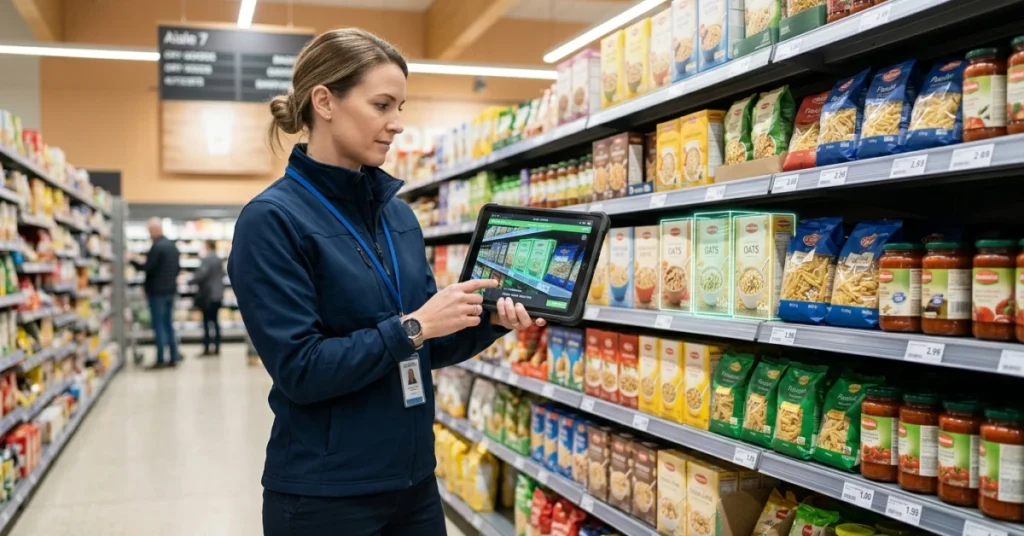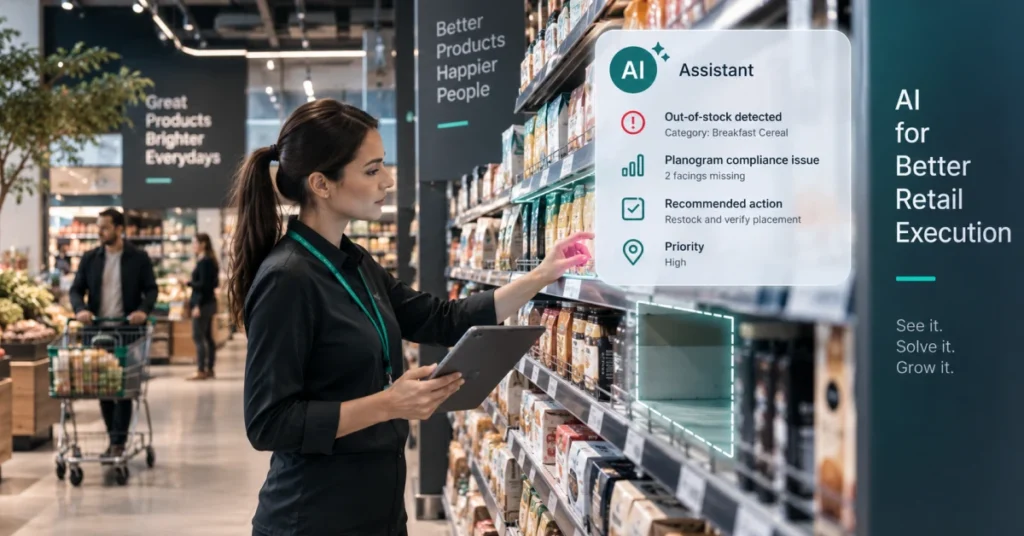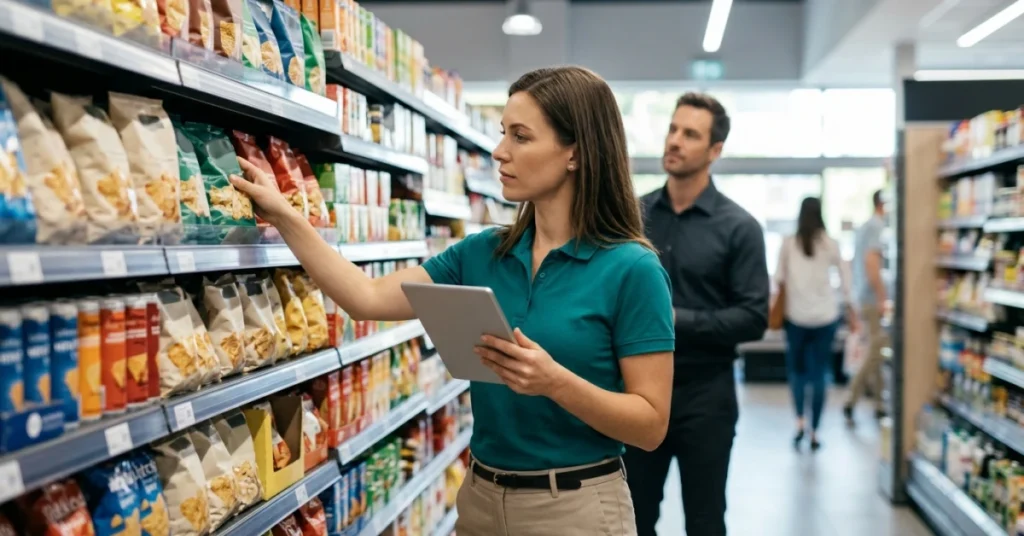



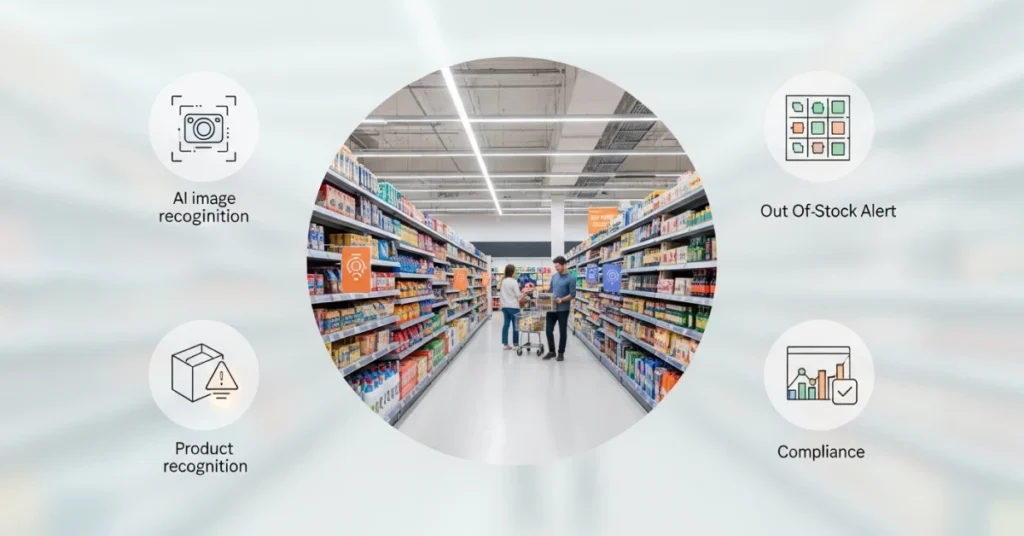
Consumer packaged goods companies are undergoing a digital transformation that is reshaping how they understand shoppers and manage retail execution. Image recognition delivers real-time shelf insights, tracks competitor positioning, and monitors consumer behavior with high accuracy.
By replacing manual audits with automated, data-driven analysis, brands can detect out-of-stocks, measure planogram compliance, and generate actionable insights within hours. Powered by AI and computer vision, this technology strengthens retail execution and improves visibility across the consumer journey at the point of purchase.
Image Recognition in the CPG Market Size, Trends, and Growth Dynamics
The AI image recognition CPG market is expanding rapidly, with a projected compound annual growth rate (CAGR) of 21.7% through the forecast period. This growth reflects its ability to deliver measurable ROI across retail execution, consumer insights, and supply chain optimization.
Retail execution leads adoption, followed by consumer insights gathering and supply chain optimization. Image recognition enables CPG companies to manage product placement and analyze real-time consumer behavior simultaneously. Adoption varies by segment: premium brands deploy faster due to larger budgets, while mid-market players start with focused use cases, creating a tiered adoption landscape.
Market Growth Drivers
Growth in the image recognition in CPG market is driven by the rapid expansion of e-commerce, increasing demand for automated product identification, and scalable inventory management. Retailers and brands are investing heavily in AI-powered visual recognition to support omnichannel operations and real-time analytics. According to Image Recognition in CPG Market Size & Forecast to 2032, companies are prioritizing technologies that enable seamless product recognition across multiple retail touchpoints.
Rising demand for contactless shopping, smart checkout systems, and automated inventory tracking is accelerating adoption. At the same time, the shift toward data-driven decision making is pushing CPG companies to deploy visual recognition solutions that deliver instant insights into product performance and consumer behavior—improving operational efficiency and execution quality across retail environments.
Market Restraints and Challenges
Despite strong projections, the shelf monitoring CPG sector faces barriers. High initial investment costs and complex integration with enterprise systems remain key obstacles, particularly for smaller companies. Data privacy regulations and accuracy limitations in challenging retail environments (poor lighting, cluttered shelves, damaged packaging) can impact reliability and ROI expectations.
Growth Opportunities in the CPG Market
Retail automation CPG solutions present strong expansion opportunities, especially in emerging markets undergoing rapid digital transformation. AI integration goes beyond basic image recognition, enabling predictive analytics and automated inventory optimization.
Advanced machine learning algorithms help anticipate demand and refine product placement strategies. Small and medium-sized CPG manufacturers represent an untapped segment seeking technological parity. With a projected 21.7% CAGR, the market offers robust growth potential across company sizes.
Key Trends in Image Recognition in CPG Market
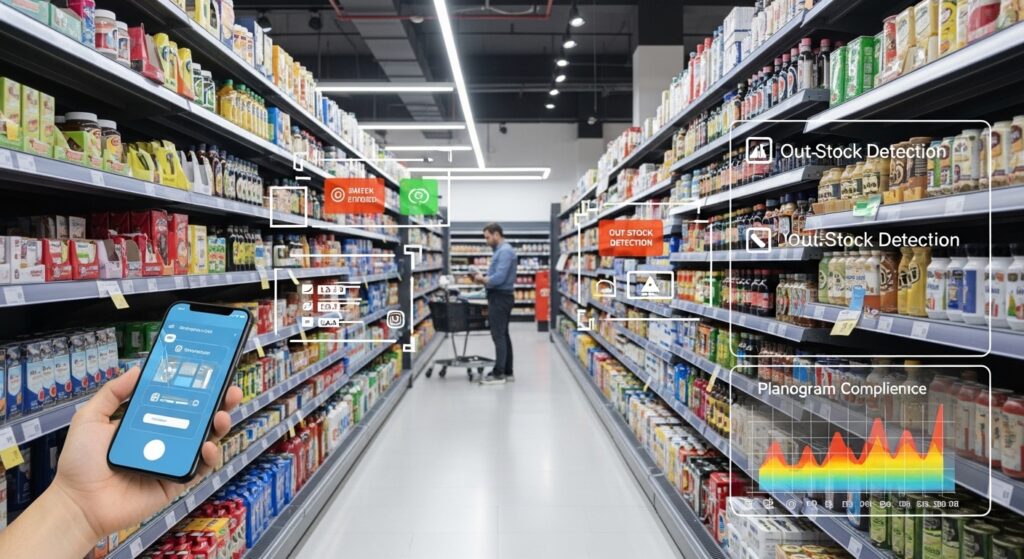
Image recognition is reshaping CPG operations through real-time shelf analytics, enabling brands to monitor product placement, detect out-of-stocks, and optimize planogram compliance instantly.
Mobile-first solutions are expanding adoption, allowing field teams to use smartphone apps for store audits and competitive analysis—reducing costs while increasing data accuracy and frequency.
Consumer-facing use cases are also growing, including interactive packaging and product authentication, where shoppers scan products to access information or verify authenticity.
Most importantly, shopper insights CPG applications analyze shopping patterns, dwell time, and product interaction data, driving personalized marketing and optimized product placement strategies.
AI and Deep Learning–Based Shelf Recognition
Advanced AI and deep learning models now achieve over 95% accuracy in controlled environments. These systems identify products, assess stock levels, and detect planogram compliance issues at scale.
Using convolutional neural networks, modern shelf recognition solutions continuously improve across varying lighting, shelf layouts, and product orientations—turning thousands of shelf images into actionable retail execution insights.
Integration With Retail Execution Platforms
Image recognition is increasingly integrated into retail execution platforms, connecting shelf monitoring, planogram compliance, CRM systems, and performance analytics into unified dashboards.
This eliminates data silos and enables automated reporting, restocking alerts, and promotional tracking. According to market analysis, demand for platform consolidation is rising as CPG companies seek greater operational efficiency.
Near Real-Time Shelf Intelligence
The shift from manual audits to continuous monitoring enables brands to receive shelf insights within minutes. Real-time alerts for out-of-stocks and planogram violations transform reactive processes into proactive shelf optimization.
This near real-time intelligence strengthens merchandising performance and supports faster, data-driven decisions across retail networks.

Market Segmentation Analysis
The AI-powered image recognition retail market shows clear segmentation across regions and use cases. North America leads due to advanced retail infrastructure and early adoption, while Asia-Pacific is the fastest-growing region with expanding retail networks.
By application, shelf monitoring and planogram compliance account for over 60% of deployments. Emerging areas such as customer behavior analysis and automated inventory management are gaining momentum as retailers seek more comprehensive solutions.
The market also divides into three tiers: enterprise platforms for major retailers, mid-market solutions for regional chains, and specialized tools for verticals like pharmacy or electronics. According to Zion Market Research, this tiered structure supports broader adoption across different operational scales and budgets.
Segmentation by Application
By application, inventory management is the largest segment, driven by automated stock monitoring and real-time shelf analytics.
Customer analytics generates shopper behavior insights—such as shopping patterns, dwell time, and product interaction—to improve product placement and promotions.
Other key areas include quality control (defect detection, packaging compliance) and brand compliance monitoring (promotion and shelf execution). This segmentation highlights how image recognition platforms support multiple CPG operations within unified systems.
Regional Analysis of the Image Recognition in the CPG Market
Regional dynamics shape adoption levels, investment priorities, and deployment models in the global image recognition in CPG market. North America leads in maturity and implementation scale, Europe differentiates through regulatory and sustainability-driven use cases, while the GCC region is emerging rapidly through government-backed digital transformation initiatives. Infrastructure readiness and cloud connectivity remain key variables influencing deployment strategies across regions.
North America
North America remains the leading region in the image recognition in CPG market, driven by early AI adoption, advanced retail infrastructure, and strong digital transformation investments. Major CPG brands and retailers leverage machine learning to enhance shelf visibility, automate inventory management, and optimize supply chain performance.
Strong cloud infrastructure enables real-time shelf monitoring AI at scale. Strategic partnerships between technology providers and established CPG brands continue accelerating implementation across retail networks.
Europe
Europe represents a fast-growing market shaped by GDPR-driven data privacy compliance and sustainability priorities. Retailers in Germany and the UK are leading adoption, using image recognition for automated checkout, planogram optimization, quality control, and regulatory compliance—particularly in food safety.
The region’s strict regulatory environment has accelerated innovation in edge computing and privacy-compliant visual recognition systems, making Europe a benchmark for compliant AI deployment.
GCC (UAE, Saudi Arabia, Qatar)
The GCC region is emerging as a high-potential market, fueled by government-led digital transformation initiatives such as UAE Smart Dubai and Saudi Vision 2030. Adoption is strongest in premium retail segments, where image recognition enhances visual merchandising and customer experience.
High smartphone penetration supports mobile-based recognition solutions, although localization requirements—such as Arabic language integration and cultural adaptation—remain important implementation considerations.
Emerging Markets
Emerging markets are the next growth frontier. Latin America, Southeast Asia, and Africa are rapidly expanding due to improving digital infrastructure and mobile-first consumer behavior.
Countries like India, Brazil, and Nigeria show strong adoption, often leapfrogging traditional retail analytics. Companies that adapt to diverse regulations and infrastructure conditions will gain long-term competitive advantage in these high-growth regions.
Market Competition in CPG Image Recognition
The image recognition in CPG market is highly competitive, driven by rapid innovation and strategic positioning. Companies differentiate through advanced AI capabilities, industry-specific solutions, and integrated platforms designed for CPG operations. Strong market growth is attracting both global tech giants and specialized startups.
Key competitive factors include algorithm accuracy, processing speed, system integration, ability to handle diverse product categories, and pricing models. Partnerships between technology providers and major CPG brands are shaping competition, creating both innovation and entry barriers.
Competitive Differentiation Factors
Companies compete primarily on accuracy, speed, and real-time processing, with leading solutions exceeding 95% recognition accuracy. Strong integration capabilities and cloud-native architectures provide major advantages, enabling seamless connection with enterprise systems and analytics platforms.
Domain expertise in specific CPG categories—such as food, beverage, personal care, and pharmaceuticals—further differentiates providers. Additionally, cost efficiency and scalability are becoming critical as companies seek solutions that adapt to different deployment sizes while maintaining long-term economic viability.

Future Outlook of Image Recognition in the CPG Market
The future of image recognition in CPG points to deeper integration and rapid growth, driven by advancing AI capabilities and rising demand for personalized shopping experiences.
The convergence of computer vision, and real-time analytics will create intelligent retail ecosystems where image recognition operates continuously in the background. Technologies such as augmented reality and predictive visual analytics will further enhance how brands understand and respond to consumer behavior.
However, long-term success will depend on balancing innovation with data privacy and regulatory compliance. Companies investing in ethical AI and transparent data practices will gain competitive advantage. The most successful organizations will treat image recognition not as a standalone tool, but as a core element of broader digital transformation strategies across the consumer journey.
Conclusion
Image recognition in the CPG market is becoming a critical driver of retail performance. With AI-powered real-time shelf insights and a projected 21.7% CAGR, brands that adopt scalable visual recognition solutions gain faster decision-making, stronger execution, and measurable competitive advantage.
Turn shelf photos into real-time retail intelligence with FieldPie’s AI-powered image recognition platform.
Request your demo now and start optimizing your retail execution today.