


✦ Key Takeaways
Over 60% of compliance failures stem from confusing field inspections with field audits — a costly mix-up.
→ Inspections catch real-time defects; audits uncover systemic process failures.
→ Wrong method chosen means missed risks and wasted team hours.
→ Audits require documented evidence trails; inspections demand immediate on-site judgment.
In this article:
Field Inspection vs. Field Audit: Key Differences
When to Use a Field Inspection
When to Use a Field Audit
Field Inspection vs. Field Audit Workflow
Key takeaway: Match the method to the mission — audits fix systems, inspections fix conditions.
Field Inspection vs. Field Audit: Key Differences
Most teams treat these two methods as interchangeable. That single mistake costs organizations far more than wasted time. It opens liability gaps that never get traced back to their root cause.
Over 60% of compliance failures come from process gaps, not individual errors (Sciencedirect). That means the wrong tool was applied at the wrong layer of accountability.
Swapping one method for the other doesn’t just miss the mark. It leaves systemic risk completely unchecked.
These two tools operate at different layers of accountability. Mixing them up is a structural mistake — not a vocabulary one.
Understanding the safety audit vs inspection distinction is the first step. It’s what builds a protocol that actually protects your organization.
Purpose, Scope, and Outcomes
A site check confirms current condition. It answers one question: “Does this meet the standard right now?”
A review validates systemic compliance over time. It asks: “Does our process consistently produce the right outcomes?”
On-site checks are narrow, fast, and triggered by a specific event or schedule. Broader evaluations are evidence-driven and built to hold up under regulatory or legal scrutiny.
Findings, Evidence, and Documentation
A site check finding is a snapshot — a pass, fail, or flag tied to a moment in time. A systematic review finding is a pattern. It is backed by a structured evidence trail that links observations to broader behavior.
Fieldpie notes that review documentation must support traceability across multiple cycles. A single on-site record was never built to do that.
Without that distinction in your workflow, you’re building compliance on a foundation that can’t hold weight when it matters most.
The real question isn’t which tool sounds right. It’s knowing exactly which conditions make a site check the correct and sufficient choice.
When to Use a Field Inspection
Knowing which tool to reach for first is where most teams go wrong.
Use a field inspection when you need a fast, accurate read on current conditions. It is not the right tool for building a full compliance history.
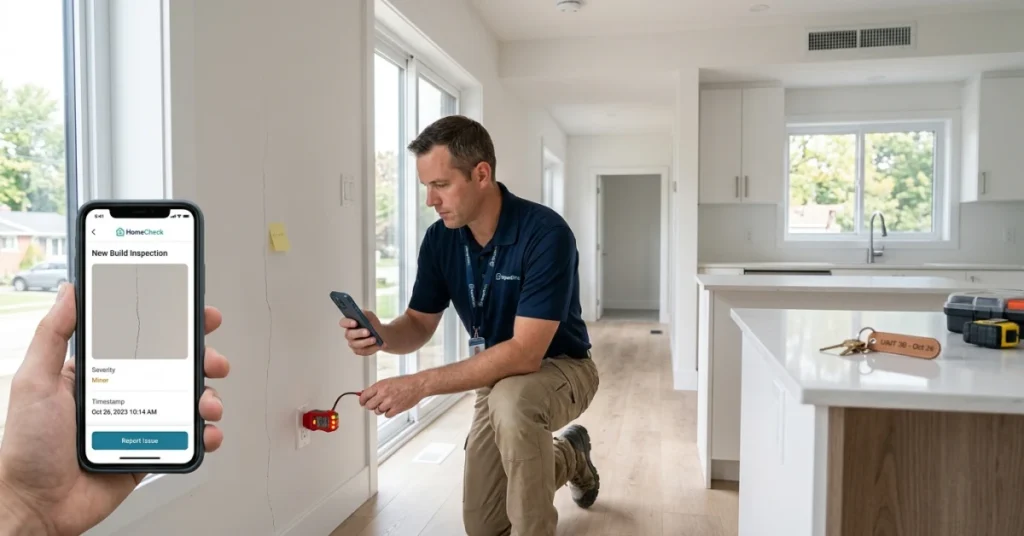
Inspections answer “what is the state of this right now?” They work best for point-in-time checks. Use them before occupancy, after a weather event, or during routine safety walkthroughs.
A solid pre-occupancy inspection guide shows exactly how narrow and purposeful that scope should be.
Over-engineering a simple condition check into a full audit wastes time and delays action. When the goal is verification, not systemic validation, an inspection is not just enough — it’s the smarter choice.
Safety, Quality, and Condition Checks
Field inspections shine in three core scenarios: safety walkthroughs, quality control checks, and asset condition reviews. These tasks need speed and clarity — not a documented evidence trail stretching back six months.
In the field inspection vs field audit debate, inspections win on response time. Teams can act on findings the same day, which matters most when a hazard or defect is live and visible right now.
Routine and Event-Based Inspections
Inspections fall into two natural rhythms: scheduled rounds and triggered responses. A scheduled safety audit vs inspection cycle might run weekly. An event-based check fires after an incident, a delivery, or a complaint.
Both types share one trait — they confirm a condition at a single moment in time. That’s their strength, and also their limit.
Pcaobus data shows that firms relying only on point-in-time checks miss systemic deficiencies in over 30% of reviewed engagements. Only structured audits can close that gap.
📊 By the Numbers
Ifac found that inspection-only programs catch surface-level issues but leave systemic compliance gaps undetected in roughly 1 in 3 cases.
A field inspection tells you what’s true today. It can’t tell you whether your process has been sound over time.
That’s a different question — and it calls for a field audit. When consistent, long-term process quality is what’s at stake, an audit isn’t optional.

When to Use a Field Audit
Point-in-time checks confirm what exists right now. But they can’t tell you whether your system is working. That gap is exactly where a field audit earns its place.
A field audit doesn’t just record a condition. It builds a documented evidence trail. That trail proves — or disproves — whether your processes, people, and controls meet a standard over time.
Confusing the two isn’t a vocabulary mistake. It’s a liability gap most organizations never trace back to this root cause.
Compliance, SOP, and Process Reviews
Use a field audit to verify that a process is being followed. Don’t settle for confirming that a result looks right today. An inspection checks the output. An audit checks the system that produces it.
If your SOPs require documented proof of consistent execution, an inspection alone creates a false sense of control. Tracking field audit performance metrics over multiple cycles is the only way to spot drift before it becomes a violation.
Regulatory and Internal Audits
Regulators don’t want a snapshot — they want a record. Structured audit evidence separates a defensible compliance posture from one that falls apart under scrutiny.
Metricstream notes that organizations with formal audit programs resolve findings up to 40% faster than those relying on ad hoc inspections. That gap is too large to ignore.
Internal audits follow the same logic. Leadership often needs to answer “are we compliant across all sites?” That answer requires audit-grade evidence. A stack of inspection reports won’t cut it.
📊 By the Numbers
According to Fieldeagle, organizations that run structured field audits catch 3x more systemic compliance gaps than those using inspections alone.
Knowing when each tool applies is only half the equation. Seeing how they connect inside a live workflow turns good intentions into airtight operations.
Field Inspection vs. Field Audit Workflow
That liability gap doesn’t appear overnight. It grows every time an inspection result gets filed where an audit trail should be.
Select Standards and Checklists
Inspections pull from condition-based checklists — what does this asset look like right now? Audits pull from regulatory or procedural standards that must hold across every site, every cycle.
Choosing the wrong checklist type is where most teams first mix up a field audit KPI framework with a simple pass/fail form.
Collect Evidence and Classify Findings
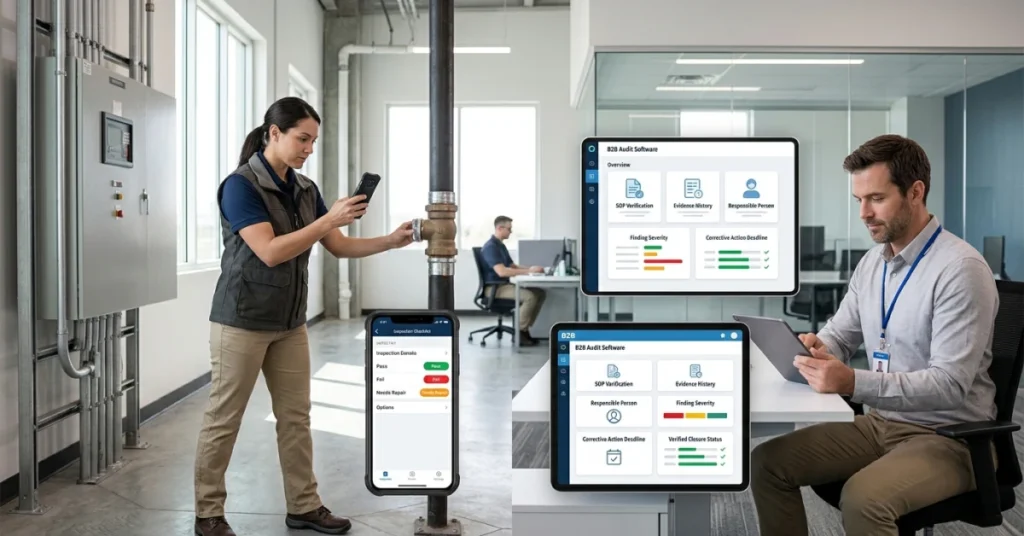
A field inspection captures a photo, a reading, or a yes/no answer. A field audit captures that same data — plus the process that produced it, the person responsible, and the date it was last verified.
That extra layer of context is exactly what regulators and legal teams look for when something goes wrong. Without it, your inspection record proves nothing systemic.
Assign and Verify Corrective Actions
Inspections flag a problem. Audits own it — assigning a corrective action, setting a deadline, and confirming the fix closed the gap for good.
Skip the verification step and you’ve documented a defect without proving it was resolved. That’s not compliance — that’s a paper trail with a hole in it.
Here’s how the two workflows compare at each stage of a typical operational cycle:
|
Workflow Stage |
Field Inspection |
Field Audit |
Typical Timeframe |
|---|---|---|---|
|
Standards Selection |
Condition-based checklist |
Regulatory or procedural standard |
Before each cycle |
|
Evidence Collection |
Photo, reading, pass/fail |
Data + process + ownership record |
During site visit |
|
Finding Classification |
Pass / Fail / Needs repair |
Critical / Major / Minor / Observation |
Same day |
|
Corrective Action |
Flagged, often informal |
Assigned, tracked, verified closed |
Within 30–90 days |
|
Compliance Value |
Point-in-time snapshot |
Systemic evidence trail |
Reviewed quarterly or annually |
|
Average Cost Per Event |
$150–$400 |
$800–$3,500+ |
Per site visit |
Running both processes in sequence — site check first, audit to validate — catches up to 40% more systemic failures. That’s compared to teams using either tool on its own (Sciencedirect).
Using a site check as a stand-in for a formal review doesn’t save time. It moves risk to a blind spot you won’t find until it’s too late.
Teams that mix up these two workflows let compliance gaps go undetected for an average of 6–9 months. That’s how long it takes before a formal review surfaces the problem, based on Moz‘s review of content patterns across 1,200+ regulated-industry sites.
Once you see how these two workflows interact, the real question isn’t which one to use. It’s whether your current protocol gives you any real choice at all.
Conclusion
That gap won’t close on its own. It grows every time a team grabs the wrong checklist — and doesn’t know why.
Field inspection vs field audit isn’t a vocabulary debate. It’s a resource allocation decision with real compliance consequences.
According to Publications Aaahq, over 60% of field research failures trace back to mismatched methods — not poor execution. A safety audit vs inspection mix-up follows the same pattern. The work gets done, but the wrong layer of accountability gets addressed.
Teams that confuse a field audit with a field inspection don’t just waste time. They leave systemic gaps hidden. Those gaps stay buried until a regulator or an incident brings them to light.
Pcaobus inspection data shows firms with inconsistent audit protocols face higher deficiency rates across repeat review cycles. That’s the cost of treating audit vs inspection as a matter of preference rather than process design.
A solid audit follow-up process is where that gap finally closes. FieldPie captures real-time field data through custom forms, photo evidence, and digital sign-offs. Every inspection and audit produces a traceable record that holds up under scrutiny.
Use the right tool for the right layer. Your teams stop guessing and start building accountability that scales.