


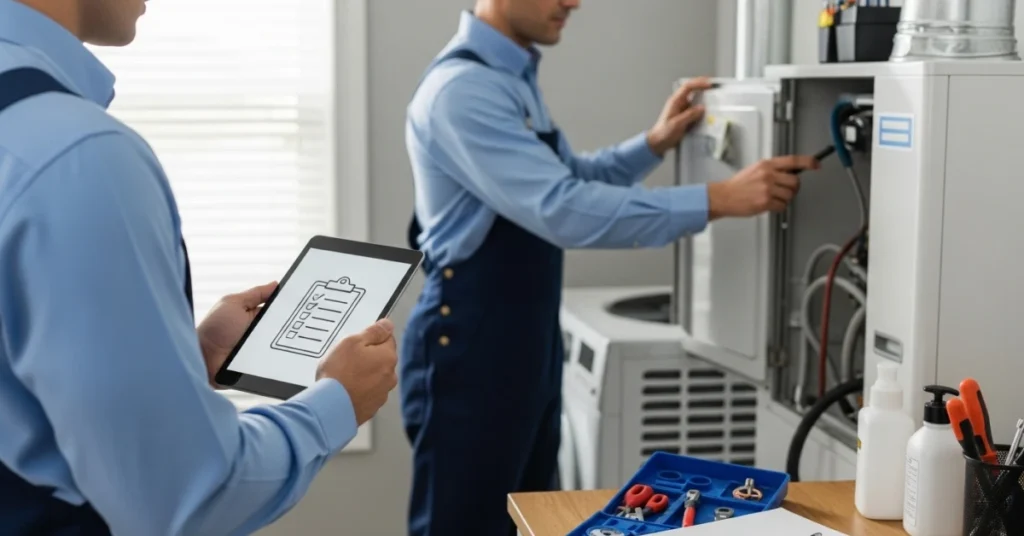
Your heating and cooling system runs year-round, yet most homeowners think about it only when it breaks. An HVAC maintenance contract is a service agreement with a qualified contractor designed to prevent costly breakdowns, improve efficiency, and ensure consistent comfort.
Most contracts include:
- Scheduled inspections and tune-ups
- Coil cleaning and filter replacement
- Refrigerant level checks
- Electrical connection inspections
- Priority repair service
Industry professionals recommend biannual maintenance—once before heating season and once before cooling season—to catch small issues before they turn into expensive emergencies.
With the HVAC services market projected to reach $97.9 billion by 2030, maintenance programs have evolved to include smart monitoring, energy efficiency assessments, and extended warranties.
Understanding how an HVAC contract works is the first step toward protecting your home’s most critical systems.
Benefits of HVAC Maintenance Contracts
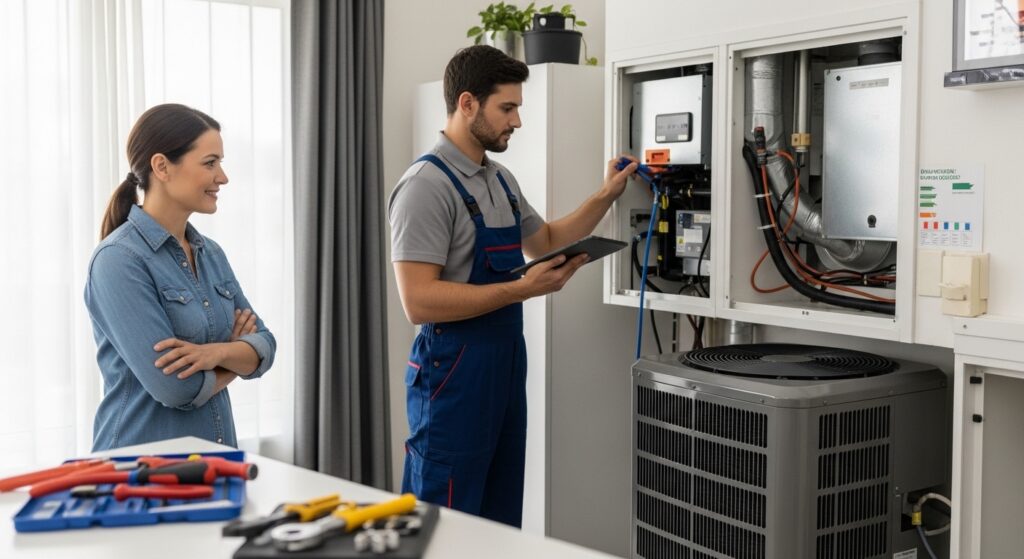
An HVAC service contract is more than convenience—it’s a strategic investment in comfort and cost control. Residential HVAC systems account for nearly half of a home’s energy consumption, making regular maintenance essential.
Key Benefits
- Lower repair costs: Prevents minor issues from becoming major failures
- Energy savings: Can reduce energy use by up to 15%
- Extended lifespan: Biannual tune-ups may add 5–10 years to system life, delaying a $5,000–$15,000 replacement
- Improved air quality: Cleaner coils, calibrated systems, and fresh filters
HVAC Contract Benefits for Contractors
For HVAC companies, maintenance contracts transform seasonal revenue into steady recurring income.
Business Advantages
- Predictable cash flow
- Higher customer retention
- Improved profit margins
- Reduced seasonal volatility
Contractors with strong maintenance programs often achieve retention rates above 80%, compared to roughly 20% in transactional repair-only models. Regular service visits also create opportunities to identify issues early and build long-term customer trust.
An effective HVAC maintenance agreement becomes the foundation for sustainable growth.
HVAC Contract Benefits for Customers
For homeowners, an HVAC maintenance contract turns reactive emergencies into proactive system care.
What Customers Gain
- System lifespan extension of 5–15 years
- Energy bill reduction of up to 15%
- 10–15% repair discounts in many plans
- Early detection of issues (e.g., a $200 refrigerant leak before it becomes a $3,000 compressor failure)
The result: Predictable costs and reliable year-round comfort.
What to Include in an HVAC Contract
A well-structured preventive maintenance contract should clearly outline service frequency, coverage details, and pricing to protect both parties. The most effective contracts specify exactly what’s included—such as filter changes, coil cleaning, and system inspections—along with what requires additional charges.
Essential contract elements include:
- Service schedule: Typically twice-yearly visits for residential systems, with commercial HVAC contracts often requiring quarterly or monthly service
- Equipment coverage: Which units are included and any age or condition limitations
- Priority service: Guaranteed response times for emergency repairs
- Parts and labor: What’s covered under the agreement versus additional charges
- Contract duration: Usually annual with automatic renewal options
According to HVAC industry data, proper contract documentation significantly reduces service disputes and improves customer retention rates. Smart contracts also include clear cancellation policies, technician certification requirements, and detailed service checklists that ensure consistency across all visits.
The best maintenance agreements strike a balance between comprehensive coverage and realistic pricing, creating a framework where both contractors and customers understand exactly what to expect from their ongoing partnership.
Maintenance Tasks and Service Coverage
Understanding what your HVAC maintenance contract covers prevents surprises and ensures complete system care. Commercial HVAC maintenance usually includes more extensive procedures than residential service due to higher system complexity and operational demands.
Typical service coverage includes:
- Filter replacement and coil cleaning
- Refrigerant level checks
- Electrical connection inspections
- Thermostat calibration
Advanced contracts may also include:
- Ductwork inspection
- Indoor air quality testing
- Emergency repair protocols
With the HVAC services market projected to reach $97.9 billion by 2030, demand for comprehensive maintenance programs continues to grow.
A strong HVAC maintenance contract template should define seasonal tasks such as spring cooling preparation, fall heating checks, and year-round safety inspections. Service depth varies—basic plans may include only visual checks, while premium contracts offer predictive maintenance and priority emergency response.
The key is aligning contract coverage with system needs and usage. Commercial facilities require more frequent service and specialized expertise, while residential contracts typically focus on routine seasonal maintenance. This scope directly influences pricing and long-term contract value.
Pricing and Contract Structure
HVAC maintenance contracts typically follow three pricing models: flat-rate annual fees, per-visit charges, and tiered service packages. Residential plans usually range from $150–$500 per year, while commercial contracts can reach several thousand dollars depending on system complexity and coverage.
Common pricing structure includes:
- Base services: Routine inspections, filter changes, basic tune-ups
- Add-ons: Emergency HVAC services and extended coverage
- Flexible payments: Monthly installments instead of annual lump sum
Tiered pricing reflects service depth and response guarantees:
- Basic plans: Preventive maintenance
- Mid-tier: Faster response and repair discounts
- Premium: Parts coverage and 24/7 emergency service
According to industry data, pricing is designed to create predictable revenue for contractors while delivering clear value to customers. Many contracts offset their cost through energy savings and avoided emergency repairs, making it essential to match pricing tier with system needs and risk level.
HVAC Contract Pricing Explained

Understanding how contractors price an HVAC contract helps you evaluate proposals and negotiate better terms. Pricing is typically based on system complexity, service frequency, and included benefits such as priority scheduling.
HVAC contracts generally follow three pricing models:
- Flat-rate annual fee
- Per-visit charges
- Tiered service packages
Typical Cost Ranges
- Residential: $150–$500 annually
- Commercial: $2,000–$10,000, depending on system size
Premium contracts typically cost 20–40% more but may include parts coverage, priority scheduling, and 24/7 emergency response.
According to the US Bureau of Labor Statistics, technician wages directly influence pricing across markets.
Well-structured contracts often offset their cost through energy savings and avoided emergency repairs.
Managing HVAC Contracts Efficiently
Effective HVAC contract management turns a yearly service agreement into an active partnership that improves system performance and long-term cost savings.
Best practices include:
- Track service schedules
- Maintain digital records
- Use contractor portals when available
- Define communication protocols clearly
According to Capstone Partners market analysis, companies with structured communication processes experience 40% fewer service disputes.
Proactive management helps extend equipment life and maintain peak performance.
Conclusion: Turning HVAC Contracts Into Long-Term Value
A well-structured HVAC maintenance contract transforms reactive repair costs into proactive system protection. It delivers predictable expenses, improved efficiency, and longer equipment life.
Choose contractors with transparent pricing, clear service scope, and defined performance standards.
🚀 Simplify Your HVAC Contract Management
If you’re an HVAC contractor looking to streamline maintenance contracts, manage recurring revenue, and improve customer retention, FieldPie helps you digitize and optimize your entire service workflow.
👉 Book a free demo today and discover how FieldPie helps you run HVAC contracts smarter and more efficiently.