


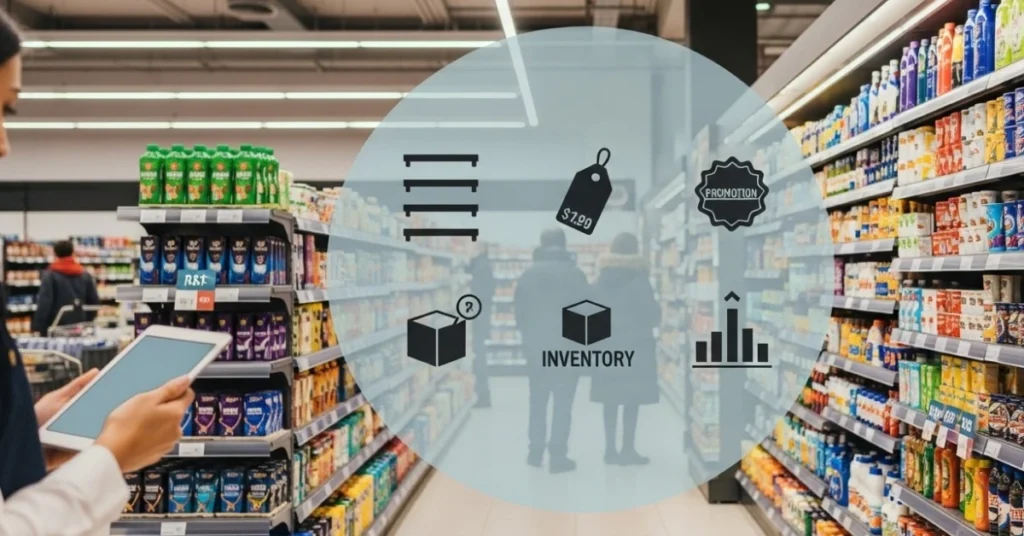
Merchandising solutions help retailers optimize product placement, inventory management, and customer experience at the point of sale. They replace fragmented manual processes with unified, data-driven execution that improves efficiency and sales performance.
Key capabilities include:
- Planogram compliance — Ensures products are placed correctly and consistently
- Pricing accuracy — Maintains correct and up-to-date pricing across displays
- Promotional execution — Verifies campaigns and in-store promotions are implemented properly
- Visual display standards — Keeps shelves and displays aligned with brand guidelines
- Analytics and real-time optimization — Enables automated compliance monitoring and inventory optimization
These solutions connect strategy with execution, ensuring every shelf, display, and promotion works together to convert shoppers into buyers.
Why Merchandising Solutions Matter
The retail landscape is changing as consumer expectations rise and profit margins shrink. Shoppers expect seamless experiences across all touchpoints, forcing retailers to shift from manual processes to fast, data-driven decision-making.
Retailers that fail to modernize their merchandising strategies risk losing market share and profitability. Today’s retail requires real-time, multi-channel inventory and execution.
Why merchandising solutions matter:
- Ecommerce merchandising optimization — Improves product visibility and catalog management
- Data-driven product placement — Uses customer behavior, seasonal trends, and inventory data
- Real-time inventory management — Enables faster decisions across channels
- Consistent execution — Maintains product visibility and competitive performance
Merchandising solutions are now a competitive necessity for staying relevant and driving growth.
Key Features of Modern Merchandising Solutions

Today’s retail merchandising platforms have evolved far beyond basic inventory tracking systems. Modern solutions, including merchandising solutions, combine real-time analytics, automated planogram management, field execution intelligence, AI-powered image recognition, and cross-channel visibility to create comprehensive merchandising ecosystems that adapt continuously to changing market conditions and consumer behavior.
Rather than simply tracking store activity, these platforms actively optimize in-store execution, improve compliance accuracy, reduce out-of-stock risks, and increase revenue productivity across every retail location.
Modern merchandising performance is built on four foundational pillars:
- Planogram compliance and execution accuracy
- Field team coordination and operational efficiency
- AI-powered shelf intelligence and visual recognition
- KPI-driven performance measurement and optimization
Together, these capabilities shift merchandising from reactive store control into a proactive, data-driven execution system where decisions are guided by real-time insights rather than manual audits.
The following sections explore how modern merchandising platforms help brands and retailers maintain consistent shelf standards, manage distributed field operations with greater efficiency, leverage AI for real-time shelf intelligence, and connect execution data directly to measurable business performance.
Planogram Compliance
Planogram compliance is one of the most critical—and most difficult—elements of retail execution. Planograms define:
- Where products must be positioned
- How much facing space each SKU receives
- Which items gain premium eye-level placement
Maintaining consistent compliance across hundreds or thousands of locations requires advanced tracking, automation, and structured monitoring.
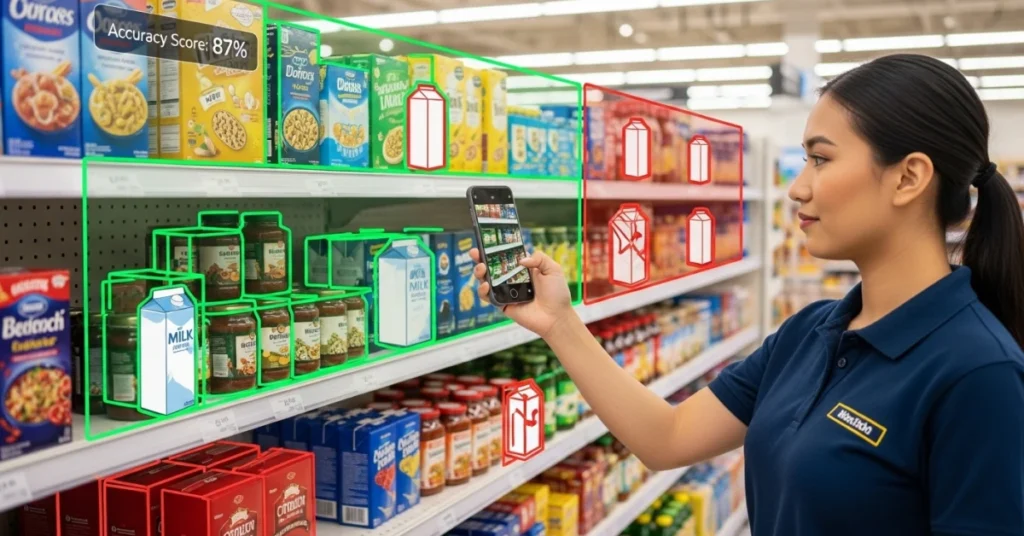
Modern merchandising platforms use AI-powered image recognition to compare real-time shelf photos against approved layouts. Within seconds, the system can detect:
- Misplaced or incorrectly positioned products
- Planogram deviations
- Missing SKUs
- Incorrect shelf placement
This eliminates manual audit guesswork and enables immediate corrective action.
The impact on revenue is significant. Research shows that strategic placement alone can increase sales by 20–30%. When products are out of position, buried on lower shelves, or missing entirely, brands lose visibility and revenue.
Poor compliance often triggers a cascade effect:
- Reduced shelf presence
- Lower brand recognition
- Weakened purchase intent at the point of sale
In short, planogram compliance directly influences both execution quality and business performance.
Field Team Management
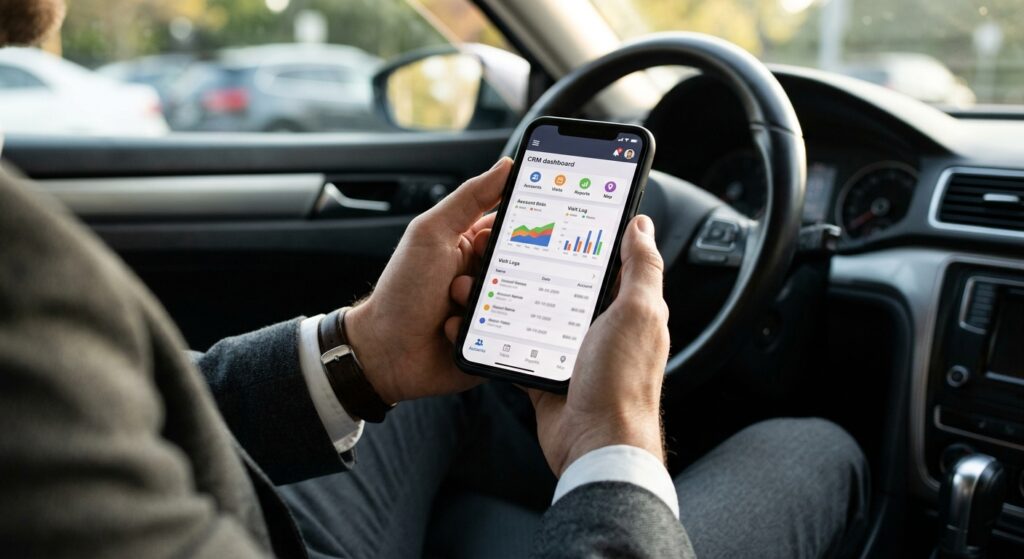
Managing distributed retail field teams introduces operational complexity that directly impacts merchandising execution quality. Modern merchandising platforms and advanced merchandising solutions now include integrated field team management capabilities that improve scheduling, task coordination, and performance visibility across multiple locations.
Route optimization automatically generates the most efficient store visit sequences based on:
- Geography and travel distance
- Store priority and urgency
- Team capacity and workload
This reduces travel time and maximizes productive store coverage throughout the day.
Real-time GPS tracking provides continuous visibility into:
- Team locations
- Visit progress
- Execution status
This allows managers to make dynamic schedule adjustments when urgent issues arise.
Task management becomes more strategic through automated merchandising workflows. Activities can be distributed based on:
- Team member expertise
- Workload balance
- Store complexity and execution priority
For example:
- Complex planogram resets → assigned to experienced representatives
- Routine compliance checks → assigned to developing team members
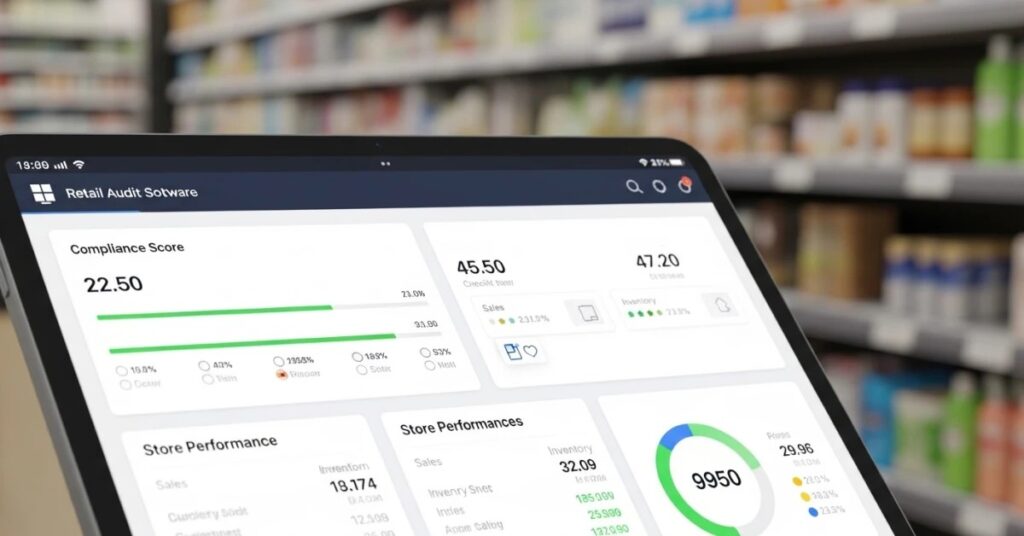
Performance dashboards provide a unified view of field execution by tracking:
- Completion rates
- Execution quality scores
- Productivity metrics
- Store coverage performance
These insights help managers:
- Identify training needs
- Recognize top performers
- Detect execution risks early
Advanced AI capabilities are increasingly integrated to deliver real-time feedback on execution quality, enabling automated verification and continuous performance improvement.
AI Image Recognition
AI image recognition represents a transformative advancement in how modern merchandising systems and modern merchandising solutions monitor and analyze retail environments. This technology converts field team photos into structured data that automatically:
- Identifies products
- Measures shelf compliance
- Detects merchandising violations
- Flags execution gaps in real-time
Advanced computer vision algorithms can distinguish between thousands of SKUs and compare shelf layouts against planogram specifications. The system can instantly detect:
- Out-of-stock situations
- Incorrect pricing
- Misplaced products
- Competitor intrusion
- Planogram deviations
What previously required hours of manual auditing now happens in seconds through automated recognition.
Modern AI image recognition goes beyond basic product detection. Advanced platforms also provide:
- Brand blocking analysis
- Share of shelf measurement
- Promotional display compliance checks
- Accuracy rates exceeding 95% in controlled environments
However, performance depends on operational discipline. AI image recognition requires:
- High-quality photography
- Consistent lighting conditions
- Standardized image capture protocols
Environmental factors such as shadows, reflections, or cluttered displays can affect detection accuracy, making proper training and deployment essential.
When implemented correctly, AI image recognition turns every shelf into a measurable data source. Real-time insights allow retailers to respond immediately to compliance issues instead of discovering execution problems weeks later.
KPI and Performance Analytics
Modern merchandising platforms improve how retailers measure and optimize execution through integrated analytics dashboards. These systems combine data from field teams, AI image recognition, and sales channels to deliver actionable insights.
Key metrics include:
- Planogram compliance
- Out-of-stock rates
- Promotional execution
- Share of shelf
- Execution quality
According to retail industry trends, integrated analytics improves both operational efficiency and revenue performance.
Modern platforms also connect merchandising actions directly to sales results in real-time, creating a continuous feedback loop between execution and business performance.
Predictive analytics helps identify:
- Underperforming stores
- Execution gaps
- At-risk categories
This enables smarter resource allocation and consistent execution across all locations.
Benefits of Using Merchandising Solutions
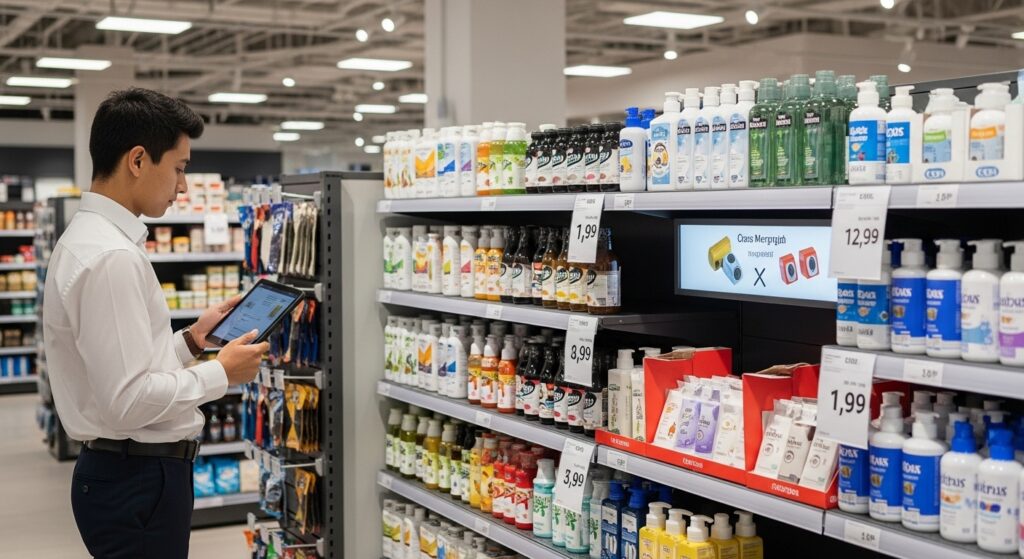
Modern merchandising platforms and advanced merchandising solutions deliver measurable improvements across key retail performance areas. Retailers using these merchandising solutions typically see better inventory turnover and stronger customer engagement driven by improved visual merchandising and execution consistency.
Operational efficiency is one of the most immediate gains. Automated compliance monitoring can reduce manual store visits by up to 60%, while real-time analytics enable faster decisions on product placement and promotional execution. Mobile-first platforms also improve staff productivity by simplifying task execution and reporting.
Revenue optimization comes from better product visibility and strategic placement. Data-driven insights help retailers:
- Identify high-performing in-store locations
- Optimize cross-merchandising opportunities
- Reduce out-of-stock situations that directly impact sales
Cost reduction occurs across multiple areas, including lower field travel expenses, fewer compliance violations, and reduced promotional waste. Industry trends show retailers using advanced merchandising platforms achieve 15–25% improvement in promotional ROI.
However, successful adoption depends on selecting the right platform, ensuring proper system integration, and preparing the organization for data-driven execution—factors that strongly influence overall results.
How to Choose the Right Merchandising Solution
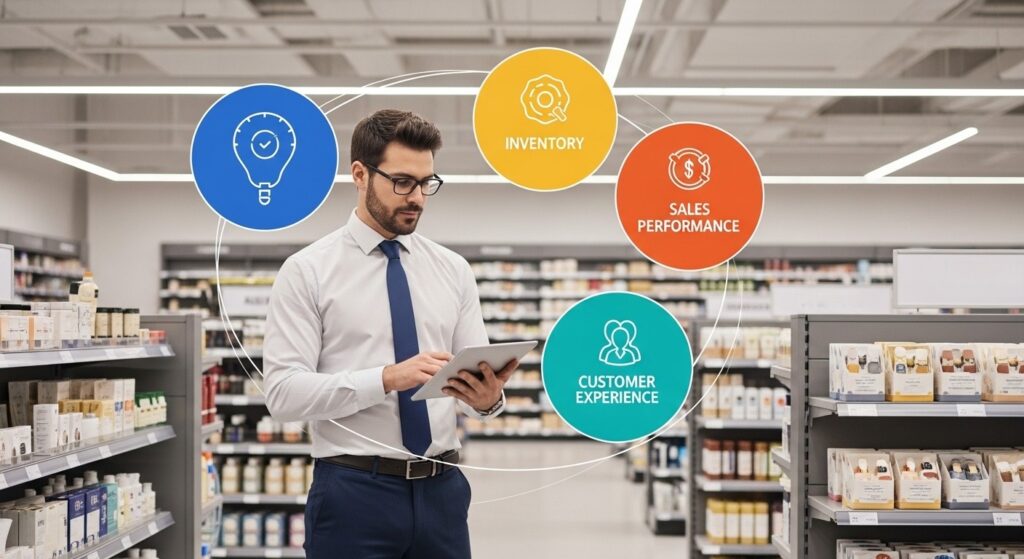
Choosing the right merchandising solution requires aligning platform capabilities with your retail operation’s size, complexity, and growth plans. The importance of merchandising in modern retail cannot be overstated—it directly affects customer experience, sales performance, and operational efficiency across all channels.
Business size and operational complexity are key decision factors:
- Small retailers often benefit from cloud-based solutions with core features such as inventory tracking and basic analytics.
- Enterprise retailers require advanced platforms supporting multi-location management, AI capabilities, and complex system integrations.
Integration capability is equally critical. Your solution should connect seamlessly with:
- POS systems
- Inventory management platforms
- E-commerce infrastructure
According to Retail Trends 2025 research, retailers prioritizing unified technology ecosystems achieve 23% better operational efficiency.
Budget strategy should balance upfront investment with long-term ROI. Modular pricing models allow businesses to scale features gradually, reducing unnecessary costs while maintaining flexibility for growth.
Finally, evaluate:
- Vendor support quality
- Implementation timeline
- User training resources
These factors directly impact adoption success and determine whether the merchandising solution delivers sustainable, measurable value.
Conclusion
Modern merchandising solutions use AI, real-time analytics, and automation to improve sales, inventory efficiency, and in-store execution.
By 2026, predictive analytics and automation will further strengthen merchandising and competitive advantage.
In short, effective merchandising solutions unify strategy and execution, turning every shelf into a revenue-driving opportunity.
FieldPie combines planogram compliance, AI image recognition, field execution, and performance analytics in one platform.
Book a demo to see how smarter merchandising drives real growth. 🚀