


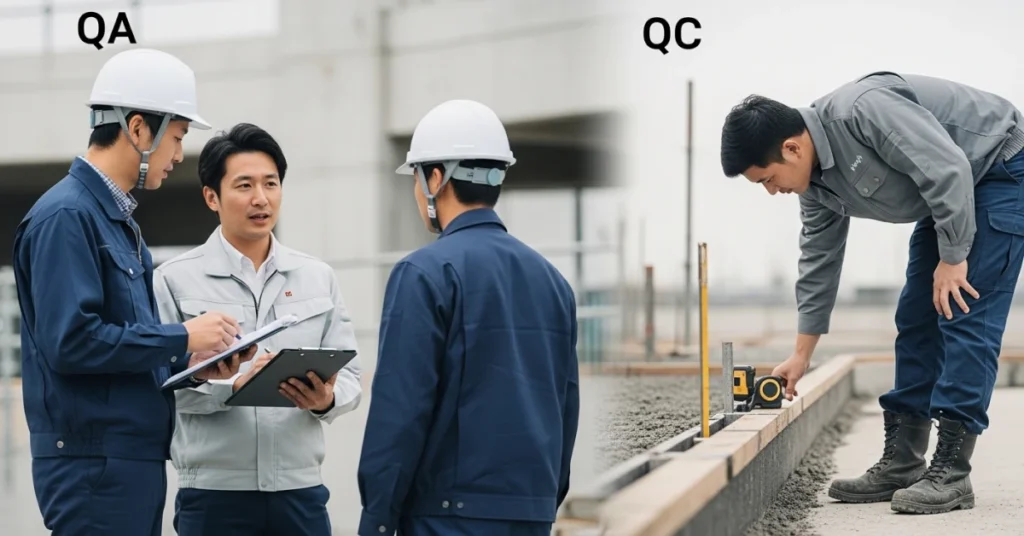
QA and QC in construction is the integrated system of quality assurance (QA) and quality control (QC) processes that ensures every phase of a construction project meets defined standards, regulatory compliance requirements, and client specifications — before, during, and after work is executed on site.
What Is the Difference Between QA and QC in Construction?
This is the most common point of confusion on any job site. The difference is directional: QA is proactive, QC is reactive. Understanding this distinction isn’t just academic — it determines how your teams allocate resources, who owns accountability, and how you structure your documentation.
As industry analysis explains, QA focuses on building the right processes upfront, while QC verifies that those processes produced the right output.
Here is a clear breakdown:
| Dimension | Quality Assurance (QA) | Quality Control (QC) |
|---|---|---|
| Orientation | Preventive | Detective |
| Timing | Before and during work | During and after work |
| Focus | Processes and systems | Products and outputs |
| Owned by | Management & project teams | Field inspectors & technicians |
| Output | Plans, procedures, training | Inspection reports, test results |
| Goal | Prevent defects and errors | Find and correct defects and errors |
| Compliance role | Sets compliance standards | Verifies compliance is met |
The practical vs theoretical difference matters here. QA asks: Do we have the right plan? QC asks: Did the plan work?
Why Does QA and QC in Construction Matter More Than Ever in 2026?
Rework is one of the costliest problems in the industry. According to research cited by digiQC, poor quality management on construction sites leads to defects that compound across project phases — meaning a single unchecked error in concrete pouring can cascade into structural compliance failures weeks later.
Three industry realities make a rigorous qaqc framework non-negotiable in 2026:
- Regulatory tightening: Building codes and OSHA compliance requirements continue to expand, with more jurisdictions mandating documented inspections and third-party audits.
- Labor complexity: Multi-tier subcontracting means site activities are executed by teams who may not share the same quality standards or training baseline.
- Technology accountability: Owners and insurers increasingly require digital documentation trails — not paper checklists — to validate compliance.
For teams managing multiple concurrent projects, understanding how scheduling integrates with quality workflows is critical to preventing inspection bottlenecks.

How Is a QA QC Plan Structured in Construction?
A qaqc plan is a formal, project-specific document that defines how quality will be managed from groundbreaking to handover. It is not a generic template — it must be tailored to the scope, materials, subcontractors, and compliance requirements of each project.
What Should a QA QC Plan Include?
A well-built plan typically contains seven core components:
- Quality policy statement — The organization’s commitment to standards, signed by senior leadership
- Roles and responsibilities — Who owns QA activities vs QC activities, including subcontractor accountability
- Applicable standards and codes — Referenced specifications (ACI, ASTM, IBC, project-specific specs)
- Inspection and test plan (ITP) — A matrix mapping every work activity to its required inspections, hold points, and witness points
- Documentation and record-keeping protocols — How errors, non-conformances, and corrective actions are logged and archived
- Submittal and material approval process — How materials are reviewed before they reach the site
- Training requirements — Minimum competency levels for teams executing quality-sensitive activities
As InspectMind’s construction QAQC guide notes, a strong qaqc plan defines not just what gets checked, but when, by whom, and what happens if it fails.
What Are the Key QA Activities on a Construction Project?
QA activities happen largely before boots hit the ground. These are the systems-level decisions that determine whether your site is set up for success.
Core QA activities include:
- Developing and approving the project qaqc plan
- Pre-qualification of subcontractors against quality and compliance benchmarks
- Reviewing and approving submittals, shop drawings, and material data sheets
- Conducting pre-construction meetings to align all teams on quality expectations
- Establishing inspection hold points in the scheduling sequence
- Delivering toolbox talks and site-specific quality training
- Setting up the document management system for non-conformance reporting
- Auditing subcontractor QA procedures before work begins
A common mistake is treating QA as a one-time setup task. In practice, QA activities must be revisited whenever scope changes, new subcontractors are brought on site, or design modifications alter the original plan.
What Are the Key QC Activities on a Construction Project?
QC is where the plan meets the physical reality of the site. These activities are executed by inspectors, testing agencies, and field supervisors during and after construction activities.
Core QC activities include:
- Conducting pre-pour, pre-installation, and pre-cover inspections
- Performing material testing (concrete cylinder breaks, soil compaction, weld inspections)
- Verifying dimensions, elevations, and alignments against approved drawings
- Documenting deficiencies and issuing non-conformance reports (NCRs)
- Tracking corrective actions to closure
- Maintaining inspection and test records for compliance audits
- Executing punch list inspections at project closeout
- Coordinating third-party special inspections per IBC Section 1705
As Achieveng Engineering points out, QC is reactive by nature — but how quickly teams respond to identified errors determines whether a defect becomes a minor correction or a costly structural rework.
Linking QC findings back into the QA process closes the loop: recurring errors in your inspection data should trigger a review of the procedures that were supposed to prevent them.
How Do Common Errors Undermine QA QC Programs?
Even well-designed qaqc programs fail in predictable ways. Recognizing these errors before they occur is the hallmark of mature quality management teams.
The most common errors include:
1. Treating QA and QC as the same function When one person or team owns both, the preventive mindset of QA gets crowded out by the reactive urgency of QC. Separate ownership matters.
2. Inadequate documentation discipline Verbal approvals and informal sign-offs don’t hold up during compliance audits or legal disputes. Every inspection, test, and corrective action needs a written record.
3. Scheduling inspections as an afterthought Inspections that are not built into the scheduling sequence get skipped when schedule pressure mounts. Hold points must be locked into the project schedule — not treated as optional.
4. Failing to close the loop on NCRs Issuing a non-conformance report without tracking it to verified closure is the most common compliance gap auditors find. Open NCRs signal a broken system.
5. Ignoring subcontractor QC activities General contractors are ultimately responsible for the quality of all work on site. Assuming subcontractors self-manage their own compliance without verification is a systemic risk.
Who Is Responsible for QA QC on a Construction Project?
Responsibility is layered, and confusion about ownership is itself a quality risk. Here is how accountability is typically distributed:
| Role | QA Responsibilities | QC Responsibilities |
|---|---|---|
| Project Manager | Approves qaqc plan; ensures resources are allocated | Reviews NCR logs; escalates unresolved defects |
| QA/QC Manager | Develops and maintains qaqc plan; conducts audits | Oversees inspections; signs off on test reports |
| Site Supervisor | Implements QA procedures in daily site activities | Conducts pre-activity inspections; flags defects |
| Subcontractors | Submit QA documentation; attend quality meetings | Execute self-inspections; correct identified errors |
| Third-Party Inspector | N/A | Performs independent compliance inspections per IBC/local code |
| Owner/Client | Approves quality standards; reviews compliance reports | May conduct independent audits at key milestones |
On large or complex projects, a dedicated qaqc manager is essential. On smaller projects, the site supervisor often carries both QA and QC responsibilities — which requires explicit scheduling of quality activities to prevent them from being deprioritized.

Frequently Asked Questions (FAQ)
What is the main difference between QA and QC in construction?
QA (Quality Assurance) prevents defects by setting standards and processes before work begins. QC (Quality Control) detects and fixes defects through inspections during and after construction. In short: QA prevents, QC detects.
What should a construction QA QC plan include?
A QA QC plan should cover quality policies, roles and responsibilities, standards, inspection and test plans (ITP), documentation processes, material approvals, and staff training.
How often should QC inspections be conducted on a construction site?
QC inspections should occur at key stages such as material delivery, before critical work (e.g., concrete pours), at hold points, and at phase completion. High-risk activities may require daily or continuous inspection.
Conclusion
A disciplined QA and QC in construction program is the difference between a project that closes on time with zero compliance issues and one that hemorrhages budget on rework and regulatory delays. QA builds the system. QC proves it works. Together, they protect your teams, your clients, and your firm’s reputation on every project.
The checklist above gives you a starting framework. The table of responsibilities gives you the accountability structure. But execution requires tools that match the pace and complexity of modern construction sites.