


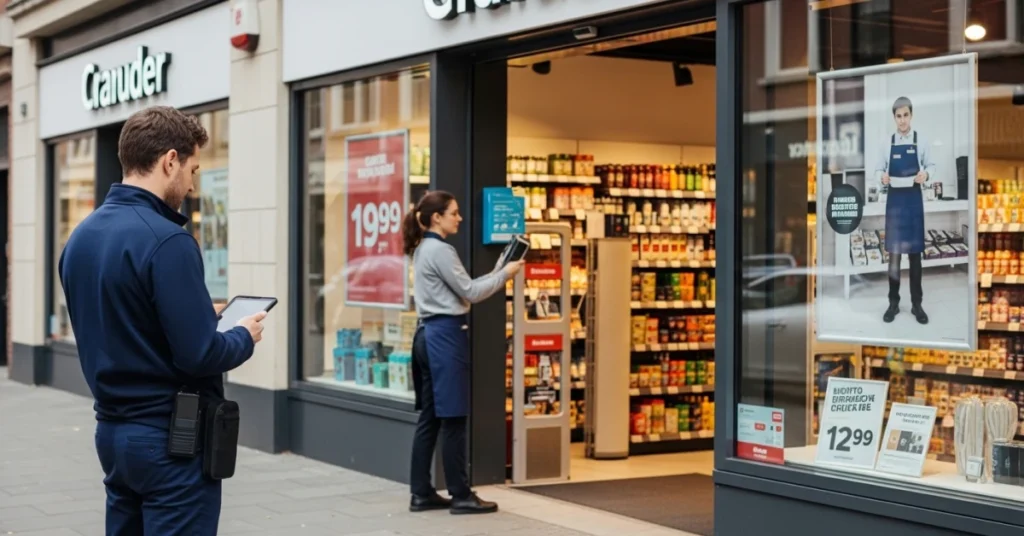
Retail standards are the documented operational, safety, legal, and brand requirements that govern how a retail business must function — covering everything from store layout and product display to food safety protocols and labor law compliance. Meeting these standards protects consumers, employees, and the business itself.
What Are Retail Standards?
Retail standards define the minimum acceptable benchmarks a store must meet across operations, safety, merchandising, and regulatory compliance. According to Law Insider’s legal definition, retail standards require that the use of retail space be limited to merchandise and services consistent with the quality and nature of a first-class commercial establishment — excluding any use that would diminish the image or reputation of the property.
In practice, these standards touch every function of your store: how products are displayed, how staff are trained, how safety hazards are managed, and how your business complies with local, national, and international regulations.
Why Do Retail Standards Matter in 2026?
The retail landscape has grown more complex. Globalization, e-commerce competition, and tightening regulatory frameworks mean that compliance is not optional — it is a competitive advantage.
According to retail compliance guide, acting in accordance with retail regulations delivers measurable outcomes:
- Guaranteed consumer rights and safety
- Reduced legal and financial exposure
- Stronger brand image and customer trust
- Improved employee performance and workplace safety
- Greater operational consistency across store locations
Retailers that do not enforce consistent standards risk fines, reputational damage, and loss of customer confidence. Any lapse in compliance — whether a mislabeled product or a blocked fire exit — can have serious consequences.

What Are the Key Categories of Retail Standards?
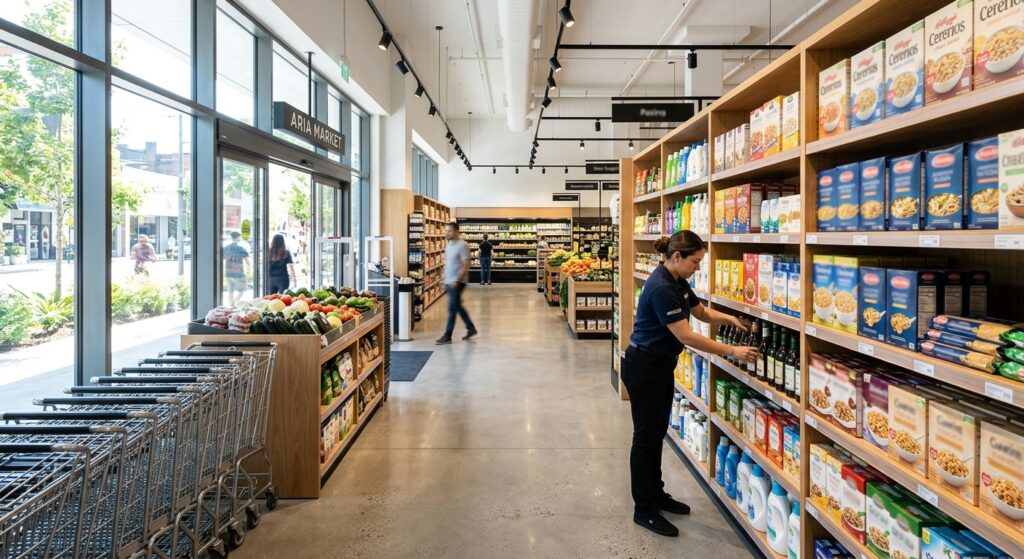
Health and Safety Standards
Safety is the foundation of any retail compliance program. In the U.S., OSHA (Occupational Safety and Health Administration) sets enforceable workplace safety rules that apply to every retail store. Key requirements include:
- Clear emergency exit signage with no obstructions
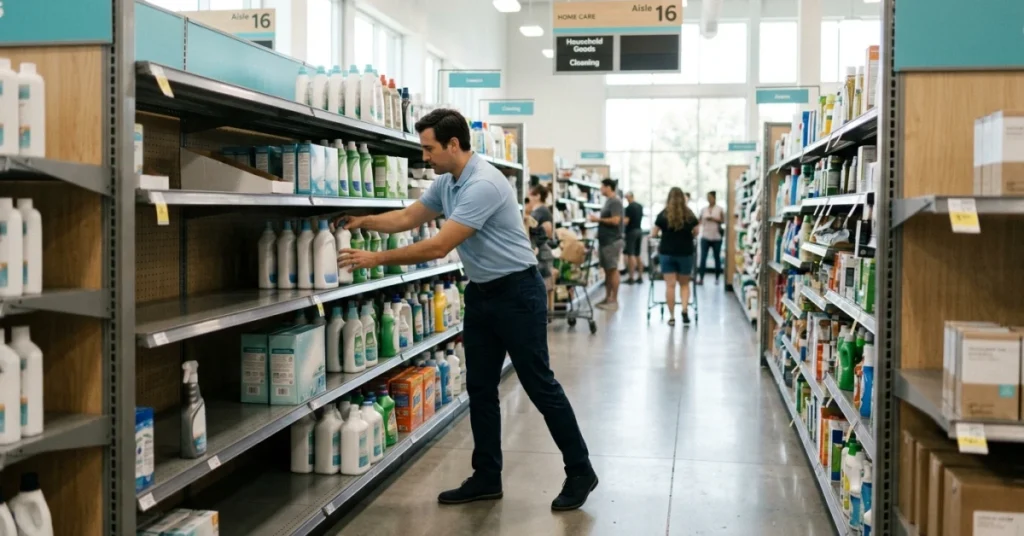
- Safe storage of stock to prevent falling hazards
- Slip, trip, and fall prevention protocols
- Adequate lighting throughout the store and stockroom
- Regular safety inspections and documented corrective actions
Please note that safety violations carry civil penalties starting at $16,131 per citation under current OSHA rules. Any repeated or willful violation can reach $161,323 per instance.
For retailers operating food departments, the FDA’s Voluntary National Retail Food Regulatory Program Standards establish nine core standards covering food safety inspections, trained regulatory staff, and foodborne illness investigation protocols. These standards are used by state and local regulatory agencies to benchmark their own inspection programs.
Visual Merchandising and Display Standards
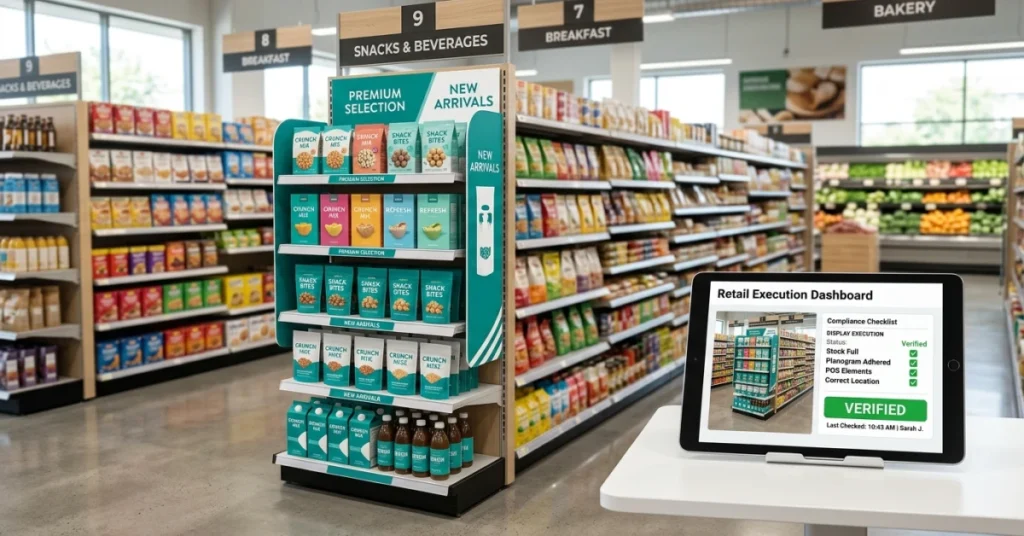
Display standards govern how products are presented to customers inside your store. A well-executed display strategy does not just look good — it directly drives conversion and average transaction value.
Core display standards typically include:
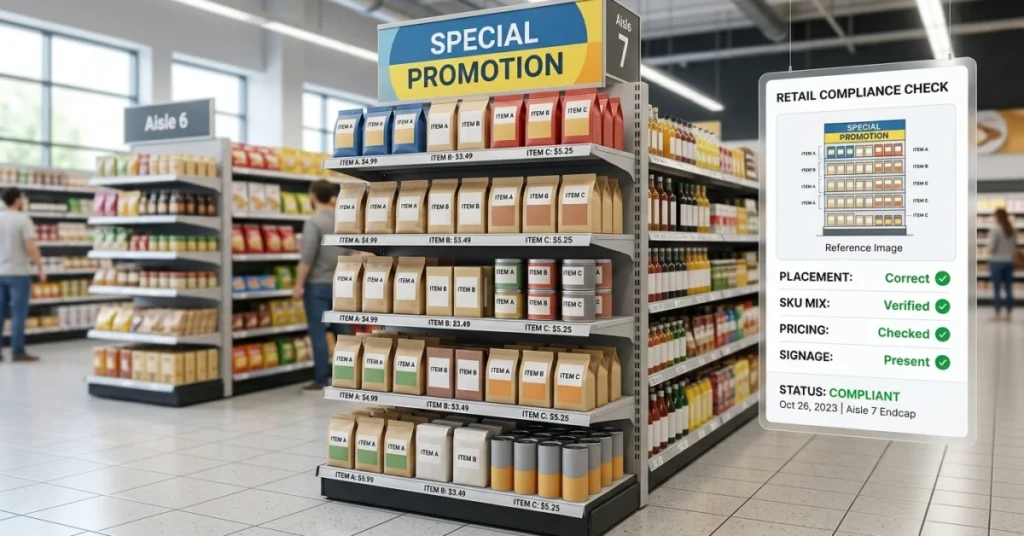
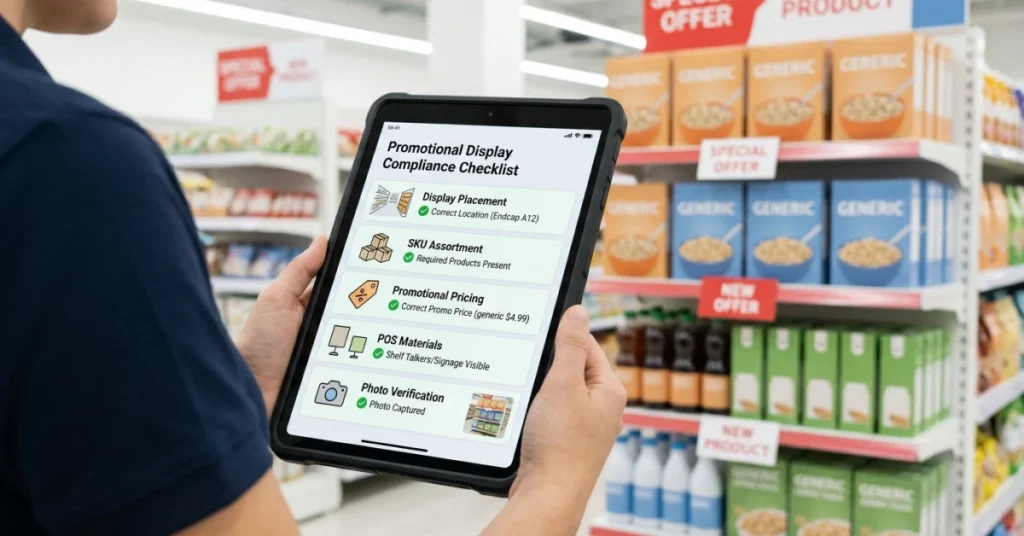
- Planogram compliance: products placed in the exact shelf position specified by the brand or category manager
- Correct use of POS (point-of-sale) materials and signage
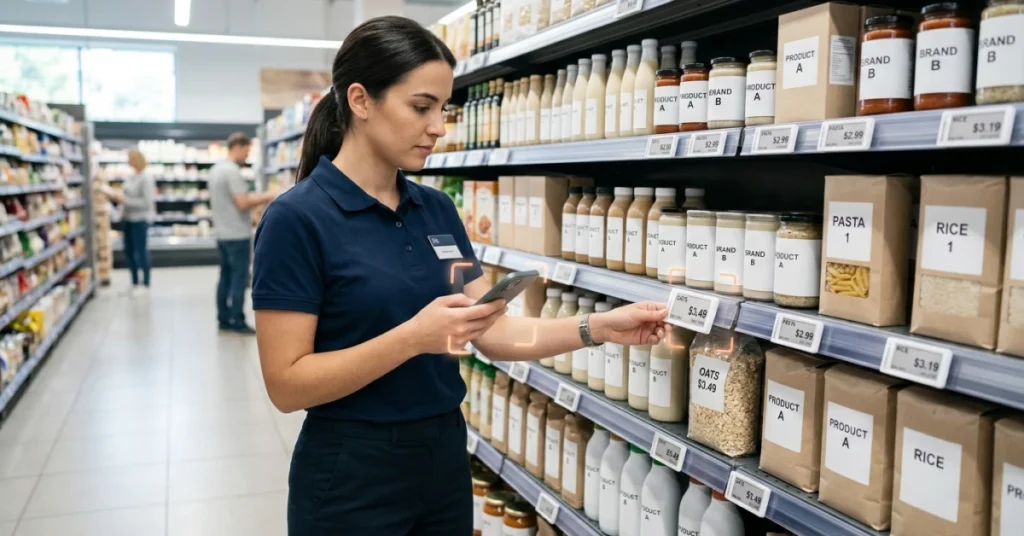
- Price accuracy: every product must carry a visible, accurate price tag
- Stock rotation: FIFO (first in, first out) principles applied to perishable and dated products
- Clean, uncluttered shelf presentation that reinforces brand image
Transport for London’s Retail Design Standards document — a 286-page framework governing retail units across the London Underground network — demonstrates how display standards can be codified at the infrastructure level. TfL’s approach requires that every retail fitout comply with fire safety classification, material specifications, and design guidelines before opening. Please contact your relevant authority for equivalent standards in your jurisdiction.
Consistent display execution across multiple store locations is one of the hardest operational challenges retailers face. For multi-site brands, retail store audit software provides the visibility needed to verify planogram compliance and display quality at scale without relying solely on manual store visits.
Product Quality and Safety Compliance Standards
Product compliance ensures that what you sell meets legal safety and labeling requirements. This is not limited to food retailers. Any store selling consumer goods must adhere to applicable standards.
Key frameworks include:
| Standard/Body | Scope | Applicability |
|---|---|---|
| BRCGS Retail Standard | Brand reputation, supply chain integrity, consumer product safety | Retailers with own-label products |
| FDA Food Safety Modernization Act (FSMA) | Food safety controls, hazard analysis | Food and grocery retailers |
| CPSC Regulations | Consumer product safety, recalls | General merchandise retailers |
| ISO 9001 | Quality management systems | Any retail organization |
| OSHA 29 CFR 1910 | Workplace safety | All U.S. retail employers |
The BRCGS Retail Global Standard is recognized globally and provides a certification pathway for retailers who want to demonstrate that their brand image, supplier relationships, and product quality meet internationally accepted benchmarks. BRCGS certification signals to customers and business partners that your compliance program is independently verified — not self-assessed.
Labor and Employment Compliance Standards
Your store’s compliance obligations extend to how you treat your workforce. Labor standards cover:
- Minimum wage compliance — Federal minimum wage is $7.25/hour, though many states and cities set higher floors. Please verify your local rate annually.
- Working hours and overtime — The Fair Labor Standards Act (FLSA) mandates 1.5x pay for any hours over 40 per week.
- Anti-discrimination laws — Title VII of the Civil Rights Act, ADA, and ADEA apply to any retail employer with 15 or more employees.
- Child labor restrictions — Strict limits on hours and job types for workers under 18.
- Right to work and I-9 compliance — Every employee must complete Form I-9 within three days of their start date.
Non-compliance with labor standards is not a minor issue. The Department of Labor recovered over $274 million in back wages for workers in fiscal year 2023 alone.
Data Privacy Standards
If your store collects customer data — through loyalty programs, e-commerce, or payment processing — you are subject to data privacy compliance requirements.
- PCI DSS (Payment Card Industry Data Security Standard): Required for any store that accepts credit or debit card payments. Non-compliance can result in fines of $5,000–$100,000 per month.
- CCPA (California Consumer Privacy Act): Applies to retailers doing business in California with annual revenues over $25 million or data on 100,000+ consumers.
- GDPR: Applies to any U.S. retailer with customers in the European Union.
What Are the Most Common Retail Compliance Failures?
According to Smart Warehousing’s retail compliance best practices analysis, the most frequent compliance breakdowns in retail operations fall into five categories:
- Inconsistent store execution — Standards exist on paper but are not enforced consistently across locations.
- Outdated training — Staff are not kept current on regulatory changes or updated internal procedures.
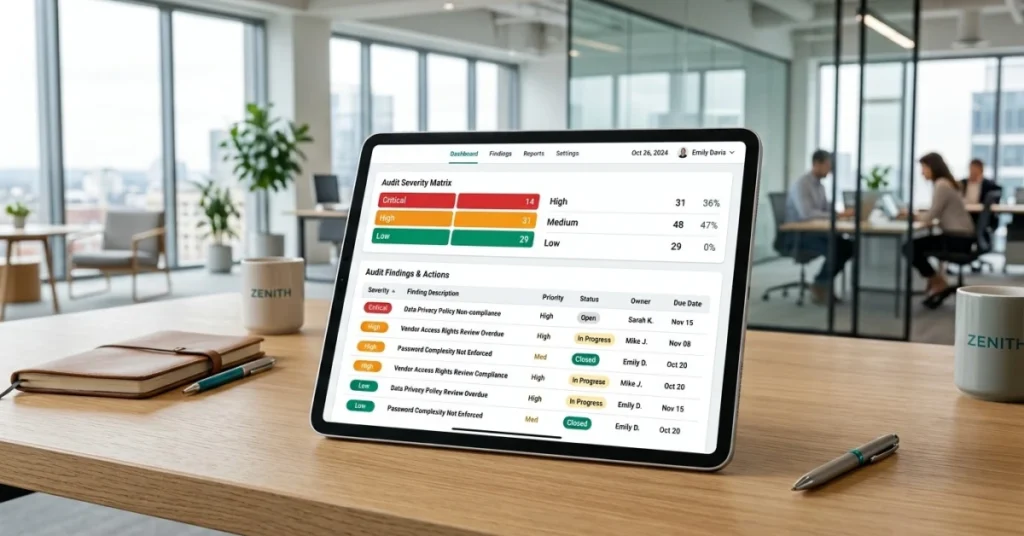
- Poor documentation — Audits happen verbally or informally, leaving no record for regulators or internal review.
- Supply chain gaps — Retailers assume supplier compliance without verifying it, exposing themselves to product liability.
- Technology lag — Manual spreadsheet-based tracking cannot scale across multi-location retail operations.
The performance cost of these failures is significant. Inconsistent compliance directly erodes store-level performance metrics, customer satisfaction scores, and brand image.
How to Build a Retail Standards Program from Scratch
If your organization does not yet have a formalized compliance program, here is a practical framework to build one:
Step 1: Conduct a baseline audit. Visit each store location and document current conditions against each compliance category. Use a standardized checklist so results are comparable.
Step 2: Identify your regulatory obligations. Map every applicable law and standard to your business type, location, and product category. Do not assume — contact your local health department, labor board, and industry association for a definitive list.
Step 3: Draft written standards. Every operational requirement must be documented in writing. Verbal instructions are not enforceable and do not protect your organization in the event of a regulatory inspection.
Step 4: Train your team. Standards only work if the people responsible for executing them understand what is required and why it matters. Please ensure training is role-specific and documented.
Step 5: Schedule regular audits. Establish a cadence — weekly for high-risk areas like food safety, monthly for visual merchandising, quarterly for full-store compliance reviews.
Step 6: Use technology to enforce and track. Deploy a retail field audit management system to digitize your checklists, track completion, and generate compliance reports automatically.
Step 7: Review and update annually. Regulations change. Your standards program must be reviewed at least once per year and updated to reflect any new legal requirements, product changes, or operational shifts.
Effective retail team training and compliance onboarding is often the difference between a program that exists on paper and one that actually changes store-level behavior.
Retail Standards by Business Type: A Quick Reference
| Retail Type | Primary Standards Focus | Key Regulatory Bodies |
|---|---|---|
| Grocery / Food Retail | Food safety, temperature control, labeling | FDA, USDA, local health depts. |
| Apparel | Product labeling, fiber content disclosure, labor | FTC, CPSC, DOL |
| Electronics | Product safety, warranty compliance, e-waste | CPSC, EPA, FCC |
| Pharmacy / Health | Drug storage, patient privacy, licensing | DEA, FDA, state pharmacy boards |
| General Merchandise | Product safety, pricing accuracy, ADA compliance | CPSC, FTC, DOJ |
| Franchise Retail | Brand standards, operational consistency, IP compliance | Franchisor + all applicable regulators |
Frequently Asked Questions (FAQ)
What is the difference between retail standards and retail compliance?
Retail standards define the requirements your store must meet, such as visual guidelines or operational rules. Retail compliance is the ongoing process of checking and ensuring those standards are consistently followed. In short, standards set the target; compliance ensures it is met.
Are retail standards legally enforceable?
Some standards are legally enforceable, such as safety and labor regulations (OSHA, FDA, FLSA). Others, like brand or internal standards, are enforced through contracts or company policies. While not legal obligations, failing to meet them can still lead to penalties, contract termination, or brand damage.
How often should a retail store conduct a compliance audit?
Audit frequency depends on risk level. High-risk areas like safety and food handling should be checked weekly or daily. Merchandising standards are typically reviewed monthly, while full-store audits are conducted quarterly, with a comprehensive annual review.
Conclusion
Maintaining consistent retail standards across every store, every shift, and every product category is one of the most operationally demanding challenges in modern retail. The stakes are high: non-compliance exposes your business to regulatory penalties, erodes customer trust, and undermines the brand image you have invested in building.
The solution is not more manual effort — it is a smarter system. Clear written standards, role-specific training, regular audits, and technology-enabled tracking are the four pillars of a compliance program that actually works at scale.