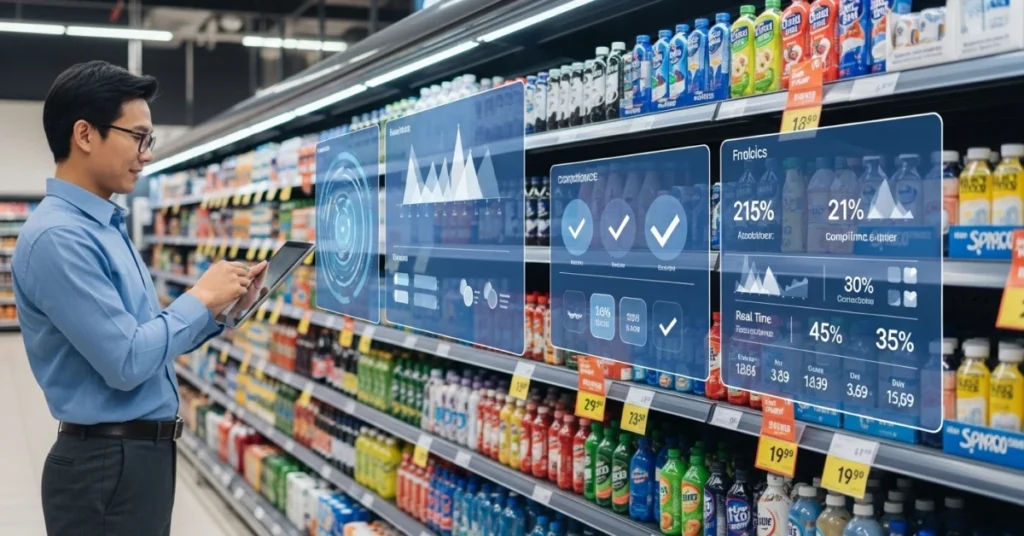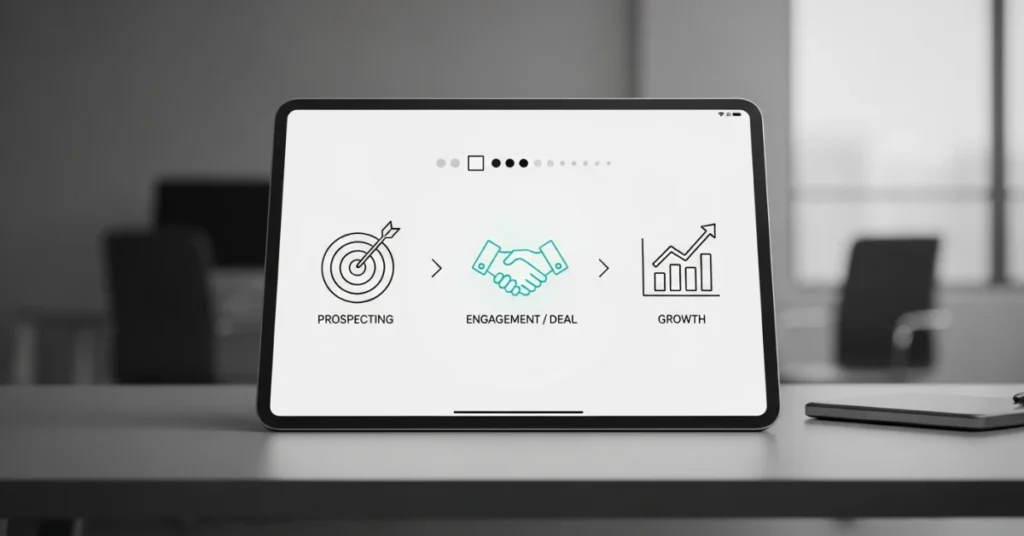




Retail execution is the set of activities consumer goods (CG) brands deploy at the store level — product placement, pricing compliance, promotions, inventory management, and staff training — to ensure the right product is available at the right place, at the right time, and at the right price.
Why Does Retail Execution Matter More Than Ever in 2026?
The numbers don’t lie. The consumer goods industry spends $200 billion annually on in-store promotional activity — yet Deloitte estimates 90% of CG companies fail to deliver on their in-store promotional strategy. That’s not a minor gap; it’s a structural crisis.
Margins have returned to slim baselines as pricing and input costs stabilize. Every missed shelf placement, every out-of-stock event, and every non-compliant display is direct revenue walking out the door. Brands that treat retail execution as an afterthought are subsidizing their competitors.
Three macro forces are making this discipline non-negotiable in 2026:
- Margin compression. Post-pandemic pricing power has eroded. Brands can no longer rely on price increases to cover execution failures.
- Retailer consolidation. Fewer, more powerful retail partners means losing a listing has outsized consequences.
- Data visibility expectations. Retailers now demand proof of execution — photos, timestamps, and compliance scores — not just field rep sign-offs.
What Are the Core Components of Retail Execution?
Strong retail execution is built on six interconnected pillars. Weakness in any one of them creates a ripple effect across the others.
| Pillar | What It Covers | Primary KPI |
|---|---|---|
| Shelf Placement & Planogram Compliance | Correct product position, facing count, and adjacency | Planogram compliance rate (%) |
| Pricing & Promotion Compliance | Accurate shelf tags, promotional pricing, and trade deal execution | Price compliance rate (%) |
| Inventory & Availability | On-shelf availability, backroom stock, and order accuracy | Out-of-stock rate (%) |
| Merchandising & Display | POS materials, secondary displays, and seasonal sets | Display compliance rate (%) |
| Field Rep Activity | Store visit frequency, task completion, and relationship management | Visits per rep per day |
| Retailer & Staff Training | Product knowledge, sell-through techniques, and compliance education | Training completion rate (%) |
How Does Retail Execution Actually Work in the Field?
The cycle runs on four repeating phases:
1. Plan Headquarters sets promotional calendars, planograms, pricing floors, and visit schedules. These directives flow down to regional managers and field reps as specific, measurable tasks.
2. Execute Field reps visit stores, verify shelf conditions, reset displays, address out-of-stocks, and conduct retailer conversations. Every action is logged — ideally in real time via a mobile platform.
3. Audit Store conditions are verified against the plan. Photo evidence, digital surveys, and shelf-scanning tools capture the actual state of execution. Gaps are flagged immediately.
4. Analyze & Adjust Data from the field rolls up into dashboards. Managers identify underperforming stores, territories, or SKUs and reallocate resources before promotional windows close.
This loop used to take weeks. Best-in-class brands are now closing it in 24–48 hours.
What Are the Most Common Retail Execution Failures — and How Do You Fix Them?
Understanding where retail execution breaks down is the fastest path to improving it.
Out-of-Stock Events
Empty shelves are the single most expensive execution failure. When a product isn’t on the shelf, the shopper either buys a competitor’s product or leaves without purchasing. Field reps must verify backroom inventory and trigger replenishment during every store visit.
Planogram Non-Compliance
Retailers agree to specific shelf layouts in exchange for trade investment. When those layouts aren’t maintained — wrong facings, wrong position, competitor encroachment — the brand loses visibility and the retailer loses the benefit of a curated assortment.
Promotional Execution Gaps
A promotion that exists in the system but isn’t activated at shelf is money wasted. Pricing tags are missing, secondary displays are never built, or end-caps are occupied by a different brand. Research consistently shows that in-store promotional compliance rates average well below 70% industry-wide.
Inconsistent Field Rep Coverage
High-value stores get visited frequently; smaller accounts get skipped. This creates uneven execution quality and allows problems to compound at lower-tier locations.
Lack of Real-Time Data
When field data takes days to reach headquarters, the promotional window is already half over before corrective action is possible.
How Does Technology Transform Retail Execution?
Manual clipboards and spreadsheet-based reporting cannot keep pace with the speed modern retail demands. Purpose-built field execution platforms eliminate the lag between what’s happening in stores and what leadership sees on their dashboards.
FieldPie is a field operations and field management platform built specifically for this challenge. It gives CPG brands and field teams:
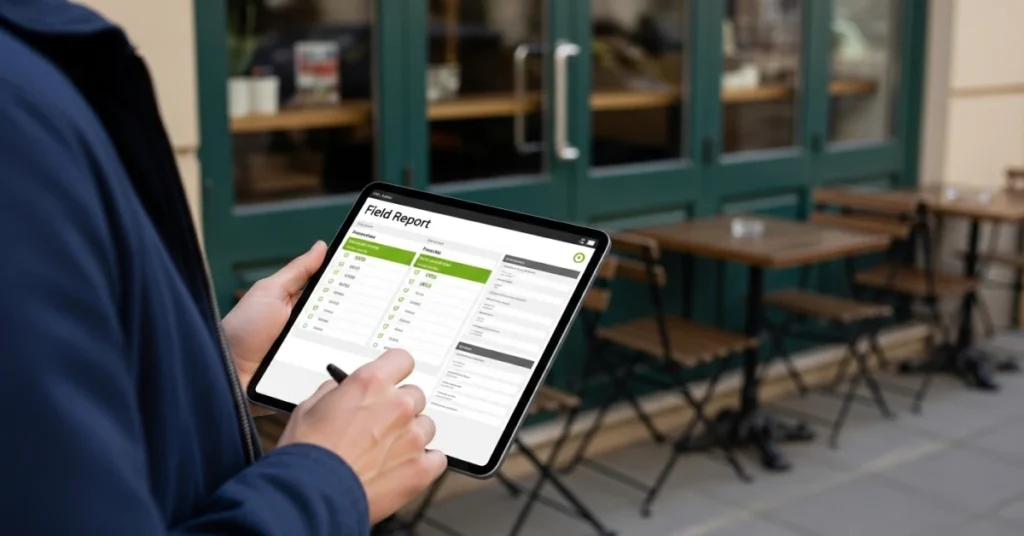
- Mobile-first task management — reps receive store-specific task lists before they walk in the door, with photo verification required for compliance confirmation.
- Real-time GPS-verified visits — every store check-in is time-stamped and location-verified, eliminating phantom visits and ensuring route adherence.
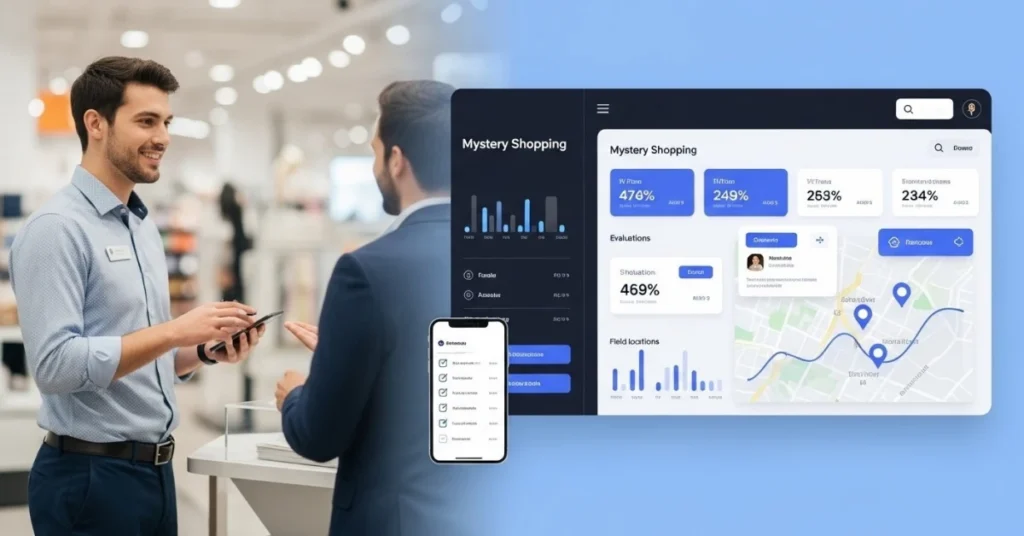
- Instant audit reporting — shelf photos, survey responses, and compliance scores sync to headquarters the moment a rep completes a store visit.
- Performance dashboards — regional managers see execution scores by store, rep, territory, and SKU in a single view, enabling same-day corrective action.
- Automated escalation — when a critical compliance issue is flagged (an out-of-stock on a promoted SKU, for example), the system automatically alerts the account manager without waiting for a weekly review call.
The result is a closed-loop system where the plan, the execution, and the audit are connected in real time — not reconciled days later in a spreadsheet.
How Do You Measure Retail Execution Performance?
Tracking the right metrics separates brands that improve from brands that guess. Focus on these five:
1. On-Shelf Availability (OSA) The percentage of SKUs physically present on the shelf at the time of a store audit. Industry benchmark: above 95% for core SKUs.
2. Planogram Compliance Rate The percentage of stores where the shelf layout matches the approved planogram. Best-in-class brands target 90%+.
3. Promotional Compliance Rate The percentage of stores where all elements of a promotion (price, display, POS) are correctly activated. Rates below 70% indicate a systemic field execution problem.
4. Visit Frequency & Task Completion Rate How often reps visit stores versus the planned schedule, and what percentage of assigned tasks they complete per visit. Low task completion — not low visit frequency — is usually the root cause of execution gaps.
5. Void Rate The percentage of stores in your distribution network where a listed SKU is not on the shelf. A rising void rate is an early warning signal of distribution erosion.
What Is the Difference Between Retail Execution and Trade Promotion Management?
These two disciplines are closely related but distinct.
Trade promotion management (TPM) is the planning and financial management of promotional investments — what you spend with retailers, when, and what ROI you expect. It lives primarily in finance and commercial planning systems.
Retail execution is the operational activation of those plans at store level. It answers the question: Did the promotion we funded actually appear on the shelf?
The two functions must be integrated because a perfectly planned promotion that fails at execution generates zero return on the trade investment. Brands that connect their TPM data to their field execution data can measure true promotional ROI — not just planned ROI.
Retail Execution Strategy: 5 Principles That Separate Leaders from Laggards
1. Prioritize stores by revenue impact, not geography. Route planning based purely on geography is efficient for the rep but inefficient for the brand. High-volume accounts demand higher visit frequency regardless of location.
2. Make compliance visual and immediate. Photo verification at the point of execution — not a written report filed later — is the standard. It eliminates ambiguity and creates an audit trail.
3. Close the feedback loop within 24 hours. If a field issue cannot be escalated and addressed within 24 hours, your data is decorating a dashboard rather than driving decisions.
4. Train field reps on the “why,” not just the “what.” Reps who understand how planogram compliance connects to retailer margin and brand growth execute with more precision and handle pushback from store managers more effectively.
5. Treat execution data as a commercial asset. Execution data — compliance rates, void rates, photo evidence — is negotiating currency with retailers. Brands that bring this data to joint business planning meetings command more shelf space and better promotional terms.
Conclusion
Retail execution is where strategy meets reality. A brand can have a brilliant promotional plan, a perfectly negotiated planogram, and a competitive price point — and still lose at the shelf if the execution breaks down between headquarters and the store floor.
The brands winning in 2026 are not necessarily spending more on trade promotion. They are executing more consistently, measuring more precisely, and correcting course faster than their competitors. They have closed the loop between planning, field activity, and real-time data.
The checklist, the KPIs, and the framework in this guide give you the operational foundation. The right technology — purpose-built field operations software like FieldPie — gives you the infrastructure to run that system at scale, across hundreds or thousands of stores, without losing visibility at the individual shelf level.
Ready to see what flawless retail execution looks like in practice?
Book a free FieldPie demo today and discover how leading CG brands are closing the execution gap — one store visit at a time.