


Retail shelf strategy is the structured approach to organizing and positioning products in physical stores to improve sales performance and customer satisfaction. It combines consumer psychology, brand visibility, and space optimization to influence whether shoppers notice and purchase products.
Research shows shelf placement strongly affects buying behavior. For example, eye-level positioning can increase product selection rates by up to 35%.
Effective shelf strategy typically includes:
- Product adjacencies that encourage complementary purchases
- Visual merchandising to improve product visibility
- Data-driven category management aligned with shopper behavior
Today, retailers increasingly treat shelf intelligence as a strategic priority, using retail management software to track and optimize shelf performance across locations. A proactive shelf strategy, rather than reactive shelf management, can unlock millions in growth by improving product discoverability and the overall shopping experience.
Shelf Strategy vs. Shelf Optimization
Although often used interchangeably, shelf strategy and shelf optimization refer to different but complementary approaches in retail merchandising.
Shelf strategy defines the overall framework for product placement, category management, and long-term positioning within a store. It explains the “why” behind placement decisions and typically remains consistent for months or seasons.
Shelf optimization, in contrast, focuses on tactical execution. Research on shelf intelligence shows that retailers increasingly use data-driven insights to refine shelf layouts and improve performance.
Key differences include:
- Strategy – long-term decisions about product placement psychology and brand positioning
- Optimization – ongoing adjustments based on sales data, inventory levels, and seasonal trends
Successful retailers combine both approaches: a clear strategic framework supported by continuous optimization to maximize immediate sales while supporting long-term brand goals.
Why Shelf Placement Matters in Retail
Product placement strongly influences purchasing decisions beyond simple visibility. Research shows eye-level positioning can deliver up to 35% higher sales compared to bottom-shelf locations.
The financial impact can be significant. One shelf research study identified $40 million in growth potential from strategic product arrangement alone. Effective shelf planning therefore turns merchandising strategy into measurable revenue.
Placement also affects the broader shopping experience. Products positioned in optimal locations influence adjacent product performance, category perception, and store traffic patterns, creating cascading effects across the store.
Promotional Displays Drive Impulse Purchases
Promotional displays attract attention and trigger impulse purchases by highlighting featured or seasonal products.
Retailers often use:
- Bold signage and product groupings
- Limited-time offers
- High-visibility store locations
These displays interrupt normal shopping patterns and encourage spontaneous purchases. Their effectiveness increases when they support core product categories rather than compete with them.
Fundamentals of a Winning Shelf Strategy
A successful retail shelf strategy combines three key elements that maximize sales performance: strategic product placement, optimized space allocation, and data-driven decisions. Effective shelf layouts place high-margin items at eye level while guiding shoppers through complementary categories.
Research shows strategic shelf management can reduce shopping effort and increase basket size by improving product discoverability. Strong planogram execution and continuous monitoring ensure shelf layouts adapt to changing consumer behavior and market conditions.
Priority SKU Visibility
Priority SKUs require strong shelf visibility to drive category performance. High-velocity and profit-leading products should receive positions that maximize both horizontal and vertical exposure.
Key principles include:
- Product facings influence visibility more than total shelf space
- A product with 3 facings at optimal height can outperform 6 facings in low-traffic areas
- AI-powered monitoring helps track facing compliance and shelf visibility across stores
Strategic visibility also includes brand blocks and logical category flow, guiding shoppers toward complementary products and increasing basket size.
Eye-Level Placement
Eye-level placement is the most valuable shelf position, typically 48–60 inches from the floor, where shoppers naturally focus their attention. Products placed here consistently achieve higher purchase rates.
Key insights:
- Shoppers scan shelves horizontally before looking up or down
- Eye-level zones increase brand visibility and impulse purchases
- Retailers typically reserve these spots for high-margin or fast-moving SKUs
In crowded categories, capturing attention in the first few seconds often determines product success.
Optimal Number of Facings
The right number of product facings balances visibility with efficient shelf use.
Research shows:
- Increasing facings from 1 to 2 can raise sales by 25–30%
- Returns decline after about 3 facings for most products
Typical guidelines include:
- High-velocity SKUs: 2–4 facings
- Slower products: single facing
- Premium products: additional facings for stronger brand presence
Modern distribution management systems help retailers track facing performance and optimize shelf space allocation.
Linked Promotions and Price Visibility
Strategic promotions can significantly increase category sales when combined with smart shelf placement.
Effective tactics include:
- Positioning promotional items near complementary products
- Using clear price tags at eye level
- Maintaining clean, uncluttered pricing displays
Research shows cross-merchandising promotions can increase basket size by visually linking related items.
Digital pricing systems now allow real-time price updates and coordinated promotions across multiple locations, improving consistency and campaign effectiveness.
Planogram and Category Management Best Practices
Planograms translate retail shelf strategy into clear product placement decisions. Effective planograms balance space allocation, visibility, and shopper convenience to improve category performance.
When integrated with category management, shelf planning supports broader goals such as complementary product placement, seasonal demand, and shopper missions.
Key best practices include:
- Logical product adjacencies
- Clear visibility for priority items
- Consistent shelf standards across locations
The most effective planograms combine data insights and merchandising experience, while remaining flexible for local market differences and store formats.
Data, AI and Real-Time Shelf Intelligence
Modern shelf optimization relies on data analytics, real-time monitoring, and AI technologies. Retailers using data-driven shelf strategies can improve category performance by up to 15% while reducing inventory costs.
Key technologies include:
- Real-time shelf visibility using sensors, mobile apps, and automated scanning
- IoT monitoring for inventory levels, facings, pricing accuracy, and promotional compliance
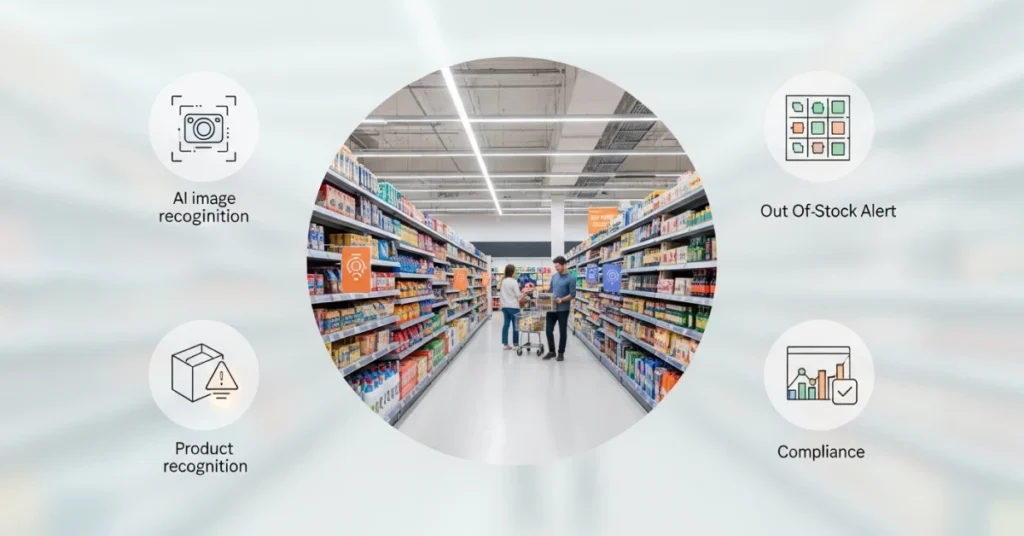
- AI and image recognition systems that analyze shelf images with 95%+ accuracy
For example, retailers using AI-powered shelf analytics have reduced out-of-stocks by up to 40% while improving product visibility.
By combining real-time monitoring, predictive analytics, and AI, retailers can continuously optimize product placement, pricing, and inventory levels across store locations.
Common Retail Shelf Strategy Execution Problems
Even a well-designed retail shelf strategy can fail due to execution problems at the store level. The most common issues include poor planogram execution, inconsistent product availability, and weak promotion or pricing alignment.
Key challenges include:
- Poor planogram execution – products placed in incorrect locations due to limited training, time constraints, or weak communication between headquarters and store teams
- Inconsistent product availability – out-of-stock situations caused by supply chain disruptions or weak replenishment processes
- Weak promotion and pricing alignment – discounted products placed in low-visibility areas or promotional placements that do not support the overall retail shelf strategy
These problems reduce product visibility, disrupt category flow, and weaken promotional performance. Retailers can address them through clear execution guidelines, regular compliance audits, improved replenishment systems, and stronger coordination between merchandising and pricing teams to ensure the retail shelf strategy performs as intended.
KPIs to Measure Retail Shelf Strategy Success
Measuring shelf strategy effectiveness requires tracking metrics directly linked to business outcomes.
Key KPIs include:
- Sales velocity per linear foot – measures how efficiently shelf space converts into revenue
- Share of Shelf (SoS) – compares your brand’s shelf presence with competitors
- On-Shelf Availability (OSA) – target 95%+ product availability during peak shopping periods
- Category turn rates – products placed at eye level often achieve 15–25% higher turnover
Advanced retailers also track planogram compliance and shelf interaction data to connect shelf placement decisions with actual shopper behavior.
On-Shelf Availability (OSA)
On-Shelf Availability (OSA) measures how often products remain available to customers during store hours. Low OSA leads to immediate lost sales and potential customer switching.
Common causes include:
- Weak replenishment processes
- Supply chain disruptions
- Lack of real-time shelf visibility
Modern retailers use automated monitoring systems to detect potential stockouts and maintain consistent product availability.
Share of Shelf (SoS)
Share of Shelf (SoS) measures the portion of category shelf space occupied by a brand compared to competitors.
This is typically calculated using:
- Linear shelf footage
- Product facings
- Total display area
Higher SoS increases brand visibility and sales potential, but placement quality matters more than quantity. For example, eye-level placements with fewer facings often outperform larger lower-shelf allocations.
Planogram Compliance
Planogram compliance measures how closely shelves match the planned product layout.
This includes correct:
- Shelf level placement
- Product adjacencies
- Spacing and positioning
Compliance typically ranges between 60% and 85% in retail environments. Regular audits help identify deviations and maintain the intended shelf strategy.
Facings per SKU
Facings per SKU refers to the number of products displayed face-forward for each stock keeping unit (SKU).
Research shows more facings increase product visibility and purchase likelihood, but the effect eventually reaches diminishing returns. Effective shelf strategy balances visual impact with efficient shelf space usage.
How to Build and Execute a Shelf Strategy Program
A successful shelf strategy program requires clear goals, structured processes, and cross-functional collaboration. Retailers should begin by defining measurable objectives such as increasing category sales, improving brand visibility, or optimizing inventory turnover.
Key steps include:
- Forming a team across merchandising, category management, and store operations
- Creating standardized processes for shelf audits, planogram design, and performance monitoring
- Using templates and checklists to ensure consistent execution across locations
Regular review cycles help maintain performance:
- Weekly reviews for fast-moving categories
- Monthly reviews for stable categories
Technology also plays a critical role. Digital shelf monitoring tools enable real-time visibility, compliance tracking, and data-driven adjustments. However, the most effective programs combine technology insights with store-level expertise, ensuring shelf strategies remain flexible and responsive to changing retail conditions.
Future Trends in Retail Shelf Strategy
The future of retail shelf strategy is evolving rapidly through AI and automated merchandising systems. Advanced machine learning algorithms now analyze shopper behavior in real time, enabling dynamic shelf adjustments based on changing consumer preferences and inventory levels.
Smart shelving technology is emerging as the next step, using IoT-enabled displays to track product performance and customer interaction. These systems can automatically:
- Trigger restocking alerts
- Optimize product placement through predictive analytics
As retail continues its digital transformation, the integration of physical and online shopping data will reshape traditional shelf strategies, making data-driven shelf optimization essential for maintaining competitive advantage.
Conclusion
A strong retail shelf strategy turns shelf space into a measurable growth driver. By combining strategic placement, clear planograms, data insights, and consistent store execution, retailers can improve product visibility, reduce out-of-stocks, and increase category performance across locations.
Want to see how technology can optimize your retail shelf strategy in real time?
Book a demo to discover how AI-powered shelf monitoring, planogram compliance tracking, and real-time store insights can improve execution and increase in-store sales.