


Email marketing strategies are structured plans that guide how businesses use email to reach, engage, and convert their target audiences. A well-built strategy defines goals, audience segments, content types, send cadence, and success metrics — turning individual emails into a measurable revenue engine.
What Are Email Marketing Strategies and Why Do They Still Matter?
Email delivers an average ROI of $36 for every $1 spent, according to industry research cited by Salesforce. That figure alone explains why email remains the backbone of digital marketing budgets worldwide — outperforming social media, paid search, and display advertising on a cost-per-acquisition basis.
Yet ROI doesn’t arrive automatically. It requires a deliberate framework: clear goals, a permission-based email list, the right platform, and consistent best practices applied at every stage of the subscriber lifecycle.
If you’re still sending batch-and-blast campaigns without a plan, you’re leaving serious revenue on the table.
How Do You Set Goals That Actually Drive Results?
Every high-performing email marketing strategy starts with goals tied to business outcomes — not vanity metrics.
Use the SMART framework:
- Specific: “Increase trial sign-ups from email by 20% in Q2.”
- Measurable: Track click-to-open rate (CTOR), not just opens.
- Achievable: Benchmark against your industry average before setting targets.
- Relevant: Align email goals with broader digital marketing objectives.
- Time-bound: Set a deadline and review cadence.
Common goals by business type:
| Business Type | Primary Goal | Key Metric |
|---|---|---|
| E-commerce | Drive repeat purchases | Revenue per email |
| SaaS | Nurture free trials | Trial-to-paid conversion rate |
| B2B Services | Generate qualified leads | Click-through rate (CTR) |
| Non-profit | Donor retention | Donation rate per send |
| Media / Publishing | Audience engagement | Open rate + scroll depth |
Defining goals upfront keeps your email list segmentation, content calendar, and platform selection aligned — and gives you a clear scorecard to optimize against.

How Do You Build and Grow a High-Quality Email List?

Your email list is your most valuable owned marketing asset. Unlike social media followers, subscribers on your list are yours — no algorithm can take them away.
Ethical List-Building Tactics That Work in 2026
- Gated content: Offer a checklist, template, or industry report in exchange for an email address.
- Pop-up forms with exit intent: Tools like Mailchimp’s embedded forms convert abandoning visitors at 3–5%.
- Social media lead ads: Run Facebook or Instagram lead-gen ads that push contacts directly into your platform.
- Webinars and virtual events: High-intent registrants make excellent email subscribers.
- Referral programs: Incentivize existing subscribers to share your newsletter.
What You Must Never Do
Purchasing contact lists is a fast track to spam complaints, damaged sender reputation, and potential violations of the CAN-SPAM Act (U.S.), GDPR (EU), and CASL (Canada). These regulations require explicit opt-in consent — no exceptions.
Platforms like Mailchimp enforce strict anti-spam policies and will suspend accounts found using purchased lists. Keep your email list clean by running a re-engagement campaign every six months and removing hard bounces immediately.
To understand how permission-based email list growth connects to long-term deliverability, you need to treat list hygiene as an ongoing process, not a one-time task.
Which Email Marketing Platform Should You Choose?
Choosing the right platform is a foundational decision. The wrong tools create friction; the right ones automate your best practices at scale.
Top Platforms Compared
| Platform | Best For | Notable Feature | Starting Price |
|---|---|---|---|
| Mailchimp | SMBs and beginners | Drag-and-drop builder, free tier up to 500 contacts | Free / $13/mo |
| Klaviyo | E-commerce brands | Deep Shopify integration, predictive analytics | Free / $20/mo |
| Brevo | Transactional + marketing email | Unlimited contacts on paid plans | Free / $25/mo |
| HubSpot | B2B inbound marketing | CRM-native, full lifecycle tracking | Free / $18/mo |
| Salesforce | Enterprise | AI personalization, omnichannel | Custom pricing |
Mailchimp remains the most widely adopted platform for growing businesses, offering built-in A/B testing, audience segmentation, and pre-built automation workflows. However, if you’re running a high-volume e-commerce store, Klaviyo’s behavioral triggers and revenue attribution reporting give it a clear edge.
Key features to evaluate in any platform:
- Automation workflows and trigger-based sending
- Segmentation depth (behavioral, demographic, purchase history)
- A/B and multivariate testing tools
- Deliverability infrastructure and dedicated IP options
- Integration with your CRM, CMS, and social media tools
- Reporting dashboards aligned to your goals
- Storage capacity for media assets and contact data
What Types of Emails Should Be in Your Strategy?
Not every email serves the same purpose. A mature email marketing strategy uses multiple type categories in a coordinated sequence.
The Core Email Types
1. Welcome Emails Triggered immediately after signup, welcome emails average a 50%+ open rate — three times higher than standard campaigns. Use this type to set expectations, deliver your lead magnet, and introduce your brand voice.
2. Newsletters Regularly scheduled emails that deliver value: industry news, original content, curated resources. Newsletters build habit and keep your email list warm between promotional sends.
3. Promotional Emails Product launches, limited-time offers, seasonal sales. This type drives direct revenue but should be balanced with value-driven sends to avoid subscriber fatigue.
4. Transactional Emails Order confirmations, shipping notifications, password resets. These have the highest open rates of any type — often above 70% — and are prime real estate for cross-sell offers.
5. Re-engagement Emails Targeted at inactive subscribers. A well-timed “We miss you” sequence with a strong offer can recover 10–15% of lapsed contacts before you remove them from your email list.
6. Drip / Nurture Sequences Automated multi-email sequences triggered by behavior (downloaded a guide, visited a pricing page). This type is the engine of B2B lead nurturing.
7. Behavioral Trigger Emails Abandoned cart, browse abandonment, post-purchase follow-up. According to Klaviyo’s research on email automation, abandoned cart sequences alone recover an average of 5–15% of lost revenue.
How Does Segmentation and Personalization Increase Revenue?
Batch-and-blast is dead. Segmentation is the single highest-leverage practice in modern email marketing.
Segmentation Dimensions That Move Metrics
- Demographic: Age, location, job title, company size
- Behavioral: Pages visited, emails clicked, products viewed
- Purchase history: First-time buyer vs. repeat customer vs. VIP
- Engagement level: Active (opened in 90 days) vs. lapsed
- Lifecycle stage: Prospect, trial user, paying customer, churned
Mailchimp’s own platform data shows that segmented campaigns generate 14.31% higher open rates and 100.95% higher click rates than non-segmented campaigns. The math is unambiguous: personalization pays.
Personalization goes beyond inserting a first name. It means sending the right type of content, at the right time, based on what you know about each subscriber. Dynamic content blocks — where different image, offer, or copy appears based on subscriber data — are now a standard feature on most platforms.
For teams managing complex customer journeys, learning how to connect email segmentation with CRM data unlocks a new level of targeting precision.
How Do You Write Subject Lines That Get Opened?
Your subject line is your email’s headline. It determines whether your message gets opened or deleted in under two seconds.
Proven Subject Line Frameworks
| Framework | Example | Why It Works |
|---|---|---|
| Curiosity gap | “The email metric you’re ignoring (it’s not opens)” | Creates a knowledge gap the reader wants to close |
| Urgency + specificity | “48 hours left: 30% off expires tonight” | Combines scarcity with a clear offer |
| Personalization | “[First Name], your cart is waiting” | Relevance drives opens |
| Number-led | “7 subject line formulas with real data” | Signals specific, scannable value |
| Question | “Are your emails landing in spam?” | Triggers self-assessment |
Additional best practices for subject lines:
- Keep them under 50 characters for mobile preview
- A/B test every campaign — even small wins compound over time
- Preview text (the gray snippet after the subject line) is a second subject line; use it
- Emoji can increase open rates in B2C contexts but use them sparingly in B2B
How Do You Automate Email Marketing Without Losing the Human Touch?
Automation is what separates scalable email marketing strategies from manual, one-off campaigns. Done right, automation feels personal — not robotic.
The Core Automation Workflows Every Brand Needs
Welcome Series (3–5 emails) Day 0: Welcome + lead magnet delivery Day 2: Brand story + social proof Day 5: Most popular content or product Day 10: Soft offer or trial CTA
Abandoned Cart (3 emails) Hour 1: Reminder + product image Hour 24: Social proof + urgency Hour 72: Final reminder + discount or free shipping offer
Post-Purchase (2–3 emails) Day 1: Order confirmation + what to expect Day 7: Onboarding tips or usage guide Day 30: Review request + cross-sell recommendation
Re-Engagement (2–3 emails) Email 1: “We miss you” + value reminder Email 2: Exclusive offer Email 3: Final notice before list removal
Platforms like Mailchimp, Klaviyo, and Brevo offer pre-built automation templates for each of these workflows. The key is to map your automation to specific goals — don’t automate for automation’s sake.
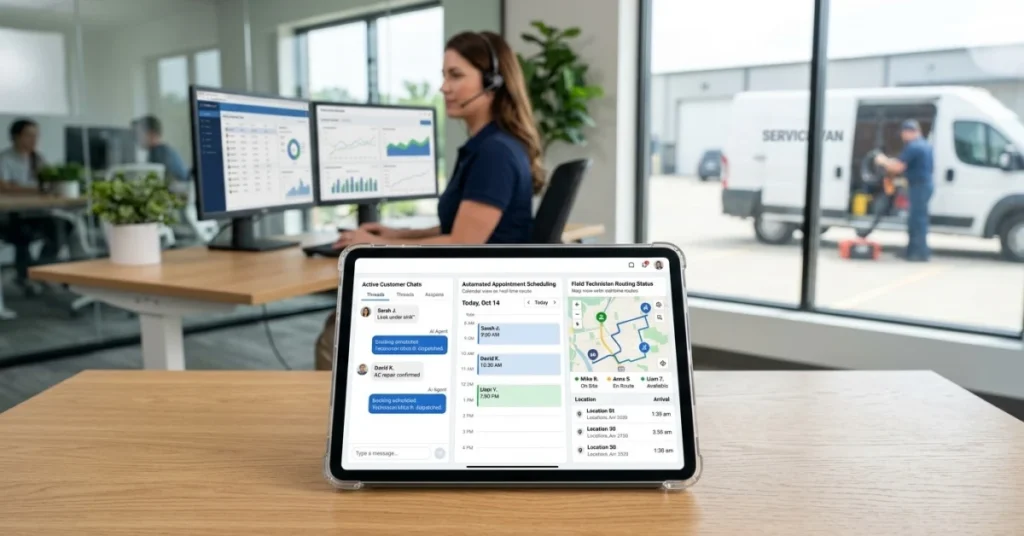
For field-based and service businesses managing distributed teams, FieldPie’s operational platform integrates with email automation tools to trigger customer communications based on real-world service events — technician arrival, job completion, or renewal reminders — ensuring your digital outreach stays synchronized with on-the-ground activity.
How Do You Measure the Performance of Your Email Campaigns?
Measurement closes the loop between strategy and results. Without it, you’re guessing.
The Metrics That Matter
| Metric | What It Measures | Industry Benchmark |
|---|---|---|
| Open Rate | Subject line + sender reputation strength | 20–40% (varies by industry) |
| Click-Through Rate (CTR) | Content relevance and CTA effectiveness | 2–5% |
| Click-to-Open Rate (CTOR) | Quality of content for openers | 10–20% |
| Conversion Rate | Revenue or lead generation effectiveness | 1–5% |
| Unsubscribe Rate | List health and content relevance | < 0.5% per send |
| Bounce Rate | List quality and deliverability | < 2% |
| Revenue Per Email (RPE) | Direct financial impact | Varies by sector |
As Coursera’s overview of email marketing best practices notes, tracking the right metrics — rather than chasing open rates alone — is what separates strategic email marketers from tactical ones.
Run monthly performance reviews against your goals. Use your platform’s reporting dashboard to identify which type of email, which segment, and which send time generates the strongest CTOR and conversion rate.
To build a full-funnel view, consider connecting your email analytics to a unified marketing dashboard that consolidates data from social media, paid channels, and CRM.
What Are the Legal Requirements for Email Marketing?
Compliance is non-negotiable. Violations carry significant financial penalties.
Key Regulations at a Glance
| Law | Jurisdiction | Key Requirement | Max Penalty |
|---|---|---|---|
| CAN-SPAM Act | United States | Opt-out mechanism, accurate headers | $51,744 per email |
| GDPR | European Union | Explicit opt-in consent, data access rights | €20M or 4% of global revenue |
| CASL | Canada | Express or implied consent required | $10M CAD per violation |
| CCPA | California, USA | Data transparency and opt-out rights | $7,500 per intentional violation |
Practical compliance checklist:
- ✅ Use confirmed double opt-in for all new subscribers
- ✅ Include your physical mailing address in every email footer
- ✅ Honor unsubscribe requests within 10 business days (CAN-SPAM) or immediately (GDPR best practice)
- ✅ Store consent records with timestamps and IP addresses
- ✅ Review your platform’s data processing agreement (DPA) to ensure GDPR compliance
- ✅ Conduct annual audits of your cookies and data collection practices
For businesses operating across multiple jurisdictions, understanding how cookies and tracking pixels interact with GDPR consent frameworks is increasingly important. Your platform’s cookie policy and your own website’s cookies disclosure must be aligned.
Conclusion
Email marketing strategies remain one of the most effective ways to drive consistent growth — but only when they’re built with intention. From setting clear goals to segmentation, automation, and performance tracking, success comes from treating email as a structured system, not a one-off channel.
The brands that win are those that combine data, timing, and relevance to deliver the right message to the right audience. When done right, email becomes more than a communication tool — it becomes a reliable, scalable revenue engine.