



✦ Key Takeaways
Over 48% of food recalls trace back to supplier failures — audits are your first line of defense.
→ Unaudited suppliers are your biggest hidden food safety liability.
→ Risk-based assessments prioritize high-threat suppliers before problems escalate.
→ A structured audit program turns compliance into a competitive advantage.
In this article:
What Is a Supplier Food Safety Audit?
How to Assess Supplier Food Safety Risk
Supplier Food Safety Audit Requirements
How to Build a Supplier Food Safety Audit Program
Key takeaway: Your supplier audit program is only as strong as the standards you refuse to compromise on.
What Is a Supplier Food Safety Audit?
Most food recalls trace back to a supplier failure an audit could have caught. Over 60% of food safety incidents start in the supply chain (Goktl).
Yet most companies treat their audit program as a paperwork exercise. That means they miss it as an early-warning system.
A supplier food safety audit is a structured review of a supplier’s practices, controls, and conditions. Its goal is to confirm the supplier can consistently deliver safe food.
But the real purpose goes further. A well-built audit program surfaces emerging risks before they trigger a recall — not after.
Research published by Sciencedirect confirms that reactive audit models consistently miss the early signs of supplier breakdown. Treat food safety auditing as predictive intelligence — not a compliance performance. That is what separates programs that protect brands from ones that just fill binders.
Supplier Audit vs. Food Safety Inspection
A government inspection is reactive — it shows up after a complaint or outbreak. A supplier food safety audit is proactive, started by the buyer to verify controls before a problem reaches consumers.
Inspections check legal minimums. Audits go deeper. They examine management systems, supplier culture, and process reliability. Those are the factors that predict future performance — not just past compliance.
First-Party, Second-Party, and Third-Party Audits
A first-party audit is a supplier auditing itself — useful for internal improvement, but limited by obvious bias. Second-party audits are conducted by the buyer, giving direct visibility into supplier operations and the food safety audit process.
Third-party food safety audits use an independent body — like a GFSI-recognized certification scheme — to provide credible, unbiased verification. Each type serves a different risk management purpose, and strong programs use all three.
When a Supplier Audit Is Required
FSMA’s Foreign Supplier Verification Program (FSVP) requires food supplier audits for most imported ingredients. Audit frequency is tied directly to the supplier’s risk level.
Retailer codes of practice and GFSI schemes add their own layers on top of that. Beyond legal triggers, audit when you lack confidence a supplier’s controls will hold under real pressure.
Compliance sets the floor. But ask yourself a harder question: is your program built to catch the right suppliers? Does it go deep enough? Does it act before risk becomes a crisis?
How to Assess Supplier Food Safety Risk
That early-warning system only works if you know which suppliers actually carry the most risk. Most programs get this wrong from the start. Treating a spice importer the same as a packaging supplier wastes audit resources. It also leaves real hazards unchecked.
Over 60% of food recalls involve ingredients sourced from suppliers that passed their last audit without a critical finding (according to IFT Online Library Wiley). That means the audit asked the wrong questions.
A real supplier food safety audit starts with a risk model, not a checklist.
Risk assessment is the filter that decides where your audit dollars go. Get it right, and your program surfaces problems early.
Get it wrong, and you’re just filing paperwork.
📊 By the Numbers
Over 60% of food recalls trace back to suppliers that cleared their most recent audit with no critical findings.
Risk by Ingredient, Product, and Process
Not every ingredient carries the same hazard profile. Raw proteins, allergens, and ready-to-eat items need far deeper scrutiny than dry goods or indirect materials.
Map each supplier to the biological, chemical, and physical hazards tied to their product. That map — not a generic form — should drive your audit depth and frequency.
Supplier History, Location, and Regulatory Status
A supplier’s past performance is one of the strongest predictors of future risk. Prior recalls, corrective actions, and regulatory citations all show where weak spots already exist.
Location matters too. Some suppliers operate under weaker regulatory oversight. Others sit in regions with known food fraud exposure. Both need a more rigorous third-party food safety audit.
This applies no matter what product type they supply. Foodtech Folio3 notes that data analytics now lets teams score supplier risk in near real time, turning static records into live signals.
High-Risk vs. Low-Risk Supplier Classification
Classify every supplier into a risk tier — high, medium, or low — before you schedule a single audit visit. Tier assignment should combine hazard severity, supplier history, and your ability to verify controls on your own.
High-risk suppliers need annual on-site food supplier audits and tighter corrective action windows. Low-risk suppliers may qualify for desk reviews or longer audit cycles. That frees your team to focus where it counts most.
Once you know your risk tiers, ask one more hard question. Which requirements govern each audit — and are you auditing against the right standard?
Supplier Food Safety Audit Requirements
You know which suppliers carry the most risk. Now you need to know exactly what to check — and why. These requirements aren’t a single list. They’re a layered stack of federal rules, global standards, and retailer demands that most teams never fully sort out.
Over 70% of food recalls trace back to supplier-side failures in preventive controls or allergen management (Digicomply). That number shows where the real exposure lives — and it’s rarely in the paperwork.
HACCP and Preventive Controls
Every credible food supplier review starts with Hazard Analysis and Critical Control Points. It’s the backbone of any science-based food safety system. Auditors verify that critical limits are set, monitored, and actually enforced on the floor — not just documented in a binder.
A supplier’s HACCP plan is only as strong as its last verified corrective action. If deviations aren’t logged and closed, the plan is theater, not control.
GMP and Sanitation Programs
Good Manufacturing Practices set the baseline conditions that make every other control possible. Auditors check employee hygiene, facility maintenance, pest control, and cleaning schedules. These unglamorous details stop contamination before it starts.
Weak sanitation programs are a leading root cause of recurring audit failures. A site that can’t hold basic GMP standards won’t hold more complex controls either.
Allergen and Cross-Contamination Controls
Allergen failures are among the most dangerous — and most preventable — risks in food safety reviews. Auditors must confirm that label controls, line changeover procedures, and ingredient segregation all work together, not just exist on paper.
Cross-contact events often happen at shift changes or during new product runs. Those are the exact moments your protocol needs to probe hardest.
Traceability, Recall, and Recordkeeping
A supplier that can’t trace an ingredient lot within four hours is a liability — full stop. Compliance requires that suppliers keep records accurate enough to support a rapid, targeted recall without guesswork.
Audit teams should run a mock recall drill during the visit. How fast a supplier can isolate a lot tells you more than any binder of SOPs ever will.
FSMA, ISO 22000, and GFSI Requirements
FSMA’s Foreign Supplier Verification Program sets one evidence bar. ISO 22000 sets another. GFSI-benchmarked schemes like SQF and BRC each add their own demands — and the three don’t always line up.
According to Digicomply, companies managing multi-standard compliance report up to 40% more preparation time than single-standard programs. That gap adds up fast across a large supplier base.
RTI research confirms that suppliers juggling multiple scheme requirements often default to satisfying the most demanding reviewer. That leaves gaps for every other standard.
Smart programs map all applicable requirements to one master checklist. Nothing falls through the cracks between standards that way.
Tracking the right field audit performance metrics helps teams see which requirement gaps surface most often across their supplier base. That pattern data turns a compliance exercise into a genuine early-warning system.
📊 By the Numbers
Multi-standard supplier programs require up to 40% more audit prep time than single-standard programs.
Knowing what to check is only half the job. The harder part is building a program that catches problems before they become incidents.
How to Build a Supplier Food Safety Audit Program
Knowing where recalls start is only half the job. The harder work is building a system that catches supplier weaknesses before they trigger a recall.
A well-designed supplier audit program does not just check yesterday’s conditions. It surfaces tomorrow’s risks.
Most programs fail because they treat every supplier the same. Over 70% of recalls trace back to preventive control and allergen failures. Yet teams spread audit resources evenly across low-risk and high-risk suppliers alike.
📊 By the Numbers
Companies with tiered supplier audit programs reduce food safety incidents by up to 40% compared to flat-frequency programs.
Segment and Prioritize Suppliers
Start by sorting suppliers into risk tiers. Base each tier on ingredient hazard, volume, and past audit history. High-risk suppliers — those handling allergens or ready-to-eat ingredients — need reviews at least twice a year.
Low-risk suppliers can rotate on an 18- to 24-month cycle. This frees your team to go deeper where exposure is real, not just where it is convenient.
Standardize Checklists and Scoring
A supplier review without a scored checklist is just a conversation. Build question sets around FSMA FSVP requirements and GFSI scheme controls. Add your top retailer codes, then assign point weights to critical items.
Critical failures — like no allergen separation or broken HACCP records — should trigger automatic holds. Scoring turns subjective observations into data you can track over time.
Track Findings and Corrective Actions
Every finding needs an owner, a deadline, and a verification step — no exceptions. Teams that log corrective actions in spreadsheets lose track of closure rates fast. Purpose-built audit performance metrics tools close that gap.
Unresolved findings from a prior review cycle are a red flag, not a paperwork gap. Treat repeat issues as early warning signals, not administrative leftovers.
Monitor Supplier Performance Over Time
A single score tells you little. A trend line across four cycles shows whether a supplier is improving, holding steady, or quietly slipping.
Supplier scorecards roll up scores, corrective action closure rates, and incident history. Together, they give you a real picture of risk. Goktl notes that trend-based analysis catches systemic supplier failures up to 6 months earlier than point-in-time checks alone.
A third-party review can confirm your internal scores. But that only works if your program already defines what “good” looks like before the outside reviewer arrives.
The real question is not whether your program is documented. It is whether it is built to learn.
Conclusion
Tiered risk prioritization is the foundation. The real payoff comes when your audit program stops reacting and starts predicting.
Over 48 million Americans get sick from foodborne illness each year (ERS USDA). Most of those incidents trace back to supplier failures that earlier warning signals could have caught.
A supplier food safety audit only earns its value as a live risk intelligence system — not a paper trail. IFT Online Library confirms that programs built around predictive scoring and corrective action loops catch supplier vulnerabilities weeks early. That gap is the difference between a close call and a recall.
Managing food safety compliance across dozens of suppliers is hard. Paper-based tracking will always leave gaps.
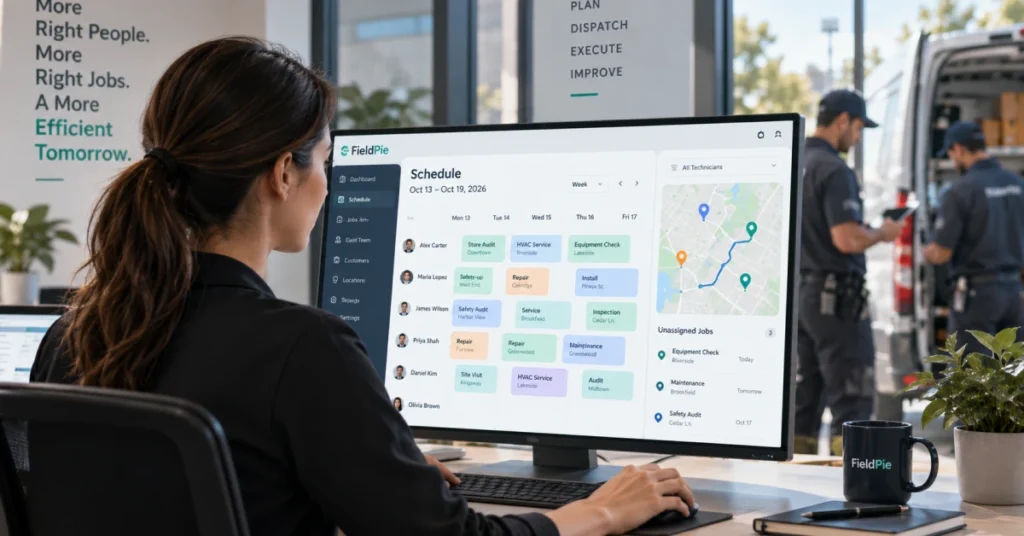
FieldPie lets audit teams build custom digital forms and capture photos on the spot. Teams can also close corrective actions in real time — all from one digital field audit workflow.
Teams that make the switch cut audit cycle time and surface supplier risk faster. Nothing gets buried in a spreadsheet.