


Door-to-door sales is one of the toughest — and most rewarding — sales channels. Top teams reach 20–30% success rates, while most stay at 2–5%. The difference isn’t luck. It’s execution.
This guide is for leaders scaling D2D teams. It shows how modern door-to-door sales works in 2026 and the execution framework high-performing teams use to grow without losing quality.
What Is Door-to-Door Sales?
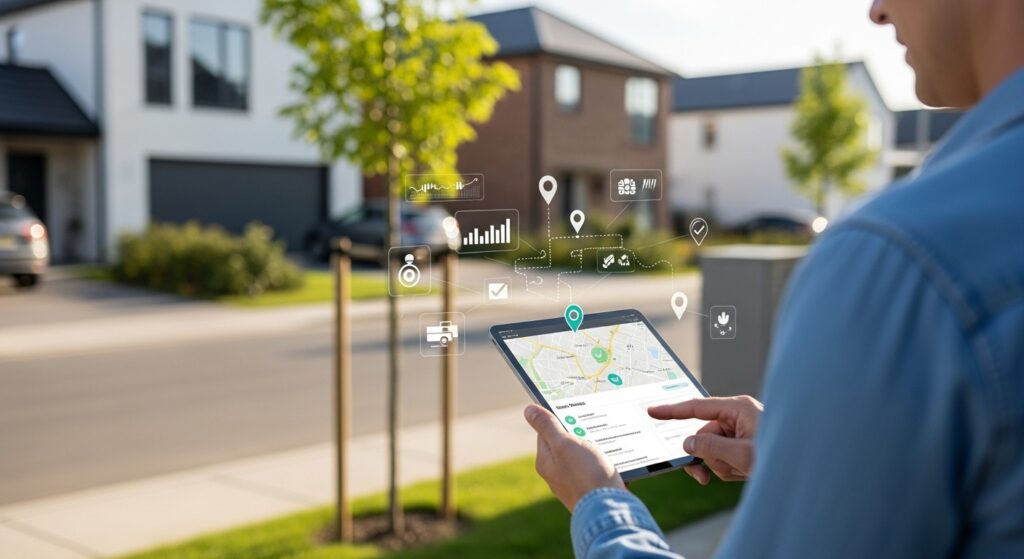
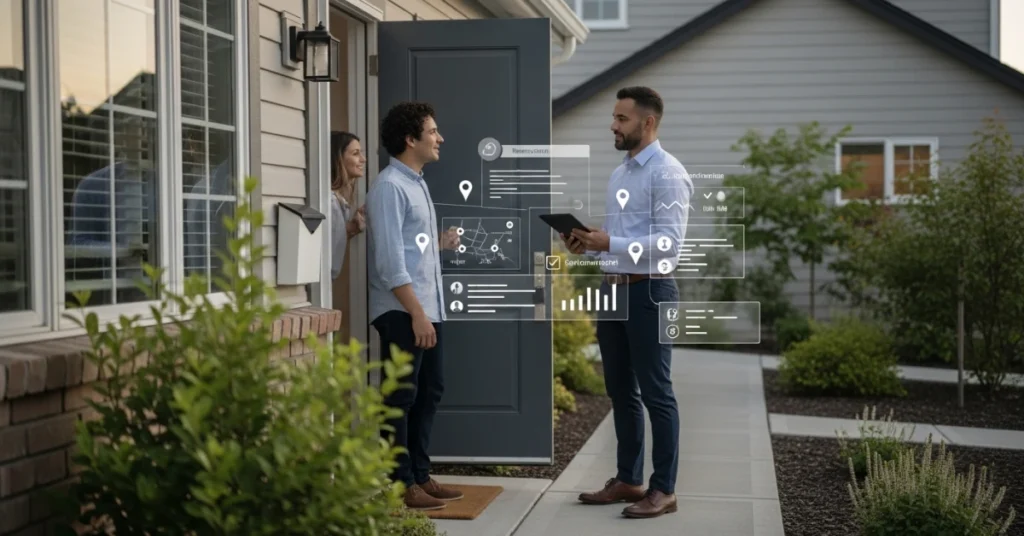
Modern door-to-door sales is a structured field sales method — not random canvassing. Teams use data, mobile tools, and clear processes to identify the right areas, execute consistently, and follow up effectively.
Today’s D2D differs in three ways:
- Targeted territories: teams focus on high-potential neighborhoods
- Disciplined execution: reps track activity, routes, and outcomes in real time
- Consultative approach: conversations focus on needs and clear value, not scripts
Key Differences Between B2B and B2C Door-to-Door Sales
Door-to-door works for both residential (B2C) and business (B2B) sales, but execution changes.
- Sales cycle: B2C closes faster; B2B needs more touchpoints
- Timing: B2C favors evenings/weekends; B2B runs in business hours
- Messaging: B2B focuses on ROI and credibility; B2C on simplicity and quick value
If you’re scaling, use separate playbooks — same channel, different mechanics.

Why Door-to-Door Sales Still Works in 2026
Door-to-door sales isn’t declining — it’s evolving. The global direct selling market exceeds $200B, with continued growth projected through 2028–2029, driven by industries that depend on trust, explanation, and face-to-face interaction.
Why D2D still works:
- Trust builds faster in person than through digital touchpoints
- Real-time dialogue removes friction by handling objections instantly
- Human connection cuts through digital noise, especially for complex offers
Higher Conversion Rates Than Digital
D2D consistently outperforms most digital acquisition channels:
- D2D: typically 2–5%
- Digital ads: ~1%
- Cold email: generally <1%
Face-to-face selling wins because value can be demonstrated on-site and questions are resolved immediately.
Industries Where Door-to-Door Sales Dominates
Door-to-door sales is strongest in solar, roofing, home improvement, security, and telecom—industries where trust, explanation, and on-site evaluation matter. In these sectors, focused area canvassing consistently delivers higher-quality leads than single-touch digital outreach.
Bottom line: In 2026, D2D wins because it creates high-trust, high-intent conversations that digital-only channels can’t match.
Core Pillars of Door-to-Door Sales
Top D2D teams don’t improvise. They follow the same execution flow at every door.
The 4-step Door-to-Door framework:
- Target & qualify the right prospects
- Deliver relevant messaging
- Move conversations to decisions
- Follow up consistently
Each step builds on the previous one. A gap at any stage lowers conversion; consistency across all four creates repeatable results.
1. Targeting & Qualification
High performance starts with focus.
- Targeting: Prioritize high-fit areas using simple signals (homeownership, income range, local conditions). Tight territories drive momentum.
- Qualification (first 30 seconds):
Decision authority · Budget · Urgency · Clear need
High-intent prospects ask about price or timing. Low-intent ones disengage early. Simple scorecards keep this consistent.
2. Messaging & Product Readiness
Messaging isn’t a script—it’s a relevant conversation.
- Lead with outcomes, not features
- Connect problem → solution fast
- Light personalization
- Address friction early (price, trust, timing)
Strong product knowledge builds instant credibility.
3. Moving to Decisions
Close when buying signals appear.
- Shift to decision mode on price/timing questions
- Use assumption-based language
- Handle objections briefly, return to value
- Create real urgency (availability, timing, cost of delay)
The goal is clarity—not pressure.
4. Follow-Up
Most deals close after the visit.
- 24 hours: thank-you + key point
- Next touch: answer their main question
- Later: proof + clear next step
Follow-up must add value—never just “checking in.”
The Operational Challenges That Break Teams
Door-to-door teams don’t fail from lack of effort — they fail when operations don’t scale.
Most teams struggle with three issues:
- Turnover: solved with realistic expectations, coaching cadence, and compensation stability
- Message drift: prevented with a core framework and regular calibration
- Burnout: reduced through territory rotation, micro-breaks, and effort-based recognition
Solve these, and scaling becomes dramatically easier.
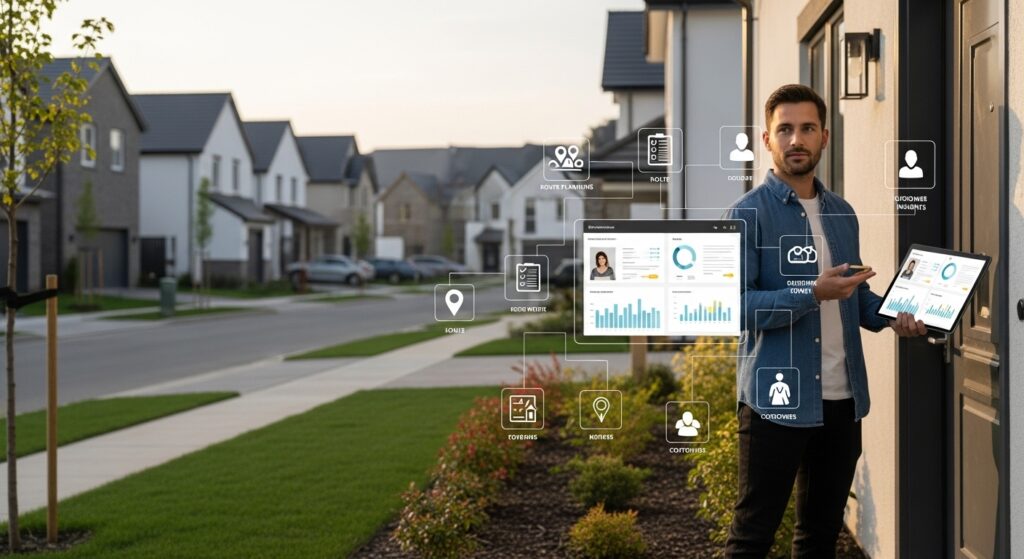
Modern Door-to-Door Sales Tech Stack
You don’t need a complex stack — just the right fundamentals:
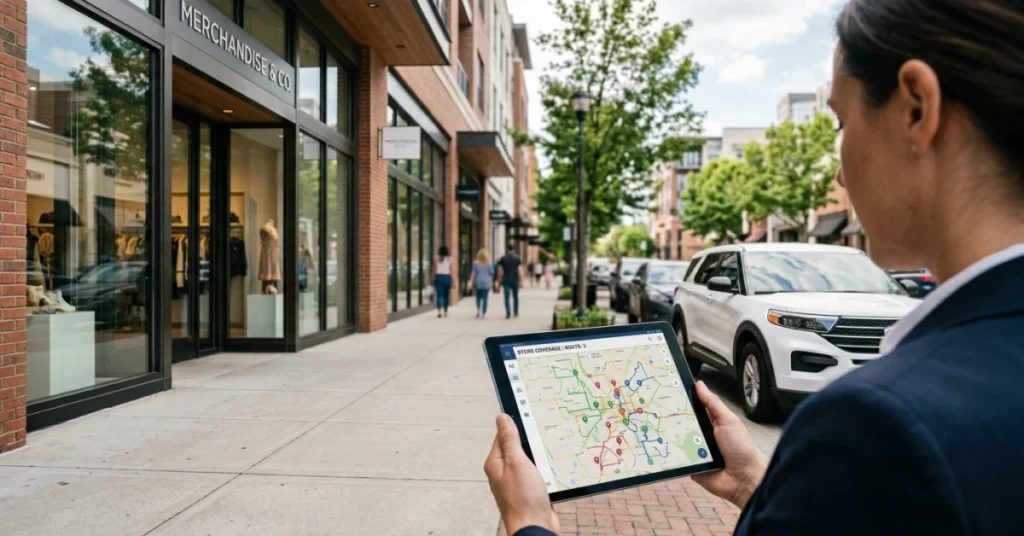
- Territory & route planning: more conversations per day, less wasted time
- CRM workflows: automated follow-up and clean pipelines
- Activity tracking: coaching data and visible performance
10 Practical Door-to-Door Sales Tips to Exceed Quotas
1. Start Strong with a Clear Hook
Why this matters: Prospects decide whether to listen within the first few seconds. A weak opening kills momentum before the conversation starts.
Tip: Open with a benefit, not an introduction. Lead with a result your customer cares about, then explain why you’re there.
2. Use Local Social Proof
Why this matters: People trust what’s already working nearby. Familiar names, streets, or neighborhoods lower resistance instantly.
Tip: Reference recent activity in the area—without oversharing. “We just helped a few homes on this block…” is often enough.
3. Master Your Product
Why this matters: Confidence comes from clarity. If you hesitate on basic questions, prospects lose trust fast.
Tip: Practice explaining your product in plain language to someone outside your industry. If they understand it, prospects will too.
4. Pick the Right Place and Time
Why this matters: Even great reps fail in the wrong territory or time window.
Tip: Focus on high-potential neighborhoods and knock when decision-makers are most available—early evenings and weekend mornings.
5. Find the Real Pain
Why this matters: People don’t buy products—they buy relief from problems.
Tip: Ask questions that uncover cost, frustration, or risk. When prospects start quantifying the problem, buying becomes logical.
6. Reframe Objections
Why this matters: Most objections aren’t rejection—they’re uncertainty.
Tip: When someone says “I need to think,” ask what they want to think through. Clarity keeps the conversation alive.
7. Show, Don’t Tell
Why this matters: Visual proof beats explanations. Seeing value shortens decision time.
Tip: Use demos, visuals, comparisons, or simple calculators to make outcomes tangible.
8. Secure Small Yeses
Why this matters: Big decisions feel easier after small commitments.
Tip: Get agreement step by step—interest, relevance, next action. Each “yes” reduces friction later.
9. Close with Confidence
Why this matters: Asking for permission invites hesitation. Clear guidance builds trust.
Tip: Speak in terms of next steps (“We’ll schedule this for next week…”) instead of asking if they want to move forward.
10. Never Skip Follow-Up
Why this matters: Many deals are won after the first visit—not during it.
Tip: Follow up with value: answer a question, share proof, or clarify next steps. Systems beat memory every time.
Frequently Asked Questions About Door-to-Door Sales
What are the advantages of Door-to-door sales?
Speed of trust, real-time objection handling, higher intent conversations.
What are the main drawbacks?
Rejection rates, compliance complexity, weather/physical demands, and turnover risk.
What conversion rates are typical?
Often 2–8% depending on offer and execution; top reps can exceed that with systems.
Which compensation models perform best?
Hybrid (base + commission) tends to reduce churn while keeping motivation high.
Final Thoughts on Door-to-Door Sales Success
Door-to-door sales rewards teams that treat the channel like an operation: clean territories, clear messaging, consistent follow-up, and real performance visibility. When execution becomes repeatable, scaling stops being chaotic—and starts being predictable.
Great reps, messy execution?
See how FieldPie brings order to the field — book a demo.