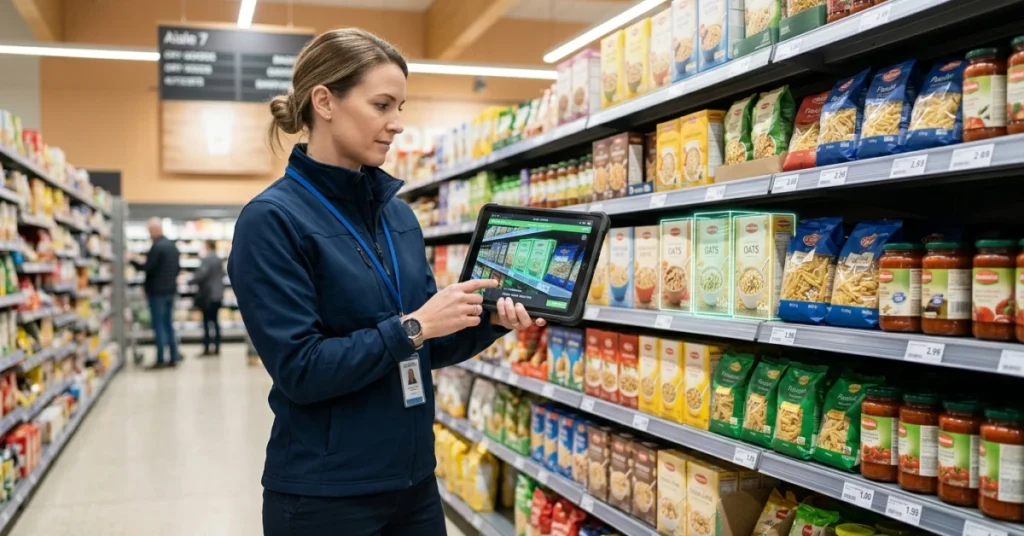




Walk into any grocery store and you enter a carefully designed environment where every shelf, aisle, and display influences buying decisions and shapes customer behavior—often without shoppers realizing it.
Retail product placement is intentional. Built on proven principles of consumer behavior, it turns shelf layout and shelf positioning into a measurable sales driver. When executed correctly, these strategies can boost sales by up to 30%. This is especially critical for FMCG retailers, where fast-moving products rely on shelf visibility, rapid stock turnover, and consistent in-store execution.
At its core, product placement blends psychology, data, and execution—transforming shelf space from a visual element into a revenue-driving asset.
Understanding the Psychology of Product Placement
The psychology behind retail product placement is rooted in how the human brain processes visual information and makes rapid decisions in busy environments.
Key psychological principles include:
- Exposure effect: Shoppers prefer products they see more often
- Visual bias: Items placed on eye-level shelves receive the most attention
- Scanning patterns: Products on the right side of shelves often perform better
- Impulse buys: Strategic proximity increases unplanned purchases
Research consistently shows that most purchasing decisions happen inside the store, not before entering it. For example, placing private-label products at eye level next to premium brands often increases perceived value and conversion rates. Strategic shelf positioning determines which products shoppers notice first, which brands they compare, and what ultimately ends up in the basket.
These psychological triggers explain why placement decisions have such a direct impact on sales performance.
Shelf Layout and Shopper Behavior

Shelf layout quietly guides shoppers through the store and shapes their decision-making process.
Studies indicate that nearly 80% of buying decisions occur while browsing shelves, making layout design critical to retail success.
Effective shelf positioning relies on predictable behaviors:
- The golden zone (eye level) delivers the highest conversion rates
- Products placed here can see 20–30% higher sales
- Complementary items placed together encourage cross-purchases
- Logical groupings reduce decision fatigue
Beyond height, horizontal placement and adjacency matter. Strategic positioning near promotional areas or end caps increases impulse buying by leveraging price comparison and visual anchors. For instance, placing batteries next to electronic toys removes friction and captures last-minute purchase intent.

Practical Product Placement Examples (In-Store)
To translate psychology into action, retailers often apply a few proven placement practices at shelf level:
- Everyday essentials are placed deeper in the store to increase exposure to additional categories
- High-margin or premium products are positioned at eye level for maximum visibility
- Complementary items (such as snacks and beverages) are grouped together to encourage add-on purchases
- Impulse items are placed near checkout areas or end caps to capture last-minute decisions
These simple adjustments, when applied consistently, can significantly influence shopper behavior and basket size.
Planograms: The Blueprint of Retail Success
A store planogram is the blueprint that turns placement psychology into action.
Planograms define:
- Exact product locations
- Shelf positioning rules
- Product groupings and adjacencies
They act as the bridge between strategy and execution. While psychology explains why products should be placed a certain way, planograms specify what goes where. When properly implemented, planograms can:
- Increase category sales by 8–15%
- Improve shelf consistency across stores
- Support broader store layout and traffic-flow goals
However, a planogram only delivers value when it is executed accurately at the store level.
Store-Level Execution and Planogram Compliance

Even the most detailed planograms fail without consistent store-level execution.
When products drift from their intended positions:
- Eye-level advantages disappear
- Cross-merchandising breaks down
- Psychological triggers lose impact
For example, a cereal designed for child eye level loses its effect entirely if placed on the top shelf. Similarly, promotional products placed correctly in the morning may drift out of position by afternoon, silently eroding expected sales uplift.
Retail teams face constant challenges, including:
- Restocking disruptions
- Daily operational pressure
- Limited time for precise placement
Regular audits and planogram compliance checks are essential to ensure shelf reality matches strategic intent. Key metrics such as compliance rate, on-shelf availability, and shelf share help retailers understand whether placement strategies are truly working. Digital tools now make it possible to identify execution gaps early—before they translate into lost revenue.
The Cost of Poor Execution in Product Placement
Poor execution does more than break visual consistency—it directly impacts sales and brand perception.
When placement standards are not maintained:
- Planned eye-level investments lose value
- Shelf visibility declines despite strong demand
- Brands appear inconsistent across locations
Retailers may invest heavily in research, planograms, and merchandising design, only to see returns diluted by low compliance. Over time, this gap between strategy and execution leads to missed sales opportunities and weakens the overall shopping experience.
Challenges Retailers Face with Product Placement
Despite understanding placement psychology, retailers struggle with consistent execution across stores.
Common challenges include:
- High staff turnover: New employees lack placement knowledge
- Time pressure: Speed often takes priority over accuracy
- Space constraints: Older store formats limit optimal layouts
- Operational disruptions: Deliveries and restocking break compliance
These challenges create a persistent gap between strategy and reality—making execution discipline just as important as placement design.

Key Takeaways
The psychology behind retail product placement combines behavioral science with disciplined execution.
Successful retailers focus on three core pillars:
- Strategic shelf positioning aligned with shopper behavior
- Well-designed planograms that translate insight into action
- Consistent store-level execution supported by compliance systems
When these elements work together, retailers improve visibility, drive impulse buys, and increase sales—while delivering a smoother, more intuitive shopping experience.
Looking ahead, the future of retail product placement lies in combining psychological insight with technology-driven execution, making precision, consistency, and measurable impact achievable at scale.
Conclusion
Retail product placement succeeds when psychology, structure, and execution work together on the shelf. Strong strategies and planograms create potential—but only consistent, store-level execution turns placement decisions into measurable sales impact.
This is where solutions like FieldPie help retail teams turn placement strategy into consistent in-store execution, ensuring shelf reality matches planned performance across every store.