


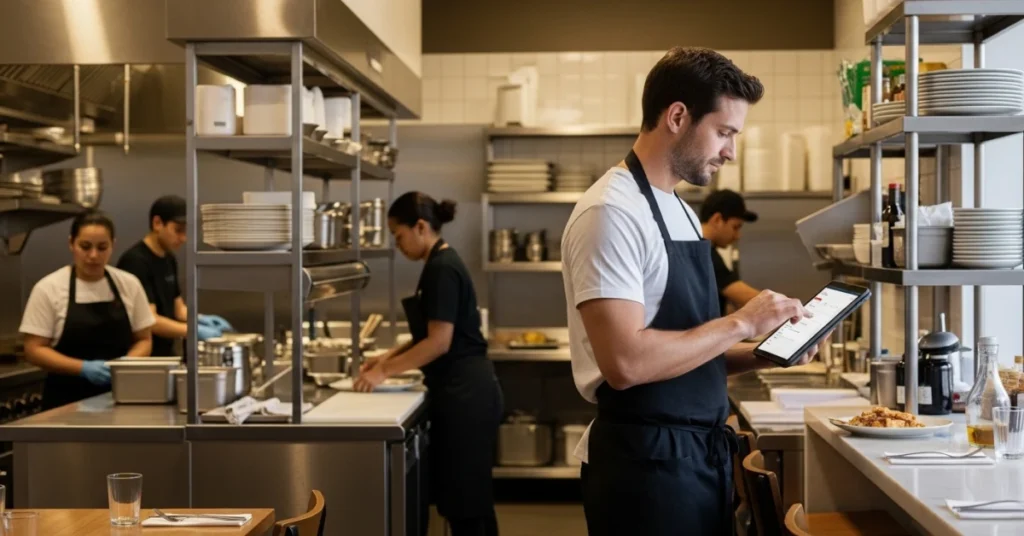
The food-service industry is under growing pressure — stricter regulations, rising consumer expectations, and the need to maintain consistent standards across every location. Research from Growth Market Reports estimates the global restaurant food safety compliance software market reached USD 1.28 billion in 2024, growing at a 10.7% CAGR toward USD 3.02 billion by 2033.
Yet many restaurant groups still rely on spreadsheets, paper forms, and disconnected tools — leading to missed audits, inconsistent standards, and limited visibility across locations.
This guide reviews the best restaurant auditing software based on real operational needs, usability, and long-term scalability.
Why Your Restaurant Business Needs Auditing Software
Restaurants increasingly rely on auditing software to stay compliant, consistent and scalable. Here’s why investing in restaurant auditing software makes sense:
- Manual tools create inconsistencies — Paper checklists lead to incomplete records and limited visibility. Centralized systems bring control — One platform covers audit scores, corrective actions, and task completion across all sites.
- Real-time tools reduce errors — Mobile apps let inspectors capture photos, notes, and signatures on-site.
- Compliance risks are increasing — Tightening regulations mean non-compliance leads to penalties and reputational damage.
- Data-driven insights drive growth — Dashboards reveal performance trends and help improve operations.
What These Restaurant Auditing Solutions Have in Common
Restaurant auditing software varies in scope and focus, yet the solutions in this guide all support efficient field operations at scale. These platforms were selected because they:
- Replace manual tools — Digitize checklists and eliminate paper forms for consistent, secure data capture.
- Centralize scheduling and execution — Plan inspections, dispatch auditors, and capture results in one system.
- Connect headquarters with field teams — Mobile apps let auditors work on-site while managers access results through a web dashboard.
- Support corrective actions — Issues can be assigned to staff members with due dates and follow-up reminders.
- Improve operational visibility — Dashboards highlight compliance scores, trends, and outstanding tasks across all locations.
Together, these capabilities replace fragmented tools with a single operational system — helping restaurants handle more audits and scale without added complexity.

Top Restaurant Auditing Software Solutions
This list highlights leading restaurant auditing software built for modern multi‑location operations. The platforms below help restaurants combine audit scheduling, checklist management, task follow‑up and reporting to maintain consistent standards and food safety compliance.
FieldPie
The Best Restaurant Auditing Software for Field Operations at Any Scale
FieldPie is a modern field execution platform built for real restaurant audit work. It supports both small multi-location operators and large franchise networks—without forcing businesses to choose between ease of use and advanced capability.
Instead of juggling multiple tools, FieldPie brings scheduling, field execution, custom forms, photo documentation, GPS tracking, and visit history into one unified system. Field managers get up and running fast; operations leaders get real-time control as the network grows.
FieldPie works as a standalone platform or integrates with your existing tools—fitting both lean setups and mature franchise operations.
Core capabilities include:
- End-to-end field execution — schedule visits, manage audits, and handle corrective actions in one continuous flow
- Smart scheduling & routing — mobile-first workflows that keep field teams moving efficiently across locations
- Offline-ready operations — capture data, photos, signatures, and forms without signal; syncs automatically when back online
- Custom audit forms & inspection checklists — fully configurable for restaurant-specific workflows, from kitchen hygiene to brand standards
- Real-time visibility — live visit progress, field team locations, and audit performance at a glance
- Flexible roles & permissions — tailored access for crew, area managers, and corporate teams
- Scalable reporting — clear operational insights across any number of locations without enterprise-level complexity
Where FieldPie stands out: FieldPie is built as a long-term platform, not a stopgap tool. It scales naturally with your restaurant network—whether you manage five locations or five hundred—without constant tool changes or hidden complexity. Its unified approach eliminates the need for separate scheduling, forms, and reporting systems, keeping the entire field audit cycle in one place.
Things to consider: FieldPie prioritizes deep operational execution over niche add-ons, which often eliminates the need for multiple separate systems.
Zenput
Zenput is an operations execution platform designed for multi-unit restaurant operators, focused on standardizing how operating procedures and initiatives are enforced across store networks.
Core capabilities include:
- Task management with deadline tracking and automatic reminders across all locations
- Audit assignment and corrective action workflows with real-time completion visibility
- Food safety and temperature monitoring integrations
- Mobile app for iOS, Android, and Windows
- Role-based access and geo & time tracking for field submissions
- Dashboards and trend analytics for above-store teams
Where Zenput stands out: Zenput is built for established brands running complex, recurring compliance programs at scale and offers broad international deployment coverage.
Things to consider: Initial setup and customization can be demanding, and some users report that form editing and data transfer between forms is less intuitive than expected. Pricing scales per user, which can become a significant factor for larger teams.
Bindy
Bindy is a cloud-based audit and task management platform for retail and hospitality brands, covering the inspection cycle from checklist creation to corrective action tracking and reporting.
Core capabilities include:
- Customizable multi-lingual inspection forms with conditional logic and mandatory photo options
- Online and offline inspection support with GPS, time, and date stamping
- Automated corrective action assignment and completion tracking
- Interactive map, collaborative calendar, and inspection scheduler
- Built-in reports and data visualizations
- API and SSO for enterprise system integration
- Unlimited users and locations on all plans
Where Bindy stands out: Bindy’s per-usage pricing model can reduce seat-based costs for larger networks, and its interface is designed to be approachable for field teams with minimal training.
Things to consider: Advanced reporting beyond the built-in set requires API access, and PDF report formatting has been flagged as an area for improvement. The platform’s hospitality focus is broad rather than restaurant-specific.
GoAudits
GoAudits is a mobile inspection platform used across hospitality, food & beverage, and retail operations, focused on digitizing compliance checklists and generating reports from field audits.
Core capabilities include:
- Mobile audits on any device with full offline functionality and automatic sync
- Pre-built templates plus a custom checklist builder
- Automatic report generation with scoring, photos, and branding upon inspection completion
- Corrective action assignment with ownership, priority levels, and deadlines
- Dashboards for tracking audit scores and compliance across locations
- Bulk scheduling and automated notifications
- Available in multiple languages
Where GoAudits stands out: GoAudits offers a relatively fast setup process for teams primarily focused on inspection and compliance workflows, with checklist digitization support included during onboarding.
Things to consider: The platform is purpose-built for inspections and compliance. Teams looking for broader field workforce management—such as visit routing, job scheduling, or customer data management—will need to supplement it with additional tools.
Lumiform
Lumiform is an inspection and audit platform designed for frontline teams across multiple industries including food service, retail, logistics, and manufacturing, combining form building with workflow automation and analytics.
Core capabilities include:
- Ready-made templates and a custom form builder
- Mobile app with offline capability and automatic sync
- Corrective action generation, assignment, and deadline tracking
- Dashboards and analytics across locations and teams
- Conditional logic, approval flows, and multi-language support
- API and integrations with ERP, BI, HR, and maintenance tools
Where Lumiform stands out: Lumiform covers a wide range of inspection types within a single platform, which can be useful for operations teams running audits across varied processes beyond just restaurant-specific workflows.
Things to consider: Lumiform is a generalist platform rather than a restaurant-specific one, requiring meaningful configuration effort to match operational context. Advanced reporting customization is still maturing, and the broad industry scope means restaurant teams may find less out-of-the-box relevance compared to purpose-built alternatives.
Your Strategic Roadmap: How to Choose the Right Restaurant Auditing Software
Choosing the right restaurant auditing software starts with understanding your operations, growth goals and daily field needs. As teams scale, visibility into compliance scores, audit schedules and corrective actions becomes as critical as core operations. Industry guides suggest focusing on usability, scalability, integration and customer support. When evaluating solutions:
- Define your core needs. Consider how many locations you manage, the frequency of audits and the complexity of your brand standards. Identify whether you need sensors for temperature monitoring or deeper operational functions like task management.
- Prioritize ease of use. Choose software with a simple, intuitive interface so auditors and managers can adopt it quickly.
- Ensure scalability. Look for a platform that can support more locations, audits and team members as your business grows.
- Evaluate integration. Select a solution that integrates with your existing POS, HR, training or inventory systems to avoid data silos.
- Assess support & training. Strong onboarding, documentation and responsive customer support make a real difference during implementation and beyond.
Must‑Have Features for Restaurant Auditing Software
Based on expert guidance and real‑world restaurant needs, the most important features include:
- Audit scheduling & routing: Efficiently assign and route auditors to multiple locations, ensuring timely inspections.
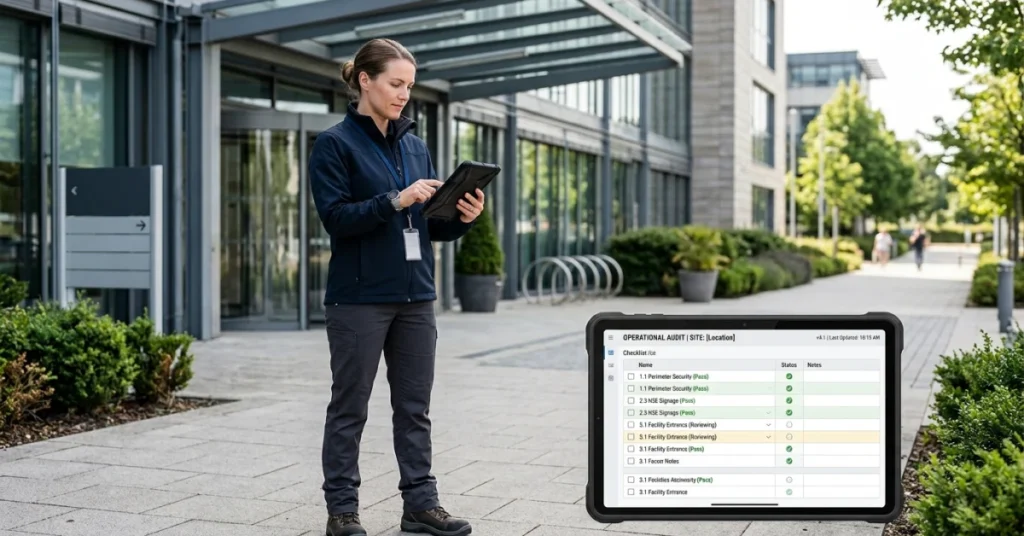
- Digital checklists & forms: Replace paper with customizable digital checklists to capture data consistently.
- Compliance tracking: Automate regulatory checks and generate audit trails for health inspections and brand standards.
- Reporting & analytics: Gain insights into performance, identify trends and optimize operations.
- Offline mobile app: Allow auditors to work without connectivity, syncing data automatically when online.
- Training & onboarding: Leverage checklists as training tools to onboard staff and ensure procedural consistency.

How to Choose the Right Restaurant Auditing Software
Selecting auditing software requires a strategic approach focused on long‑term fit, not just feature checklists. Beyond core features, consider these factors:
- Depth vs. specialization. Some platforms focus exclusively on food-safety compliance but lack broader task management; others cover scheduling but offer limited analytics. Determine whether a specialized tool or an all-in-one platform like FieldPie better aligns with your needs.
- Total cost of ownership. Evaluate subscription costs, training effort and the potential to replace multiple legacy tools.
- Vendor reliability. Consider the vendor’s track record, customer references and support resources.
Conclusion
The right restaurant auditing software should support how your teams work today and still scale with you tomorrow. While all tools on this list cover core audit needs, FieldPie stands out by combining powerful field execution with an easy‑to‑use interface and comprehensive features—working just as well for small restaurants as for large multi‑unit operations. Its unified platform for scheduling, audits, custom forms, offline operations, roles and reporting reduces reliance on multiple systems and positions restaurants for long‑term success.
See it in action. Schedule a FieldPie demo to explore real‑world audit workflows, reporting and corrective actions in practice.