Inspection reliability depends on consistent workflows, accurate data, and the right tools. This guide explores how digital checklists, machine vision, and predictive maintenance can improve inspection quality, with practical implementation steps and KPIs to measure progress.
✦ Key Takeaways · 6 min read
Every dollar spent on pre-disaster mitigation saves six, making reliable inspections the smartest investment a building owner can make.
→ Outdated inspection methods leave critical defects dangerously undetected.
→ The right technology transforms inconsistent inspections into repeatable, trustworthy processes.
→ Affordable tools exist today that eliminate guesswork from every inspection cycle.
In this article:
Why Inspection Reliability Fails Without the Right Tools
What Technologies Actually Improve Inspection Reliability?
How to Implement These Technologies Without Overspending
What KPIs Measure Real Inspection Reliability Gains?
Your Next Step Toward Consistent, Reliable Inspection
Conclusion
Key takeaway: Technology does not just improve inspections, it makes unreliable ones inexcusable.
Why Inspection Reliability Fails Without the Right Tools

Why Inspection Reliability Fails Without the Right Tools
Most organizations treat inspection quality as a people problem. If results are inconsistent, the instinct is to retrain the inspector, add a supervisor, or write a stricter checklist. But the real problem runs deeper: reliability that depends on who shows up that day is not reliability at all. It’s a gamble dressed up as a process.
Say your team runs end-of-shift equipment checks using paper forms. One inspector is thorough. Another skips three steps because the shift ran long. Both forms get filed, both look complete, and no one catches the gap until something breaks. That’s not a hiring failure. That’s a system built to produce variable outcomes.
Human Error and Inconsistency Costs
Human attention is finite, and checks are repetitive by design. Fatigue, distraction, and habit cause inspectors to miss the same items in the same order, often without realizing it. Improving inspection accuracy with technology starts by finding the steps that need perfect human focus every time. Then you make those steps automatic.
The cost isn’t just a missed defect. A flawed product ships, a machine fails mid-production, or a safety issue surfaces at the worst possible moment. Each gap compounds the next.
What Visual Inspection Alone Can’t Catch
The human eye picks up obvious surface damage well. It can’t detect heat buildup inside a motor, micro-cracks beneath a coating, or pressure variance in a sealed line. Those are exactly the failure points that cause the most expensive breakdowns.
A solid inspection sampling plan helps structure what gets checked. But structure alone can’t push human perception past its physical limits. Automated accuracy tools and AI-based quality systems exist to cover that gap.
They don’t replace the inspector’s judgment. They give that judgment better information to act on. That raises a fair question: which tools actually move the needle on consistency?
What Technologies Actually Improve Inspection Reliability?
The tools that close that gap aren’t exotic. They’re built to enforce consistency where human judgment tends to drift. Improving inspection reliability with technology means replacing “did the inspector remember to check it?” with a system that makes skipping a step impossible.
That shift is the difference between reliability as a habit and reliability as a designed outcome. Say your team runs vehicle safety checks every morning. Without a structured digital workflow, one technician checks brake fluid and another forgets it entirely, yet both sign off.
Digital vehicle inspection tools lock the sequence and require photo evidence at each step. They also flag incomplete submissions before the vehicle ever leaves the lot.
Machine Vision Systems and AI-Powered Detection
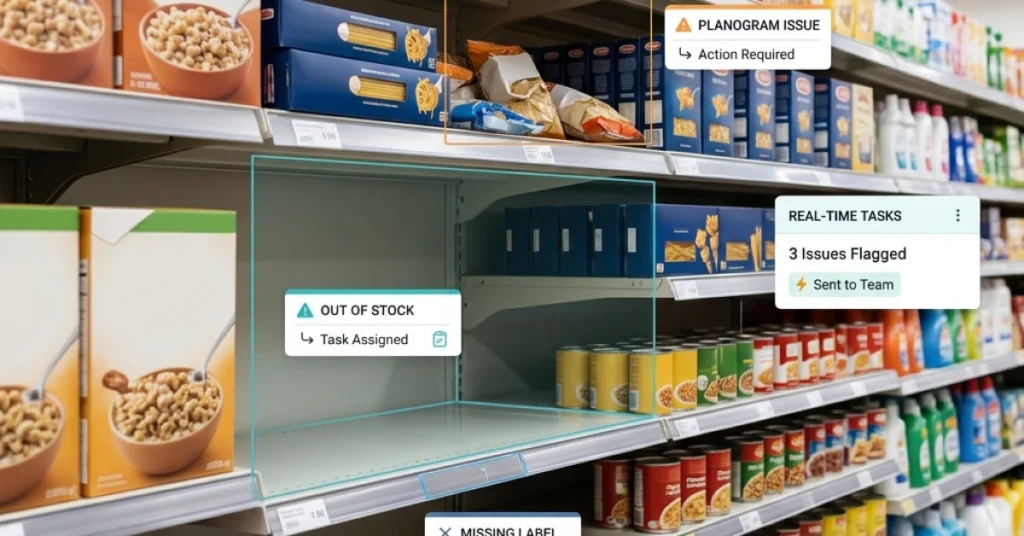
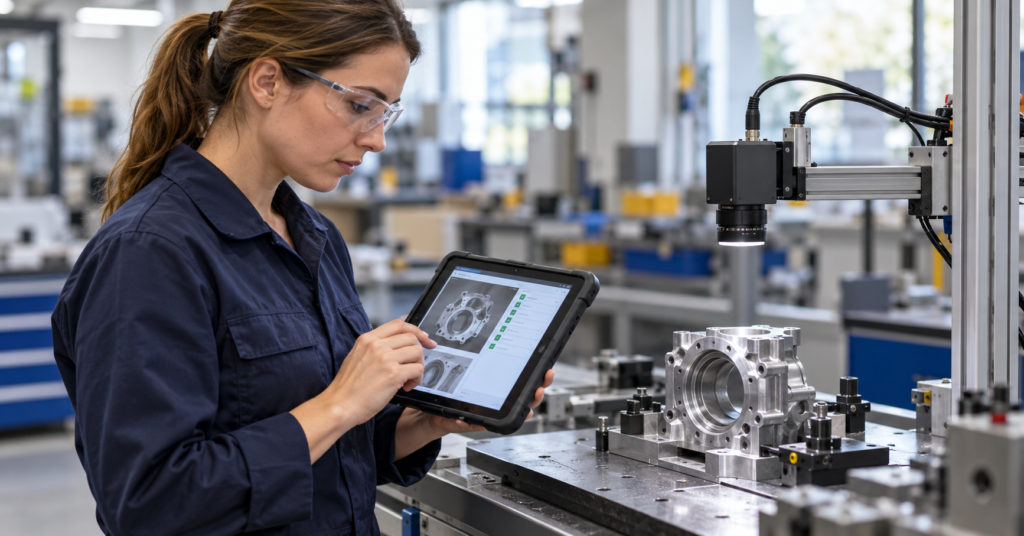
Machine vision cameras scan surfaces, welds, and parts far faster than a human eye can. They apply the same standard every single time. AI-based quality inspection doesn’t get tired on a night shift or lose focus after a long run.
It flags the same defect at hour one and hour ten with equal precision. That consistency is something no human inspector can reliably match across a full shift.
These systems work best on high-volume, repeated checks where the defect profile is well defined. Think label alignment on a production line or crack detection on a machined part. They don’t replace all human judgment, but they remove the most error-prone layer from routine visual tasks.
How AI Reduces Human Error in Visual Checks
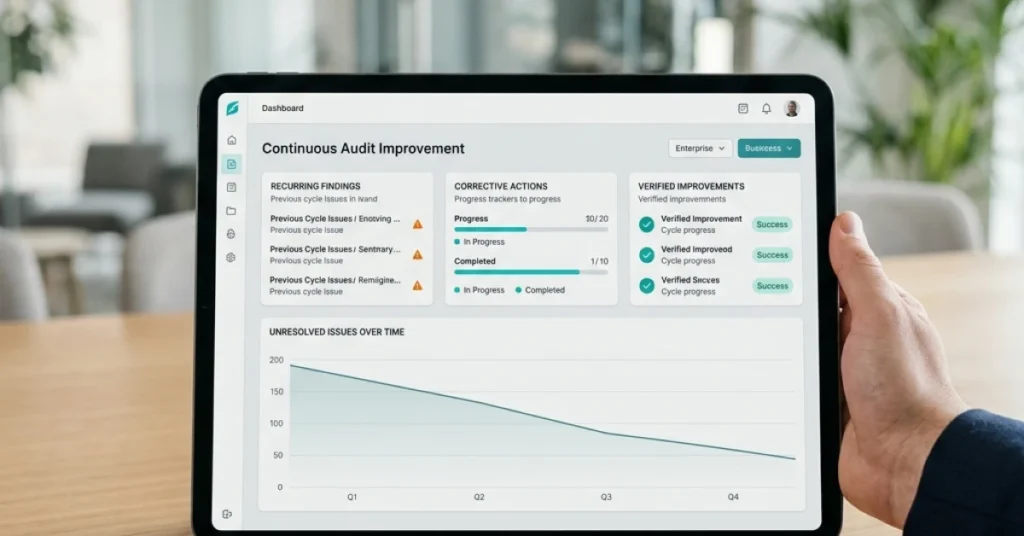
Human inspectors miss defects more often when they’re tired, rushed, or checking something they’ve seen thousands of times before. AI detection removes that gap by treating every item as the first one. It applies a fixed set of rules with no fatigue or familiarity bias. That’s why continuous audit improvement increasingly depends on machine-assisted checks rather than individual attentiveness.
When to Use Machine Vision vs. Manual Inspection
Machine vision earns its place on fast, repeated lines where volume makes manual checking impractical. Manual inspection still wins on complex, low-volume work that needs contextual judgment. Deciding whether a repair meets a specific customer’s standard is a good example. The smartest operations use both: automated checks handle the routine, and trained inspectors handle the edge cases.
Predictive maintenance inspection adds another layer by using sensor data to flag equipment trending toward failure before a breakdown occurs. Instead of waiting for something to break, teams get an early warning and schedule a fix on their own terms. Automated inspection accuracy grows over time as the system learns which signals actually predict failure in your specific environment.
Knowing which tools fit your operation is only half the challenge. The harder question is how to bring them in without blowing your budget before you see a single result.

How to Implement These Technologies Without Overspending
Enforced digital workflows solve the consistency problem, but only if your team actually adopts them. The biggest mistake organizations make is treating a new inspection tool like a software install rather than a process change. Improving inspection reliability with technology starts with redesigning how work gets done, not just which app your team opens.
Say your team runs vehicle fleet checks every morning. Don’t roll out a full AI-based quality inspection platform on day one. Start with one route: replace the paper checklist for that single check with a mobile digital form that flags incomplete fields before submission.
That one change builds the habit, surfaces the gaps, and proves the value before you spend more.
Scalable Entry Points for SMBs
Smaller teams don’t need enterprise-grade platforms to get started with automated inspection accuracy. Most digital vehicle inspection tools offer tiered pricing, so you can start free or low-cost. Scale up only when the value is clear to you. Paying for features you won’t use in month one is the fastest way to kill adoption before it starts.
Pick one inspection type, one team, and one location. Run it digitally for four weeks, then review what broke down, what got skipped, and where the data surprised you. That review cycle is where the real redesign happens.
Integrating Inspection Data With CMMS or ERP
Predictive maintenance inspection only delivers its full value when the data flows somewhere useful. That means connecting it to a CMMS (computerized maintenance management system) or an ERP platform your team already uses. Without that connection, inspection results sit in a silo and nobody acts on them fast enough. Learning how inspection data prefill works shows exactly how captured field data can feed downstream systems without manual re-entry.
Most modern inspection platforms offer native integrations or simple API connections to tools like SAP, Salesforce, or Fiix. Start by mapping one data handoff: what does the inspector record, and who needs that information next? Solve that single handoff first, and the broader integration becomes much easier to plan.
Once the workflow is running and the data is moving, ask whether any of it is actually making inspections more reliable. That question is harder to answer than it sounds. Give your numbers an honest look before you expand further.
What KPIs Measure Real Inspection Reliability Gains?

What KPIs Measure Real Inspection Reliability Gains?
Once you’ve redesigned the workflow, the next honest question is: how do you know it’s actually working? Switching from paper checklists to digital vehicle inspection tools feels like progress, but feelings aren’t proof. The KPIs you track decide whether you’re measuring real reliability gains or just measuring activity.
Pick metrics that reflect system performance, not inspector effort. Defect escape rate tells you how many problems slip past inspection and surface later. That number tells you far more than “inspections completed per day.” Repeat-failure rate is also worth watching. If the same issue keeps appearing after a fix, your inspection process isn’t reaching the root cause.
Leading vs. Lagging Indicators to Track
Lagging indicators like defect counts and failure rates tell you what already went wrong. Leading indicators, such as inspector completion consistency and checklist adherence rates, warn you before a problem escapes. Better inspection technology lets you capture both automatically, without relying on someone to remember to log them.
Say your team runs AI-based quality inspection on a production line. Watch how often the system flags an anomaly before a human would have caught it. Tracking that gap consistently over weeks shows whether automated inspection accuracy is tightening your safety net.
Building a Feedback Loop From Inspection Data
Raw data sitting in a dashboard doesn’t improve anything. Review your KPIs on a set schedule, weekly at minimum. Tie each metric back to a specific step in the workflow. A good inspection sampling plan gives you a structured baseline. You can then spot when a number drifts and act before it becomes a pattern.
Predictive maintenance inspection programs live or die by this feedback loop. When field data flows steadily into a review process, it drives real action. Reliability becomes something you build on purpose, not something you hope for. That shift in mindset is exactly what the next step is built around.

Your Next Step Toward Consistent, Reliable Inspections
Those metrics you just identified, defect escape rate and repeat-failure rate, are only useful if you act on them. Knowing your system leaks problems is step one. Fixing the workflow that causes the leak is step two. If you’re new to this, start by picking one inspection type your team runs every week. Map exactly where human judgment is filling in for a missing process.
Say your team does builder warranty inspections on a recurring schedule. Start there: replace the paper checklist with a digital form that requires a photo for every flagged item. Review the results after two weeks and see what changed. Improving inspection reliability with technology doesn’t mean overhauling everything at once. It means closing one gap, measuring the result, and repeating that cycle.
Reliable inspections aren’t built on hiring better people or pushing teams harder. They’re built on systems that make the right outcome the easiest outcome, every time someone shows up to do the work. The teams that figure this out stop hoping for consistency and start engineering it.
Inconsistent inspections cost you more than failed audits; they cost you trust, repeat business, and the ability to scale. FieldPie enforces structured inspection workflows through its audits feature. Every field visit follows the same documented process, regardless of who runs it.
FieldPie is an AI-powered field operations platform. It helps businesses manage scheduling, routing, audits, sales, merchandising, and team tracking from one mobile-friendly tool.
Conclusion
That one recurring inspection you standardized first? That’s the proof of concept your whole team can see and trust. Reliability isn’t about hiring better inspectors. It’s about building a system that works the same way no matter who runs it that day.
Improving inspection reliability with technology stops being a theory the moment real results appear. A structured, photo-required digital workflow catches defects that a rushed paper checklist would miss. That difference shows up fast once your team has a real example to point to.
Say your team runs weekly equipment checks at five locations. Replace the paper form with an AI-based inspection workflow, and every technician follows the same steps. They capture the same photos and flag the same risk thresholds with no guesswork. That consistency turns automated inspection accuracy and predictive maintenance inspection from buzzwords into outcomes you can measure on a dashboard.
Most field teams lose time and trust to inspections that vary by person, location, or day of the week. FieldPie enforces structured digital vehicle inspection tools and audit workflows at the point of execution, so every inspection produces a complete, comparable record.
FieldPie offers an AI-powered field operations platform built for businesses that need scheduling, routing, audits, sales, merchandising, and team tracking. It puts all of that in one mobile-friendly tool. It’s designed to replace scattered processes with a single system your whole team can use.