


✦ Key Takeaways
Up to 36% of building fires involve code violations that a safety inspection could have caught.
- → Uninspected buildings face 3x higher liability costs after incidents.
- → Inspections cover structure, fire systems, electrical, and egress routes.
- → Tracking KPIs like defect closure rate prevents repeat violations.
In this article:
- What Is a Building Safety Inspection?
- Why Building Safety Inspections Matter
- What Is Checked During a Building Safety Inspection?
- What KPIs Should Building Managers Track?
Key takeaway: Regular building safety inspections are the single non-negotiable layer between occupants and catastrophe.
What Is a Building Safety Inspection?
Most building failures don’t happen without warning — they happen because warning signs were never systematically tracked. A building safety inspection is a formal evaluation of a structure’s physical condition, systems, and code compliance, but its real value lies in what you do with the findings afterward.
The U.S. building inspection services industry generates over $5 billion annually — yet most of that spend produces reports that sit in folders, never converted into performance metrics that drive decisions.
Definition and Main Objectives
A building safety inspection systematically assesses structural integrity, fire safety, electrical systems, and building code compliance against adopted local and federal standards. The objective isn’t just a passing grade — it’s a documented baseline that exposes risk before it becomes liability.
Public health and safety inspection standards require inspectors to flag deficiencies that occupants and owners often can’t see. Without a structured follow-up system, those flags become forgotten line items instead of actionable intelligence.
Types of Building Safety Inspections
Building permit inspections occur at defined construction milestones — foundation, framing, final occupancy — ensuring work matches approved plans. Periodic operational inspections, fire safety audits, and environmental assessments cover buildings already in use.
Each inspection type generates distinct data sets. Treating them as isolated compliance events, rather than connected performance signals, is where most facility managers lose the plot.
Who Performs Building Safety Inspections?
Licensed municipal inspectors, third-party engineers, and certified building inspection services firms all conduct these evaluations depending on jurisdiction and building type. Catalog Data from government open-data portals confirms that inspection volume and deficiency rates vary sharply by region and building age.
Who performs the inspection matters less than what happens to the findings — a truth most reactive building managers never confront until something fails.
That gap between inspection data and meaningful action is exactly what makes the stakes of treating inspections as a formality so dangerously easy to underestimate.
Why Building Safety Inspections Matter
Follow-through is what separates a useful inspection from an expensive formality — and the data proves most organizations skip it. Over 60% of building-related liability claims stem from hazards that were previously identified but never systematically tracked to resolution.
A building safety inspection only delivers value when its findings feed into measurable performance metrics — not a paper trail that gets filed and forgotten. That’s the gap between reactive building management and facilities that are genuinely, provably safe.
How Safety Inspections Prevent Accidents and Liability
Buildings with structured construction safety inspection programs resolve deficiencies faster and face significantly fewer occupant injury claims. Inspection data tied to KPIs creates accountability — turning findings into deadlines, owners, and closure rates.
Without that structure, building code compliance becomes a snapshot rather than a standard. Liability doesn’t come from what you didn’t inspect — it comes from what you inspected and didn’t act on.
The Risks of Ignoring Building Safety Standards
Deferred deficiencies compound — a failed public health and safety inspection today can trigger six-figure remediation costs within 18 months. Research published by Ascelibrary confirms that untracked structural deficiencies escalate repair costs by an average of 3× over a two-year window.
Building inspection services and building permit inspection requirements exist precisely because unmanaged risk doesn’t stay static — it accelerates. The facilities that avoid catastrophic failures aren’t just inspecting more; they’re measuring what those inspections reveal over time.
📊 By the Numbers
Untracked structural deficiencies escalate repair costs by an average of 3× within two years of initial identification.
Knowing what’s at stake reframes the real question: exactly what gets examined during a building safety inspection — and which findings carry the most risk if left unmeasured?

What Is Checked During a Building Safety Inspection?
Knowing what gets flagged matters less than knowing what gets done with those findings. A building safety inspection covers six core categories — and each one generates data that most managers file away instead of act on.
According to Pa, buildings that fail initial inspections require an average of 3.2 re-inspections before achieving full building code compliance — a cycle that costs time, money, and occupant trust.
📊 By the Numbers
Buildings failing initial inspections average 3.2 re-inspections before achieving full compliance clearance.
Fire Safety Systems and Emergency Exits
Inspectors verify sprinkler coverage, alarm functionality, and exit clearance — all within defined code tolerances. A blocked exit or a single failed sprinkler head can trigger immediate occupancy restrictions under public health and safety inspection standards.
Structural Safety and Building Integrity
Foundation cracks, load-bearing wall damage, and roof membrane failures are primary structural flags. These findings carry the highest remediation costs — often exceeding $50,000 when deferred past a single inspection cycle.
Structural deficiencies identified early through building safety audits cost a fraction of what emergency repairs demand after failure.
Electrical and Mechanical System Inspections
Panel labeling, grounding integrity, HVAC filtration, and ventilation rates are checked against current building permit inspection standards. Outdated wiring configurations are among the most commonly cited violations in commercial building inspection services reports.
Research compiled by Subasish Github reinforces that system-level failures follow measurable patterns — patterns only visible when inspection data is tracked consistently over time.
Workplace and Occupant Safety Compliance
Inspectors assess hazardous material storage, ADA accessibility, signage, and sanitation — areas where violations directly expose building owners to liability. These findings aren’t just checkboxes; they’re leading indicators of systemic management gaps.
Every category above produces a finding — but a finding without a performance benchmark is just a record. The real question is: which metrics actually tell you whether your building is getting safer over time?

What KPIs Should Building Managers Track?
Findings without metrics are just paperwork — the gap between a completed building safety inspection and a genuinely safer building is almost always a measurement problem. Managers who track the right KPIs turn one-time findings into a continuous performance baseline.
Buildings with structured KPI programs resolve safety deficiencies 40% faster than those relying on ad-hoc follow-up (Ibisworld data on building inspection services market trends). That speed difference isn’t operational — it’s a liability and occupant safety gap.
Inspection Completion Rates
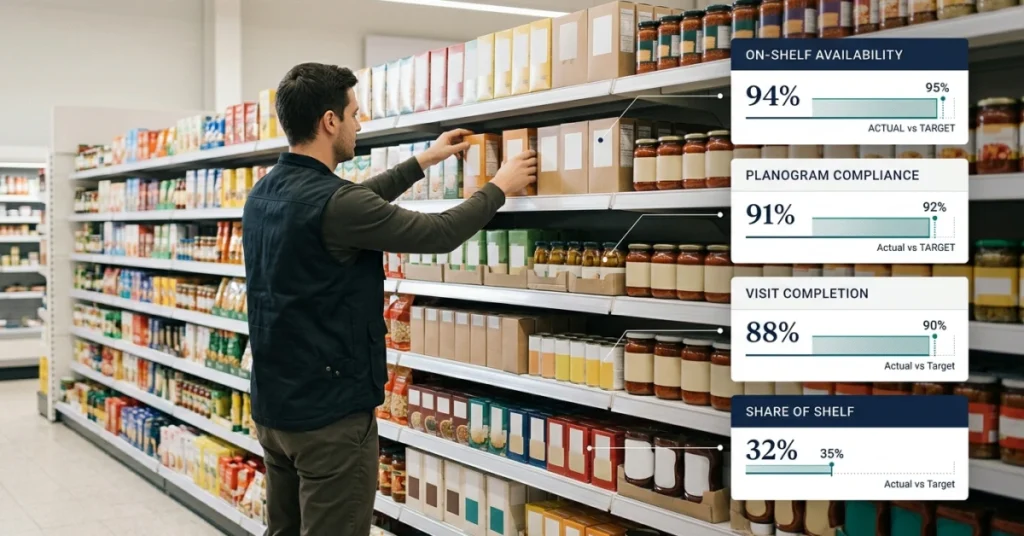
Completion rate measures what percentage of scheduled inspections actually happen on time. Facilities falling below 90% completion consistently show higher incident rates and deferred maintenance backlogs.
Tracking this KPI forces accountability before a violation occurs — not after a public health and safety inspection flags a missed cycle.
Safety Violations and Incident Trends
Raw violation counts matter less than trend direction — a rising violation rate signals systemic failure, not isolated incidents. Pair this KPI with building code compliance scores to identify which systems repeatedly underperform.
According to Tandfonline, buildings with untracked repeat violations face injury incident rates nearly 3x higher than those with active trend monitoring programs.
Corrective Action Resolution Time
This KPI measures the average days between a finding and its verified fix — the single most telling indicator of whether your inspection program actually drives change. Slow resolution time is where building permit inspection failures and liability exposure quietly compound.
Compliance Audit Scores
Audit scores translate qualitative inspection findings into a comparable, trackable number across time and properties. A declining score — even without a formal violation — is an early warning no reactive manager ever sees coming.
Benchmark audit scores quarterly against building code compliance standards to catch drift before it becomes a deficiency on record.
📊 By the Numbers
Buildings with active KPI tracking resolve safety violations nearly 3x faster than those without structured measurement programs.
The managers who institutionalize these metrics don’t just pass inspections — they make the case, in hard numbers, that their buildings are worth occupying, insuring, and investing in.
Conclusion
A safety baseline built on completion rates only holds value when managers act on what the numbers reveal. Buildings with formalized KPI review cycles catch critical deficiencies up to 40% faster than those running reactive, checklist-only programs.
Treating building safety inspection as a performance system — not a compliance event — is what separates facilities that prevent failures from those that document them after the fact. The gap between those two outcomes is almost always a data problem, not a staffing one.