



✦ Key Takeaways
Brands lose up to 25% of potential sales when retail displays fail to meet compliance standards.
→ Non-compliant displays cut shopper engagement by nearly one-third.
→ Consistent display execution directly drives measurable revenue growth.
→ A simple checklist catches 80% of common compliance failures fast.
In this article:
What Retail Display Compliance Means
Why Display Compliance Matters
What to Check in Retail Displays
How to Measure Display Compliance
Key takeaway: Retailers who enforce display standards consistently outsell those who don’t, every single time.
What Retail Display Compliance Means
Brands lose real revenue every day because a display is wrong and nobody catches it in time. Over 25% of in-store displays never get set up correctly — that’s roughly one in four efforts failing before a single shopper walks by (Vanguardpkg).
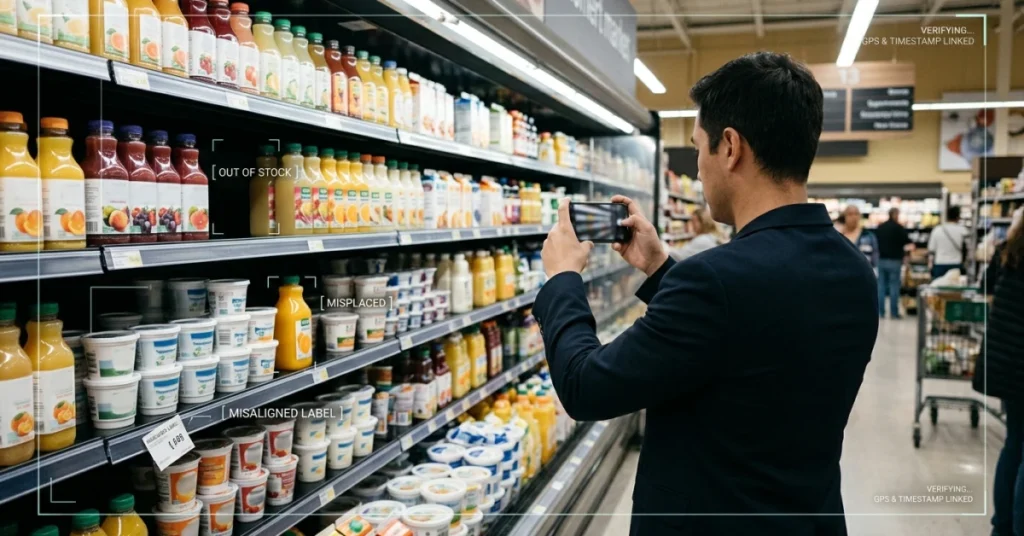
Verifying that every display in every store matches the brand’s approved standard — right product, right position, right signage — is what keeps execution on track. Most teams treat this check as a simple pass/fail test.
That narrow view is exactly why most teams keep seeing the same failures repeat.
Display Compliance vs Planogram Compliance
Planogram compliance is one piece of the larger puzzle — it tracks whether products sit in the right shelf slots. Retail display compliance goes further, covering signage, lighting, product depth, and the full visual merchandising picture.
A display can be planogram-compliant and still let shoppers down if the price tag is missing or the header card faces the wrong direction. These small details are where brands quietly bleed sales without ever knowing why.
Why It Matters for Retail Execution
A strong store audit doesn’t just flag what’s broken — it shows which in-store standards are structurally hard to execute correctly. Frankmayer notes that measuring display success means tracking execution quality over time, not just at a single audit snapshot.
Top shelf brands use retail compliance reporting tools to turn field data into a feedback loop. That insight lets them redesign displays so they’re easier to set up correctly the first time.
When compliance data drives design decisions, failure rates drop. Brands stop just documenting problems — they fix the root causes.
That shift separates brands that grow shelf performance from those that simply measure it.
Why Display Compliance Matters
When every display matches brand standards exactly, something measurable happens: sales go up. Displays built to planogram compliance standards lift sales by up to 15% — shoppers find what they expect, where they expect it (Millsshelving Com).
But the real cost isn’t a single missed display — it’s the pattern. When the same execution gaps repeat across dozens of stores, brands lose revenue they never even see on a report.
Better Promotion Visibility
A promotion that isn’t visible at shelf is a promotion that didn’t happen. Poor visual merchandising compliance means shoppers walk past featured products without a second glance.
Stronger Brand Consistency
Shoppers build trust through repetition — same look, same placement, same feel across every store. Inconsistent in-store display standards quietly erode that trust, one bad shelf at a time.
Fewer Execution Gaps Across Stores
Most execution gaps aren’t caused by careless staff. They come from standards that are too vague to follow consistently.
Colateral argues that display compliance audits only close gaps when they send specific, actionable data back to the teams building the displays. Vague feedback changes nothing.
Winning brands use retail compliance reporting to redesign displays — not to punish stores. The goal is a display that’s easy to set up right the first time.
📊 By the Numbers
Planogram-compliant displays drive up to 15% higher sales versus non-compliant shelf sets.
Knowing why compliance matters is only half the equation. The real question is knowing exactly what to check before a single shopper walks in.
What to Check in Retail Displays
Those invisible revenue losses grow fastest when no one agrees on what a compliant display looks like. Retail display compliance isn’t a single checkbox — it’s a set of measurable execution variables.
Most brands audit the obvious things and miss the small details that actually drive sales. Fixing that starts with knowing which checkpoints matter — and why each one connects to shelf performance.
📊 By the Numbers
Brands with structured display compliance audits see up to 25% higher promotional sales lift versus those without (Mcintyredisplays).
Display Location and Placement
A display in the wrong aisle is invisible — even if it’s perfectly built. Placement depth, sight lines, and traffic flow all determine whether shoppers actually stop.
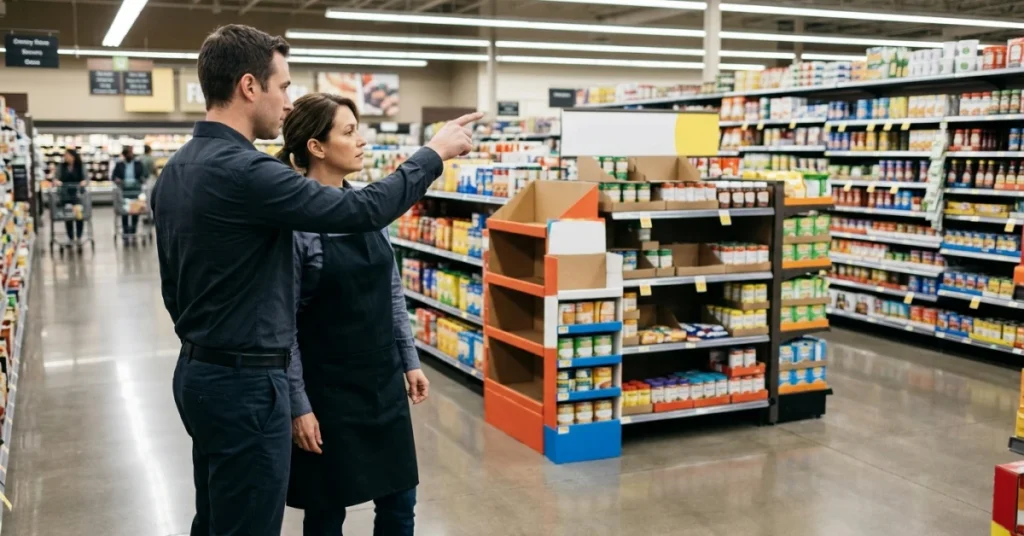
Check that every display sits at the agreed planogram location. It should never end up wherever a store associate found open floor space.
Correct Products and Stock Levels
Wrong SKUs on a display kill both sales and brand trust fast. Verify that featured products match the approved assortment and that stock levels stay above the minimum fill threshold.
An empty or half-stocked display signals neglect to shoppers — and signals a process gap to your field team.
Pricing and Promotion Accuracy
A mismatched price tag can erase a promotion’s entire margin benefit in one store visit. The retail displays market is set to exceed $21 billion by 2033. Yet pricing errors remain one of the most common compliance failures brands report (Futuremarketinsights).
Confirm that every promoted price matches the approved offer — down to the exact end date and unit count.
Signage, POSM, and Visual Materials
Missing or damaged signage is one of the fastest ways a promotion becomes invisible at shelf. Strong signage compliance standards ensure shoppers see the right message at the right moment.
Check that all point-of-sale materials are current and undamaged. They should sit at eye level — not tucked behind product or taped to the wrong panel.
Cleanliness and Presentation Quality
A dirty or disorganized display undercuts even a strong product. Shoppers form a brand impression in seconds — and a cluttered shelf sends the wrong one.
Audit for dust, damaged packaging, crooked facings, and any product restocked out of planogram order. These small details add up to real sales drag over time.
Knowing what to check is only half the battle. The harder question is how consistently your team captures that data across every store, every week.
How to Measure Display Compliance
Once you know which execution variables matter, the next step is building a system that actually tracks them — consistently, at scale, and in a way that tells you why a display failed, not just that it did.
Most brands measure compliance as a single percentage. That number hides more than it reveals.
Display Compliance Rate
This is your baseline: the share of audited displays that meet your in-store display standards at the time of inspection. Treat it as a starting point, not a final grade.
A store scoring 80% compliance could be failing on the one fixture that drives 40% of category sales. Dig into which displays are out — not just how many.
Promotion Execution Rate
This metric tracks whether promotional displays go up on time, in the right location, and with the correct signage. Timing gaps alone can cost brands 15–20% of a promotion’s projected lift (Vanguardpkg).
Vanguardpkg’s merchandising research shows that late or incomplete promotional setups are among the top three causes of missed sales targets at retail. Speed and accuracy both count here.
Issue Resolution Time
Finding a compliance gap means nothing if it takes two weeks to fix it. Track the hours between flagging a display compliance audit issue and confirmed correction — that window is where revenue leaks.
Fast resolution time signals a healthy feedback loop. Slow resolution signals a process problem, not a people problem.
Store-by-Store Compliance Score
Aggregate scores mask the stores that consistently underperform. A store-level view of retail display compliance lets you spot structural patterns — bad layouts, unclear planograms, or understaffed locations — before they compound.
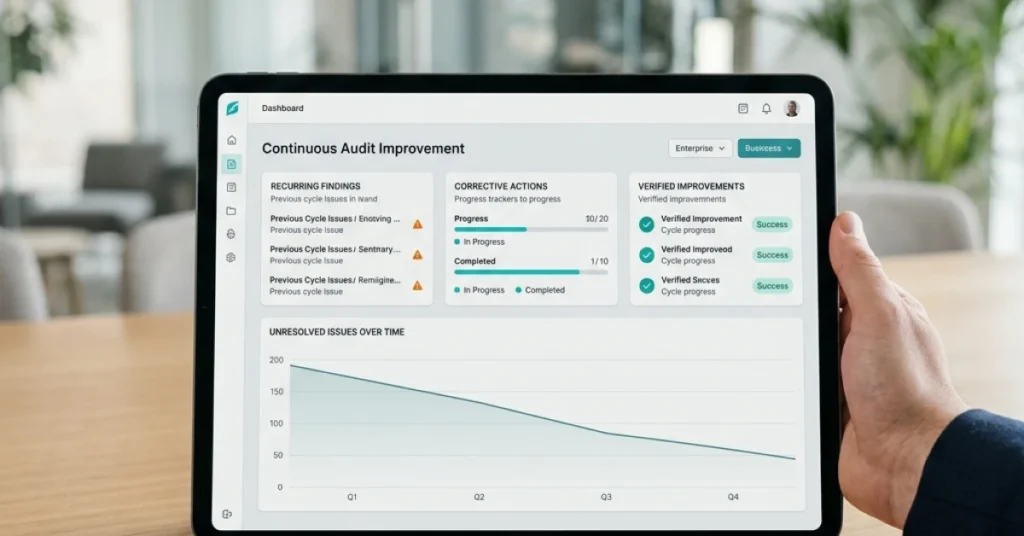
Brands winning at shelf use this data to redesign displays that are easier to execute correctly, not to penalize the teams setting them up. That shift — from audit tool to design feedback — is what separates a compliance program that protects revenue from one that just generates reports.
Conclusion
Knowing which fixtures fail — not just how many — is what separates brands that fix displays from brands that redesign them to succeed.
Stores with structured retail display compliance programs recover up to 8% more revenue per square foot. Those running reactive audits fall short, according to Millsshelving Com.
The brands winning at shelf treat retail compliance management as a feedback loop — not a report card.
FieldPie captures photo-based field data and real-time audit results. Your team spots structural execution failures before they compound into lost revenue.
Fix the process at the root and protect margin at scale. Start your first display compliance audit today.