✦ Key Takeaways · 6 min read
- Schedule professional service before your local heating and cooling seasons.
- Match maintenance tasks to the equipment installed, its operating conditions, and manufacturer guidance.
- Separate routine homeowner checks from electrical, refrigerant, and combustion work.
- Compare maintenance plans by included services, exclusions, and total annual cost.
- Keep a service record and follow up on issues that remain unresolved.
Seasonal HVAC maintenance combines scheduled professional inspections with routine checks throughout the year. A useful plan explains what needs attention, who should handle it, and when the work is due.
This guide covers residential central air conditioners, furnaces, and heat pumps. Commercial systems and specialized equipment may require different maintenance procedures.
In this article:
- How Service Teams Can Manage Recurring Visits
- Why Seasonal HVAC Maintenance Matters
- When to Schedule HVAC Maintenance
- A Seasonal HVAC Maintenance Checklist
- Homeowner Checks vs. Professional Service
- How to Compare Maintenance Costs
Why Seasonal HVAC Maintenance Matters
Seasonal HVAC maintenance helps identify airflow restrictions, drainage problems, worn components, and performance changes before periods of heavy use. It cannot prevent every breakdown, but it gives technicians an opportunity to address problems before demand increases.
A maintenance visit should reflect the equipment installed. A gas furnace, an electric heat pump, and a central air conditioner do not need identical checks.
Airflow and Equipment Condition Affect Performance
A restricted filter or dirty coil can interfere with normal operation. Maintenance should address the condition found rather than assume every component needs cleaning or replacement at every visit.
Follow the equipment manufacturer’s guidance for filter selection, service intervals, and approved cleaning methods.
Keep Records of Maintenance and Recommendations
Record the service date, equipment identification, findings, work completed, and any recommended follow-up. This makes it easier to compare the condition of the same system over time.
Review the specific warranty terms for your equipment. Maintenance requirements and documentation expectations vary by manufacturer and coverage agreement.
For contractors, maintaining a consistent job history also supports continuity when different technicians visit the same property. FieldPie’s HVAC software connects scheduling with mobile job records so teams can keep service information organized.
When Should You Schedule HVAC Maintenance?
Schedule service before your system enters its busiest operating period. ENERGY STAR recommends pre-season checkups, with cooling equipment checked in spring and heating equipment in fall. Adapt that timing to your local climate rather than relying on fixed calendar months.
Before Cooling Season
Arrange a cooling inspection before sustained hot weather arrives. Ask the contractor to confirm the scope for your equipment and explain which findings require additional work.
Before Heating Season
Schedule heating service before regular heating use begins. The checklist should reflect whether the property uses a furnace, heat pump, or another heating system.
During Peak Use
Continue routine checks between professional visits. Monitor filter condition, airflow, unusual noises, visible leaks, and changes in comfort.
A seasonal checklist does not automatically mean four professional visits per year. Set the service frequency using manufacturer instructions, operating conditions, and your contractor’s recommendations.
Seasonal HVAC Maintenance Checklist
Use this checklist to organize the year. Confirm equipment-specific procedures with the manufacturer and your service contractor.
| Season | Homeowner checks | Professional service focus |
|---|---|---|
| Spring: before cooling demand | Check accessible filters, keep supply and return vents unobstructed, and note comfort concerns. | Inspect cooling operation and address equipment-specific maintenance needs. |
| Summer: peak cooling | Monitor airflow, filter condition, visible water leaks, and unusual operating changes. | Diagnose persistent cooling problems, leaks, or abnormal operation. |
| Fall: before heating demand | Confirm the heating appointment and check alarms according to their instructions. | Inspect heating operation using a checklist appropriate to the installed system. |
| Winter: peak heating | Keep vents accessible and observe outdoor equipment from a safe position. | Investigate persistent heating problems, abnormal icing, or repeated faults. |
Homeowner Checks vs. Professional Service
Homeowner checks should stay within the procedures described in the equipment manual:
- Inspect an accessible filter and replace or clean it as instructed.
- Use the specified filter size and a filtration rating compatible with the system.
- Keep indoor vents unobstructed.
- Keep loose debris away from outdoor equipment without opening panels or reaching inside.
- Record unusual operating changes for the technician.
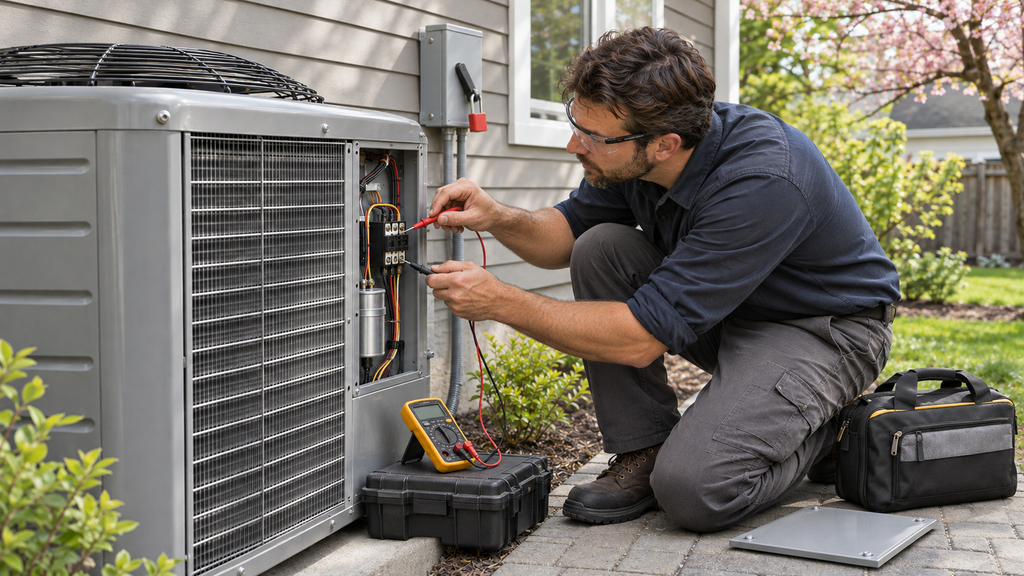
Professional work includes electrical testing, refrigerant work, combustion inspection, and internal equipment servicing.
In the United States, covered refrigerant servicing activities fall under EPA Section 608 certification requirements. Requirements elsewhere depend on local rules.
Avoid universal cleaning instructions, such as pouring vinegar into every condensate drain. Drain arrangements, materials, and approved procedures differ between systems.
Warning Signs That Need Attention
Contact a qualified contractor if you notice persistent unusual noises, repeated shutdowns, weak airflow, unexplained water around equipment, or a sustained loss of heating or cooling.
These symptoms can have several causes. Record what happened and when rather than diagnosing a refrigerant leak or failed compressor from the symptom alone.
If a carbon monoxide alarm sounds, leave the building immediately, contact emergency services from outside, and do not return until responders say it is safe. Follow the CPSC’s carbon monoxide guidance.
How Much Does Seasonal HVAC Maintenance Cost?
The price depends on your location, equipment type, number of systems, accessibility, and the work included. A basic inspection and a visit that includes extensive cleaning or repairs are different services.
Request an itemized quote before comparing providers.
One-Time Visit vs. Maintenance Plan
A maintenance plan may be useful when it includes the visits and services your equipment needs. It is not automatically cheaper, and it does not necessarily cover four visits each year.
| What to compare | Questions to ask |
|---|---|
| Number of visits | How many visits are included, and which systems do they cover? |
| Inspection scope | Which checks are included for each equipment type? |
| Cleaning and consumables | Are filters, coil cleaning, and other materials included or charged separately? |
| Repairs | Are parts, labor, diagnostics, and refrigerant excluded? |
| Scheduling benefits | What does priority service mean, and are response times guaranteed? |
| Agreement terms | Are there renewal conditions, cancellation fees, or restrictions? |
Compare the annual plan fee plus expected extras with the cost of equivalent individual visits. Keep repair costs separate unless the agreement explicitly includes them.
For example, a plan that includes two inspections but excludes filters and cleaning should not be compared directly with a quote that includes those services.
How HVAC Service Teams Can Manage Seasonal Maintenance
For contractors managing multiple customers, the challenge is turning a maintenance recommendation into a scheduled visit, a complete service record, and a resolved follow-up.
1. Build an Equipment Register
Record the customer, property, equipment type, model, service history, and applicable maintenance instructions. Schedule against the actual equipment rather than treating every property as the same job.
2. Set Service Windows
Use local heating and cooling demand, manufacturer guidance, customer availability, and technician capacity to define the next service window.
Recurring service scheduling can help teams organize repeat work, but dispatchers still need to review access restrictions, qualifications, and scheduling conflicts.
3. Use Equipment-Specific Job Forms
Give technicians a checklist suited to the installed system. Record the checks performed, relevant findings, work completed, and items that could not be inspected.
An unavailable reading or inaccessible component should have an explanation rather than an invented value.
4. Separate Completed Visits From Open Repairs
A maintenance visit can be complete while a repair remains outstanding. Record whether a recommendation is awaiting approval, parts, a return appointment, or final verification.
Use field service job management to keep the service visit and its follow-up work connected.
5. Review Outstanding Work
Track:
- On-time maintenance completion: visits completed within the agreed window ÷ visits due.
- Overdue visits: appointments that have passed their service window.
- Open follow-up age: time since an unresolved issue was recorded.
- Record completeness: completed jobs containing all required service information ÷ completed jobs.
FieldPie supports recurring scheduling and mobile job forms with notes and photos. In a demo, test how your team would schedule one maintenance visit, document a finding, and manage the resulting follow-up.
Conclusion
Seasonal HVAC maintenance works best when the schedule reflects the equipment, climate, and operating conditions. Prepare before peak demand, carry out routine checks between visits, and keep a record of findings and outstanding work.
For homeowners, the next step is to confirm the required service scope with a qualified contractor. For HVAC businesses, it is to make that scope repeatable across appointments and technicians.
FieldPie’s HVAC software helps service teams organize appointments, recurring work, and mobile job records.
Book a demo to walk through your seasonal maintenance workflow, from the initial booking to follow-up completion.