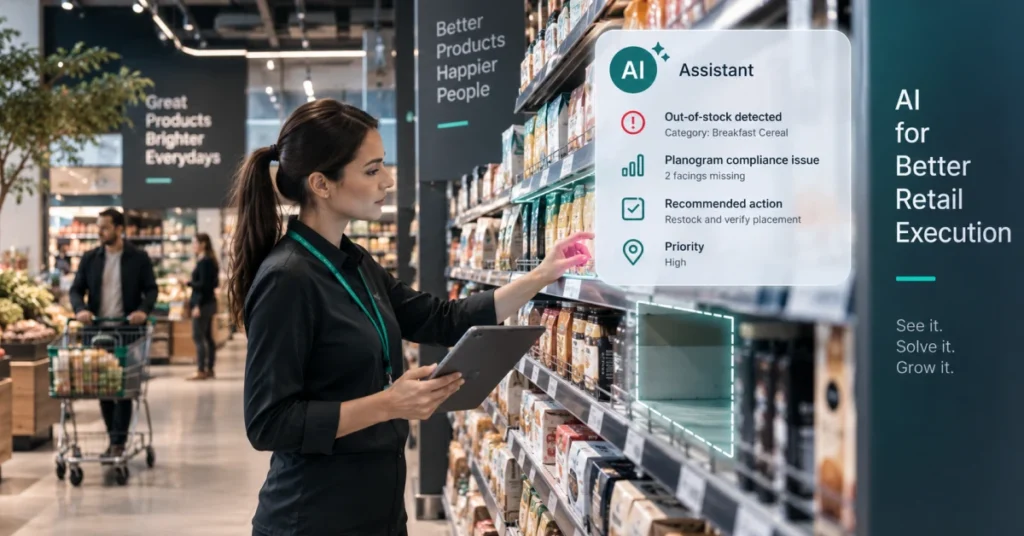




A restaurant audit is a structured, systematic evaluation of a food service operation against health, safety, and brand standards. It covers food handling, sanitation, equipment, staff hygiene, and regulatory compliance—giving operators a clear, documented snapshot of where their location stands and what must be corrected.
What Is a Restaurant Audit?
A restaurant audit is a formal inspection process used to verify that a food service establishment meets internal operational standards and external regulatory requirements. Audits can be conducted by internal managers, third-party inspectors, or health department officials. The output is a scored report that identifies gaps, assigns corrective actions, and creates an accountability trail.
Why Does Your Restaurant Need Regular Audits?
Skipping audits doesn’t save time—it creates liability. The FDA Food Safety Modernization Act (FSMA), enacted in 2011, shifted the regulatory focus from responding to foodborne illness to preventing it. That shift puts the burden of proof on operators.
Here’s what consistent auditing delivers:
- Regulatory protection: Documented inspection records demonstrate good-faith compliance during surprise health department visits.
- Reduced liability: According to the CDC, roughly 48 million Americans get sick from foodborne illness each year. A rigorous audit program is your first line of legal defense.
- Brand consistency: For multi-unit operators and franchise groups, audits are the primary mechanism for ensuring every store delivers the same guest experience.
- Financial performance: Waste, over-portioning, and theft surface quickly during operational audits—issues that erode margins silently.
As industry best practice guides note, combining internal operational reviews with scheduled safety audits creates a measurable culture of accountability across every location.

What Are the Different Types of Restaurant Audits?
Not every audit serves the same purpose. Understanding the distinctions helps operators schedule them correctly.
| Audit Type | Primary Focus | Conducted By | Frequency |
|---|---|---|---|
| Food Safety / HACCP Audit | Temperature control, cross-contamination, storage | Internal manager or third party | Weekly / Monthly |
| Health Department Inspection | Regulatory compliance (FDA, local codes) | Government inspector | Unannounced |
| Brand Standards Audit | Guest experience, presentation, SOPs | Internal or franchisor | Quarterly |
| Operational / Financial Audit | Labor, waste, inventory, cost control | Internal or external auditor | Monthly / Quarterly |
| Fire & Safety Audit | Emergency exits, suppression systems, equipment | Certified safety inspector | Annually |
How Do Internal Audits Differ From Third-Party Inspections?
Internal audits are self-assessments run by managers or a dedicated compliance team. They are proactive, frequent, and lower-cost. Third-party inspections are conducted by independent firms or regulators and carry formal authority. The smartest operators use internal audits to prepare for—and pass—every external inspection.
How Do You Conduct a Restaurant Audit? (Step-by-Step)
Step 1: Define the Audit Scope
Decide whether you’re running a food safety audit, a brand standards review, or a full operational inspection. Each requires a different template and a different level of expertise from the auditor.
Step 2: Select or Build Your Checklist Template
Use a standardized, role-specific template. A kitchen template covers HACCP critical control points; a front-of-house template covers service standards and cleanliness.
Step 3: Conduct the Walk-Through
Arrive unannounced when possible. Move systematically—receiving dock → dry storage → walk-in coolers → prep areas → cooking line → front of house → restrooms. Document with photos, not just checkmarks.
Step 4: Score and Prioritize Findings
Classify each finding by severity:
- Critical: Immediate health risk (e.g., improper food temperatures, pest evidence). Must be corrected within 24 hours.
- Major: Significant non-compliance that could escalate (e.g., missing date labels, broken equipment). Correct within 72 hours.
- Minor: Low-risk observations (e.g., worn signage, minor cleaning gaps). Address within 7 days.
Step 5: Assign Corrective Actions
Every finding needs an owner, a deadline, and a verification step. Without assigned accountability, audits become documentation exercises with no operational impact.
Step 6: Follow Up and Close the Loop
A completed audit report without a follow-up inspection is wasted effort. Schedule a re-inspection for all critical and major findings within the correction window. This is where most programs fail—and where digital field operations tools make the biggest difference.
The Master Restaurant Audit Checklist
Use this checklist as a starting point. Customize it to your jurisdiction’s health code and your brand’s specific SOPs.
Food Safety & HACCP
- All refrigeration units holding at or below 41°F (5°C)
- All hot-holding equipment maintaining food at or above 135°F (57°C)
- Raw proteins stored below ready-to-eat foods in walk-ins
- Date labels present and accurate on all prepared and opened items
- No evidence of cross-contamination between allergen and non-allergen prep areas
- Thawing conducted via approved methods only (refrigerator, cold running water, microwave, or cooking)
- HACCP logs current and signed by responsible staff
Kitchen Sanitation & Equipment
- All food-contact surfaces cleaned and sanitized per schedule
- Sanitizer solution at correct concentration (chlorine: 50–100 ppm; quaternary ammonia: 200–400 ppm)
- Dishwasher final rinse temperature at or above 160°F
- Grease traps cleaned per maintenance schedule
- Hoods and suppression systems inspection tags current
- No evidence of pest activity (droppings, gnaw marks, live insects)
Employee Hygiene
- All staff wearing clean, appropriate uniforms
- Handwashing logs completed; soap and paper towels stocked at every sink
- No bare-hand contact with ready-to-eat foods
- Illness reporting policy posted and acknowledged by staff
- Food handler certifications current for all kitchen employees
Front of House & Guest Areas
- Tables, chairs, and menus clean and in good repair
- Restrooms fully stocked, clean, and free of odor
- Floors, walls, and ceilings free of visible soil, damage, or pest evidence
- Emergency exits unobstructed and clearly marked
Operational & Brand Standards
- Menu boards and pricing accurate and up to date
- Portion standards followed per recipe cards
- Opening and closing checklists completed and signed
- Inventory par levels reviewed; waste log current
- Staff training records and certifications filed and accessible
What Are the Most Common Restaurant Audit Failures?
According to data compiled by a restaurant audit framework, the most frequently cited violations in food service inspections cluster around five areas:
- Improper food temperatures — The single most cited critical violation in health department inspections nationwide.
- Poor personal hygiene — Inadequate handwashing and improper glove use remain top failure points.
- Cross-contamination risks — Improper storage order in walk-in coolers and shared prep surfaces.
- Pest control gaps — Inadequate sealing of entry points and inconsistent exterminator schedules.
- Incomplete or falsified records — Missing temperature logs and unsigned HACCP documentation.
Understanding these patterns lets managers focus their internal programs on the areas that actually fail—rather than treating every audit category as equally weighted.
How Often Should You Conduct a Restaurant Audit?
Frequency depends on the audit type and your operation’s risk profile.
| Audit Type | Recommended Frequency |
|---|---|
| Daily temperature and sanitation checks | Daily |
| Internal food safety / HACCP audit | Weekly |
| Full internal operational audit | Monthly |
| Brand standards / franchise audit | Quarterly |
| Third-party food safety audit | Semi-annually |
| Fire, safety, and equipment inspection | Annually |
High-volume locations, those with a recent violation history, or new store openings should increase internal audit frequency until performance stabilizes. As food safety audit guidelines note, newly opened locations benefit significantly from weekly internal audits during their first 90 days of operation to catch procedural gaps before they become regulatory violations.
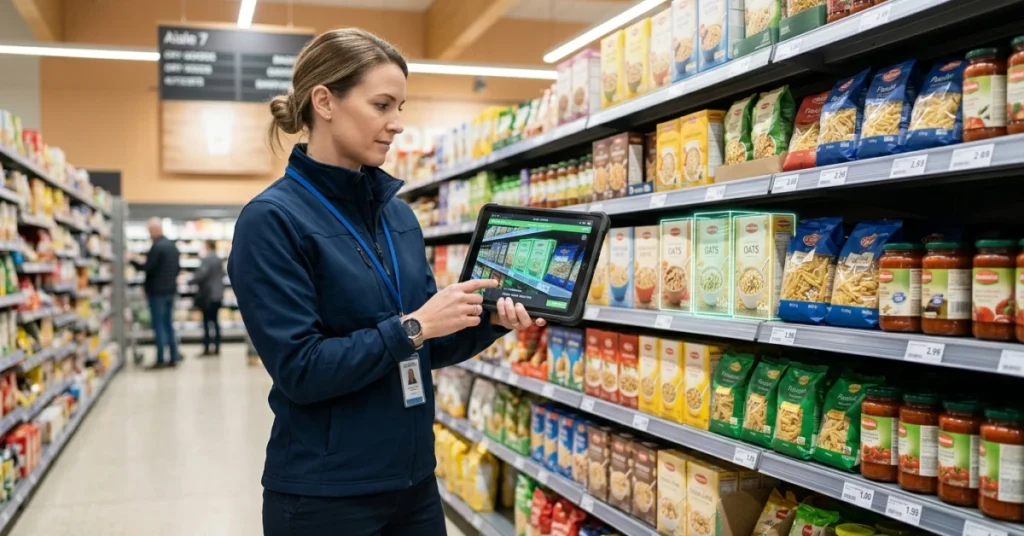
For operators managing retail-adjacent food service—such as grocery store delis or food court units—safety audits must also account for retail-specific foot traffic patterns and shared sanitation infrastructure. The retail environment introduces unique cross-contamination vectors that a standard restaurant template may not fully address.
How to Build an Internal Audit Program From Scratch
If your operation doesn’t yet have a formal internal audit program, here’s how to build one efficiently.
- Audit your current state. Before building a program, conduct a baseline assessment using a standard template to understand where your gaps are.
- Map your regulatory requirements. Identify which federal (FDA Food Code), state, and local health codes apply to your specific operation.
- Build role-specific templates. Create separate checklists for kitchen, front of house, bar (if applicable), and management operations. Each template should be tied to a specific standard.
- Assign audit ownership. Designate a primary auditor for each location—typically a shift supervisor or assistant manager—and a secondary reviewer at the district or regional level.
- Establish a corrective action protocol. Define severity classifications, correction windows, and escalation paths before you run your first audit.
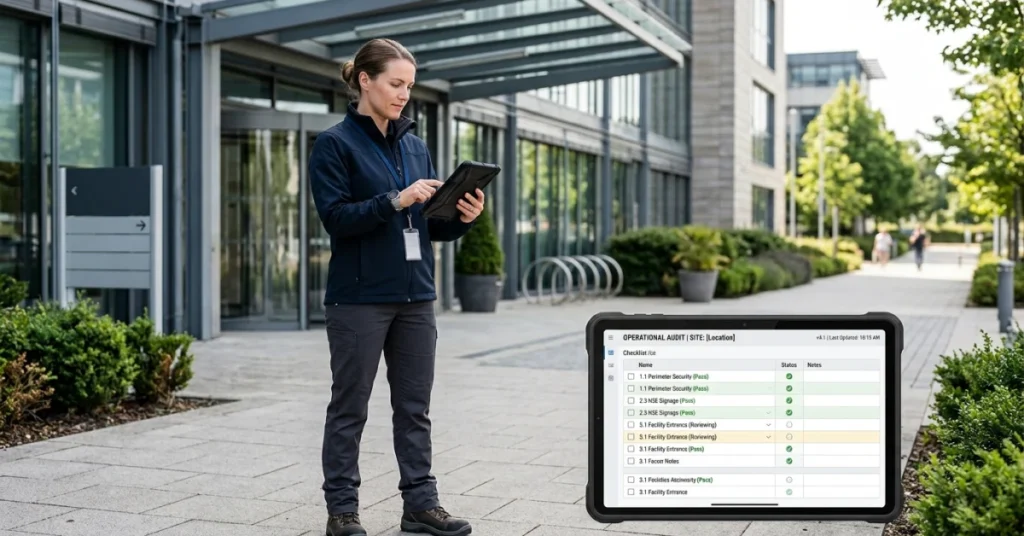
- Digitize from day one. Paper programs are difficult to scale and impossible to trend. Start with a digital platform and make sure your team can view and close findings from their mobile devices.
- Review and calibrate quarterly. Templates should evolve as your menu, staffing, and regulatory environment change. Schedule a quarterly template review to keep your program current.

Frequently Asked Questions (FAQ)
What is the difference between a restaurant audit and a health inspection?
Health inspections are government-led and can lead to fines or closures. Restaurant audits are internal or third-party reviews used to identify and fix issues before inspections.
How long does a restaurant audit take?
A basic audit takes 1–3 hours, while a full operational audit can take a full day. Digital tools can reduce audit time by up to 50%.
Who should conduct a restaurant audit?
Internal audits are done by managers or compliance staff. Third-party audits should be conducted by certified food safety professionals.
Conclusion
A restaurant audit is not a bureaucratic formality—it’s the operational backbone of any food service business that wants to protect its guests, its staff, and its license to operate. From daily temperature checks to quarterly brand standard reviews, a layered audit program catches problems at the lowest possible cost: before they become violations, injuries, or headlines.
The operators who consistently pass health inspections, maintain brand equity across multiple locations, and control food costs aren’t lucky—they’re systematic. They run structured internal audits on a defined schedule, they act on findings within clear correction windows, and they use data to improve over time.
If your current audit program lives on paper or in email threads, you’re one surprise inspection away from a problem you could have prevented.