



What Is Retail Execution Strategy
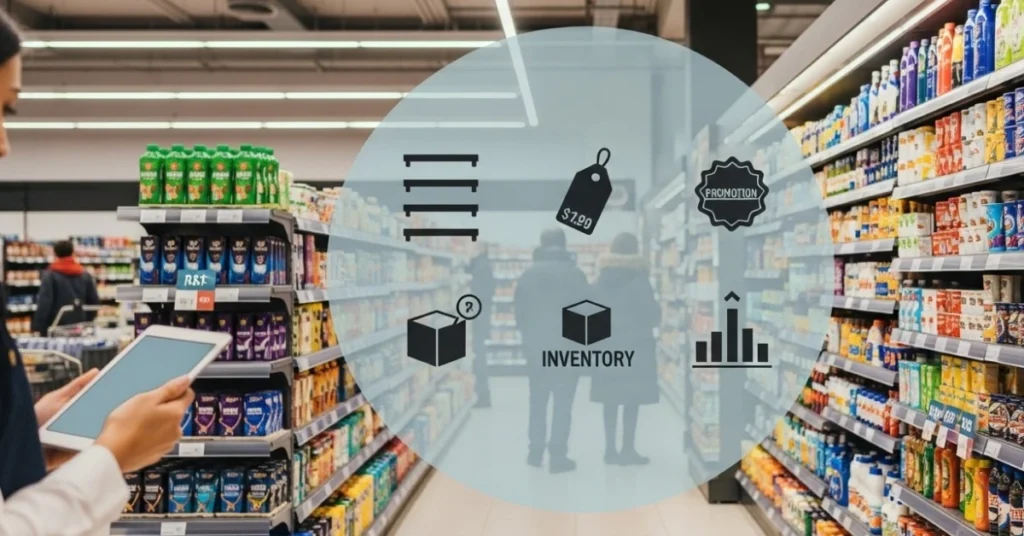
Retail execution strategy transforms how products perform at the point of sale, turning shelf space into revenue drivers. It’s the systematic approach to ensuring your brand’s vision comes to life in every store aisle, from product placement to promotional displays.
At its core, retail execution bridges the gap between boardroom planning and shopping cart reality. While traditional marketing focuses on generating demand, retail execution captures that demand when it matters most—during the crucial moments when customers make purchase decisions. This strategy encompasses everything from optimizing shelf positioning and maintaining stock levels to training store associates and implementing promotional campaigns that actually convert browsers into buyers.
The difference between brands that thrive and those that struggle often comes down to execution quality. A comprehensive retail execution approach ensures consistent brand representation across thousands of retail touchpoints, creating the seamless customer experience that drives repeat purchases and builds lasting loyalty.
Understanding the fundamental elements that make retail execution successful sets the foundation for measurable in-store performance improvements.
Core Elements of Retail Execution
Successful retail execution operates on four foundational pillars that determine in-store performance. Product availability ensures items reach shelves when customers need them, while optimal shelf placement maximizes visibility in high-traffic zones. Promotional compliance guarantees marketing campaigns execute as planned across all locations.
The fourth element involves systematic approaches to measure retail store performance through real-time monitoring systems that track everything from stock levels to display quality. These metrics create accountability and reveal which locations need immediate attention versus those performing optimally.
However, these elements only succeed when supported by robust data collection and analysis capabilities that transform raw observations into actionable insights for continuous improvement.
Retail Execution vs. Retail Strategy
While retail strategy sets the big-picture direction, retail execution focuses on the tactical implementation at store level. Strategy determines what products to launch and which markets to enter, while execution ensures those products actually reach shelves and perform optimally.
The distinction becomes clear when examining key performance indicators retail teams track. Strategic KPIs measure market share and revenue growth over quarters, while execution metrics focus on daily realities like stock availability and shelf compliance.
Think of strategy as the blueprint and execution as the construction work—both essential, but requiring different skill sets and timeframes to master effectively.
Why Retail Execution Strategy Matters
Poor retail execution costs brands millions in lost revenue every year. When products are out of stock, incorrectly priced, or poorly positioned, shoppers simply choose alternatives—often competitors’ products. This breakdown in the 5 P’s of retail (product, price, place, promotion, and people) directly impacts bottom-line performance.
Research shows that proper retail execution can increase sales by up to 30%, making it one of the highest-impact investments brands can make. The difference between a product sitting on shelves versus flying off them often comes down to execution fundamentals: optimal shelf placement, competitive pricing, and promotional visibility.
Without a structured retail execution strategy, brands lose control over their in-store presence, leaving their success to chance rather than strategic planning.
Impact on Sales and Shelf Performance
Poor retail execution directly impacts your bottom line through reduced sales velocity and compromised shelf performance. When products are out-of-stock, incorrectly positioned, or poorly maintained, brands typically see sales drops of 20-30% in affected stores.
The 5 S’s of retail operations – Sort, Set in Order, Shine, Standardize, and Sustain – form the foundation of effective shelf management. These principles ensure products remain visible, accessible, and appealing to shoppers throughout the day.
Strong execution drives measurable results: properly executed planograms increase sales by 15-25%, while consistent pricing and promotional compliance can boost category performance by up to 40%. However, even minor execution gaps create significant revenue leaks that compound across multiple locations and time periods.
Understanding these performance impacts sets the stage for identifying and addressing the specific challenges that prevent optimal execution.
Common Retail Execution Challenges
Despite understanding the importance of strong retail performance, brands face persistent obstacles that prevent them from achieving optimal results. Out-of-stock situations remain the most widespread challenge, with research showing that stockouts can reduce sales by up to 40% for affected products.
Compliance issues create another significant barrier, as field teams struggle to ensure promotional displays meet brand standards across thousands of retail locations. When planograms aren’t properly executed or pricing errors occur, brands lose both revenue and market share to competitors who optimize in-store performance more effectively.
These challenges become particularly acute during peak selling periods when coordination between multiple stakeholders—from merchandising teams to store managers—proves most difficult to maintain consistently.
Retail Execution Strategy Framework
Building a comprehensive retail execution strategy requires understanding the interconnected elements of retail strategy that drive in-store success. A robust framework centers on three core pillars: strategic planning, operational excellence, and performance measurement.
The strategic planning pillar establishes clear objectives, target metrics, and resource allocation across channels. Operational excellence focuses on consistent execution of merchandising standards, inventory management, and promotional activities. Performance measurement creates feedback loops through data collection and analysis to drive continuous improvement.
Successful retail execution happens when all framework elements work in harmony – from headquarters strategy to field team implementation to store-level execution. However, this coordination requires more than just good planning; it demands aligned teams working toward shared objectives across every level of your organization.
Align HQ, Field and Store Teams
Successful retail execution depends on seamless coordination between headquarters strategy, field operations, and store-level execution. Without proper alignment, even the best-planned initiatives fall apart at the point of sale.
Establishing communication protocols creates the foundation for effective team alignment. Regular touchpoints between HQ planners and field representatives ensure strategic directives translate into actionable store-level tasks. However, communication alone isn’t enough—teams need shared visibility into performance data and execution standards.
Standardized data collection retail processes enable all teams to work from the same information baseline. When headquarters, field managers, and store associates use consistent metrics and reporting formats, everyone understands current performance levels and required improvements. This unified approach eliminates confusion and ensures accountability across all organizational levels.
The key to sustainable alignment lies in creating feedback loops that connect store insights back to strategic planning, enabling continuous refinement of execution strategies based on real-world results.
Define Clear Execution KPIs
Effective retail execution hinges on measuring what matters most to store performance. Key performance indicators must translate strategic objectives into actionable metrics that field teams can influence directly.
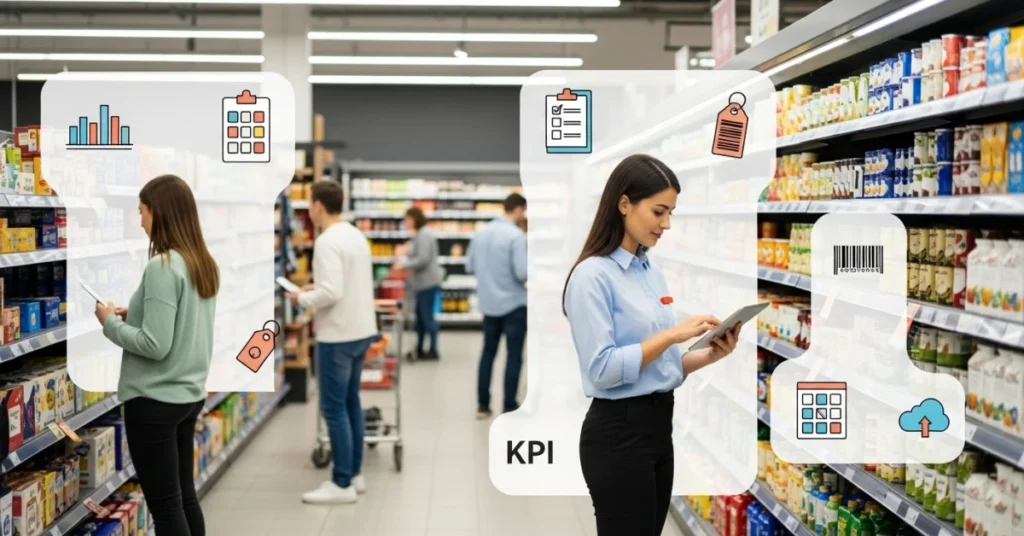
Essential KPIs include on-shelf availability, planogram compliance, promotional execution accuracy, and inventory turnover rates. Modern tools for brick and mortar retail now enable real-time tracking of these metrics through mobile apps and IoT sensors, providing immediate visibility into execution gaps. The most successful retailers focus on leading indicators rather than lagging ones. While sales data reveals outcomes, metrics like stock-out frequency and display compliance predict future performance. This forward-looking approach allows teams to course-correct before problems impact revenue.
However, too many KPIs can overwhelm store teams and dilute focus. Limit core metrics to 5-7 critical measurements that directly correlate with customer experience and sales outcomes. Each KPI should have clear ownership, realistic targets, and regular review cycles to ensure accountability remains strong throughout the organization.
Standardize Store Execution Processes
Consistent execution across all store locations requires standardized processes that eliminate guesswork and ensure uniform customer experiences. Without clear procedures, even an effective business plan retail strategy can fail at the store level due to inconsistent implementation.
Process standardization begins with documenting every critical activity, from product placement and promotional setup to customer service protocols. These standards should specify exact steps, timing requirements, and quality checkpoints that store associates can follow regardless of location or experience level.
The key is creating executable playbooks rather than abstract guidelines. Each process should include visual aids, step-by-step instructions, and clear success criteria that make compliance straightforward for frontline staff. However, standardization doesn’t mean rigidity. Successful retailers build flexibility into their processes to accommodate local market differences while maintaining core brand standards across all touchpoints.
This foundation of consistent processes naturally leads to the next evolution in retail execution: leveraging technology to transform manual, time-intensive tasks into intelligent, automated systems.
From Manual to AI-Driven Execution
The evolution from manual clipboards to AI-powered retail execution represents the most significant transformation in store operations management. Traditional methods of paper-based checklists and subjective assessments are giving way to automated systems that deliver real-time insights and predictive analytics.
Modern retail execution best practices now center on leveraging technology to eliminate human error and accelerate decision-making. AI-driven platforms can automatically detect planogram compliance issues, identify out-of-stock situations, and analyze customer behavior patterns within minutes rather than days. What typically happens is stores using AI-powered execution see 35% faster issue resolution compared to manual processes.
However, successful AI adoption requires careful change management. Teams need training on new systems, and retailers must balance automation with human oversight for complex merchandising decisions. The key is implementing technology that enhances rather than replaces human expertise, creating a seamless bridge between digital insights and in-store execution.
Digital Store Audits and Data Collection
Digital store audits transform traditional clipboard-based assessments into comprehensive data collection systems that capture every aspect of store performance. Modern audit solutions enable field teams to document compliance issues, track product availability, and measure execution quality with unprecedented accuracy and speed.
These digital platforms streamline the most critical retail strategy implementation steps by automating data capture through mobile apps, barcode scanning, and structured checklists. Field representatives can instantly photograph planogram violations, record out-of-stock situations, and document pricing discrepancies while the system automatically timestamps and geo-locates each observation.
However, the true power of digital audits lies in their ability to aggregate store-level data into actionable insights. Real-time dashboards reveal execution patterns across territories, identify recurring compliance issues, and highlight stores requiring immediate attention. This systematic approach eliminates the guesswork that often plagues traditional retail execution efforts.
The technology foundation also sets the stage for more sophisticated data collection methods that leverage visual recognition capabilities.
Image Recognition and Computer Vision
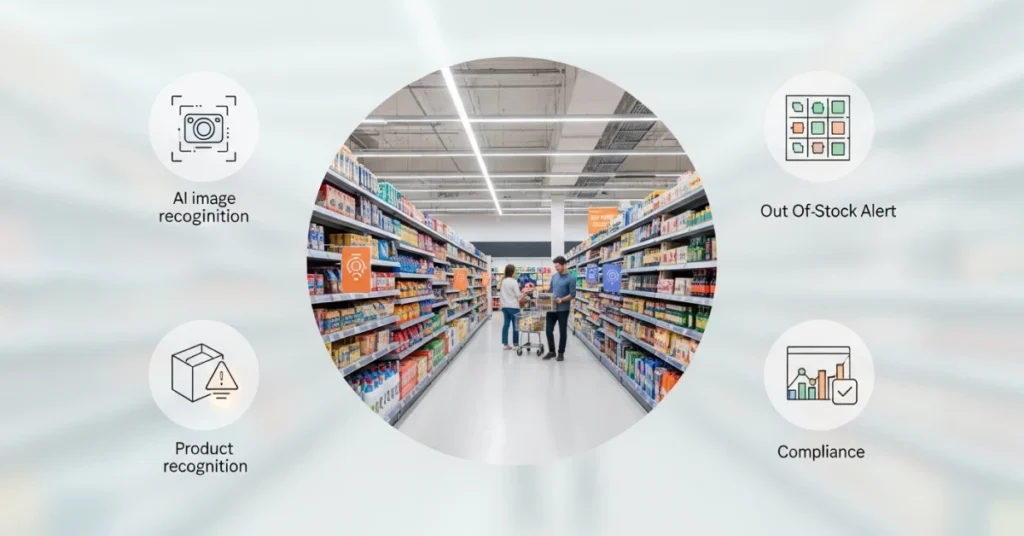
Computer vision technology revolutionizes how brands monitor and execute in-store performance by automatically analyzing visual data from store environments. Instead of relying on field representatives to manually photograph and assess shelf conditions, AI-powered image recognition systems can instantly identify product placement, pricing accuracy, and promotional compliance.
Modern retail execution platforms leverage computer vision to detect out-of-stock situations, planogram violations, and competitor activity with remarkable precision. A single smartphone photo can now generate comprehensive shelf analytics, measuring share of shelf, identifying missing products, and flagging pricing discrepancies within seconds.
This technology transforms subjective assessments into objective data points, eliminating human error and bias from store audits. Field teams can capture dozens of locations daily while the AI processes visual information in real-time, creating a scalable foundation for comprehensive retail execution monitoring and immediate corrective action.
Automation and Real-Time Visibility
Automation transforms retail execution from reactive problem-solving to proactive performance optimization. Modern platforms automatically trigger alerts when stock levels drop below thresholds, planograms deviate from standards, or promotional compliance issues arise. This shift eliminates the traditional lag between problem occurrence and detection.
Real-time visibility connects field teams, headquarters, and retail partners through unified dashboards that display current store conditions across entire networks. Instead of waiting for weekly reports, brands can monitor compliance rates, inventory positions, and execution quality as events unfold, enabling immediate corrective action that prevents lost sales opportunities.
Retail Execution Metrics → Insights → Actions
Raw data becomes actionable intelligence through systematic analysis that transforms retail execution metrics into strategic decisions. The progression from measurement to optimization requires structured interpretation frameworks that connect performance indicators to specific operational improvements.
Effective retail teams establish clear analytical pathways that convert shelf-level observations into category-wide strategies. When planogram compliance drops 15% across multiple locations, the insight might reveal inadequate staff training or supplier delivery issues, triggering targeted corrective actions.
Actionable insights emerge when metrics are analyzed within broader market context rather than in isolation. A 10% increase in out-of-stocks might initially seem problematic, but when correlated with competitor stockouts and promotional timing, it could indicate successful demand generation that requires supply chain adjustments.
The most successful retail execution programs create automated insight generation that flags anomalies and suggests specific interventions, ensuring metrics drive immediate performance improvements rather than just historical reporting.
Key Retail Execution Metrics
Successful retail execution hinges on tracking the right metrics that directly correlate with sales performance and operational efficiency. The most impactful metrics fall into three core categories: availability metrics (out-of-stock rates, planogram compliance), visibility metrics (share of shelf, promotional execution), and sales velocity indicators (inventory turns, price compliance).
Share of shelf emerges as the most predictive metric for sales success, measuring both space allocation and positioning relative to competitors. Retail execution monitoring shows that brands achieving 30% higher share of shelf typically see 15-20% sales increases within the same period.
However, metrics lose meaning without actionable thresholds and real-time monitoring. Setting specific targets—like maintaining 95% stock availability or achieving 85% planogram compliance—transforms raw data into performance indicators that drive immediate corrective actions.
Turning Data into Corrective Actions
Effective corrective actions emerge from systematic data analysis that identifies root causes rather than symptoms. When retail execution metrics reveal gaps—whether in shelf availability, planogram compliance, or promotional execution—successful brands implement structured response protocols that address underlying issues.
The most impactful corrective actions target specific performance gaps with measurable solutions. A stockout pattern might trigger automated reorder protocols, while consistent planogram deviations could prompt enhanced training programs for merchandising teams. What typically happens is that brands create escalation matrices linking specific metric thresholds to predetermined response actions.
This systematic approach transforms reactive firefighting into proactive performance optimization, setting the foundation for continuous improvement cycles.
Continuous Execution Improvement Loop
Sustainable retail execution excellence requires establishing a systematic improvement cycle that transforms insights into actionable strategies. This continuous loop begins with regular performance reviews, where teams analyze execution metrics against established benchmarks and identify patterns in both successes and failures.
The improvement process involves three key phases: assessment, optimization, and implementation. During assessment, teams evaluate current practices against performance data, identifying gaps between planned and actual execution. The optimization phase focuses on developing targeted solutions based on root cause analysis, while implementation ensures these improvements are systematically rolled out across all relevant touchpoints.
Regular calibration of execution standards ensures strategies remain aligned with evolving market conditions and consumer behaviors, creating a dynamic framework that adapts to changing retail landscapes while maintaining operational consistency.
Conclusion
Retail execution strategy transforms good products into market winners through disciplined implementation, measurement, and optimization. The journey from building foundational systems to achieving sustainable performance improvements requires commitment to data-driven decision making and continuous refinement.
Success hinges on three critical elements:
- establishing clear execution standards that align with brand objectives
- implementing robust measurement systems that capture real-time performance data
- creating systematic optimization processes that turn insights into corrective actions. Companies that master this cycle typically see 15-25% improvements in sales performance within their first year of implementation.
The retail landscape will continue evolving, but the fundamentals remain constant – brands that consistently execute at the point of sale while adapting their strategies based on performance data will maintain competitive advantage. Start with one key metric, build measurement discipline, and expand your optimization capabilities systematically to achieve lasting retail execution excellence.
🚀 Ready to Strengthen Your Retail Execution Strategy in 2026?
If you’re looking to turn your retail execution strategy into measurable, real-time performance across every store, FieldPie helps you digitize audits, track compliance, verify execution with photo proof, and gain full visibility across locations.
Stop guessing. Start executing with clarity.
👉 Discover how FieldPie can transform your retail execution strategy.