


Mystery shopping gives businesses an unfiltered view of their customer experience by deploying trained evaluators who pose as ordinary shoppers. As a research methodology that has evolved significantly since its origins in the 1940s, it remains one of the most actionable tools available to retail operators, service brands, and franchise networks today.
What Is Mystery Shopping?
Mystery shopping is a market research technique in which a company hires anonymous evaluators — called mystery shoppers — to interact with its locations, staff, or digital channels as regular customers would, then submit structured reports on what they observed. The goal is to capture objective, real-time data on service quality, compliance, and brand standards that internal audits cannot replicate.
How Does Mystery Shopping Work, Step by Step?
How does mystery shopping work at a process level? The cycle moves through six clearly defined phases.
Phase 1: Program Design
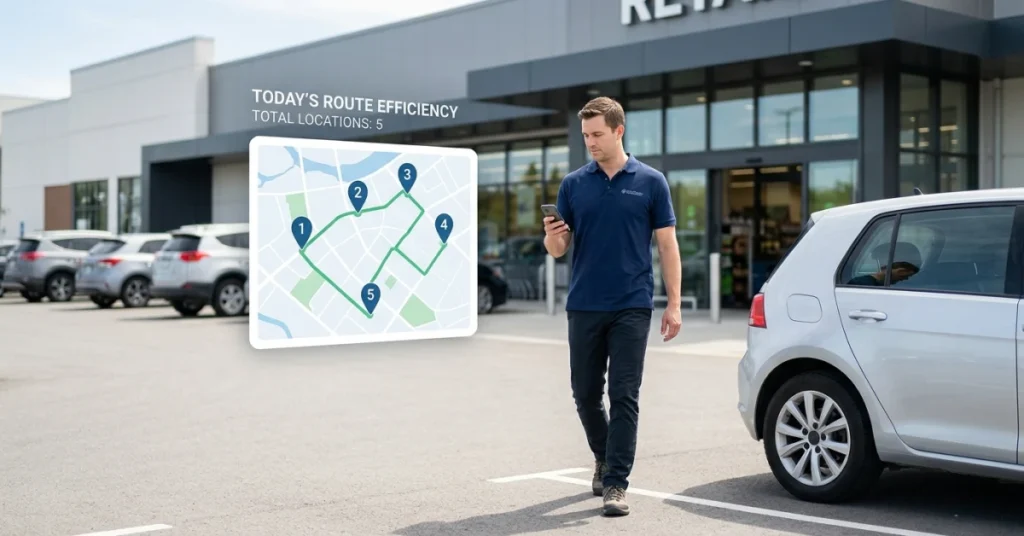
A business — or the mystery shopping agency it hires — defines the objectives. Common goals include measuring greeting protocols, upsell execution, cleanliness compliance, or checkout wait times. At this stage, the client also decides:
- Which locations or channels to evaluate (in-store, phone, online, drive-through)
- How frequently shops will occur (weekly, monthly, quarterly)
- What scoring rubric will apply
Phase 2: Shopper Recruitment and Screening
Mystery shoppers are recruited from a panel maintained by the agency. Reputable providers screen for demographic fit, communication skills, and geographic proximity. According to the Mystery Shopping Professionals Association (MSPA), legitimate shoppers are always independent contractors, never employees of the brand being evaluated.
Phase 3: Assignment and Briefing
Each shopper receives a detailed assignment brief that specifies:
- The scenario they must execute (e.g., “Ask about a loyalty program and attempt a return”)
- Specific behaviors to observe (greeting within 10 seconds, name badge visible, etc.)
- Documentation requirements (receipts, timestamps, photos)
- A deadline for report submission — typically 24 to 48 hours post-visit
Phase 4: The Shop Visit
The shopper enters the location and carries out the assigned scenario without revealing their identity. As Greenbook’s research methodology coverage confirms, shoppers evaluate employee professionalism, adherence to protocols, product knowledge, and overall customer experience — all while behaving like any ordinary customer.
The visit covers observable touchpoints:
- Store entrance and first impression
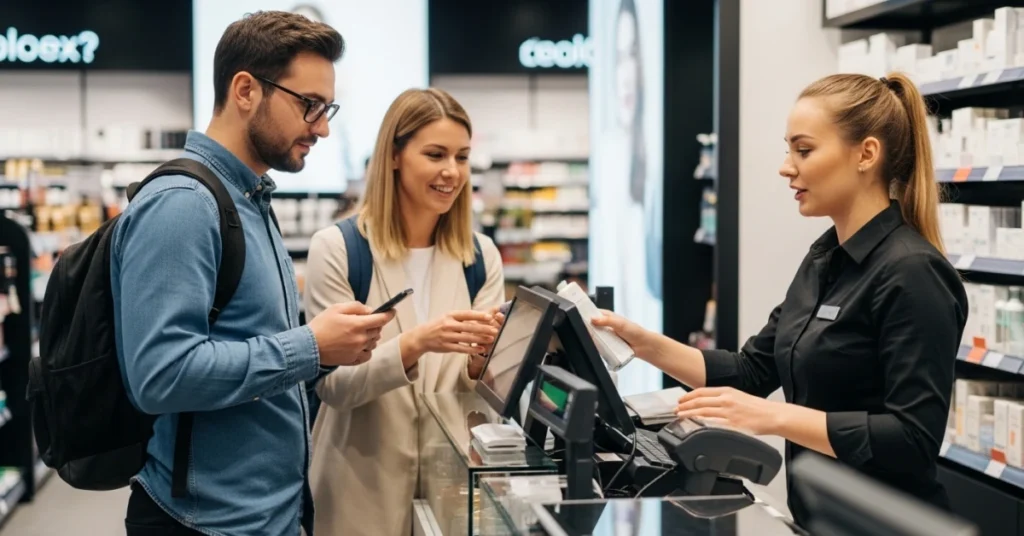
- Staff approach and greeting behavior
- Product knowledge demonstrated during the interaction
- Complaint or return handling (if applicable)
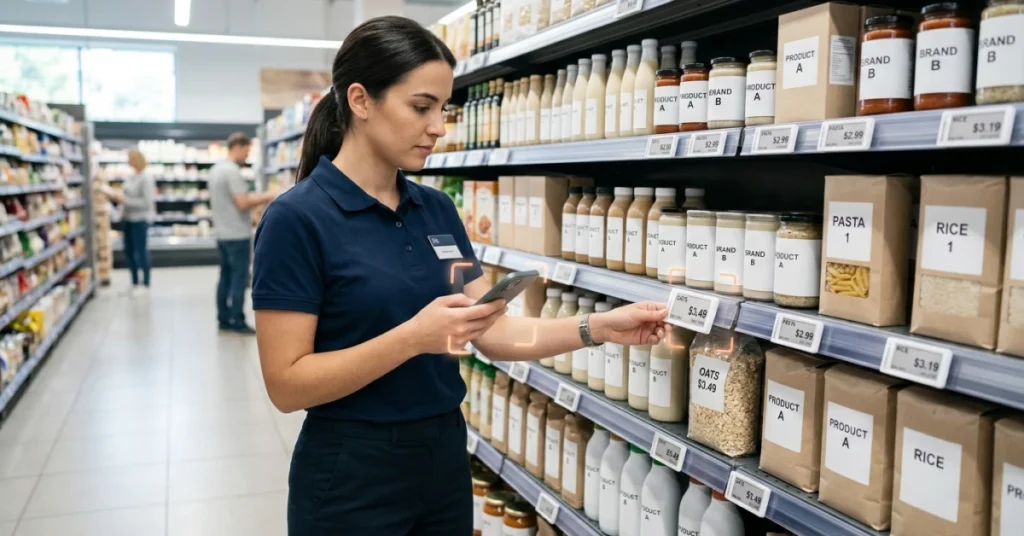
- Checkout speed and accuracy
- Facility cleanliness and brand presentation
Phase 5: Report Submission
Immediately after the visit, the shopper completes a structured questionnaire — often through a mobile app or web portal. Reports typically include:
- Scored responses to yes/no and rating-scale questions
- Verbatim narrative descriptions of key interactions
- Supporting photos or audio recordings where permitted
- A timestamped receipt as proof of purchase
Phase 6: Data Analysis and Action
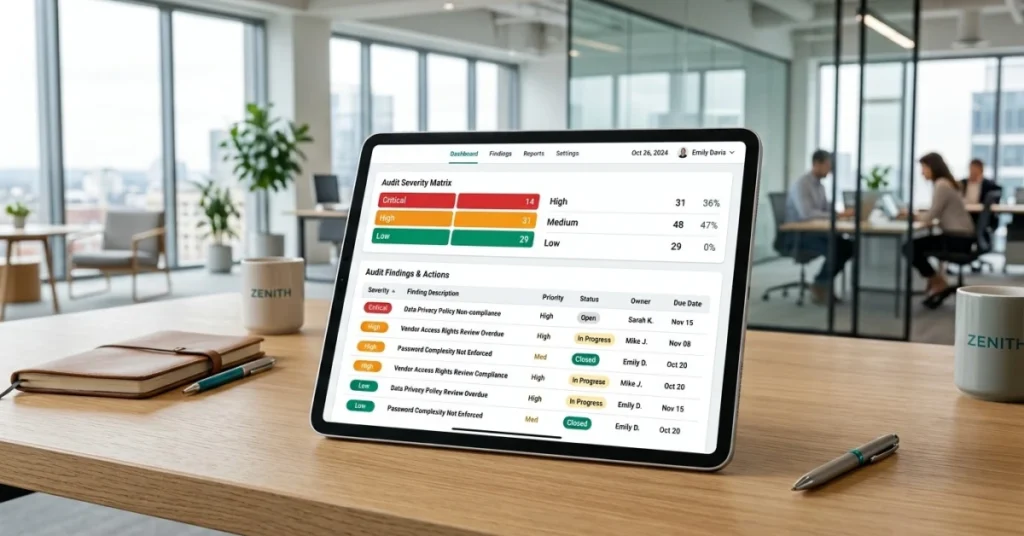
The agency aggregates scores across locations and time periods, then delivers dashboards and trend reports to the client. This is where the real business value emerges. Brands use this data to coach underperforming staff, adjust training curricula, benchmark locations against one another, and verify whether previous corrective actions produced results.
If you want to understand how this data layer connects to your broader field operations, learn how field team performance tracking integrates with mystery shopping data.

What Types of Mystery Shopping Exist?
The methodology is more versatile than most people assume. Here is a breakdown of the most common formats:
| Type | Channel | Best For |
|---|---|---|
| In-Store Visit | Physical retail location | Evaluating face-to-face service, merchandising, cleanliness |
| Phone/Call Center | Telephone | Measuring hold times, script adherence, resolution rates |
| Online/Digital | Website or app | UX assessment, chat support quality, e-commerce flow |
| Video Mystery Shopping | In-store with camera | Providing irrefutable visual evidence for training |
| Competitor Shopping | Rival locations | Benchmarking your brand against market alternatives |
| Drive-Through | QSR or pharmacy | Speed of service, order accuracy, staff demeanor |
As Clickworker’s analysis of mystery shopping notes, digital mystery shopping has grown significantly as brands seek to evaluate omnichannel customer journeys rather than individual touchpoints in isolation.
Who Uses Mystery Shopping — and Why?
Mystery shopping is not exclusive to large retail chains. Any business that relies on consistent customer-facing execution benefits from the methodology.
Industries that rely on mystery shopping most heavily:
- Retail — Apparel, electronics, grocery, and specialty retail chains use it to enforce brand standards across hundreds of locations.
- Hospitality — Hotels and restaurants deploy mystery shoppers to evaluate reservation handling, room quality, and dining experience.
- Financial services — Banks and insurance firms use it to test regulatory compliance and sales conduct.
- Healthcare — Clinics evaluate patient intake, staff courtesy, and wait time management.
- Automotive — Dealerships assess the test-drive experience and financing conversations.
- Franchise networks — Franchisors use it to ensure franchisees operate within brand standards.
For franchise and multi-unit retail operators, understanding how mystery shopping fits into a broader retail audit program is essential for scaling quality control.
What Do Mystery Shoppers Actually Evaluate?
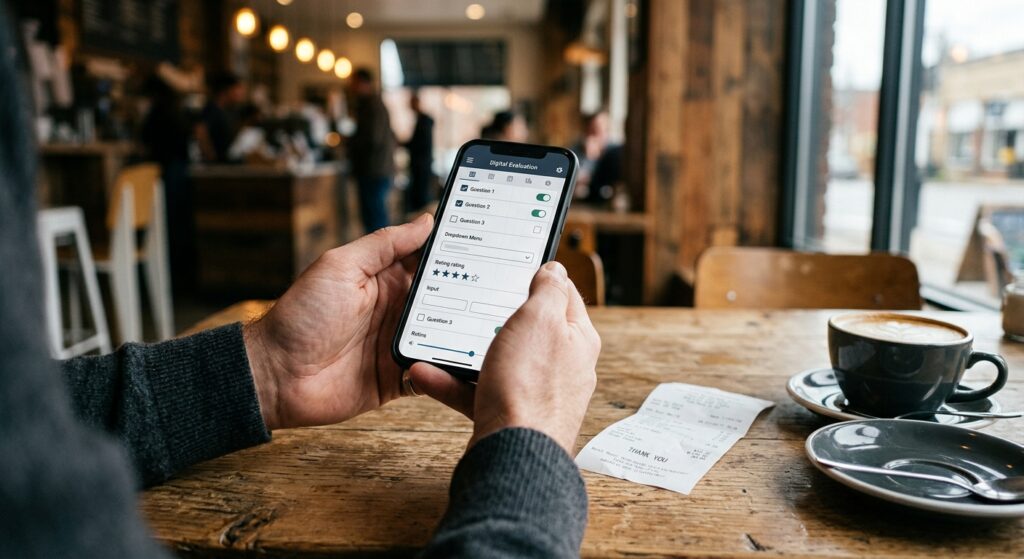
Mystery shoppers follow a structured evaluation form, but the specific criteria vary by industry. Across most programs, evaluations cover these core dimensions:
Service Quality
- Was the customer greeted within a defined time window?
- Did staff make eye contact and use a friendly tone?
- Were questions answered accurately and completely?
Compliance and Standards
- Were uniforms and name badges worn correctly?
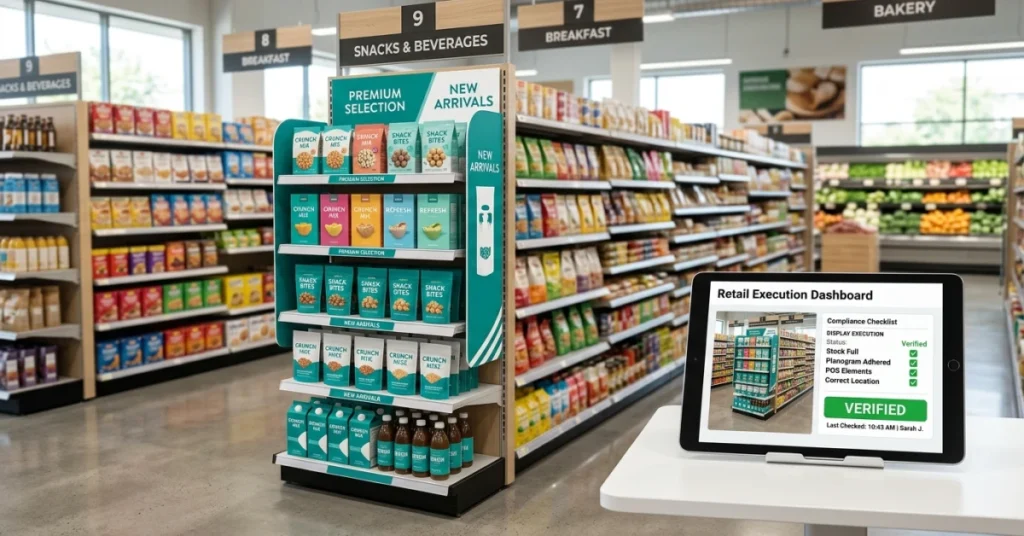
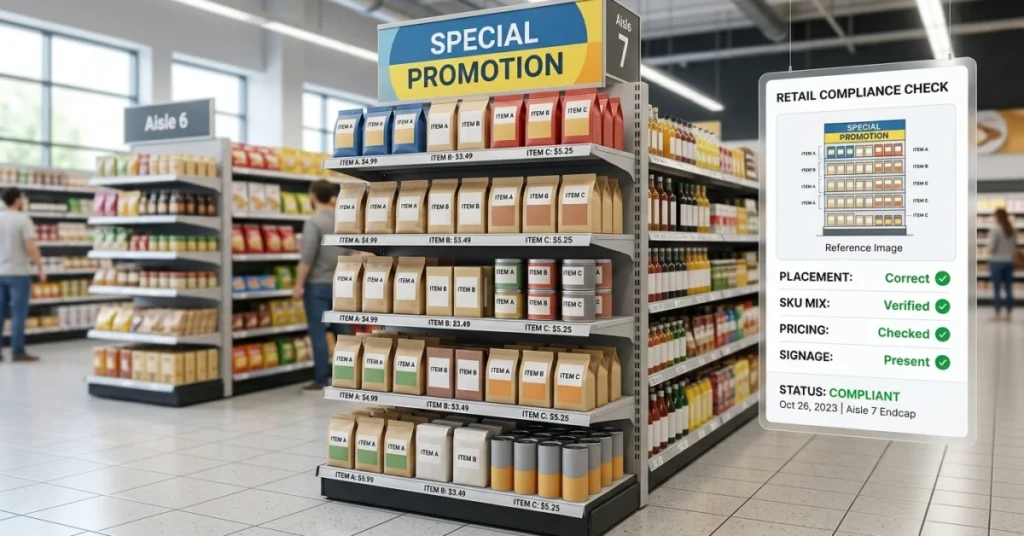
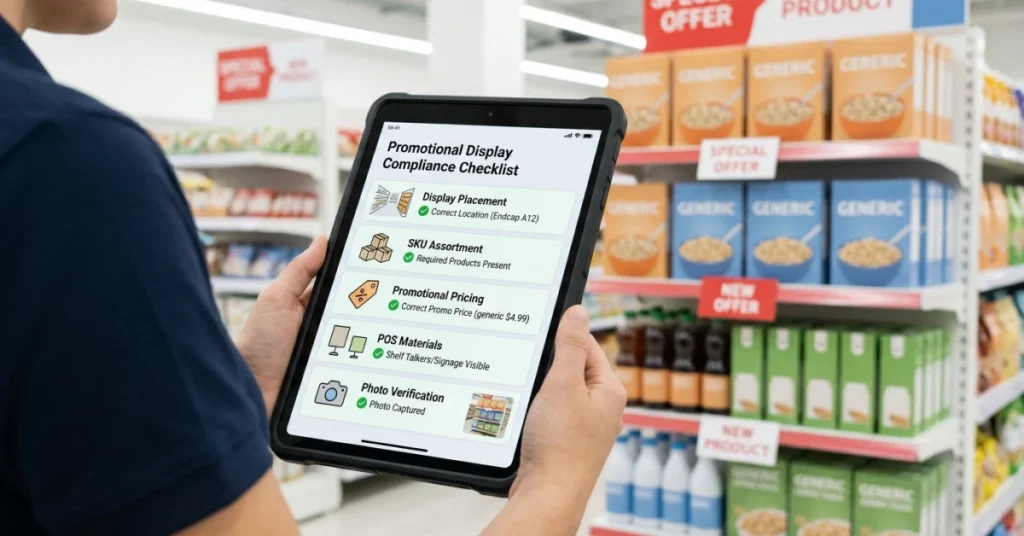
- Was the promotional signage displayed per planogram?
- Were safety and hygiene protocols followed?
Sales Execution
- Did staff suggest add-ons or complementary products?
- Was the loyalty program mentioned?
- Was a follow-up or return visit encouraged?
Physical Environment
- Were restrooms clean and stocked?
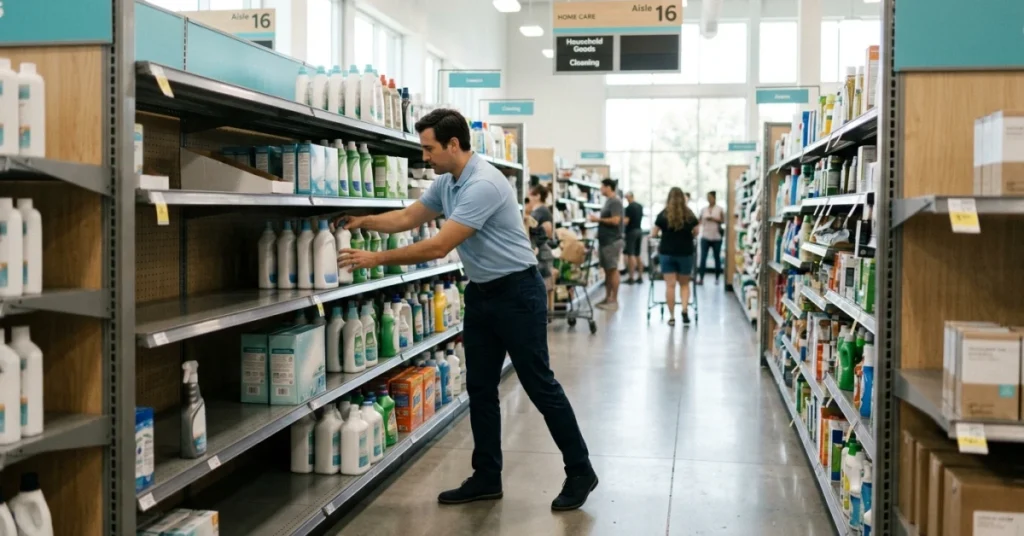
- Were shelves properly faced and merchandise organized?
- Was the checkout area free of clutter?
The Mystery Shopper’s Checklist
This checklist is designed for both new and experienced mystery shoppers — and for program managers briefing their evaluator panels.
Before the Visit
- Read the assignment brief completely and note all required scenarios
- Confirm the shop date, time window, and location address
- Understand what documentation is required (receipt, photos, audio)
- Prepare a plausible cover story or shopping scenario
- Check whether you need to make a purchase and note the reimbursement cap
- Verify the report submission deadline
During the Visit
- Arrive as a normal customer — no notepads, no obvious observation behavior
- Note exact times: arrival, first staff contact, checkout completion
- Observe all required evaluation points without prompting staff
- Complete any required transaction and retain your receipt
- Mentally log or discretely note specific staff names or badge numbers
- Capture required photos per the brief guidelines
After the Visit
- Submit your report within the required window (usually 24–48 hours)
- Write narrative sections in first-person, specific, and factual language
- Avoid editorializing — describe what happened, not what should have happened
- Attach all required documentation (receipt scan, photos)
- Review your scores for internal consistency before submitting
What Are the Legal and Ethical Boundaries of Mystery Shopping?
Mystery shopping is legal in the United States and most international markets, but it operates within important constraints.
Key legal considerations:
- Recording laws vary by state. In two-party consent states (California, Florida, Illinois, and others), audio or video recording during a shop requires all parties’ consent. Violating this can expose both the shopper and the client to liability.
- Shoppers are independent contractors. The IRS classifies mystery shoppers as self-employed individuals responsible for reporting their own income. Agencies issue 1099 forms for earnings above $600 annually.
- Shopper identity must remain confidential. Agencies are ethically obligated to protect shopper identities, and clients may not request information that would identify an individual evaluator.
- Scam awareness. The Federal Trade Commission (FTC) has issued warnings about mystery shopping scams that send fake checks and ask shoppers to wire money. Legitimate mystery shopping programs never ask you to wire funds.
For service evaluation companies and their clients, maintaining compliance documentation throughout the shop lifecycle is a non-negotiable operational requirement.
How Does Mystery Shopping Differ From Customer Surveys?
Both tools measure customer experience, but they are not interchangeable.
| Factor | Mystery Shopping | Customer Surveys |
|---|---|---|
| Data Type | Observational, behavioral | Self-reported, perceptual |
| Timing | Real-time during interaction | Post-interaction recall |
| Objectivity | Structured, criteria-based | Subject to response bias |
| Depth | Specific, actionable | Broad sentiment capture |
| Cost | Higher per data point | Lower per data point |
| Best Use | Standards compliance, training | Brand perception, NPS tracking |
The most sophisticated customer experience programs use both in tandem. Mystery shopping identifies the specific behaviors driving customer satisfaction or dissatisfaction; surveys capture how customers feel as a result.
How Technology Is Changing Mystery Shopping in 2026
The mystery shopping industry has moved well beyond paper forms and mailed reports. Today’s programs run on platforms that deliver real-time data, automated scoring, and integrated coaching workflows.
Key technology shifts shaping the space:
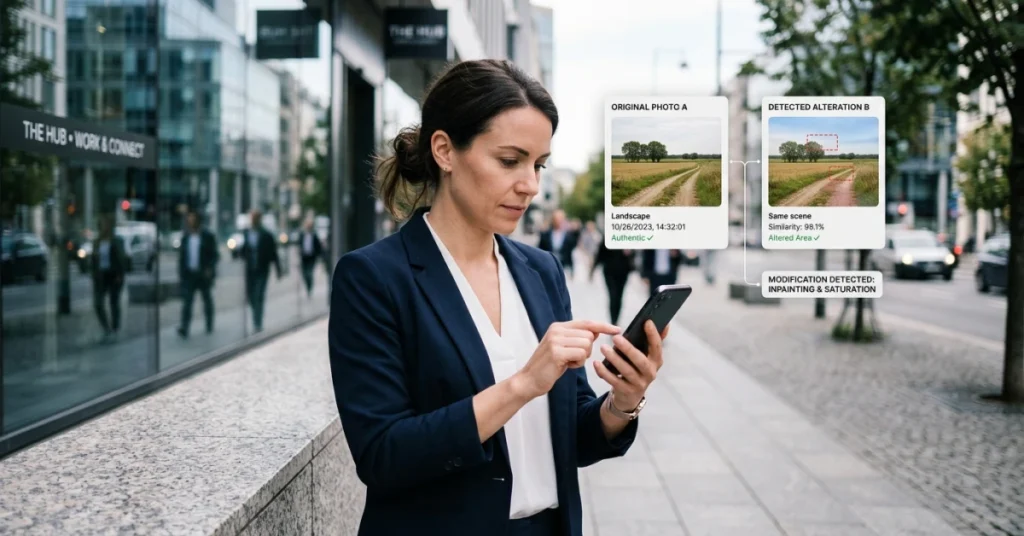
- Mobile-first reporting apps allow shoppers to submit evaluations with geo-tagged photos and timestamps directly from the visit location.
- AI-assisted quality control flags inconsistent or incomplete reports before they reach the client, improving data reliability.
- Video mystery shopping uses wearable cameras or smartphone footage to provide training departments with visual evidence rather than written descriptions alone.
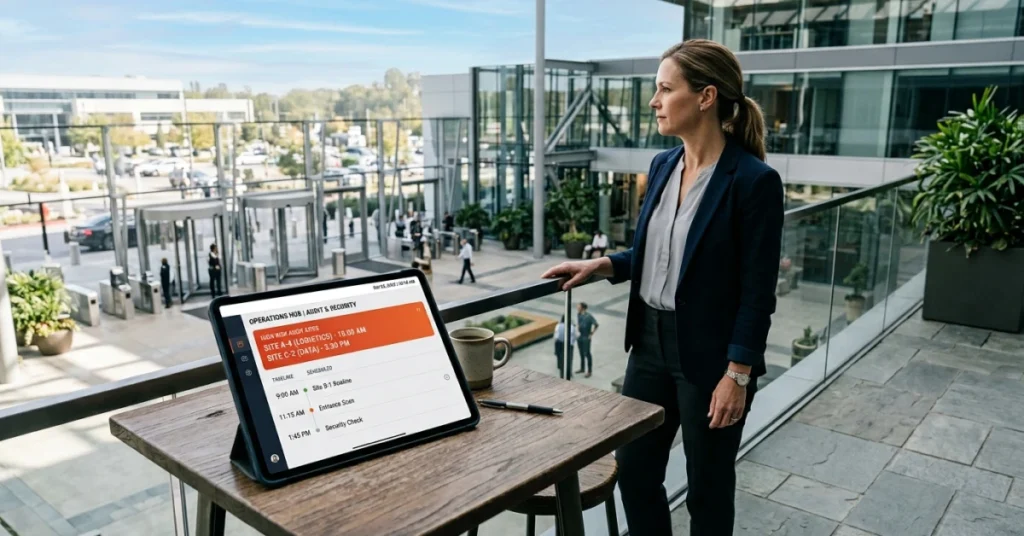
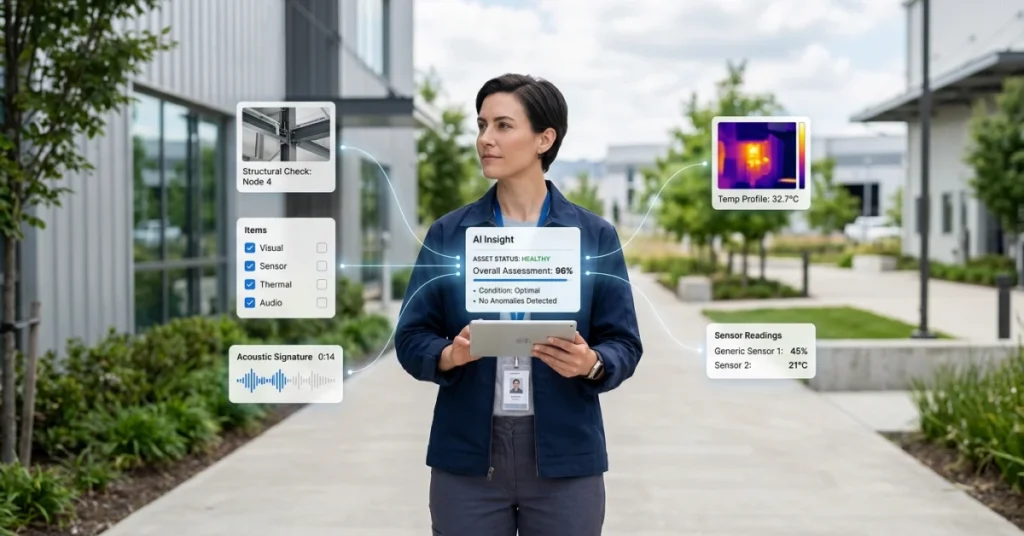
- Integrated dashboards connect mystery shopping scores to operational KPIs like sales per square foot, conversion rate, and net promoter score.
This is where platforms like FieldPie become operationally critical. FieldPie’s field operations management software allows mystery shopping program managers to assign visits, track shopper progress in real time, collect structured digital reports, and push findings directly to location managers — all within a single platform. For brands running programs across dozens or hundreds of locations, deploying a field operations platform to manage mystery shopping at scale eliminates the reporting lag that makes traditional programs slow to act on.
What Does a Mystery Shopping Program Actually Cost?
Pricing varies significantly by program complexity, but here are standard market benchmarks:
- Basic in-store shop (single visit): $15–$50 per location, plus reimbursement
- Video mystery shopping: $75–$200 per visit
- Phone/digital shops: $10–$30 per interaction
- Full program management (agency fee): Typically 20–40% added to per-shop cost
- Enterprise programs (100+ locations/month): Custom pricing, often $5,000–$50,000+ monthly
The return on investment is typically calculated against the cost of customer attrition. Research consistently shows that a single negative service experience drives a measurable percentage of customers to competitors — making the per-shop cost modest relative to the lifetime value of retained customers.
Common Mistakes Businesses Make With Mystery Shopping Programs
Even well-resourced brands undermine their mystery shopping investment by making avoidable errors.
1. Evaluating without a clear objective. Shops that try to measure everything measure nothing well. Define two or three priority behaviors per program cycle.
2. Infrequent cadence. A quarterly shop provides a snapshot, not a trend. Monthly or bi-weekly programs generate the data volume needed for statistically reliable conclusions.
3. Failing to close the feedback loop. Data that never reaches the store manager or training team produces zero behavior change. Build a formal corrective action workflow into the program design.
4. Rewarding or punishing based on a single shop. One visit is one data point. Personnel decisions should rely on trend data across multiple evaluations.
5. Ignoring digital channels. In 2026, a customer’s experience begins online. Programs that only evaluate physical locations miss half the journey.
For brands that want to avoid these pitfalls, building a structured customer experience audit framework from the outset is the most reliable path to program ROI.

Frequently Asked Questions (FAQ)
Is mystery shopping a legitimate way to earn money?
Yes. Mystery shopping is a legitimate paid activity, but earnings are modest — typically $15 to $50 per shop plus reimbursements. It works best as supplemental income rather than a primary revenue source. Always verify that a company is listed with the MSPA before accepting assignments, and never pay a fee to access mystery shopping opportunities.
How do businesses find mystery shoppers?
Most businesses contract with established mystery shopping agencies that maintain panels of pre-screened evaluators. The agency matches shoppers to assignments based on location, demographic profile, and availability. Some larger enterprises manage in-house programs, but the majority outsource to agencies to maintain evaluator anonymity and program objectivity.
How does mystery shopping work for franchise networks specifically?
Franchise systems use mystery shopping to verify that individual franchisees are adhering to brand standards on service, cleanliness, product presentation, and sales protocols. Scores are typically rolled into franchisee performance reviews and can influence territory renewal decisions. The Service Evaluation Concepts blog notes that brand consistency across franchise locations is one of the primary drivers of mystery shopping adoption in multi-unit systems.
Conclusion
Mystery shopping remains one of the most precise tools available for measuring real-world service delivery against brand standards. When designed with clear objectives, executed by well-briefed evaluators, and connected to a formal action workflow, it produces the kind of granular, behavior-level data that no survey or internal audit can replicate. The methodology has evolved from handwritten reports mailed to head office to real-time digital programs that push findings to store managers within hours of a visit.
The businesses that get the most from mystery shopping in 2026 are those that treat it not as a periodic check-in but as a continuous performance intelligence system — one that feeds directly into training, coaching, and operational decision-making.