


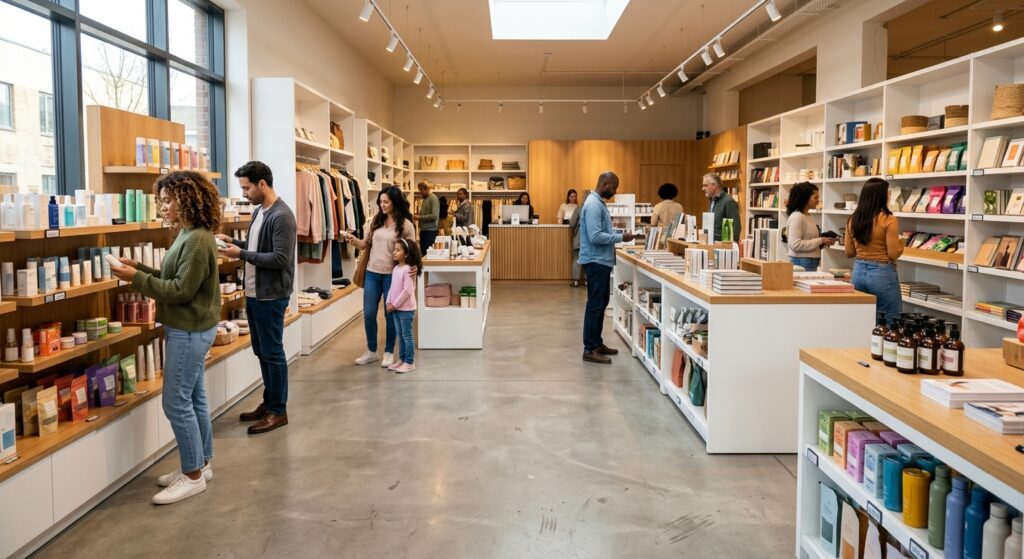
Retail marketing is the process of promoting and selling products or services directly to end consumers through physical stores, e-commerce platforms, or a combination of both. It encompasses pricing, placement, promotion, and product strategy — all designed to attract customers, drive conversions, and build long-term brand loyalty.
What Is Retail Marketing and Why Does It Matter?
Retail marketing sits at the intersection of consumer psychology and business strategy. Unlike B2B marketing, which targets organizations, retail marketing speaks directly to individual customers at the moment they are most ready to buy.
According to Salesforce’s guide, the primary goals of retail marketing are to acquire new customers, increase conversion rates, and maximize the lifetime value of existing ones. These are not abstract objectives — they translate directly into revenue.
Here is why it matters in 2026:
- Global retail e-commerce sales are projected to exceed $8 trillion by 2027.
- Physical store traffic is recovering, but customers now expect seamless omnichannel experiences.
- Brand trust has become a primary purchase driver, surpassing price in several consumer segments.
- First-party data strategies are replacing cookie-based targeting as third-party cookies phase out across major browsers.
Retailers who treat marketing as an afterthought lose market share to competitors who treat it as a core business function.
How Does the Retail Marketing Mix Work?
The foundation of any retail marketing strategy is the classic “4 Ps” framework, adapted for the modern retail environment.
| Element | Definition | Modern Retail Application |
|---|---|---|
| Product | What you sell | Assortment planning, private label development, bundling |
| Price | What you charge | Dynamic pricing, loyalty discounts, promotional markdowns |
| Place | Where you sell | Omnichannel presence: store, app, website, marketplace |
| Promotion | How you communicate | Email, social, paid ads, in-store displays, influencer marketing |
Some frameworks extend this to 7 Ps, adding People, Process, and Physical Evidence — particularly relevant for brick-and-mortar retail, where the in-store experience is a marketing asset in itself. As noted in Wikipedia’s overview of retail marketing, the retail mix must be carefully calibrated to match the target market’s expectations and the retailer’s competitive positioning.
What Are the Main Types of Retail Marketing?
Understanding the types helps you allocate budget and effort where they will generate the highest return.
In-Store Marketing
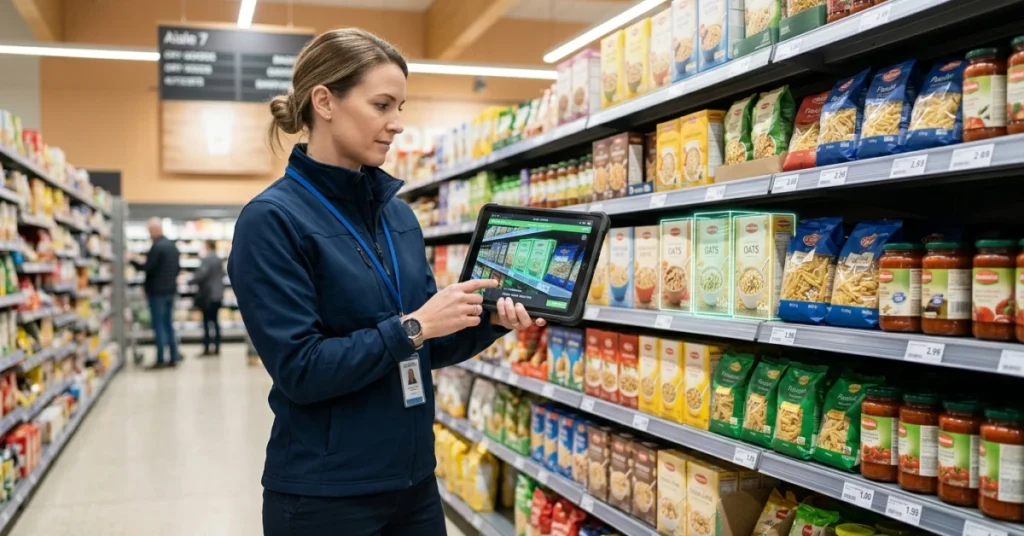
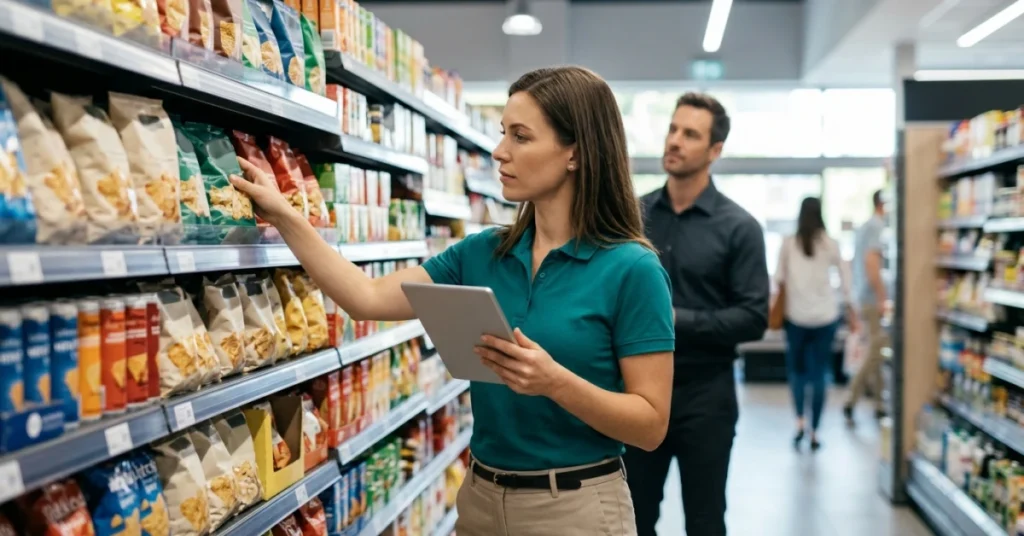
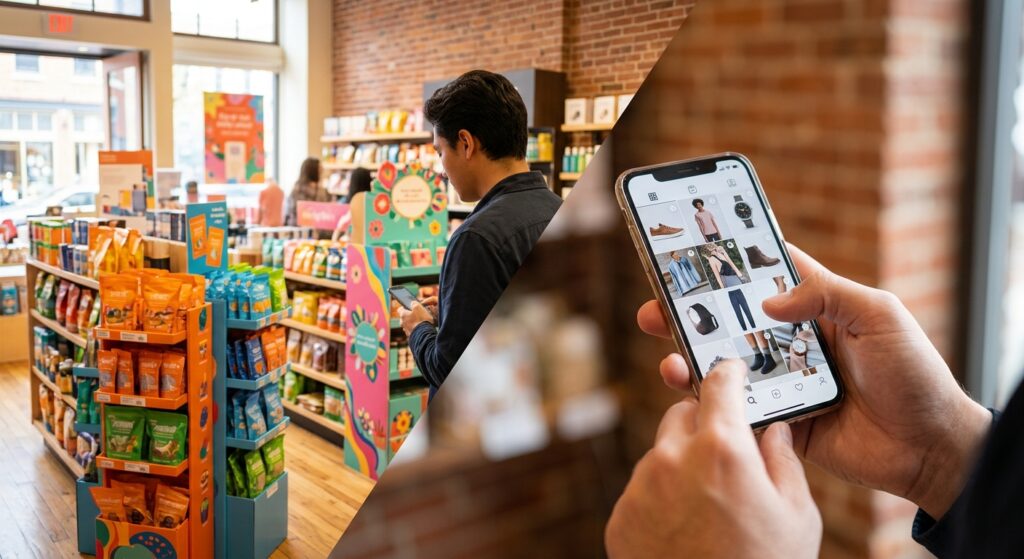
Point-of-sale displays, end caps, floor graphics, and store layout design all influence purchase decisions. Research consistently shows that a significant percentage of purchase decisions are made inside the store, making the physical environment a critical marketing channel.
Digital and E-Commerce Marketing
Search engine optimization, paid search, email campaigns, and social media advertising drive online traffic and conversions. For most retailers, digital marketing now accounts for the majority of new customer acquisition.
Social Media Marketing
Platforms like Instagram, TikTok, and Pinterest are particularly effective for retail because they are inherently visual and product-centric. Shoppable posts reduce friction between discovery and purchase.
Loyalty and Retention Marketing
Loyalty programs, personalized offers, and post-purchase email sequences are among the highest-ROI marketing investments a retail business can make. Acquiring a new customer costs five to seven times more than retaining an existing one.
Influencer and Affiliate Marketing
Partnering with creators who already have the trust of your target customers accelerates brand awareness at a fraction of traditional advertising costs.
Seasonal and Event-Based Marketing
Holiday campaigns, back-to-school promotions, and flash sales create urgency and drive volume during predictable buying windows.
If you want to understand how these channels integrate, exploring a unified retail channel strategy is an essential next step for any marketing team.
How Do You Build a Retail Marketing Strategy From Scratch?
A retail marketing strategy is not a collection of tactics — it is a structured plan that connects your business objectives to specific customer actions.
Step 1: Define Your Target Customer
Build detailed customer personas based on demographics, purchase history, and behavioral data. Know who your best customers are before you spend a dollar on reaching new ones.
Step 2: Audit Your Current Marketing Channels
Identify which channels are driving revenue and which are draining budget. Use UTM parameters, attribution models, and CRM data to get an accurate picture.
Step 3: Set SMART Marketing Goals
Goals like “increase sales” are not actionable. “Increase repeat purchase rate from 22% to 30% within 12 months through a redesigned loyalty program” is.
Step 4: Map the Customer Journey
Understand how customers discover your brand, evaluate your products, make a purchase, and decide whether to return. Each stage requires a different marketing approach.
Step 5: Choose Your Channels and Allocate Budget
Prioritize channels based on where your customers actually spend their time, not where you feel most comfortable.
Step 6: Create a Content and Campaign Calendar
Plan campaigns around your seasonal peaks, product launches, and key retail dates. Consistency beats bursts of activity.
Step 7: Measure, Test, and Optimize
Set KPIs for every campaign. Run A/B tests on subject lines, ad creative, and landing pages. Review performance monthly and adjust allocation accordingly.
What Are the Most Effective Retail Marketing Strategies in 2026?
Personalization at Scale
Customers expect brands to remember them. Personalized product recommendations, triggered emails based on browsing behavior, and dynamic website content all increase conversion rates significantly. Bluecore’s retail marketing research highlights that AI-assisted personalization can increase the likelihood of purchase by up to 2x compared to generic campaigns.
First-Party Data Collection
With third-party cookies being phased out by Google Chrome and other browsers, retailers must build direct relationships with customers. Loyalty programs, email sign-up incentives, and on-site registration flows are the primary mechanisms for collecting first-party data. These cookies — or rather, the data collected in their place — now represent a strategic competitive asset.
Omnichannel Integration
Customers move fluidly between channels. They research products online, visit a store to touch and feel, then complete the purchase on a mobile app. Retailers who create a seamless experience across every touchpoint retain more customers and generate higher average order values.
Local SEO and Google Business Profile Optimization
For store-based retailers, appearing in local search results is among the most cost-effective marketing investments available. Optimizing your Google Business Profile, generating reviews, and publishing location-specific content can drive significant foot traffic without paid advertising.
User-Generated Content (UGC)
Customer photos, reviews, and unboxing videos are more credible than brand-produced content. Encourage customers to share their purchases and feature their content across your marketing channels.
Retail Media Networks
Brands selling through major retail platforms like Amazon, Walmart, or Target can now purchase advertising directly within those retail environments — reaching customers at the exact moment of purchase intent. This is one of the fastest-growing segments of the marketing industry.
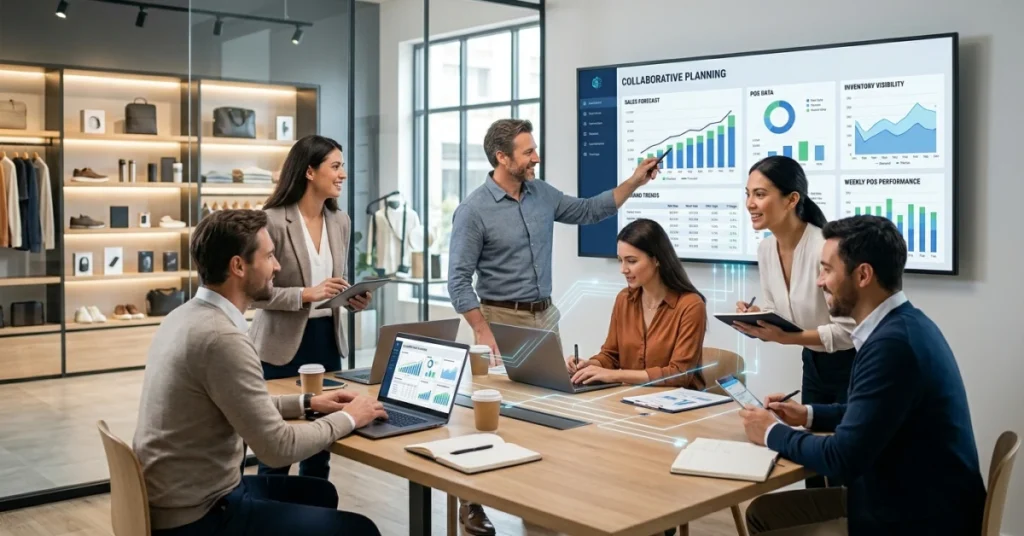
For teams managing field sales alongside digital campaigns, integrating a field team performance tracking tool ensures that in-store execution aligns with your broader marketing strategy.
What Role Does Technology Play in Modern Retail Marketing?
Technology is not optional in 2026 — it is the infrastructure that makes retail marketing scalable and measurable.
Customer Data Platforms (CDPs)
CDPs unify customer data from every touchpoint — store, website, app, email — into a single customer profile. This enables true personalization and eliminates the data silos that plague most retail organizations.
Marketing Automation
Automated email sequences, SMS campaigns, and push notifications allow retailers to engage customers at the right moment without manual effort. Welcome series, abandoned cart reminders, and win-back campaigns are table stakes.
AI and Predictive Analytics
AI models can predict which customers are most likely to churn, which products a specific customer is most likely to buy next, and which marketing messages will resonate with different segments. These predictions allow marketing teams to allocate budget with surgical precision.
Point-of-Sale (POS) Integration
When your POS system feeds data directly into your marketing platform, you can trigger campaigns based on in-store purchases, track the offline impact of digital campaigns, and build accurate customer lifetime value models.
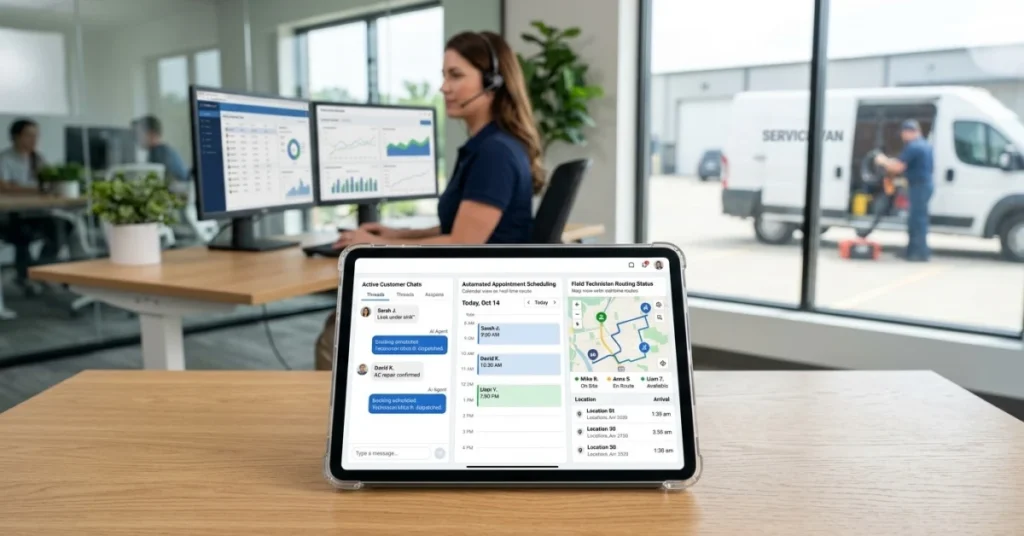
FieldPie for Field Team Coordination
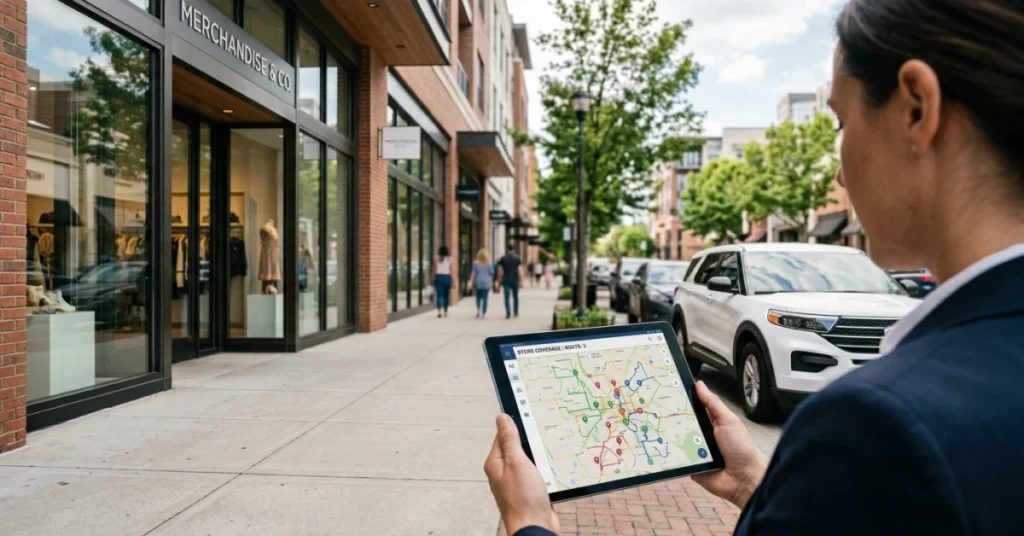
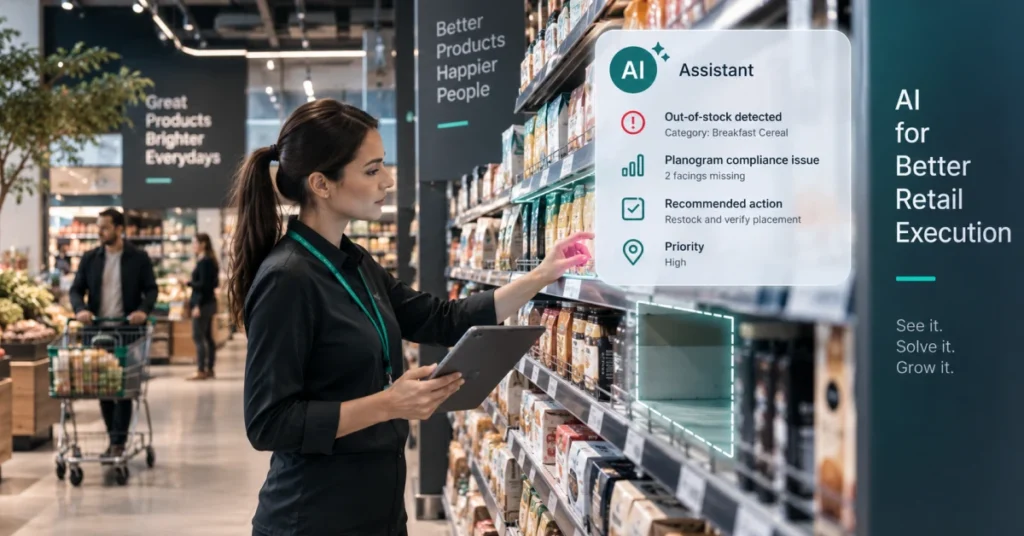
For retailers with distributed store networks or field marketing teams, coordinating in-store execution is a persistent challenge. FieldPie provides real-time visibility into field team activity, allowing marketing managers to verify that promotional displays are set up correctly, planograms are followed, and in-store campaigns are executed on time. When your field execution matches your marketing plan, every campaign performs better. Teams using FieldPie’s field operations management platform report significantly improved alignment between central marketing decisions and store-level execution.
Retail Marketing Checklist: 25 Actions to Execute Before Your Next Campaign
Use this checklist to audit your retail marketing readiness before launching any major campaign.
Strategy and Planning
- Customer personas are documented and updated within the last 12 months
- SMART goals are set for the campaign with defined KPIs
- Customer journey map covers all touchpoints from awareness to post-purchase
- Budget is allocated by channel based on historical performance data
- Campaign calendar is synchronized with seasonal retail peaks
Digital Marketing
- Website is mobile-optimized and loads in under 3 seconds
- Google Business Profile is complete and updated
- Email list is segmented by purchase history and engagement level
- Abandoned cart email sequence is active and tested
- Paid search campaigns use negative keywords to eliminate wasted spend
In-Store Marketing
- Point-of-sale displays are aligned with current campaign creative
- Store staff are briefed on promotional offers and messaging
- Planograms are current and verified at store level
- Signage is consistent with digital advertising creative
Data and Analytics
- UTM parameters are applied to all digital campaign links
- Conversion tracking is verified in Google Analytics and ad platforms
- First-party data collection mechanisms are active (loyalty program, email opt-in)
- Customer lifetime value is calculated and segmented by cohort
Customer Experience
- Return and exchange policy is clearly communicated across all channels
- Customer service response time meets defined SLA standards
- Post-purchase email sequence is triggered correctly
- Review generation process is active
- Email marketing complies with CAN-SPAM Act requirements
- Cookie consent banners comply with applicable privacy regulations (GDPR, CCPA)
- Promotional claims are reviewed for FTC compliance
For retail teams managing multiple store locations, using a centralized retail operations dashboard makes it far easier to verify checklist items at scale without relying on manual reporting.
How Do You Measure Retail Marketing Performance?
Measurement is where most retail marketing programs break down. Teams track vanity metrics — impressions, followers, page views — while missing the numbers that actually reflect business performance.
These are the metrics that matter:
Revenue Metrics
- Revenue attributed to marketing (by channel)
- Return on ad spend (ROAS)
- Customer acquisition cost (CAC)
- Average order value (AOV)
Retention Metrics
- Customer lifetime value (CLV)
- Repeat purchase rate
- Churn rate
- Net Promoter Score (NPS)
Engagement Metrics
- Email open rate and click-through rate
- Conversion rate by channel
- Cart abandonment rate
- In-store traffic and conversion rate
Brand Metrics
- Share of voice in your market
- Brand search volume trends
- Review ratings and review volume
Benchmarking these metrics against your market competitors — not just your own historical performance — gives you a realistic picture of where your retail marketing program stands.
What Are the Biggest Retail Marketing Challenges in 2026?
Privacy Regulation and the End of Third-Party Cookies
The deprecation of third-party cookies by major browsers has fundamentally changed digital marketing. Retailers must now rely on first-party data collected directly from customers, which requires stronger value exchange — loyalty programs, exclusive content, personalized offers — to convince customers to share their information. These cookies were the backbone of behavioral retargeting for over a decade, and their absence demands a new approach.
Rising Customer Acquisition Costs
Paid advertising costs on Google and Meta have increased substantially over the past five years. Retailers with weak organic marketing foundations — poor SEO, no content strategy, no referral program — are feeling this pressure most acutely.
Inventory and Demand Forecasting
Marketing campaigns that drive demand for out-of-stock products destroy customer trust. Aligning marketing planning with inventory management is a cross-functional challenge that requires tight coordination between marketing, merchandising, and supply chain teams.
Competing With Marketplace Giants
For independent retailers, competing with Amazon on price and convenience is not a viable strategy. The winning approach is to differentiate on experience, expertise, community, and curation — areas where large platforms are structurally disadvantaged.
Measuring Offline Impact of Digital Marketing
Attributing in-store sales to digital marketing campaigns remains one of the hardest problems in retail analytics. Solutions include store visit tracking in Google Ads, loyalty card matching, and controlled geographic tests.
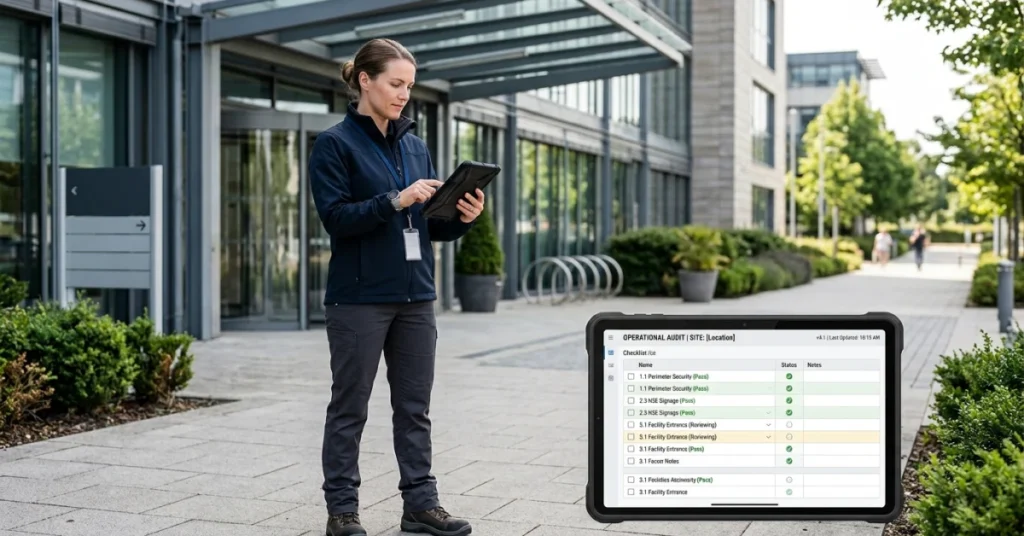
Retailers who struggle with in-store execution gaps will find that adopting a retail field audit solution helps close the loop between digital campaign planning and physical store performance.
How Does Retail Marketing Differ From Consumer Marketing?
This is a distinction worth understanding clearly.
Consumer marketing (also called brand marketing) is conducted by manufacturers and brand owners to build awareness and preference for their products among end consumers — regardless of where those products are purchased.
Retail marketing is conducted by the retailer — the entity that owns the store or e-commerce platform — to drive customers to their specific channel and convert them into buyers.
The two overlap significantly in co-op marketing programs, where a brand funds advertising that promotes both the product and the retail partner carrying it. Understanding this distinction helps retailers negotiate more effectively with brand partners and allocate marketing budgets more strategically.
As the Open University’s retail marketing course material notes, retail marketing must account for the retailer’s unique position as both a customer (buying from suppliers) and a marketer (selling to consumers) — a dual role that shapes every strategic decision.

Retail Marketing Best Practices: What Separates Top Performers?
Based on consistent patterns across high-performing retail brands, these practices separate market leaders from the rest:
- They invest in customer data infrastructure first. Before spending on campaigns, top retailers build the systems to collect, unify, and activate customer data.
- They treat loyalty as a product, not a promotion. The best loyalty programs deliver genuine value — early access, exclusive products, personalized rewards — not just points.
- They test relentlessly. Every campaign is an experiment. Top retail marketing teams run dozens of A/B tests per quarter.
- They align marketing with merchandising. Marketing campaigns are planned in conjunction with product assortment decisions, not after the fact.
- They invest in their people. Marketing technology delivers results only when the team operating it has the skills and authority to act on insights quickly.
- They build community. The strongest retail brands cultivate communities of customers who advocate for them — reducing dependence on paid acquisition and strengthening brand resilience.
For brands looking to strengthen their in-store marketing execution, reviewing a comprehensive visual merchandising strategy guide can provide a structured framework for aligning store presentation with campaign objectives.
Conclusion
Retail marketing in 2026 demands a combination of strategic clarity, technological capability, and relentless customer focus. The retailers who win are not those with the largest budgets — they are those who understand their customers most deeply, execute consistently across every channel, and measure what actually drives business results.
The shift away from third-party cookies, the rise of AI-driven personalization, the growing importance of first-party data, and the ongoing pressure on customer acquisition costs are not temporary disruptions. These are permanent features of the retail marketing landscape that require permanent adaptations in strategy and operations.
Start with the checklist in this guide. Audit your current marketing mix against the 4 Ps framework. Set measurable goals. And build the operational infrastructure — including field team coordination tools like FieldPie — that allows your marketing plans to be executed flawlessly at every customer touchpoint.