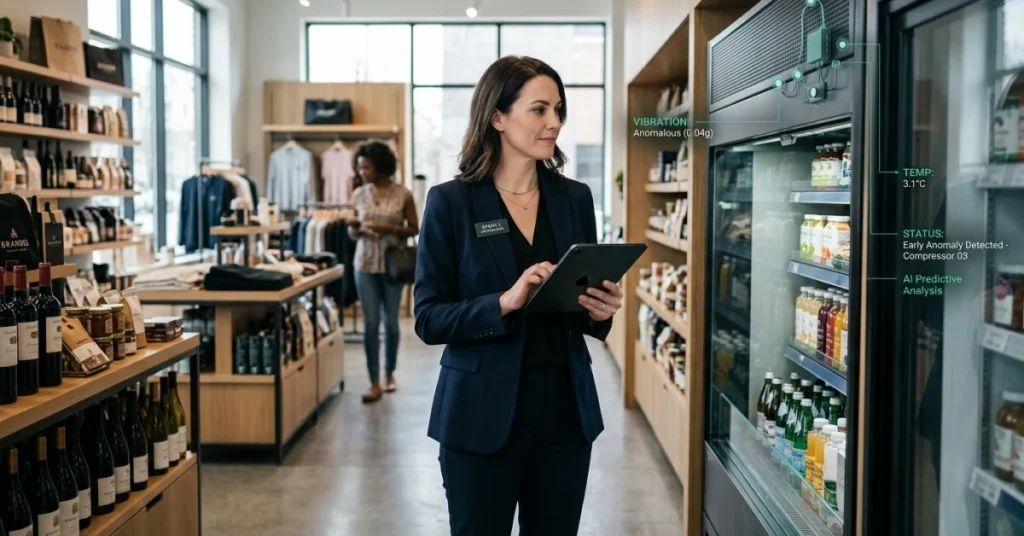




Retail statistics are quantitative data points measuring sales volume, consumer spending, market size, and business performance across the retail sector. They cover brick-and-mortar and e-commerce channels, enabling businesses, policymakers, and investors to benchmark performance, forecast demand, and allocate resources with precision.
What Do the Latest Global Retail Sales Numbers Actually Show?
The global retail market continues to expand at a pace that demands attention. According to Statista’s retail and trade market data, global retail e-commerce sales alone are projected to surpass $7 trillion by 2027, up from approximately $5.8 trillion in 2023.
Key global benchmarks for 2025–2026:
- Global retail market size: Estimated at $29–30 trillion annually across all channels
- E-commerce share of total retail: Approaching 22% globally, with Asia-Pacific leading at over 35%
- Year-over-year growth rate: Global retail sales grew roughly 4–5% in real terms through 2025
- Top retail markets by revenue: United States, China, Japan, Germany, and the UK
For context, our industry’s largest players — Walmart, Amazon, and Costco — collectively account for a disproportionate share of global retail sales, underscoring the ongoing consolidation trend that shapes consumer access and pricing power worldwide.
Understanding these numbers is the first step in building a data-driven retail operations strategy that keeps your business competitive through economic cycles.
How Are U.S. Monthly Retail Sales Measured and Reported?
The U.S. Census Bureau publishes the Monthly Retail Trade Sales Report, the most authoritative source for domestic retail sales data. The April 2026 release — covering March 2026 advance estimates — provides seasonally adjusted figures for retail and food services combined.
Key U.S. Retail Metrics to Track Every Month
| Metric | Definition | Reporting Frequency |
|---|---|---|
| Advance Monthly Sales | Preliminary estimate of retail + food service sales | Monthly (approx. 12 days after month-end) |
| Revised Monthly Sales | Updated figure incorporating additional survey data | Monthly (following release) |
| Annual Retail Trade Survey | Comprehensive year-end reconciliation | Annually |
| Retail Sales ex-Autos | Core retail figure excluding volatile auto sales | Monthly |
| Retail Sales ex-Autos & Gas | “Control group” used in GDP calculations | Monthly |
The Census Bureau surveys approximately 5,500 retail firms monthly, covering 13 major trade categories from auto dealers to nonstore retailers. Seasonally adjusted monthly data strips out holiday and trading-day distortions, making month-over-month comparisons more reliable for trend analysis.
Retailers operating multi-location networks can pair this macro data with real-time field team performance tracking to understand how their own numbers align with industry benchmarks.

What Do UK Retail Statistics Reveal About the British Market?

The UK retail industry is one of the most closely monitored in the world. The Office for National Statistics (ONS) publishes monthly retail sales data covering volume, value, and price indicators across food, non-food, and online channels.
UK Retail Industry Fast Facts (2025–2026)
- Total UK retail sales value: Approximately £500 billion per year
- Online share of UK retail: Around 26–28% of all retail sales, one of the highest globally
- Number of retail businesses in the UK: Over 300,000 enterprises
- Retail workforce: Approximately 3 million employees, making it one of the UK’s largest employment sectors
- Monthly retail sales growth (2025 average): +1.2% year-on-year in volume terms
The British Retail Consortium (BRC) supplements ONS data with its own Retail in Numbers tracker, covering like-for-like sales, footfall, and consumer confidence indicators. The BRC’s monthly monitor is particularly useful for understanding how UK retailers perform against macroeconomic headwinds such as inflation and wage growth.
PwC’s Retail Outlook 2026 highlights that UK retailers face a dual challenge: managing cost pressures from the National Living Wage increases while simultaneously investing in digital transformation. Those retailers that successfully integrate omnichannel operations are outperforming peers by 15–20% on comparable store sales.
How Do Wholesale and Retail Statistics Differ — and Why Does It Matter?
Many analysts conflate wholesale and retail figures, which distorts strategic decisions. Statistics Canada’s retail and wholesale statistics portal makes this distinction explicit, tracking both channels separately as part of our national accounts framework.
Retail vs. Wholesale: Core Distinctions
Retail:
- Sells directly to the end consumer
- Higher per-unit margin, lower volume
- Subject to consumer sentiment, seasonal demand, and footfall
- Measured by units sold and basket size
Wholesale:
- Sells to businesses (retailers, manufacturers, institutions)
- Lower per-unit margin, higher volume
- Driven by trade orders, inventory cycles, and B2B contracts
- Measured by trade value and shipment volumes
For any business operating across both channels, understanding where your revenue sits on this spectrum is critical. Our industry data consistently shows that wholesale margins compress faster during inflationary periods, while retail margins suffer more during recessionary consumer pullbacks.
What Are the Most Important Retail Statistics Segmented by Category?
Not all retail sectors move in tandem. Category-level retail statistics reveal divergent performance that aggregate figures mask entirely.
U.S. Retail Sales by Major Category (2025 Estimates)
| Retail Category | Annual Sales (USD) | YoY Growth |
|---|---|---|
| Motor Vehicle & Parts Dealers | ~$1.6 trillion | +3.2% |
| Food & Beverage Stores | ~$900 billion | +2.8% |
| General Merchandise Stores | ~$750 billion | +1.5% |
| Nonstore Retailers (e-commerce) | ~$1.2 trillion | +9.1% |
| Health & Personal Care Stores | ~$380 billion | +4.4% |
| Clothing & Accessories Stores | ~$290 billion | +0.9% |
| Building Materials & Garden Supply | ~$450 billion | +2.1% |
Nonstore retailers — primarily e-commerce — continue to post the highest year growth rates across every reporting period. This structural shift has forced traditional retailers to rethink their store network strategies and invest heavily in last-mile logistics.
Retailers using inventory and field operations software can reconcile these macro category trends against their own SKU-level performance to identify gaps and opportunities faster than competitors relying on manual reporting.
How Does Deloitte’s Global Retail Research Frame the Market Outlook?
Deloitte’s Retail Across the World analysis provides the most rigorous global benchmarking available from a consulting perspective. Their research identifies several structural forces reshaping the industry through 2026 and beyond:
Four Forces Driving Global Retail in 2026
- Polarization of consumer spending — Premium and value segments are growing simultaneously, while the mid-market contracts. Our industry calls this the “hourglass economy.”
- Technology-led efficiency gains — AI-powered demand forecasting, automated replenishment, and computer vision in stores are compressing operating costs for early adopters.
- Supply chain regionalization — Post-pandemic trade disruptions have pushed retailers to shorten their supply chains, favoring regional sourcing over global optimization.
- Sustainability as a commercial imperative — Consumer demand for ESG-aligned products is no longer a niche preference; it is a mainstream purchasing criterion in developed markets.
These forces are not evenly distributed. Retailers in the UK and Western Europe face more acute regulatory pressure on sustainability, while U.S. retailers are more exposed to tariff volatility and shifting trade policy.
Retail Statistics by Channel: In-Store vs. Online Performance
The channel split is the single most debated metric in modern retail analysis. Here is where our industry currently stands:
Global Channel Performance Snapshot (2025–2026)
| Channel | Global Share of Retail Sales | Growth Rate | Key Driver |
|---|---|---|---|
| Physical (in-store) | ~78% | +1.8% YoY | Experiential retail, convenience |
| E-commerce (online) | ~22% | +8.5% YoY | Mobile commerce, same-day delivery |
| Social Commerce | ~3% (within e-com) | +22% YoY | TikTok Shop, Instagram Checkout |
| Click & Collect | ~5% (within e-com) | +11% YoY | Hybrid consumer behavior |
Despite years of predictions about the “death of physical retail,” in-store channels still account for nearly four-fifths of all global retail sales. The real story is not replacement but integration — the most successful retailers operate seamlessly across every touchpoint.
Conclusion
Retail statistics are not just reporting tools — they are strategic assets. Whether you are benchmarking your monthly sales against the U.S. Census Bureau’s latest release, comparing your online penetration to the ONS UK data, or using Deloitte’s global market research to stress-test your five-year plan, the retailers who win are those who close the loop between data and execution fastest.
The 2026 retail landscape rewards precision. Consumer spending is polarizing, channels are multiplying, and the margin for operational error is shrinking. Every metric in your checklist above is an opportunity to act before your competitors do.