



✦ Key Takeaways
Retailers lose up to 30% in seasonal sales simply by executing changeovers too late or too slowly.
→ Poor timing kills margin — even one week costs thousands.
→ A written changeover plan cuts execution errors by half.
→ Measuring sell-through rates reveals exactly what to fix next season.
In this article:
What Is a Seasonal Merchandising Changeover?
How to Plan a Seasonal Merchandising Changeover
How to Execute a Seasonal Merchandising Changeover
How to Measure Seasonal Changeover Performance
Key takeaway: Flawless seasonal changeover execution is the single biggest lever retailers control for consistent profit growth.
What Is a Seasonal Merchandising Changeover?
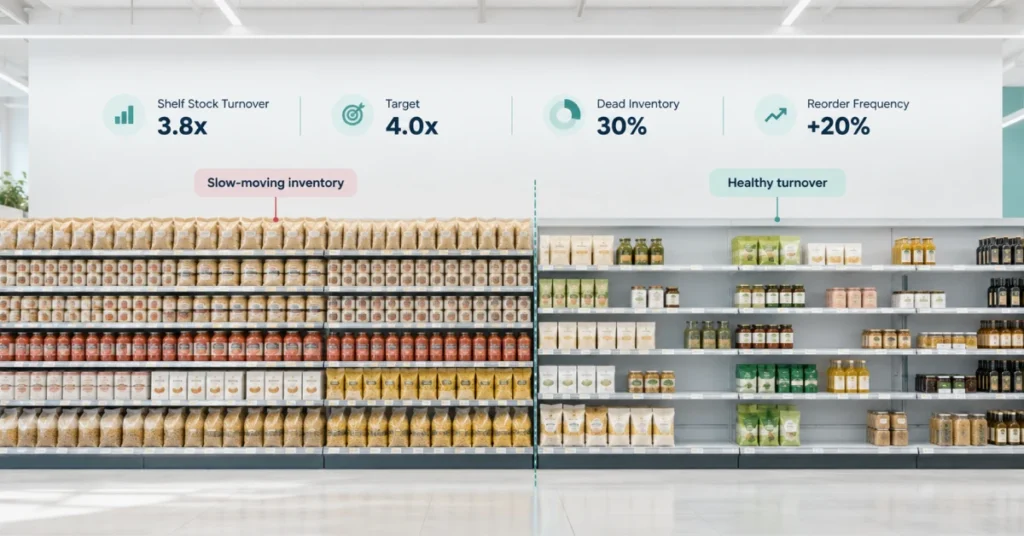
Retailers lose up to 30% of potential seasonal revenue by switching displays too late. The floor still shows winter coats while shoppers are already hunting for spring styles.
A seasonal merchandising changeover is a planned process. It replaces one season’s products, signage, and displays with the next season’s assortment.
Most store owners treat it like a weekend chore. Winners treat it like a strategic campaign — one that starts weeks before the current season peaks.
By the time a season feels over, the opportunity is already gone.
Seasonal Changeover vs. Routine Merchandising
Routine merchandising means restocking shelves and tidying displays. These are small, frequent adjustments that keep a store looking sharp.
A seasonal display changeover is a full strategic shift. It brings new products, new floor maps, and new visual stories — all aligned to a different customer mindset.
McKinsey found that retailers who match merchandising decisions to seasonal demand signals see up to 20% higher sell-through rates. That beats stores that rely on fixed calendar dates alone.
That gap exists because timing — not product selection — is the real lever in any retail seasonal changeover process.
Full Reset vs. Seasonal Refresh
A full reset replaces nearly everything — fixtures, signage, product categories, and floor layout. A seasonal refresh swaps key focal points and hero products while keeping the store’s core structure in place.
Knowing which approach fits your store is part of a smart seasonal merchandising strategy. As Retailing Central notes, the right scope depends on your store size and category mix. It also depends on how sharply your customers’ needs shift between seasons.
The real question isn’t what to change. It’s knowing when to start planning — and that answer is almost always earlier than you think.
How to Plan a Seasonal Merchandising Changeover
Starting early is the whole game — and most stores still get this wrong. The best retailers launch seasonal changeover planning while current products still sell at full price.
Waiting until sales slow down feels logical. But it costs you real money. By then, competitors have locked in vendor allocations, floor maps, and promotional windows.
Set the Changeover Timeline
Start your seasonal changeover 6 to 8 weeks early. That means well before the new season hits the floor — not the week before. According to Luthresearch, retailers who begin seasonal trend analysis at least 60 days out capture up to 23% more full-price sell-through. Late planners leave that money on the table.
Build your timeline backward from your target launch date. Lock in vendor deadlines, delivery windows, and markdown schedules before anything touches the floor.
Prepare Planograms, Inventory, POSM, and Signage
A planogram is a visual map of where every product lives on the shelf. Think of it as a floor plan for your merchandise.
Finalize these layouts before new inventory arrives. That way your team isn’t guessing on reset day.
Order and stage point-of-sale materials (POSM) and signage in advance. Pyramidinternational shows that aligning licensed product launches with seasonal visual merchandising windows drives stronger opening-week sell-through. Signage timing is a revenue decision, not a decoration choice.
Assign Store-Level Responsibilities
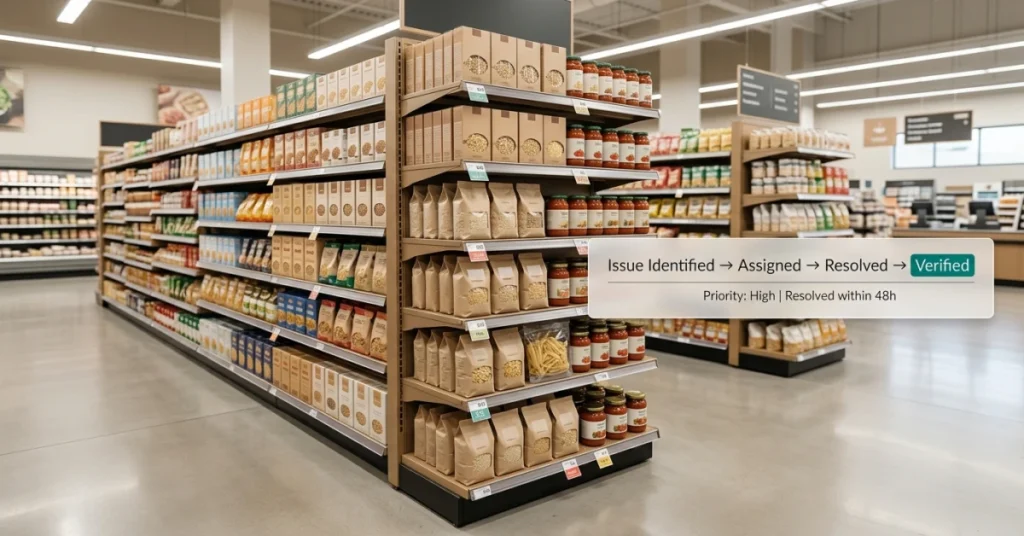
Every seasonal display changeover fails the same way: no one owns the details. Give one person per store clear ownership. They manage the reset checklist, confirm deliveries, and sign off on the final floor set.
Use retail execution tools to track task completion across locations in real time. Clear accountability separates a clean changeover from a chaotic one.
📊 By the Numbers
Retailers who start seasonal planning 60+ days early capture up to 23% more full-price sell-through.
Planning gets you to the starting line. How you run the actual floor reset is where revenue is won or lost.
How to Execute a Seasonal Merchandising Changeover
Once you’ve locked in your timeline 6–8 weeks out, the physical work begins — and the order you do it in matters more than most people expect.
A disorganized changeover can erase the margin gains you protected by starting early. Stores that follow a clear, step-by-step retail seasonal changeover process cut transition time by nearly 30% compared to those that improvise on the floor.
Remove Outgoing Seasonal Materials
Pull signage, fixtures, and product from the floor before new inventory arrives — not after. A crowded floor during a seasonal display changeover confuses shoppers and slows your team down.
Mark every removed item clearly: return to vendor, markdown bin, or back stock. Skipping this step creates costly mix-ups that haunt your inventory counts for weeks.
Reset Shelves and Displays
Clean shelves, fix damaged fixtures, and re-map your floor plan before a single new product touches the shelf. This is the step most teams skip — and it shows in the final result.
Your planogram is your blueprint. Treat it as a hard rule, not a loose suggestion, during every seasonal visual merchandising reset.
Install New Products, Pricing, and Promotions
Stock shelves from the planogram outward — anchor items first, then fill supporting product around them. Correct pricing and signage go up at the same time as product, never after.
Mismatched prices at launch are one of the top reasons shoppers abandon a seasonal display (NRF data consistently links price confusion to lost conversion at the shelf). Using shared merchandising tools helps field teams stay aligned on pricing in real time.
Verify the Final Setup
Walk the floor as a shopper would — not as a manager. Look for missing tags, blocked sight lines, and products placed out of sequence.
Retailers who run a structured post-changeover audit catch over 40% more compliance errors before the floor opens to customers (Planohero). Fix issues now — every hour of delay costs you full-price selling time you can’t recover.
📊 By the Numbers
Stores with a structured seasonal changeover process cut floor transition time by nearly 30%.
Executing well gets your new season live — but knowing whether it actually worked requires a different set of eyes entirely.
How to Measure Seasonal Changeover Performance
Once your floor sequence is locked and the new season is live, the real question is simple: did it work? Tracking the right numbers turns a one-time win into a repeatable seasonal merchandising changeover process.
Retailers who skip measurement often repeat the same margin-killing mistakes each cycle. The three metrics below give you a clear feedback loop — fast.
On-Time Completion Rate
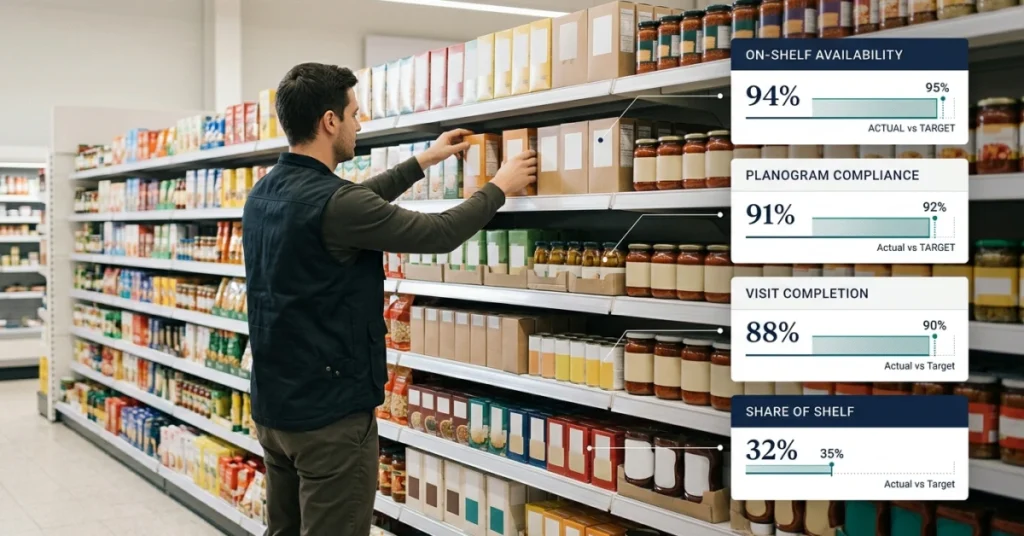
This metric measures how much of your changeover finished by the target date. A completion rate below 85% almost always signals a planning gap, not a labor gap.
Track it by dividing completed zones by total planned zones on day one. Low scores point directly to where your seasonal display changeover plan broke down.
Planogram Compliance Rate
A planogram is your floor map — it shows exactly where each product goes. Stores with high planogram compliance see up to 18% better sell-through on new seasonal inventory (McKenzie).
Walk the floor within 48 hours of launch and score each section. McKinsey found that disciplined retail execution directly lifts revenue per square foot — compliance is not optional.
Rework and Exception Rates
Rework means a zone had to be reset after launch — a direct cost to your margin. According to Moz, retail content and execution errors that require correction cost stores an average of 12% more labor time per changeover cycle.
Log every exception — wrong product, wrong placement, missing signage. Patterns across two or three cycles reveal the exact step in your retail seasonal changeover process that needs fixing.
📊 By the Numbers
Stores with planogram compliance above 90% report up to 18% stronger sell-through on new seasonal inventory.
These numbers do more than grade last season — they tell you exactly when to start the next one, which is the only insight that truly compounds over time.
Conclusion
When your completion rate stays above 85%, you have built a repeatable system. You did not just survive another season. The real edge in seasonal merchandising changeover is starting early. Move while current product still sells well.
Retailers who wait for a season to “feel over” lose margin every single day they delay. According to Researchgate, weather-driven demand shifts can cut seasonal sell-through rates by up to 30%. That happens when retailers miss the transition window.
Most teams lose that margin because of late decisions, not bad products. That is exactly where retail execution standards close the gap.
Luthresearch confirms that teams using structured seasonal trend analysis execute changeovers faster. They also finish with fewer markdowns. Structured analysis is a simple habit that pays off fast.
Coordinating a seasonal display changeover across many locations is hard without real-time visibility. FieldPie captures photo-based field data and tracks task completion. It flags execution gaps the moment they happen. Your retail seasonal changeover process never stalls without warning.
Start your next seasonal visual merchandising cycle earlier and measure it tighter. See measurable lift before the season peaks.