



✦ Key Takeaways
Poor retail reset execution costs brands up to 25% in lost sales during the transition window.
→ Misaligned planograms trigger out-of-stocks that erode shopper trust fast.
→ A structured checklist cuts reset errors by more than half.
→ Unresolved exceptions left overnight compound into full-aisle compliance failures.
In this article:
What Is Retail Reset Execution?
How Should a Retail Reset Be Planned?
What Should a Retail Reset Checklist Include?
How Should Teams Handle Reset Exceptions?
Key takeaway: Flawless reset execution is the single factor separating brands that grow shelf space from those that lose it.
What Is Retail Reset Execution?
Every year, brands lose millions because store shelves don’t match the plan. Products land in the wrong spot. Fixtures go missing, and outdated layouts stay in place.
That gap between the corporate blueprint and the actual shelf is where retail reset execution either succeeds or breaks down.
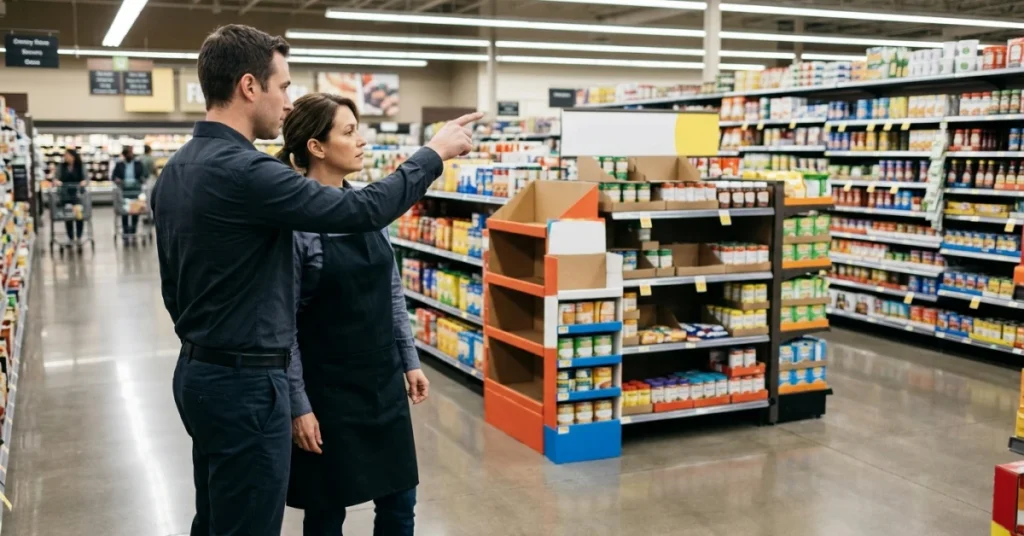
A retail reset reorganizes a store’s shelves, fixtures, or entire departments. The goal is to match a new planogram or merchandising strategy. Most people never see it happen — it runs overnight, between shifts, or during slow hours.
What Happens During a Retail Reset?
A reset crew removes existing product, moves fixtures, and restocks shelves to match a new planogram. All of this happens inside a tight window. According to Rmservicing, poor store execution costs the retail industry over $1 trillion annually in lost sales and wasted labor.
The work looks simple on a diagram. In practice, a single aisle reset can mean dozens of SKU moves. Add new shelf tags and hardware changes — all under time pressure.
When Are Retail Resets Typically Needed?
Resets happen when a retailer launches new products, shifts seasonal inventory, or updates shelf space for a brand.
They also follow major planogram overhauls — sometimes hitting hundreds of stores at once. Theinstoregroup once ran an overnight reset across 159 grocery stores in a single push.
The timing is rarely easy. Resets run on tight schedules tied to promotional windows or supplier contracts.
Who Is Responsible for Reset Execution?
Corporate merchandising teams design the plan. Store managers, third-party crews, or brand reps carry it out on the floor.
The plan changes hands — from the people who drew it to the people doing the work. That handoff is where most retail execution gaps start.
The reset strategy looks solid in a boardroom. It rarely survives first contact with a real store unchanged.
The real question is simple: was the plan built for what crews will actually face? That answer decides whether the reset works or fails.
How Should a Retail Reset Be Planned?
That gap between corporate plans and real shelves won’t close on its own. It closes when planning starts with the people doing the physical work, not just those designing the strategy.
Most retail reset execution plans look airtight on paper. They fall apart because the planogram designer and the overnight stocker never share the same information at the same time.
What Should Be Prepared Before the Reset?
Every store reset needs three things confirmed first. Not one shelf gets touched until you have current inventory counts, a finalized planogram, and a clear point of contact for field questions.
Skipping any one of these creates delays. Those delays ripple across every store in the chain.
Fixture shortages and wrong SKUs show up in nearly every reset. That’s why retail execution exception handling must be built into the plan before day one.
Don’t improvise it after problems hit. Build the response process in early.
How Should Stores Be Prioritized?
Not every store resets at the same speed or with the same crew size. High-volume locations and stores with the most complex planogram changes should go first.
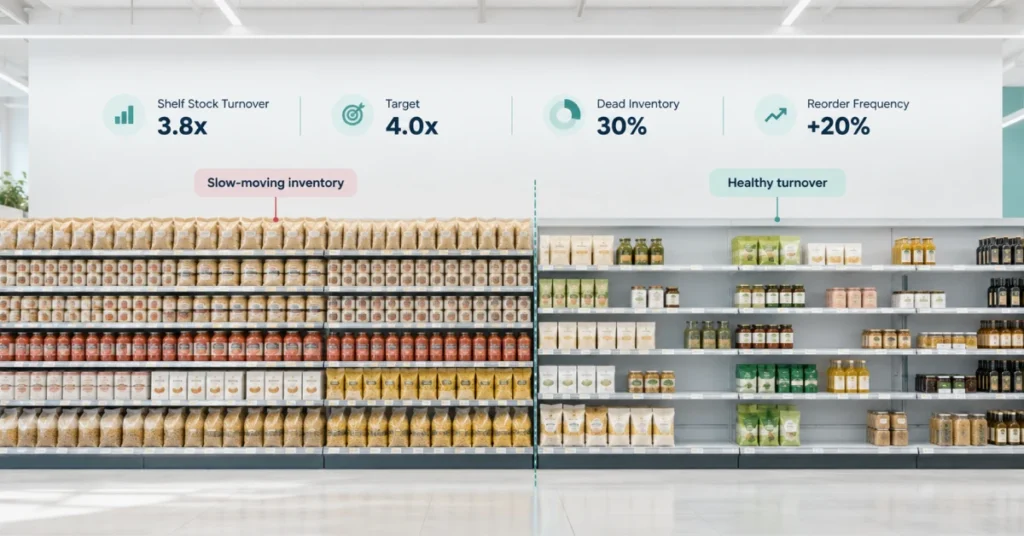
Over 70% of retail execution failures trace back to poor sequencing, where low-priority stores get resources before high-impact ones (C3solutions). Prioritizing by sales volume and reset complexity cuts that risk fast.
What Deadlines Should Teams Set?
Deadlines only work when the field team helped set them. A timeline built entirely by corporate ignores store-level realities — crew availability, local delivery windows, and floor traffic patterns.
Maxerience found that real-time deadline tracking makes a big difference. Reset teams using it complete planogram compliance checks 40% faster than teams working from static paper schedules. Speed comes from visibility, not pressure.
📊 By the Numbers
Teams using real-time reset tracking finish planogram compliance checks 40% faster than paper-based crews.
A reset plan is only as strong as the instructions that reach the person holding the shelf tag. That’s exactly what a reset checklist is built to solve.
What Should a Retail Reset Checklist Include?
With confirmed inventory and a finalized planogram in hand, the checklist becomes the bridge between that preparation and the actual shelf. But a checklist only works when every person reading it pictures the same outcome — and that gap is where retail reset execution most often breaks down.
Stores with strong planogram compliance see up to 8% higher sales than those without it (according to Faculty Wharton Upenn). That number only holds when the field team and the planner share the same mental picture of “done.”
A checklist built for retail launch execution must cover five concrete checkpoints — each one closing a specific communication gap, not just ticking a box.
📊 By the Numbers
Stores with full planogram compliance generate up to 8% more revenue than non-compliant locations.
Are Fixtures and Shelves Ready?
Before a single product moves, every shelf, peg, and fixture must be clean, level, and in the right position. A missing shelf bracket stops an entire section — and nobody on the overnight crew should have to guess what to do next.
This step sounds obvious, but Trocglobal notes that fixture readiness is one of the most skipped pre-reset checks, leading to delays that cascade through the entire store reset timeline.
Are Products in the Correct Locations?
Every SKU must land in the exact shelf position shown on the planogram — not close, not approximate. One product in the wrong slot pushes every item next to it out of place.
The checklist must include the planogram image, the shelf number, and the bay location for each product. Without all three, two crew members can read the same sheet and build two different shelves.
Are Facings and Shelf Space Accurate?
A “facing” is the number of product units visible from the front of the shelf. Getting facings right is not cosmetic — it directly controls how much stock the shelf holds and how fast it sells.
The checklist must state the exact facing count for each SKU. Vague instructions like “fill the shelf” are a setup for inconsistency across every store in the reset.
Are Prices and Labels Correct?
Every shelf edge needs the right price label in the right spot before the store opens. A wrong price is not just a compliance issue — it erodes shopper trust fast.
The checklist should require a photo confirmation of each label. That one step creates a record and forces the crew to look closely, not just assume.
Are Displays and POSM Installed Properly?
POSM — point-of-sale materials like signs, shelf talkers, and end-cap displays — must go up in the right location at the right height. Misplaced signage sends shoppers to the wrong aisle.
Each display item needs a specific placement note in the checklist, not a general description. The retail merchandising reset fails visually when signage is an afterthought.
Even a perfect checklist cannot save a reset when something unexpected shows up — a missing fixture, a wrong SKU, a product that was discontinued but is still on the shelf.
How Should Teams Handle Reset Exceptions?
Even a perfect checklist breaks down the moment reality does not match the plan.
Exceptions — missing fixtures, wrong SKUs, discontinued products still on shelves — show up in nearly every retail reset execution. They are not rare. They are the norm.
The real problem is not the exception itself. It is the silence that follows when a crew member at 2 a.m. has no clear path to an answer.
📊 By the Numbers
Planogram compliance gaps cost retailers an estimated $1.75 trillion in lost sales globally each year.
What If Products Are Out of Stock?
A missing SKU should never stop the entire store reset. Teams need a pre-approved substitution rule — fill the slot with the nearest approved product and flag it immediately.
Document every gap with a photo and a timestamp. That record protects the team and gives planners the data they need to fix the next reset.
What If Fixtures Do Not Match the Planogram?
Wrong shelving or missing hardware is one of the most common reasons retail reset execution stalls mid-shift. Teams without a decision rule waste hours waiting for someone to answer a phone.
The fix is simple: define in advance which fixture swaps are acceptable and which require a supervisor call. That one rule eliminates most of the guesswork.
What If Required Materials Are Missing?
Missing signage, price tags, or display kits are not minor details — they directly hurt planogram compliance scores. Rmservicing notes that incomplete displays are among the top reasons retail merchandising resets fail final audits.
Teams should carry a short backup materials list to every reset. If a core item is missing, they note it, skip that section, and return — rather than improvise and create a compliance problem.
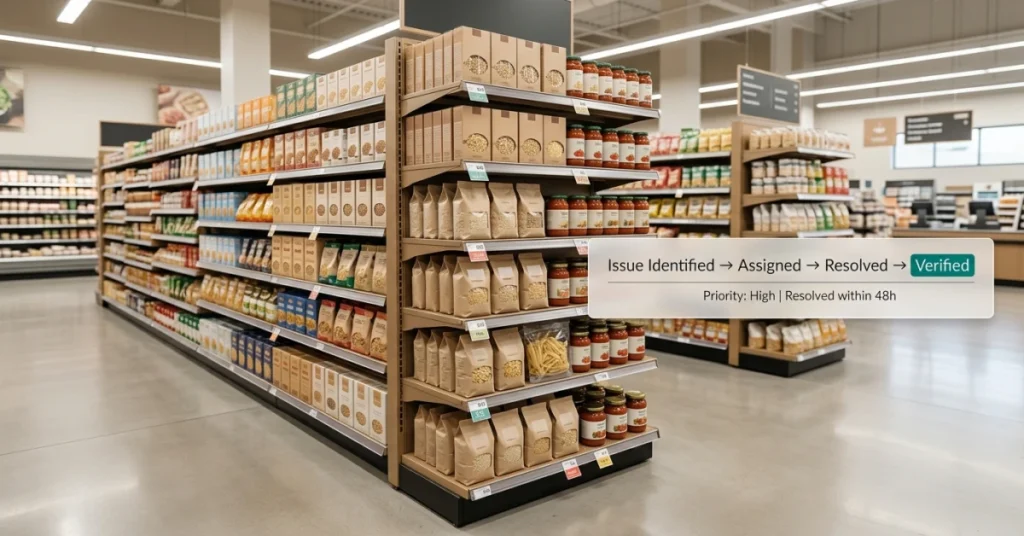
How Should Unresolved Issues Be Escalated?
Every reset execution strategy needs one named contact per shift — not a group chat, not a general email. One person, reachable, with the authority to make a call fast.
Stores with a clear escalation path resolve exceptions up to 40% faster than those using improvised communication. That stat comes from Moz research on field team performance.
Speed matters. Every stalled aisle costs selling time.
Exceptions are not the enemy of a good store reset — a lack of clear answers is.
Strong teams do not face fewer problems. They already know what to do when problems hit, and the final section covers exactly that communication structure.
Conclusion
A clear exception path solves the immediate crisis — but the bigger fix is building communication that works before the crisis hits.
Most retail reset execution failures trace back to one gap: the crew on the floor never had a direct line to the person with answers.
Teams that close this gap see real results. That improvement is not about better planograms — it is about faster answers.
Store reset completion rates climb by as much as 30% when field crews can flag issues and get decisions fast. This data comes directly from Tumblr.
Poor reset results almost always start with a broken communication layer — not a broken checklist. Smart teams invest in point-of-sale execution tools that connect every layer of the reset.
C3solutions found that supply chain visibility gaps cost retailers millions each year. Silence between teams is never free.
When your reset strategy puts human clarity first, the planogram has a real chance to work.
Most teams lose hours — and sales — because overnight crews hit a wall and have no one to call. FieldPie fixes that fast.
FieldPie links field reps, store managers, and office teams through real-time photo reporting and live job tracking. Every exception gets a quick, documented answer.
Start closing the communication gap today and watch your planogram compliance rates rise. Explore FieldPie’s field operations platform to see how it works.