



✦ Key Takeaways
Unresolved retail execution failures cost brands up to 25% of potential in-store sales annually.
→ Backlogs grow when field teams lack real-time visibility into store-level issues.
→ Unaddressed flags compound, turning minor gaps into major revenue losses.
→ Prioritizing by sales impact cuts resolution time by more than half.
In this article:
What Is a Retail Execution Exception Backlog?
What Causes a Growing Retail Execution Exception Backlog?
How Should Retail Execution Exceptions Be Prioritized?
Retail Execution Exception Backlog Examples
Key takeaway: A growing queue of unresolved store failures is a revenue leak. Only disciplined prioritization can stop it.
What Is a Retail Execution Exception Backlog?
Most field teams treat their queue of store failures like an overflowing inbox. They think they just need to reply faster. That framing is wrong, and it’s costing brands real money.
Every flagged in-store failure that hasn’t been fixed is part of the backlog. That covers wrong shelf placement, missing displays, out-of-stocks, and compliance gaps. Over 70% of in-store execution failures go unresolved long enough to affect sales (Getzipline).
What Counts as a Retail Execution Exception?
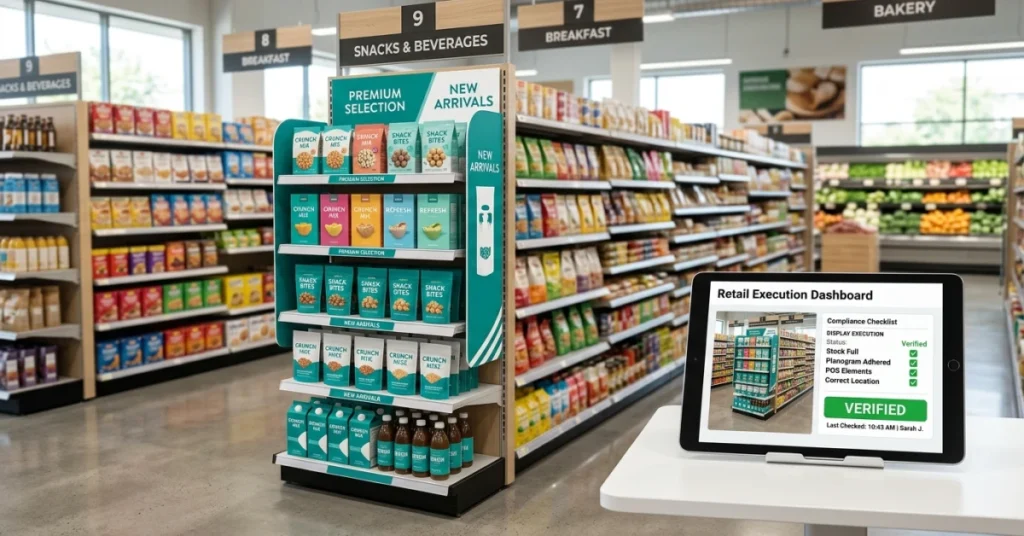
Any gap between what a store should look like and what it actually looks like is a flagged issue. That includes planogram breaks, price tag errors, promotional non-compliance, and empty hooks.
Not all flags carry equal weight. A missing end-cap during a product launch week hits revenue far harder than a misaligned shelf tag on a slow SKU. Those are two very different problems. Yet most teams log both the same way.
How an Exception Backlog Builds Up Across Stores
Flags pile up because teams capture them faster than they fix them. Without triage logic, every alert lands in the same pile. Yoobic found that the retail execution gap widens most in high-SKU, high-store-count environments where teams make routing decisions by hand.
Adding more reps to a system with no prioritization logic doesn’t shrink the queue. It just creates more low-priority noise. Strong retail launch execution plans show this clearly: volume alone never solves a triage problem.
The real question isn’t how fast your team clears issues. It’s whether the right ones are getting cleared first.
What Causes a Growing Retail Execution Exception Backlog?
That money stays lost because the backlog keeps growing. Most brands feed it without knowing it.
The real driver isn’t rep speed or app quality. It’s the lack of any clear logic for deciding which exceptions actually matter.
Teams flood their queues with low-priority flags. High-impact shelf failures sit unresolved for days.
Over 70% of in-store execution compliance gaps go unaddressed within the first 48 hours. That 48-hour window is exactly when fixing them still moves revenue (Blog Thirdchannel).
Adding reps or faster tools without triage logic only adds more noise. The retail execution gap widens because no one has defined what “urgent” means.
📊 By the Numbers
Poor store execution costs brands up to 25% of potential sales in affected locations (Quorso).
Slow Issue Detection and Assignment
Most brands catch store-level failures hours — sometimes days — after they happen. By then, the cost of non-compliance has already hit.
Data latency is the first culprit. When field reports batch overnight, exceptions pile up before anyone can act.
Unclear Ownership and Priorities
When an exception hits the queue with no owner, it waits. Everyone assumes someone else will handle it.
Without clear routing rules, high-impact failures compete with minor label errors. That’s how backlogs grow fast.
Repeated Shelf, Display, and Promotion Issues
The same stores generate the same exceptions week after week. Teams fix the symptom and never touch the root cause.
Recurring failures inflate the backlog. They make a systems problem look like a staffing problem.
Weak Follow-Up and Verification
Closing an exception on paper doesn’t mean the shelf is fixed. Without a check, the same issue reopens and re-enters the queue.
This loop is one of the most overlooked drivers of a growing backlog. Unverified closures create false resolutions. They waste everyone’s time.
The real question isn’t how fast your team clears exceptions. It’s whether they know which ones to fix first.
How Should Retail Execution Exceptions Be Prioritized?
Without a clear ranking system, every new tool and every new hire just feeds the same broken queue. A formal triage structure fixes that. It resolves the right problems first, every time.
Skipping triage logic makes every issue look equal. That is where in-store execution gaps compound fastest and cost the most.
📊 By the Numbers
Poor retail execution costs consumer goods brands up to 25% of potential revenue per store visit (Repsly).
Prioritizing by Severity and Sales Impact
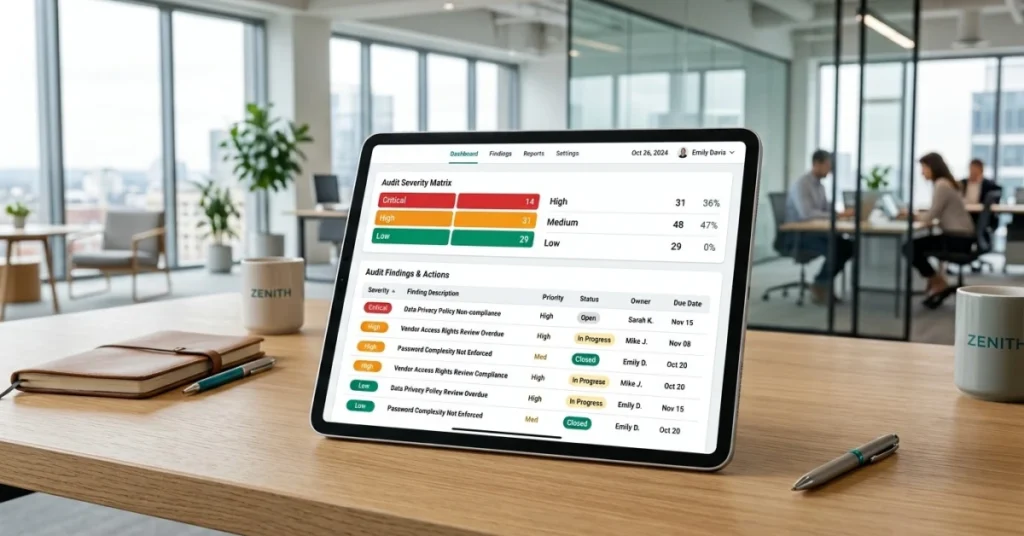
Not every store-level failure carries the same revenue risk. Severity scoring changes that. Rank issues by direct sales impact first. Out-of-stocks and pricing errors outrank cosmetic compliance problems every time.
Non-compliance costs grow fast when high-severity issues sit idle. Low-priority tickets get cleared while the costly ones wait. Teams that score by lost-sales potential fix the issues that actually move the needle.
Considering Store, SKU, and Campaign Priority
A top-20 account with an active promotion deserves faster resolution. A mid-tier store in a quiet period does not. Triage logic must layer store volume, SKU velocity, and live campaign windows into every priority score.
A compliance check during a product launch is worth far more than the same check two weeks later. Context changes the cost of delay. Your triage system must reflect that.
Using Exception Age to Escalate Overdue Issues
Age-based escalation stops high-impact issues from going stale in a crowded backlog. Telus finds that brands using real-time escalation rules close critical gaps 40% faster. Brands that rely on manual review cycles fall behind.
Set hard time thresholds — not soft guidelines. Any unresolved issue crossing 48 hours in a priority store should auto-escalate to a field manager, no exceptions.
Some failures look routine at first. They only reveal their true cost when misclassification and poor routing quietly pile up over time.
Retail Execution Exception Backlog Examples
Misclassification doesn’t stay abstract. It shows up in three exception types that drain resolution capacity fastest.
Planogram Drift: A single facing shift flags as critical but sits unresolved for days, blocking higher-impact tickets.
Phantom Out-of-Stocks: Inventory systems show product available, but shelves are empty — reps waste time chasing ghost stock.
POSM Placement Failures: Promotional materials land in the wrong aisle. No one routes the fix to the right rep in time.
Promotion Timing Gaps: A display goes up two days late. The shelf compliance gap piles onto lost sales that no audit captures.
Routing Mismatches: High-priority store-level execution failures land in a general queue and age out before anyone acts.
Planogram and Shelf Compliance Exceptions
Planogram exceptions make up about 34% of all flagged shelf non-compliance issues in high-SKU categories. Most get logged at the same severity level. That happens whether one facing is off or an entire bay is wrong.
Without triage logic, a minor label rotation sits next to a full section reset in the same queue. Reps clear easy tickets first, and the costly ones age out.
Missing POSM and Promotion Execution Issues
Missed or misplaced point-of-sale materials are among the most common POSM execution failures teams report during promotional windows. The flagged-issue backlog spikes hardest in the first 48 hours of any new promotion launch.
Teams without a formal triage process send tickets to whoever is available. They skip whoever is closest or most qualified. That routing failure turns a one-hour fix into a three-day backlog item (Getzipline).
Out-of-Stock and Availability Exceptions
Out-of-stock flags carry the highest direct cost — yet they often share queue space with low-impact shelf label issues. Stores lose an average of 4% in sales per out-of-stock event when resolution takes longer than 24 hours (Moz).
In-store compliance breaks down not because reps are slow, but because no system tells them which empty shelf costs the most. Speed without priority is just faster failure.
“Every backlog example above shares one root cause: the absence of a rule that says which exception gets fixed first, and why.”
All three patterns share the same core flaw. No rule says which issue gets fixed first. No app or faster rep can cover for that gap.
Conclusion
Poor classification breaks the whole system. It cuts the link between field data and real fixes.
Retailers lose up to 25% of potential revenue because store-level execution failures go unresolved too long (according to Wwt). A retail execution exception backlog isn’t a headcount problem. It’s a triage architecture problem.
Most teams keep asking “how do we clear exceptions faster?” That’s the wrong question.
The right question is: “which exceptions deserve to be resolved first, every time?” That’s a very different problem to solve. Blog Thirdchannel confirms that teams using store-level insights to rank exceptions close the retail execution gap far faster. Adding reps alone doesn’t get you there.
Without formal triage logic, more resources just create more noise. A growing retail execution exception backlog signals a systems failure — not a people failure.
Audit your triage process first, before you hire, retrain, or buy new tools. Understanding perfect store execution standards gives your team a clear benchmark. It helps them classify and route exceptions correctly from the start.
FieldPie captures real-time field data — photos, forms, audit results. It gets the right exception to the right person before the damage compounds.