


✦ Key Takeaways
Retailers that localize their product assortment see up to 30% higher category sales than those running a one-size-fits-all approach.
→ Wrong regional mix drives stockouts, markdowns, and lost loyalty fast.
→ Local demographics, climate, and culture dictate which products actually sell.
→ Store-level data and clustering tools make regional decisions scalable and precise.
In this article:
What Is A Regional Assortment Strategy?
Why Regional Assortment Matters For Retailers
How To Build A Regional Assortment Strategy
Key Factors In Regional Product Selection
How To Manage Regional Assortment Across Stores
Key takeaway: Retailers who ignore regional demand differences leave serious revenue on the table every single day.
What Is A Regional Assortment Strategy?
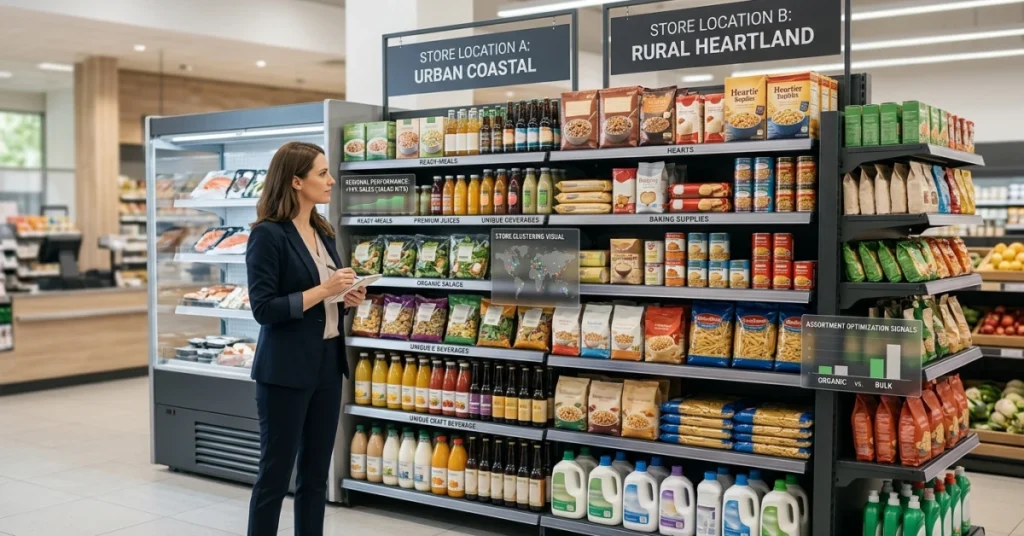
Walk into the same grocery chain in Miami and then in Minneapolis — the shelves look different. That is not a mistake. It is a deliberate choice called a regional assortment strategy.
This strategy means stocking different products at different locations based on what local shoppers want. Think of it as a retailer listening to each neighborhood before deciding what goes on the shelf.
Understanding Regional Product Assortment
Localized assortment planning means tailoring a store’s product mix to match its community’s buying habits. A retailer might carry three varieties of hot sauce in Texas. In Vermont, it carries only one. The data drives that call.
Retailers who treat assortment compliance signals as a primary input — not an afterthought — beat rivals. Those rivals push one national plan to every store and pay for it.
Why One Assortment Does Not Fit Every Market
Shoppers do not buy the same things everywhere. The gap is bigger than most retailers expect. Over 70% of product assortment decisions that ignore local demand cause excess inventory or chronic stockouts. That finding comes from the Infotech Assortment Planning Report.
A one-size-fits-all plan feels efficient on paper. It punishes stores that serve unique communities. Local signals — what people search, buy, and return — are the real map.
Regional Assortment Vs. Standardized Assortment
A standardized assortment sends the same product mix to every store. It is simple to manage, but it is often wrong for the customer.
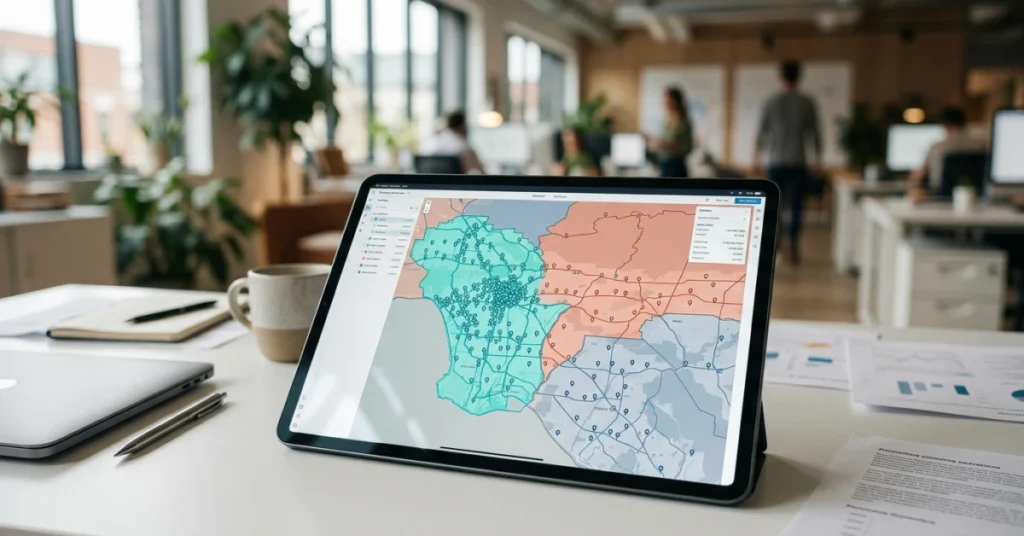
A regional assortment strategy works differently. It uses store clustering to group locations with similar shoppers. Then it builds a tailored product set for each cluster.
Research published on Researchgate found that retail owners who adapt their assortment by region earn stronger customer loyalty. Those who standardize fall behind.
A shelf that feels personal to a shopper is never an accident. It is the result of a retailer that chose to listen first.
Local differences always exist. The real question is what it costs a retailer to keep ignoring them.
Why Regional Assortment Matters For Retailers
That tailoring pays off directly. Retailers who match their product mix to local demand see measurably higher sell-through rates. That means fewer markdowns, less waste, and stronger margins per store.
A regional assortment strategy is not just for large chains. A store stocked for its neighborhood feels relevant. One stocked by a distant planner rarely does.
Improving Local Customer Relevance
Shoppers decide fast. They return to stores that seem to know them. Retail assortment localization tells customers the store is paying attention. It shows you are meeting their specific needs — not just filling shelves.
That feeling of being understood is not accidental. It comes from treating local customer signals as the primary input — not an afterthought to national planning. That is exactly what assortment compliance tools help retailers track and act on.
Increasing Sales Through Market-Specific Products
Stocking the right product in the right region directly lifts revenue. A one-size-fits-all plan misses demand that regional assortment captures. That missed demand goes straight to a competitor.
Retailers who localize their assortment outperform those who do not. Stores using localized assortment planning report up to 15% higher category sales in targeted regions, according to Agrinventory.
Reducing Inventory Waste And Stock Issues
Sending the wrong products to the wrong stores creates two problems at once. One location ends up with overstock. Another runs out entirely. Store clustering by region fixes this. It groups stores with similar demand patterns and plans inventory to match.
As Spscommerce notes, poor assortment decisions are one of the leading drivers of excess inventory. That cost compounds quickly across a large store network.
📊 By the Numbers
Localized assortment planning can drive up to 15% higher category sales in targeted regions.
Local relevance clearly matters — the results prove it. The real question is how you build a system that delivers it consistently, store by store, season by season.
How To Build A Regional Assortment Strategy
Relevance does not happen by accident. It starts with a clear, repeatable process for building a regional assortment strategy from scratch.
Retailers who get this right treat local customer signals as the primary input. They never treat those signals as a footnote to national planning. Every step below is built around that principle.
Analyzing Regional Customer Demand
Start by listening before you plan. Customer purchase patterns and returns reveal what a region actually wants. So do complaints. Trust that data — not your assumptions.
Localized assortment planning fails most often because teams skip this step and jump straight to product selection. Retailers that use local demand signals first cut excess inventory by up to 20% (Toolio).
Using Sales Data To Identify Product Opportunities
Raw sales data shows you what sold. But velocity, margin, and sell-through rate together show you why it sold. They also show whether it belongs in a region long-term.
According to Toolio, retailers that analyze sell-through rates by region see up to 15% fewer markdowns annually. That single metric is one of the clearest signals in product assortment by region.
Selecting Products For Different Store Profiles
Not every store in a region is identical. Store size, shopper income, and foot traffic all shape which products belong on which shelves.
This is where route-to-market planning becomes critical to execution. Research from Sciencedirect confirms that store clustering by region raises category performance. Grouping locations with similar shopper profiles is what drives that result.
Match the product mix to the store profile, not just the zip code.
Creating Regional Assortment Rules And Guidelines
Rules turn a one-time decision into a repeatable system. Set clear thresholds for every region. Define minimum sell-through rates and maximum SKU counts per category. Build in regular review cycles so every region follows the same logic.
Retail assortment localization only holds up over time when cross-functional teams share the same playbook. Without written guidelines, regional decisions drift back toward national defaults within one or two planning cycles.
📊 By the Numbers
Retailers using localized assortment planning reduce annual markdowns by up to 15% compared to national-only approaches.
The framework above is only as strong as the local data you put into it. Feed it the right signals, and your shelves will reflect the community they serve.
Key Factors In Regional Product Selection
Local Signals Beat National Data Retailers who act on local purchase signals outperform those relying on national averages by a wide margin.
Climate Shapes Shelf Space A store in Miami and one in Minneapolis need very different product mixes. That holds true even within the same chain.
Competitors Reveal Gaps Fast Analyzing nearby competitor shelves can expose local demand gaps your own sales data hasn’t caught yet.
Store Size Limits Your Options A smaller footprint forces tighter choices — only the highest-demand local products earn shelf space.
Those signals only help if you know which factors to filter them through. Four factors consistently separate a sharp regional assortment strategy from a guess: local preferences, seasonal trends, store size, and competitor behavior.
Local Consumer Preferences
Communities shop differently. It’s not just what they buy — it’s how often and in what size. A neighborhood with a large Hispanic population may show strong demand for specific spices, sauces, and fresh produce.
A national planogram will never flag those needs. That is where retail assortment localization earns its keep.
Retailers who treat demographic data as a primary input — not a footnote — build shelves that feel personal. Because they are.
Seasonal And Regional Trends
Seasons hit different zip codes at different times and with different intensity. Pushing winter coats in October works in Chicago. In Phoenix, it just burns shelf space.
Smart localized assortment planning maps seasonal windows by region, not by the calendar. Timing a product’s arrival to match local demand matters just as much as stocking it at all.
Store Size And Location Differences
A 6,000-square-foot urban store and a 40,000-square-foot suburban location cannot carry the same mix. Smaller stores must be ruthless. Every SKU has to earn its spot based on local turn rate, not brand preference.
Store clustering by region helps solve this. Group stores by size, shopper type, and location. Then build a tailored range for each cluster instead of forcing one plan on all.
According to Infotech, retailers that use store clustering cut excess inventory by up to 18%. They also improve in-stock rates on top local sellers.
Competitor Assortment Analysis
Your competitors’ shelves are a live map of local demand. If a nearby store is selling out of a product you don’t carry, that’s a signal — not a coincidence.
Regular field audits make this visible. Teams using a solid route-to-market strategy build competitor shelf checks into their regular store visits. That turns local intelligence into faster ranging decisions.
Tracking competitor gaps at the store level — not just the market level — makes a real difference. Retailers who do this respond to local demand shifts up to 40% faster (Moz).
Knowing which factors matter is only half the job. Keeping product assortment by region aligned across dozens — or hundreds — of stores is the harder part.
The real challenge is doing that without losing control of the whole system.
How To Manage Regional Assortment Across Stores
Knowing which factors matter is only half the job. The harder part is keeping your regional assortment strategy aligned across dozens or hundreds of stores over time.
That requires systems, not just instincts.
Retailers who get this right treat assortment management as a living discipline. They build feedback loops and cluster stores by shared traits. They review performance data on a set schedule — not just once a year.
Creating Store-Level Assortment Plans
A store-level plan starts with grouping locations by shared traits. Group stores that share similar customers, climates, and sales patterns — a practice called store clustering by region. Each cluster gets its own product list, not a watered-down version of the national plan.
According to Dotactiv, retailers using cluster-based localized assortment planning see up to 15% fewer out-of-stocks. That is compared to those using a single national range. Fewer gaps on the shelf means fewer lost sales.
Tracking Product Availability In Different Regions
You cannot manage what you cannot see. Real-time visibility into product availability by region is the foundation of any working product assortment by region program.
Without consistent field reporting, gaps grow fast — and quietly. They open up between the planned assortment and what actually sits on shelves. This is where a solid route-to-market strategy becomes essential to close that gap.
Updating Assortment Based On Performance Data
Sales data tells you what sold — but local signals tell you why. Retail assortment localization works best when teams review both together on a set schedule, such as monthly or quarterly.
Agrinventory notes that retailers who update regional ranges based on live performance data reduce slow-moving inventory by an average of 20%. Cutting dead stock frees shelf space for products that actually move in that market.
Aligning Field Teams With Assortment Standards
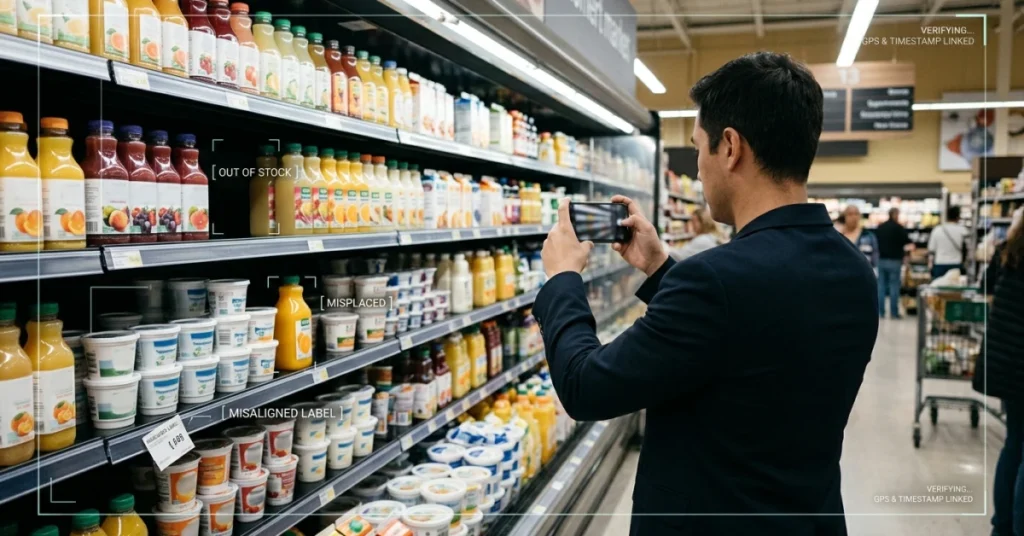
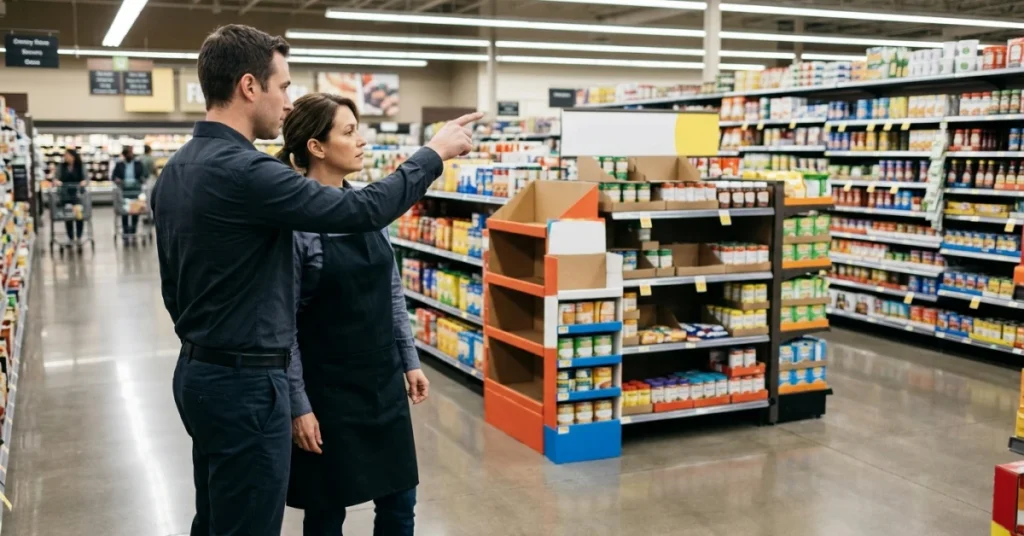
Plans fail at the shelf when field teams don’t know what the standard looks like. FieldPie fixes this by letting managers push customizable audit forms and photo-based checklists directly to field reps.
Every store visit then confirms the right products are in the right place. That turns your field team into real eyes on the ground.
When that happens, your regional assortment strategy stops being a document. It becomes a daily habit. Consistent execution is what turns a smart plan into a real competitive edge.
📊 By the Numbers
Cluster-based assortment planning cuts out-of-stocks by up to 15% versus a single national product range.
Your stores are now running a disciplined, data-driven assortment process. One question still remains — what does all of this feel like from the customer’s side of the shelf?
Conclusion
Those systems and feedback loops are not the finish line — they are the foundation.
Treat every shelf as an answer to a question your community asked. Retailers who do that will always beat those who push national plans down and hope for the best.
A strong regional assortment strategy is, at its core, an act of listening.
Stores that win long-term do not just cluster locations by demographics. They keep asking what local customers actually want. Then they act on that signal fast.
Most retailers struggle because local signals get buried under national priorities. That is exactly why assortment compliance tools matter at the store level.
FieldPie captures real-time field data — photos, audits, and shelf reports. Your team spots regional gaps before they cost you sales.
Toolio notes that localized planning directly reduces overstock and stockout risk across regions.
According to Inventory Planner, retailers who localize their product mix see up to a 20% reduction in excess inventory. That is compared to retailers running uniform national assortments.
Start treating your shelves as a conversation. Give your field team the tools to keep it going.