



✦ Key Takeaways
One CPG brand used mobile compliance tracking to audit 25,000 stores across the convenience channel, without a single paper form.
→ Paper audits leave compliance gaps that cost brands real shelf space.
→ Mobile verification gives field teams instant, accountable proof of execution.
→ Real-time HQ visibility turns compliance data into faster, smarter decisions.
In this article:
Why Mobile Compliance Tracking Beats Paper Audits
How Field Teams Verify Planogram Compliance on Mobile
Must-Have Features in a Merchandising Compliance App
KPIs and HQ Visibility: Measuring What Actually Matters
Build Your Mobile Compliance Workflow With FieldPie
Key takeaway: Mobile merchandising compliance is no longer optional, it is your brand’s frontline defense.
Why Mobile Compliance Tracking Beats Paper Audits
A large-scale audit by Quri (now part of Onedoor) found that 42% of promotional displays across 5,600+ U.S. stores were out of compliance. Brands had assumed their rates were 70% or higher. That gap isn’t a people problem.
Paper audits have a built-in flaw: a rep captures a snapshot days after the visit, and by the time HQ sees the data, the promotion is already over. There’s no way to act on information that arrives that late.
Tracking merchandising verification via mobile closes that gap in a way paper never could. A field rep checks a display, submits a photo, and flags a violation, all from one app, all in real time. The brand sees the problem the same day it happens, not the same week someone processes a clipboard.
Real Costs of Manual Merchandising Audits
Paper audits burn time at every step. Reps print forms, drive routes, transcribe notes, and email spreadsheets to a manager who then builds a report. Each handoff adds delay and a new chance for error.
By the time an issue surfaces, the window to fix it has usually closed. The deeper cost isn’t the labor hours. It’s the execution gap, the silent distance between what a brand planned at headquarters and what a shopper actually sees on the shelf.
Paper was never built to measure that gap consistently, and it still isn’t.
Speed and Accuracy Gains From Going Mobile
A mobile field audit app replaces every paper handoff with a single digital submission. Reps follow guided checklists, attach photos as proof, and submit findings before they leave the store. One telecom retailer automated fixture checks and reached 95%+ recognition accuracy, according to Onedoor, eliminating manual reviews entirely.
Speed matters, but accuracy matters more. When a retail execution tracking app captures structured, photo-verified data, HQ can spot patterns across dozens of stores, not just fix one bad display. The real question is whether your field team’s current process actually captures that data, or just records that someone showed up.
How Field Teams Verify Planogram Compliance on Mobile
That real-time visibility only matters if field reps know exactly how to act the moment they walk into a store. Tracking merchandising compliance via mobile works because it replaces a vague checklist with a structured, step-by-step audit. The rep works through each shelf section in sequence and attaches photo evidence before leaving the aisle.
Say your team walks into a grocery account. The rep opens a retail execution tracking app and pulls up the assigned planogram for that store. Then the rep photographs each shelf section in order. The app flags any shelf that doesn’t match the approved layout. The rep fixes it right there, instead of writing a paper note a manager won’t see for three days.
GPS-Tagged Photo Capture in Live Store Visits
Every photo a rep takes gets stamped with a location and timestamp. That tells HQ the audit happened inside the right store, not from a parking lot two blocks away. This single feature closes the most common gap in mobile field audit programs: proving that compliance was checked, not just reported.
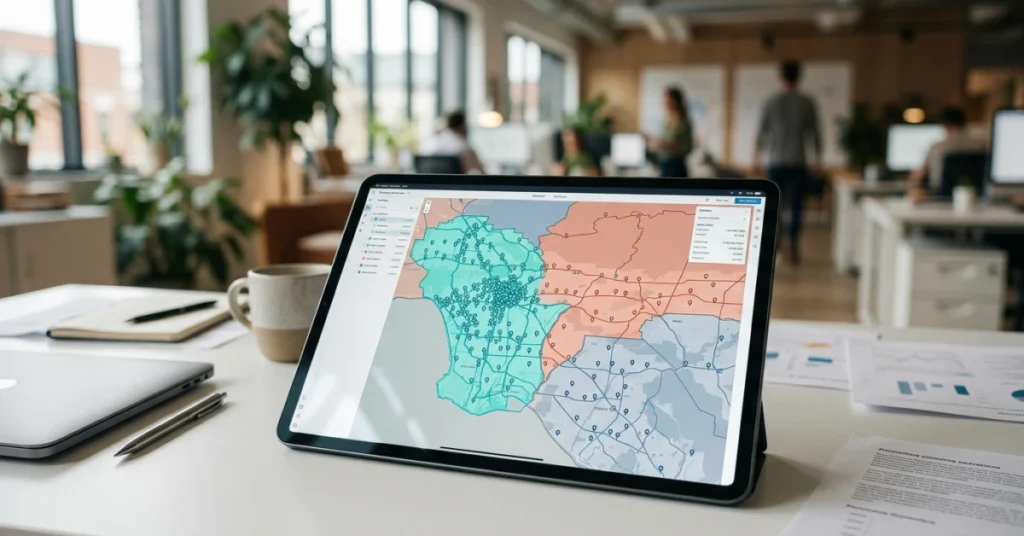
A regional manager can pull up a live dashboard and see which stores passed, which failed, and which reps are still mid-visit. That kind of in-store compliance monitoring on mobile replaces the guesswork that paper audits left behind.
Offline Mode: Auditing Without Internet Access
Retail stores often have weak Wi-Fi, and a field merchandising audit app that freezes mid-visit is useless. Good mobile shelf-check software lets reps finish the full audit offline, then syncs all data the moment a connection returns.
A rep shouldn’t have to choose between a thorough audit and a working signal. Offline capability keeps the workflow consistent whether the store is a flagship downtown or a rural outpost with spotty coverage.
📊 By the Numbers
One field executive may complete 95% of assigned tasks on time while another completes only 60%, per 1channel. That gap makes performance reviews data-driven rather than based on gut feel.
That gap between 95% and 60% task completion points to a process problem, not a people problem. The right app features are what expose it. Knowing which features actually move that number is what separates a useful tool from one that just digitizes the same old blind spots.

Must-Have Features in a Merchandising Compliance App
Structured, photo-backed audits only deliver value when the app is built to close the execution gap, not just digitize a checklist. The right features decide whether your field team catches a planogram violation in real time or finds it three weeks later in a manual report. Most compliance failures don’t come from lazy reps. They come from tools that weren’t designed to surface the right problem at the right moment.
When an app lacks smart routing, offline sync, and instant photo capture, reps burn time on logistics instead of shelf verification. That slows everything down and leaves gaps in your data. Assortment compliance strategies only work when the mobile tool feeding them data is reliable and fast. It also has to be built around how field reps actually move through a store.
AI Image Recognition for Shelf Compliance
Tracking merchandising compliance via mobile gets a serious upgrade when the app can read a shelf photo instead of just storing it. AI image recognition compares a rep’s photo against the approved planogram and flags gaps automatically. Nobody at HQ has to manually review hundreds of images. That shift moves compliance from a reporting task to a real-time correction trigger.
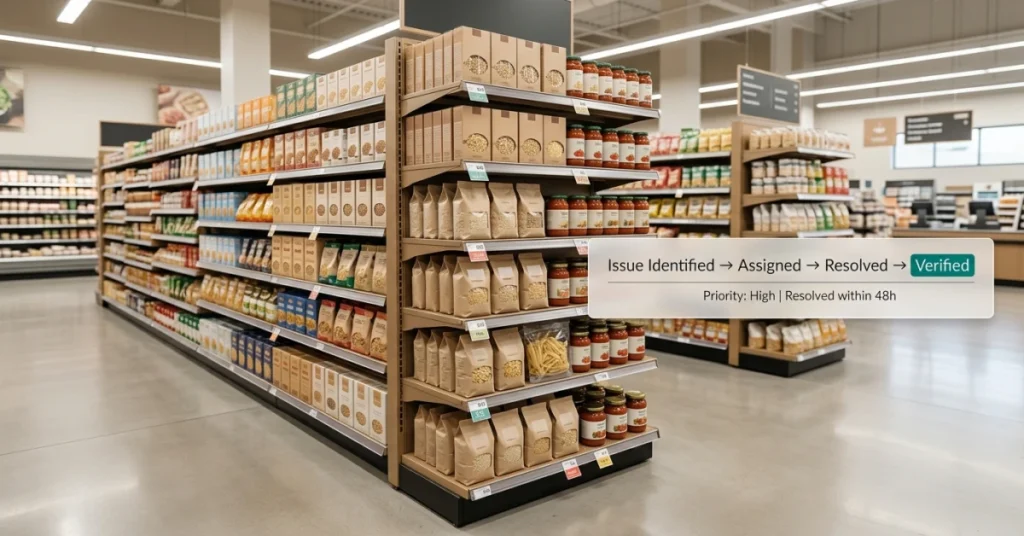
A rep photographs a beverage aisle, and the app instantly flags two facings out of position and one missing product. The rep fixes it before leaving the store, and HQ sees a resolved ticket, not an open violation. No paper audit was ever built to close the execution gap that fast.
POSM Deployment Tracking Across Hundreds of Stores
Point-of-sale materials, things like shelf talkers, display stands, and promotional banners, are expensive to produce and easy to misplace. A solid field merchandising audit app logs exactly which POSM items were placed and at which store. It also records which rep did the work, so HQ has a deployment record it can actually trust.
Without that tracking layer, brands often find out that promotional materials never reached the shelf, or were placed wrong, only after the campaign ends. Catching that mid-campaign is far better than learning about it too late. In-store compliance monitoring via mobile turns POSM deployment from a hope into a verified, timestamped fact. That verified record is also what makes the next question worth asking: are the metrics you’re tracking actually showing you where execution breaks down?
KPIs and HQ Visibility: Measuring What Actually Matters
The right tools in a rep’s hands matter. But knowing what to measure is where most programs fall short. Most field teams track activity and few track the metrics that show whether execution is actually working.
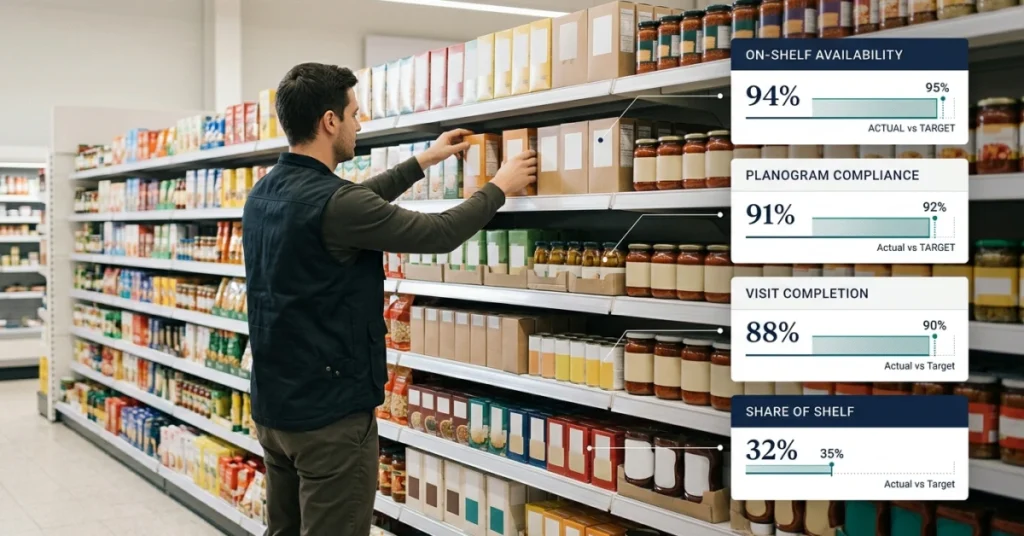
6 KPIs Every Mobile Compliance Program Should Track
These six metrics expose the gap between what HQ planned and what shoppers actually see at the shelf.
Audit Completion Rate by Territory: This tells HQ which regions are keeping pace with the audit schedule and which are quietly falling behind.
Time-to-Corrective-Action: This is the gap between when a rep flags a problem and when someone actually fixes it; shorter is always better.
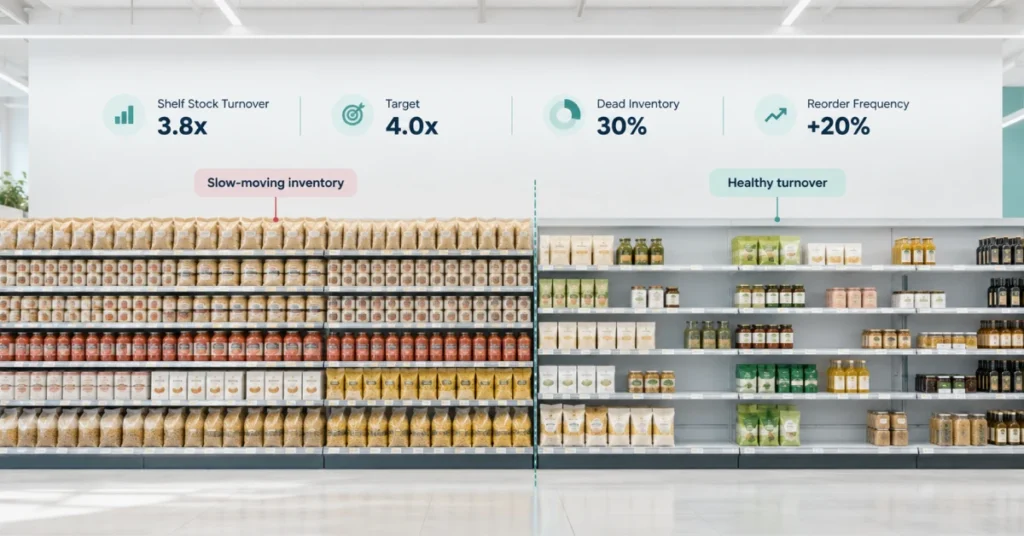
Out-of-Stock Frequency at Shelf Level: Track how often a product is missing from its assigned shelf position. That pattern reveals supply or replenishment failures before they grow.
Store Visit Coverage vs. Target: Comparing planned visits to completed ones shows whether your field team is reaching every store that needs attention.
How HQ Monitors Execution Without Store Visits
A retail execution tracking app pushes field data to a central dashboard the moment a rep submits an audit. HQ doesn’t need to wait for a weekly report or call a district manager to learn what’s happening on the ground.
Say your team manages two hundred stores across five regions. Without mobile merchandising compliance tools, you’d rely on each region to self-report, which means problems stay hidden until they’re expensive. With a live dashboard, HQ can filter by territory, store type, or KPI and spot a compliance dip the same day it happens.
Tracking merchandising compliance via mobile also creates a timestamped photo record for every audit. That record is concrete proof, and it makes follow-up conversations with store managers direct and specific.
The real value of in-store compliance monitoring mobile isn’t the data it collects. It’s the speed at which that data reaches the person who can act on it.
Review your KPI dashboard every week, not every quarter. Compliance problems compound fast. A weekly check gives you time to correct course before a bad shelf week becomes a bad sales month.
A field merchandising audit app that tracks these six metrics gives HQ a clear picture of execution quality. That picture tells you exactly where to send your team next.

Build Your Mobile Compliance Workflow With FieldPie
Knowing which KPIs to track is only half the job. The other half is making sure your field team captures that data on every visit. A repeatable process keeps reps from skipping steps or recording data in whatever format feels easy that day.
FieldPie closes the execution gap by connecting scheduling, routing, and in-store audits inside one mobile-friendly platform. A rep opens the app and follows a structured checklist tied to that store’s planogram. They photo POSM placement and submit the report before leaving the aisle. HQ sees the result in real time, not three days later when the window to fix it has already closed.
Structuring Your First Mobile Audit Rollout
Start with your highest-volume stores and one focused checklist: planogram compliance, POSM placement, and stock availability. Run the mobile audit on 10 of those first and compare the data quality to your paper records. You’ll see the gap right away.
Tracking merchandising compliance via mobile works best when the checklist mirrors exactly what HQ designed, not a field rep’s interpretation of it. Build the form once in FieldPie and push it to every device. Every rep then follows the same steps in the same order. That consistency is what makes the data comparable across stores and regions.
Turning Compliance Data Into Sales-Floor Action
Raw audit scores don’t move product. What moves product is a manager seeing a failed planogram flag at 10 a.m. and dispatching a fix before the afternoon rush. Mobile merchandising compliance software like FieldPie routes those alerts automatically, so the right person gets notified without anyone sorting through a spreadsheet by hand.
Review your assortment compliance data every week, not monthly. What looks like a one-off error often turns out to be a recurring gap in a specific region. It may also point to a problem with a particular retail partner. Catching that pattern early is exactly what mobile monitoring is built to do.
📊 By the Numbers
Up to 20% of field merchandiser time is lost to inefficient routing and manual reporting tasks, per Fieldpie.
A solid workflow captures the right data, flags issues fast, and gets fixes to the right person quickly. That structure closes the gap between what your brand designed and what a shopper actually sees at the shelf.
Conclusion
That real-time visibility is exactly what separates teams that fix compliance problems from teams that only discover them. Tracking merchandising compliance via mobile is the first method that actually measures the gap between what your brand planned and what a shopper sees at the shelf. It shows you that gap directly. Paper audits could never do that, no matter how diligent the rep filling them out.
Without a retail assortment compliance guide, you’re likely measuring activity, visits completed, forms submitted, rather than execution quality. The right mobile merchandising compliance software shifts focus to outcomes. Think planogram accuracy, share-of-shelf, and corrective action rates that HQ can act on before the week ends.
Most field teams don’t have a motivation problem. They have a process problem, and the right retail execution tracking app fixes that. FieldPie lets field reps capture photo evidence and complete structured audits in real time. Issues get flagged right away, so nothing waits until the next reporting cycle. FieldPie offers an AI-powered field operations platform. It helps businesses manage scheduling, routing, audits, sales, merchandising, and team tracking from one mobile-friendly tool.