


✦ Key Takeaways
Retailers lose up to 8% of annual revenue from empty shelves — AI shelf audits are closing that gap fast.
→ Out-of-stocks cost the industry $1 trillion globally each year.
→ AI scans shelves 3x faster than human auditors with greater accuracy.
→ Real-time alerts let store teams restock before sales are ever lost.
In this article:
What Is an AI Retail Shelf Audit?
How Does an AI Retail Shelf Audit Work?
What Can AI Detect During a Retail Shelf Audit?
Key takeaway: AI shelf auditing is no longer optional — it is the competitive edge that separates winning retailers from struggling ones.
What Is an AI Retail Shelf Audit?
One in three shoppers walks away from an empty shelf and buys nothing — that lost sale is a broken promise, and it happens thousands of times a day in stores everywhere. An AI retail shelf audit is the technology now stepping in to keep that promise, using cameras and software to check shelves automatically, in real time.
Traditional store checks rely on workers walking aisles with clipboards, catching problems hours — sometimes days — after they start costing sales. AI-powered shelf auditing spots the same problems in seconds, at a scale no human team can match.
How AI Changes Traditional Shelf Audits
Retail teams have always audited shelves — the difference now is speed and frequency. A computer vision shelf audit can scan an entire store section in under a minute, flagging gaps before a shopper ever sees them.
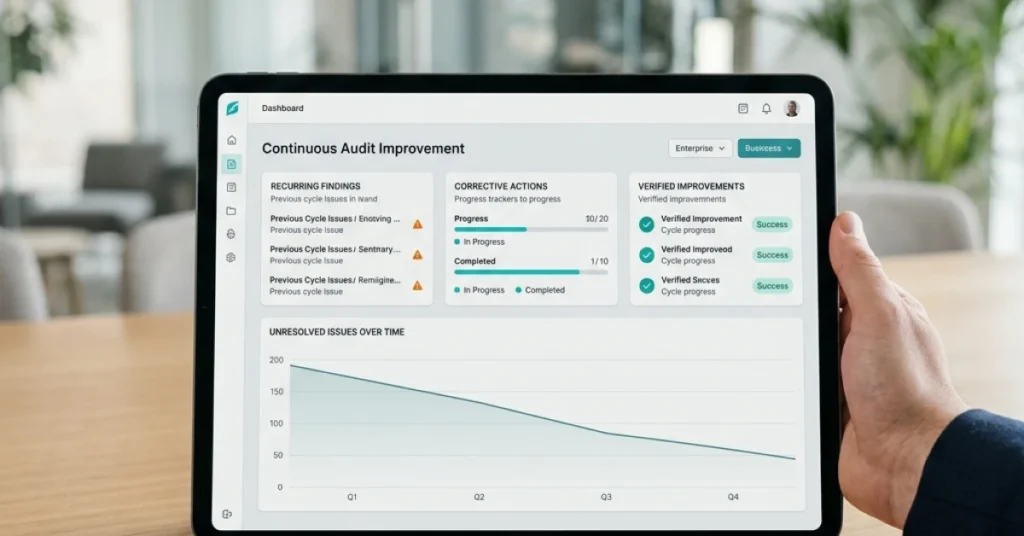
Stores that catch out-of-stocks faster lose fewer sales and frustrate fewer customers — which is why retail audit root causes matter so much to fix first. AI turns a once-a-day check into a continuous, always-on process.
What Can AI Detect on Retail Shelves?
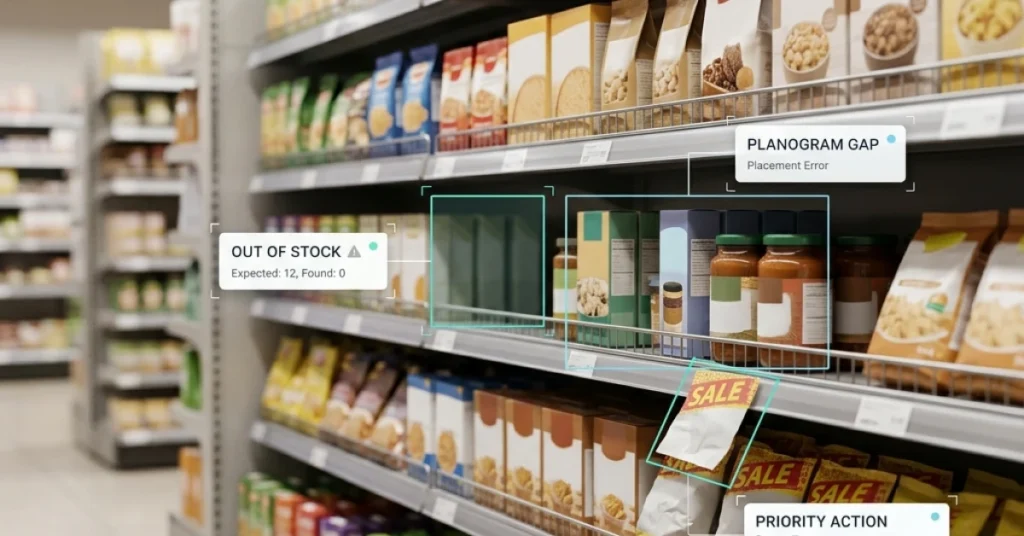
An automated shelf audit does far more than spot an empty slot. It reads price tags, checks product placement, flags expired items, and confirms that shelves match the store’s official layout plan.
Retailers lose roughly $1 trillion globally each year to out-of-stocks and overstocks combined (Traxretail) — AI catches the root causes before they compound. Every wrong tag or misplaced product that AI flags is one less bad experience for a real shopper.
AI Retail Shelf Audits vs. Manual Store Checks
Manual checks are slow, inconsistent, and expensive — a trained worker can audit only a fraction of a store’s SKUs per shift. Research published by Mdpi confirms that computer vision systems detect shelf compliance issues with over 90% accuracy, far outpacing human auditors.
Retail shelf compliance AI doesn’t replace good store teams — it gives them precise, real-time information so they fix the right problem fast. The shopper never sees the technology; they just find what they came for.
The real question isn’t whether AI can audit a shelf — it’s exactly how cameras and algorithms turn a store aisle into a live data feed.
How Does an AI Retail Shelf Audit Work?
That speed is only possible because the system runs a precise, repeatable process — one that most shoppers never see but benefit from every time a shelf is fully stocked.
Retailers lose roughly 8% of annual sales to out-of-stock products alone — a number that reflects real shoppers leaving empty-handed (Fieldpie). Automated monitoring exists to close that gap before a single customer notices.
Capturing Shelf Images in Stores
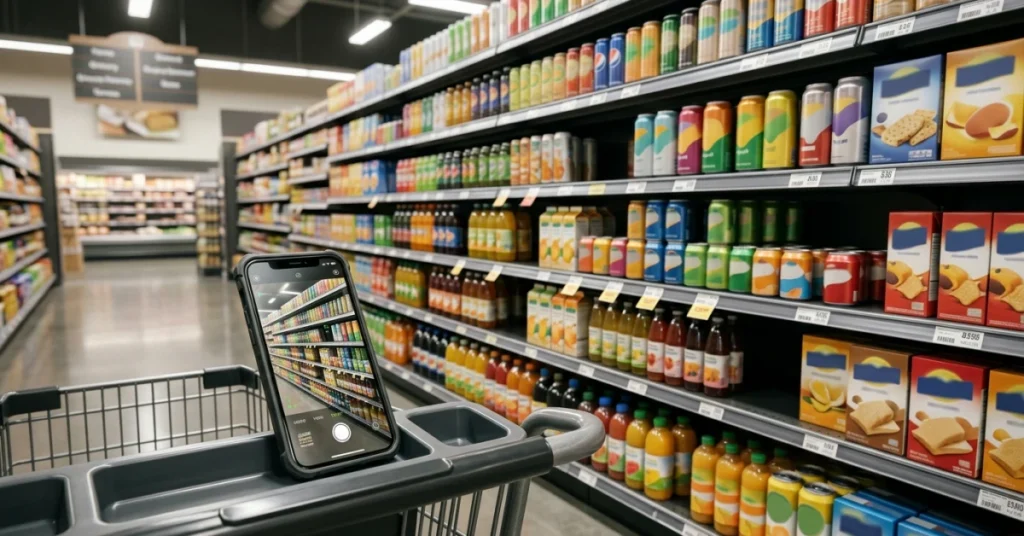
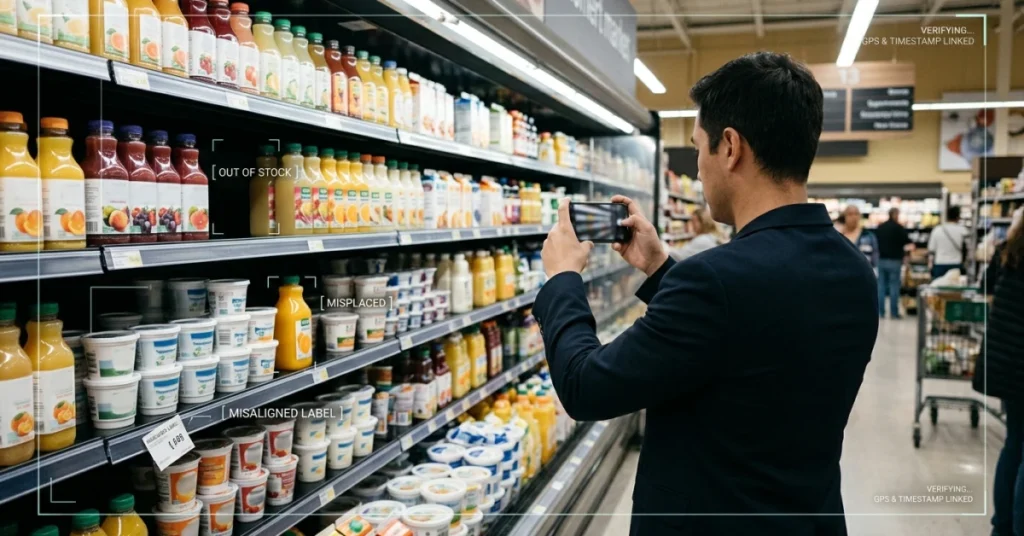
Cameras mounted on store fixtures, robots, or handheld devices snap photos of every product row — continuously. Those images feed into the system in real time, not once a week like a manual walkthrough would.
Recognizing Products and SKUs With Computer Vision
A computer vision model scans each image and identifies every item by its label, shape, and color. It can distinguish between two nearly identical cereal boxes in under a second.
This is where automated detection pulls far ahead of any human checker — no fatigue, no missed items, no slow shifts.
Measuring Facings, Shelf Position, and Availability
The system counts how many units face the customer and verifies whether each product occupies its correct slot. A missing facing is flagged instantly — no guesswork, no clipboard.
Comparing Shelf Execution Against Planograms
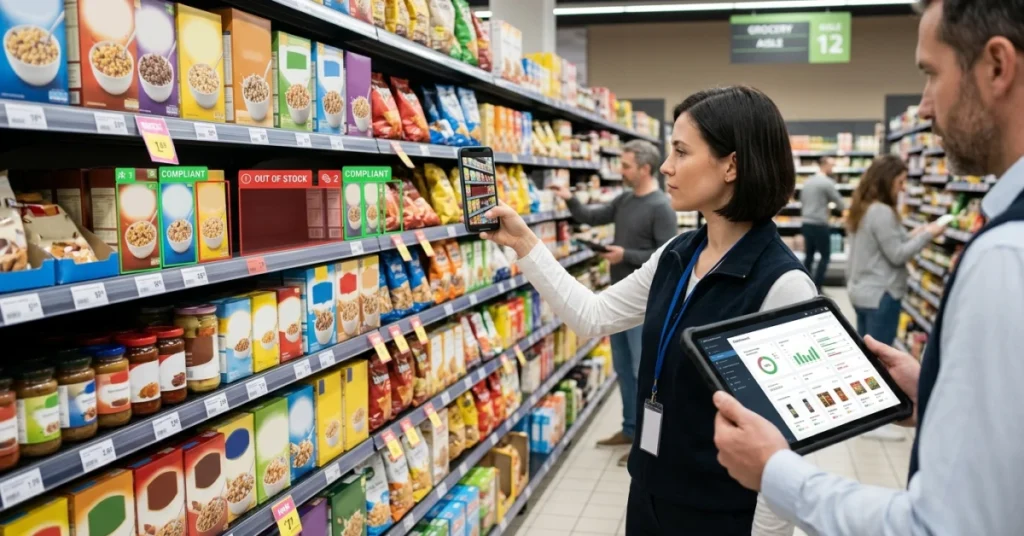
A planogram is the store’s official layout map — it shows exactly where every product should be placed. The automated check compares the live photo against that blueprint and surfaces every discrepancy.
Think of it as a spell-checker for store aisles, running across every section at once.
Generating Compliance Findings Automatically
Once the comparison is complete, the system scores each section for adherence to merchandising standards — no human has to write a report. Every gap, misplaced item, or pricing error becomes a timestamped record in seconds.
This is why retail audit root cause analysis has become far more actionable — the data arrives fast enough to actually use it.
Sending Findings to Field Teams for Action
Alerts go straight to a store associate’s phone or tablet — with a photo, a location, and a clear fix. The issue gets resolved in minutes, not days.
This category is expanding fast precisely because the loop works: Dataintelo projects the sector will surpass $6 billion by 2032, driven by operators who can no longer afford slow corrections.
📊 By the Numbers
Retailers lose up to 8% of yearly revenue because a product simply wasn’t on the shelf when a shopper reached for it.
The real question isn’t how the system captures merchandising data — it’s what it uncovers once it starts looking.
What Can AI Detect During a Retail Shelf Audit?
That data capture is only useful if the system knows what to look for — and it turns out, AI can spot far more than a human walking the aisle ever could. A well-trained computer vision shelf audit catches problems in seconds that a store associate might miss for hours.
Every detection below represents a broken promise to a shopper — a wrong price, a missing product, a display that never got set up right. AI-powered shelf auditing is the first technology fast enough and consistent enough to catch all of them at once.
Out-of-Stock Products and Empty Shelf Gaps
An empty shelf is the most visible failure in retail — and AI catches it before a shopper does. Computer vision scans shelf images in real time and flags gaps the moment they appear.
Retailers lose roughly 8% of annual sales to out-of-stocks, and AI cuts detection time from hours to minutes (Ifactoryapp). That speed is the difference between a restocked shelf and a lost sale.
Incorrect Product Placement
A product in the wrong spot is nearly as bad as no product at all. Shoppers expect items where they’ve always been — and a misplaced SKU quietly kills the sale.
AI cross-references each product’s location against the approved store layout instantly. It flags the wrong item on the wrong shelf without anyone having to count or compare by hand.
Planogram Compliance Issues
A planogram is the store’s blueprint — it tells every product exactly where to live on the shelf. When stores drift from that plan, sales drop and the brand’s deal with the retailer breaks down.
Automated shelf audit tools compare live shelf images to the approved planogram in real time. Non-compliance gets flagged immediately, not at the next quarterly review.
Missing or Incorrect Facings
“Facings” means how many product units face forward on the shelf — more facings means more visibility. AI counts them precisely, something a tired human auditor often undercounts or skips.
A brand might pay for four facings and only get two. Mobile field audit tools paired with AI catch this gap before the brand pays for space it isn’t getting.
Promotional Display and Pricing Compliance
A sale price that never made it to the shelf is a broken promise — and it happens more than retailers admit. AI reads price tags and promotional signage and checks them against what the system says they should be.
Wrong prices frustrate shoppers and create legal risk for retailers. AI retail shelf audit systems catch these mismatches at scale, across every aisle, every day.
Competitor Products and Share of Shelf
AI doesn’t just track your products — it tracks everyone else’s too. It measures how much shelf space competitors hold versus your brand, a metric called share of shelf.
According to Paralleldots, machine learning models can now identify competitor SKUs and calculate share of shelf with over 95% accuracy. That insight used to take days of manual counting.
Assortment and Distribution Gaps
Sometimes the right product simply never made it to a specific store — and no one noticed. AI flags these distribution gaps by comparing what should be on the shelf against what’s actually there.
A shopper who can’t find their usual brand doesn’t wait — they switch. Retail shelf compliance AI closes that gap before the shopper ever has to make that choice.
📊 By the Numbers
AI shelf audits identify planogram violations and out-of-stocks up to 10x faster than manual store checks.
Every one of these detections adds up to something bigger than operational efficiency — it adds up to a store that actually works for the person pushing the cart.
Conclusion
Catching shelf problems before shoppers do is no longer a future goal. Retailers using AI retail shelf auditing report up to 30% fewer out-of-stock incidents in the first year.
That gap on the shelf was always a broken promise. Now there’s a tool fast enough to catch it first.
The next time you walk into a store and every product is right where it should be, a mobile field audit tool likely played a quiet role in that. Shelves that look effortless come from real-time detection, not luck.
Most brands still lose sales because shelf problems surface too late. The shopper has already left empty-handed by then.
FieldPie captures photo-based shelf data in real time and flags compliance gaps the moment they appear. Field teams can fix issues before they cost a sale.
The gap between what your planogram promises and what shoppers see is where revenue hides. Traxretail estimates poor shelf execution costs retailers billions every year.