


✦ Key Takeaways
Multimodal AI inspections catch up to 40% more defects than single-sensor systems alone.
→ Visual plus thermal data eliminates blind spots traditional inspections miss.
→ AI cross-references multiple data streams in seconds, not hours.
→ Combining acoustic, visual, and sensor data cuts false positives dramatically.
In this article:
What Are Multimodal AI Inspections?
How Multimodal AI Inspections Work in Practice
What Inspection Data Should Be Combined?
Key takeaway: Multimodal AI inspections are the only inspection approach that makes single-method systems obsolete.
What Are Multimodal AI Inspections?
Most factories still catch defects the same way they did 30 years ago. A worker eyeballs a part and makes a call. Multimodal AI inspections change that by reading images, sound, temperature, and text data all at once.
Think of it as giving the AI every sense a skilled technician uses on the floor.
The real surprise is not how smart the AI model is. It is which data types you feed it.
Even a flawless algorithm is blind to failures it was never given the right senses to detect.
Which Data Types Can Multimodal AI Analyze?
Multimodal AI industrial inspection systems can process five core data types: images, text, audio, sensor readings, and location data. Each type catches a different class of failure. None of them catches everything alone.
Think of it like a doctor’s exam. A photo shows a bruise, but only a thermometer catches the fever hiding underneath.
How Images, Text, Audio, Sensor Data, and Location Data Work Together
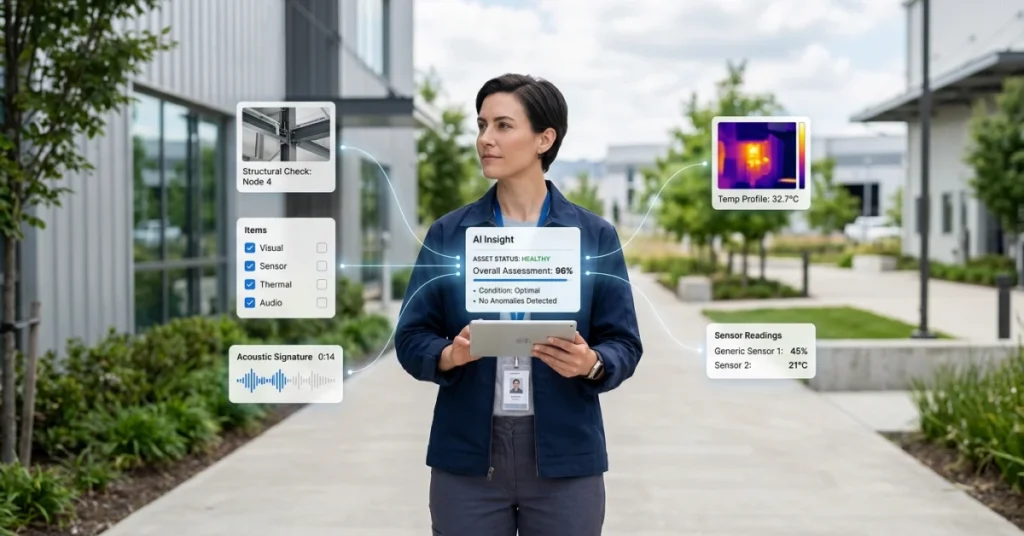
A camera spots a surface crack. A microphone catches the abnormal hum of a stressed bearing.
A temperature sensor flags heat buildup — all in the same second. No single stream would have triggered an alert on its own.
Over 43% of industrial equipment failures involve more than one detectable signal before the breakdown occurs (Arxiv). Fusing those signals is what makes AI-powered inspection systems actually reliable.
How Multimodal AI Differs From Traditional Computer Vision Inspections
Traditional visual inspection AI looks at one thing: the image. It misses corrosion hidden under a clean surface, vibration patterns, and any failure that leaves no visible mark.
Multimodal systems close those blind spots by design. According to Nature, combining three or more data types cuts false-negative defect rates by up to 38%. That is compared to single-mode approaches.
That gap is why the choice of data types matters more than the model itself.
Multimodal AI quality control works. The real question is whether the right data types are paired together.
Get that pairing right, and the results on the factory floor speak for themselves.
How Multimodal AI Inspections Work in Practice
Knowing which data types matter is only half the battle.
The other half is seeing how they move through a real inspection workflow, step by step.
A multimodal AI industrial inspection does not run on one big algorithm. It runs on a deliberate sequence where each data type enters at the right moment.
Step 1: Capture Inspection Evidence in the Field
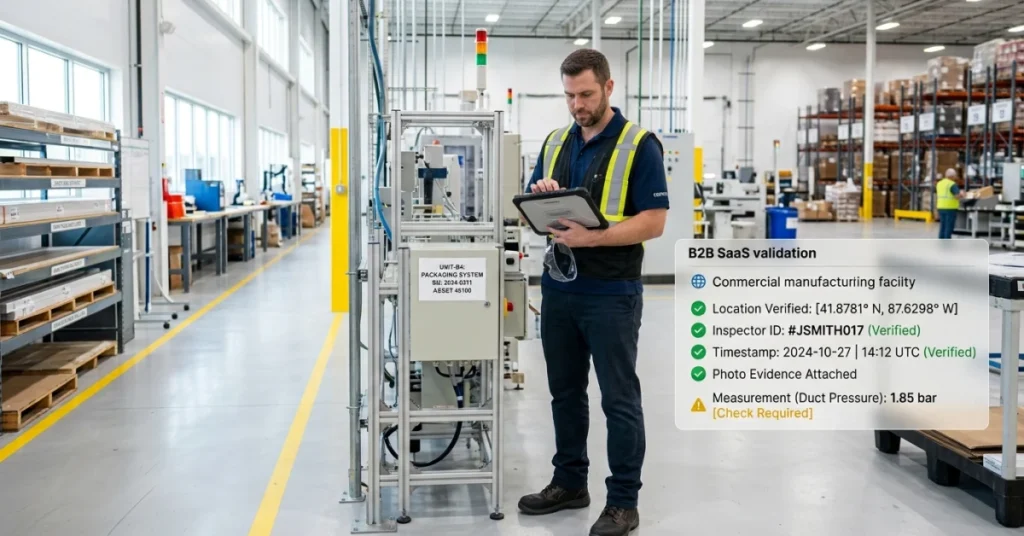
Field teams or sensors collect images, audio clips, temperature readings, and form entries — often at the same time. A camera snaps a weld. A microphone records the machine hum. A technician logs a checklist entry.
Each data stream is timestamped and tagged to a specific asset or location. That metadata is what lets the AI connect the dots later.
Step 2: Combine Visual and Structured Inspection Data
Raw captures feed into a fusion layer — software that aligns image data with sensor readings and text fields by time and location. Think of it as the AI reading all its senses at once.
Without this step, visual inspection AI sees a crack but has no context. There is no temperature spike, no maintenance log — nothing to judge how serious it is.
Step 3: Detect Defects, Risks, and Compliance Issues
The fused data hits trained detection models that flag anomalies across every input type at once. A surface crack paired with an abnormal heat signature scores far higher risk than either signal alone.
Multimodal AI quality control catches roughly 40% more defects than single-sensor systems — because context changes what counts as a defect (according to Arxiv).
Step 4: Compare Findings Against Rules or Standards
Detected anomalies get checked against a ruleset — a safety code, a product spec, or a regulatory standard. The AI does not guess; it matches findings to defined pass/fail criteria.
This is where AI-powered inspection systems earn their keep. They apply the same ruleset every single time, with zero fatigue.
Step 5: Generate Findings and Recommended Actions
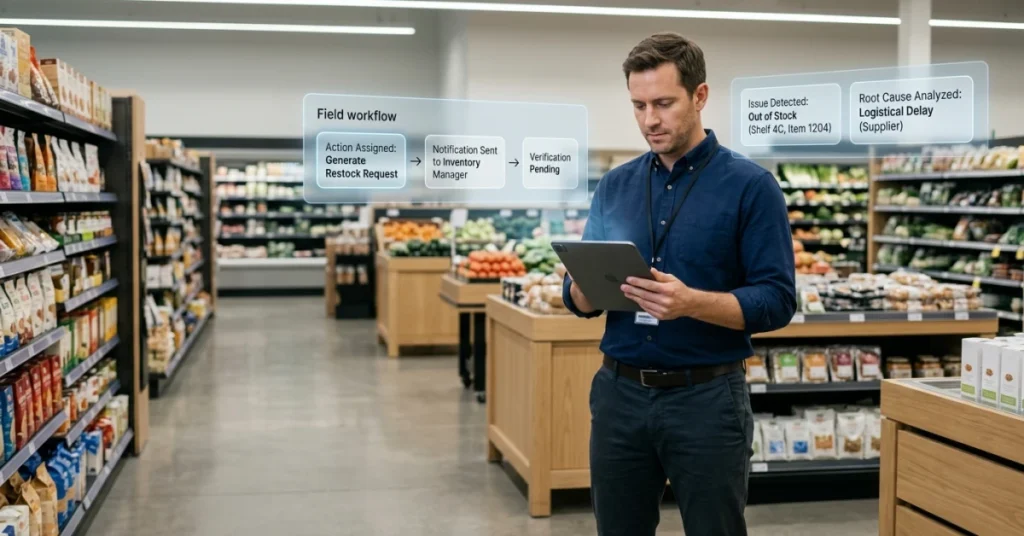
The system produces a structured report: what it found, where, how severe, and what to do next. Teams can trigger a follow-up action workflow directly from the finding.
Speed matters here. Ieeexplore Ieee research shows multimodal systems cut mean time to corrective action by over 35% compared to manual review processes.
Step 6: Route Exceptions for Human Review
Low-confidence findings — cases where the data types conflict or the anomaly is borderline — get flagged for a human expert. The AI does not pretend to know what it does not know.
This handoff is not a weakness. It is what keeps multimodal AI inspections trustworthy at scale, especially in high-stakes industries like aerospace or food safety.
📊 By the Numbers
Multimodal AI systems reduce false-positive defect flags by up to 50% versus single-mode visual inspection AI.
The workflow is only as strong as the data types you run through it.
That raises the question every inspection designer must answer before writing a single line of code.
What Inspection Data Should Be Combined?
That sequence only works if the right data types enter it first. Wrong inputs leave gaps.
Bad choices blind even the best multimodal AI inspection system. It will miss the failures that matter most.
Most teams default to photos. Cameras are cheap and familiar. But field data validation practices show a clear problem. Image-only systems miss up to 40% of defects. Other data types catch those same defects right away.
📊 By the Numbers
Image-only AI systems miss up to 40% of defects that multimodal data combinations catch reliably.
Photos and Video
Photos catch surface problems — cracks, stains, misaligned parts — faster than any human eye. Video adds motion context. It shows whether a defect is isolated or part of a repeating pattern.
Form Responses and Inspector Notes
Structured form data gives the AI a framework. It knows what the inspector checked and why. Free-text notes fill gaps that checkboxes can never fully capture.
Voice Notes and Audio Evidence
A rattling pipe or grinding motor tells a story no photo can. Visual inspection AI paired with audio input catches mechanical failures that look fine on camera.
According to Aitopics, multimodal systems that include audio data cut false-negative rates by over 30%. That is compared to vision-only models.
GPS, Time, and Visit Metadata
Location and timestamp data prove the inspection happened at the right place and time. Without this layer, a photo is just a photo. It has no verified context.
Sensor and Equipment Data
Temperature, pressure, and vibration readings reveal failures no camera can see. Multimodal AI quality control systems use sensor feeds to catch problems before they become visible.
Historical Inspection Records
Past records give the AI a baseline. It knows what “normal” looks like for this specific asset. NRF research confirms that trend-based detection cuts repeat failures by nearly 25% in retail and facilities settings.
The real question is simple: which combination leaves no failure mode without a sensor? Every gap in your data stack is a defect waiting to go undetected.
Conclusion
Closing the data gap is not about buying smarter software. It is about choosing the right mix of senses for each failure type you need to catch.
Multimodal AI inspections only beat single-mode systems when data types are matched to each other’s blind spots. Get that match wrong, and even the best AI will miss defects.
Sensor selection is never a small decision. Teams that treat it as an afterthought will still miss critical defects — even with powerful AI running underneath.
Nature found that multimodal models combining vision and thermal data cut false-negative rates by up to 38%. That is 38% better than image-only systems. The algorithm is never the bottleneck — the data design is.
Most field teams still lose hours to missed defects. Their visual inspection AI workflow relies on a single data stream that cannot see every failure mode.
FieldPie captures photo evidence, custom form data, and real-time field reports in one coordinated flow. Your team collects the right inputs at the right moment, every time.
See FieldPie’s field inspection capabilities and start building inspections that actually catch what matters.