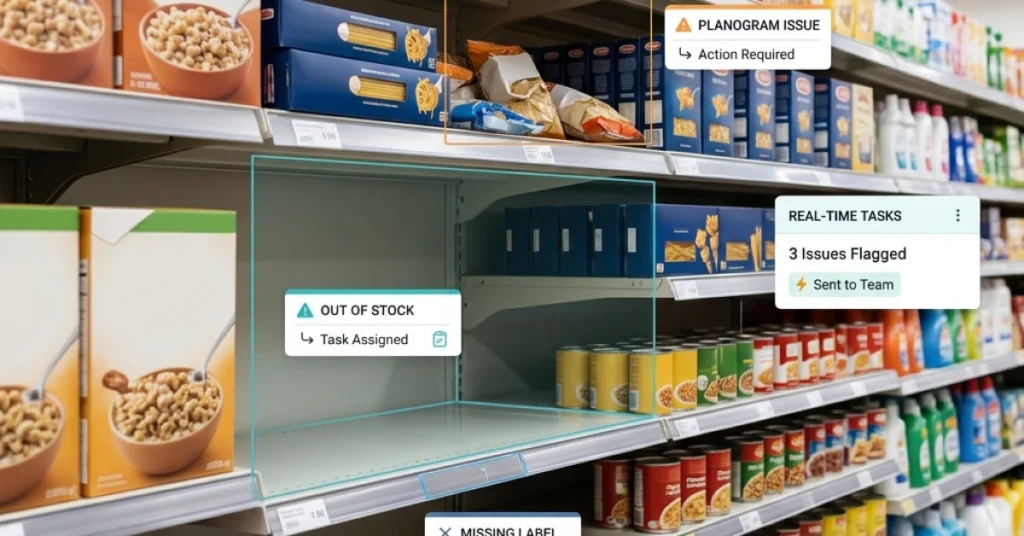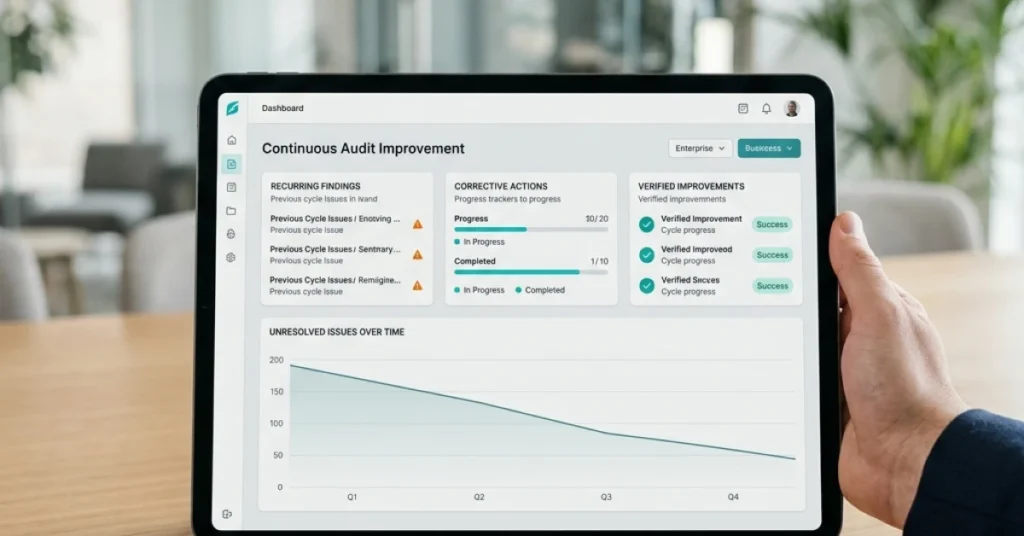
AI anomaly detection helps field teams identify unusual equipment behavior before it escalates into costly downtime. This guide explains how detection models work, the three main anomaly types, and four practical deployment steps to connect sensor signals with maintenance action.
✦ Key Takeaways · 6 min read
A breach exposing 147 million consumers proved that undetected anomalies in complex systems carry catastrophic, irreversible consequences.
→ Undetected field anomalies escalate silently into full operational failures.
→ AI spots irregular patterns human technicians routinely miss in the field.
→ Early anomaly signals transform reactive repairs into planned, cost-controlled maintenance
In this article:
Why Field Operations Demand Smarter Anomaly Detection
How Does AI Anomaly Detection Actually Work in the Field?
3 Most Common Anomaly Types in Field Operations Data
How to Deploy AI Anomaly Detection Across Field Assets
Turn Anomaly Signals Into Predictive Maintenance Actio
Conclusion
Key takeaway: AI anomaly detection is the only reliable path to resilient, failure-proof field operations.
Why Field Operations Demand Smarter Anomaly Detection

Why Field Operations Demand Smarter Anomaly Detection
Field teams don’t fail because they lack data. Small, slow warning signs hide inside that data and go unnoticed until a truck breaks down mid-route. By then, a technician may arrive at a site that’s already gone dark. Threshold-based alerts and fixed inspection schedules were built for predictable environments, and most field operations stopped being predictable a long time ago.
The real cost shows up in unplanned downtime, wasted dispatch trips, and safety incidents a smarter system could have flagged hours or days earlier. AI-powered field detection is shifting that picture. But it only works when it’s trained to separate a genuine fault from normal variation caused by a shift change, a heat wave, or a seasonal load spike. A model that can’t make that distinction doesn’t cut false alarms; it just produces them faster.
AI anomaly detection in field operations earns trust when it understands operational context, not just raw sensor readings. Consider a team running HVAC units across dozens of commercial sites. A temperature reading that looks alarming at noon in July may be perfectly normal. That same reading at 2 a.m. in October signals a real problem. The question worth asking is whether your current system knows the difference.
How Does AI Anomaly Detection Actually Work in the Field?
Closing that gap means collecting sensor data and building intelligence around it, not just setting a threshold. AI anomaly detection in field operations works by learning what “normal” looks like for each specific asset, route, or environment. It then flags deviations that fall outside that learned baseline.
The critical word is “learned.” Normal on a Monday morning looks nothing like normal during a summer heat wave or a shift changeover. Say your team manages a fleet of refrigeration units across dozens of retail sites. A traditional alert fires when temperature crosses 40°F.
An AI model notices that one unit’s compressor has been cycling three seconds longer than usual for the past six hours. The temperature still reads fine, but that subtle drift is the early warning. Catching it is exactly what AI-powered field detection is built to do.
ML Models vs. Traditional Threshold Alerts
A threshold alert is a fixed rule: if value X exceeds limit Y, send a notification. It doesn’t know what day it is, what the weather is doing, or how this asset behaved last week. Machine learning anomaly detection builds a dynamic picture of normal behavior and updates that picture as conditions change.
The practical difference shows up fast. Threshold systems flood field teams with false alarms during seasonal peaks, so technicians start ignoring alerts entirely. An ML model trained on operational context learns to separate a real fault signal from a routine load spike. The alerts that do fire actually get acted on.
Supervised, Unsupervised, and Semi-Supervised Approaches
Supervised models learn from labeled examples of past failures. This works well when you have clean historical data on what went wrong and when. Unsupervised models find patterns with no labels at all. That makes them useful for outlier detection where failure data is sparse or inconsistent. Semi-supervised approaches sit in the middle, using a small set of known examples to guide the model without requiring a fully labeled dataset.
Most real-world deployments use a mix of all three, because no single approach handles every asset type or data stream well. The choice of method matters less than whether the model understands the operational context it’s running in. An AI that can’t tell a weather-driven load spike from a failing motor isn’t smarter than a threshold alert, it’s just more expensive.
Picking the right method for your assets covers only half the problem. The anomalies that cause the most damage rarely look like the obvious spikes your team already watches for.

3 Most Common Anomaly Types in Field Operations Data
Once AI learns what “normal” looks like for each asset, it can sort deviations into three distinct types. Each one demands a different response.
Point, Contextual, and Collective Anomalies Explained
A point anomaly is the easiest to spot. One reading sits far outside the expected range, like a pressure sensor spiking to triple its normal value in a single moment. Contextual anomalies are trickier because the reading itself looks fine, but the timing or surrounding conditions make it wrong.
Say your team sees a generator running at full load at 3 a.m. on a Sunday. That’s a contextual red flag even if the load number is technically within spec.
Collective anomalies are the most dangerous type in field operations. No single reading looks alarming, but a cluster of small shifts across multiple sensors tells a story that points to a developing fault. This is exactly where rule-based threshold alerts fail, and where agentic AI in field ops starts to earn its place.
Where Root Cause Analysis Fits In
Spotting an anomaly is only half the job. Without root cause analysis, a field team gets an alert but no direction. They dispatch a technician who spends an hour ruling out causes the data already eliminated. AI-powered anomaly detection links the flagged signal back to the most likely source before anyone rolls a truck. That source could be a worn bearing, a voltage fluctuation, or a calibration drift.
This matters most for collective anomalies, where the cause is buried across several data streams. A system built to monitor 100% of your data streams, as Anodot describes, can catch patterns no single-stream alert would ever surface. Root cause analysis turns that catch into a repair order, not a bare notification.
Here’s a quick breakdown of how the three anomaly types compare across the factors that matter most to field teams:
|
Anomaly Type |
How It Shows Up |
Detection Difficulty |
Typical Field Risk |
|---|---|---|---|
|
Point |
Single reading spikes far outside normal range |
Low |
Equipment failure, safety incident |
|
Contextual |
Reading looks normal but timing or conditions are wrong |
Medium |
Missed misuse, unplanned load events |
|
Collective |
Multiple small shifts across sensors form a pattern |
High |
Slow fault progression, costly downtime |
|
False Positive (all types) |
Alert triggered by weather, shift change, or seasonal load |
High without context-awareness |
Alert fatigue, teams stop trusting the system |
|
Drift (subset of collective) |
Gradual baseline shift over days or weeks |
Very High |
Calibration failure, chronic underperformance |
The table makes one thing clear: outlier detection in field operations only delivers value when the AI understands operational context, not raw numbers alone. An alert triggered by a shift change or a cold-weather startup isn’t a fault signal, it’s noise. Real-time anomaly detection that can’t tell the difference just floods your team with false alarms at a higher cost.
Knowing which anomaly type you’re dealing with changes how you respond. That raises a harder question: how do you set up machine learning anomaly detection so it actually fits the assets and workflows your team runs every day?
How to Deploy AI Anomaly Detection Across Field Assets

How to Deploy AI Anomaly Detection Across Field Assets
Knowing your anomaly type is only half the battle. The harder part is deploying your detection system in a way that fits how your field assets actually behave day to day.
AI anomaly detection in field operations fails most often not because the algorithm is weak, but because the deployment ignores operational context. Consider a compressor running hot on a 95-degree afternoon in Phoenix versus one running hot because it’s about to fail. A system that can’t separate those two scenarios will bury your team in false alerts. Once that happens, technicians stop trusting the tool entirely.
Edge Deployment Challenges and How to Solve Them
Field assets rarely sit in a clean, connected environment. Spotty cellular coverage, power limits, and aging hardware all make it harder to run real-time anomaly detection at the asset level.
The practical fix is an edge-first setup. Push lightweight detection models directly onto gateway devices or on-site controllers so the system flags problems locally, without waiting on a cloud round-trip. Say your team monitors remote pipeline sensors across a rural corridor with unreliable connectivity. A model running at the edge still catches a pressure drift at 2 a.m., even when the network is down. It queues the alert and sends it the moment the connection comes back.
Integrating With FSM Platforms and OT Environments
Most field teams already run a field service management (FSM) platform. They also rely on some form of operational technology (OT) infrastructure, think SCADA systems or PLCs that control physical equipment. AI-powered anomaly detection has to plug into those existing layers, not replace them, or adoption stalls before it starts.
The cleanest path uses standard APIs to pipe fault signals from your detection layer into your FSM ticketing queue. A flagged asset then generates a work order automatically, with no one manually watching a dashboard to make it happen. Tools like AI corrective action agents can go further by recommending the right fix alongside the alert, cutting the time between detection and dispatch.
Step 1: Audit Sensor Data Quality and Coverage
Before you train or deploy anything, pull a coverage map of your sensors and ask one honest question: are there asset classes or geographic zones with gaps? Outlier detection in field operations is only as reliable as the data feeding it. A blind spot in your sensor network becomes a blind spot in your AI.
Step 2: Establish Baselines Before Going Live
Run your detection model in observation mode for at least a few weeks before it triggers any alerts. This lets the system learn what normal looks like for each asset, including shifts caused by schedule changes, seasonal load swings, and local weather patterns.
Step 3: Tune Alert Thresholds to Cut False Positives
Machine learning models ship with default sensitivity settings that are almost never right for your specific environment. Review alert accuracy every week during the first month. Adjust thresholds asset by asset based on what your technicians confirm as real faults versus noise.
Step 4: Connect Anomaly Alerts to Dispatch Workflows
An alert sitting in a monitoring dashboard, waiting for someone to notice it, is a liability rather than a workflow. Send every confirmed fault signal straight to your dispatch queue, including the asset ID, fault type, and severity rank. That way the right technician gets the right job without a phone call in between.
Deployment done right turns raw sensor data into ranked, routed, actionable signals. The next question is what your team does with those signals to stop failures before they happen.
Turn Anomaly Signals Into Predictive Maintenance Action
Context-awareness gets your AI to the right signals. What you do with those signals next is what separates a useful system from an expensive dashboard nobody checks.
The most common failure point isn’t detection. It’s the gap between a flagged anomaly and a technician actually fixing something. AI anomaly detection in field operations only pays off when every alert triggers a ranked, routed action. A notification that sits in a queue helps no one.
Why Most Alert Systems Break Down
Say your team runs HVAC units across forty retail sites. The AI flags a compressor drawing irregular current at 2 a.m. That signal means nothing if the dispatch system doesn’t know which technician is closest, certified, and available by morning.
Real-time anomaly detection must connect directly to your maintenance workflow. Without that link, field crews learn to treat alerts like car alarms, background noise they’ve trained themselves to ignore. That erosion of trust is hard to rebuild once it sets in.
How to Route Signals Into Action
Rank every anomaly by asset criticality and failure urgency before it reaches a dispatcher. A slow pressure drift on a non-critical pump can wait for a scheduled visit; a temperature spike in a refrigerated unit cannot. Treating both the same way wastes time and burns crew trust fast.
Tie your corrective action workflows directly to the anomaly output. The technician should arrive with the right parts and the right history. Give them a clear task, not a vague “go check it out” work order. Machine learning anomaly detection earns its keep when it shortens the time from signal to fix, not only the time to alert.
Operations that treat outlier detection in field operations as a living feedback loop get better over time. Each closed work order teaches the system what a real fault looks like versus a false positive. That means fewer wasted trips and faster response on the calls that actually matter.
The teams that pull ahead aren’t the ones with the most sensors or the most alerts. They’re the ones who’ve built a system where every anomaly signal ends in a closed loop. That discipline is what the best field operations run on.
Conclusion
Routing flagged anomalies to the right technician is only half the job. Your AI also needs to learn what “normal” looks like for each asset, shift, and season. Once it does, it stops raising false alarms and starts earning real trust.
AI anomaly detection in field operations only pays off when the system grows smarter with every completed work order. Learning from new alerts alone is not enough.
Say your team manages HVAC units across a dozen retail sites. A unit that runs hotter on summer afternoons isn’t failing; it’s responding to load. If your AI flags that pattern every August, your technicians will start ignoring it. That’s exactly how a real fault slips through unnoticed.
Outlier detection in field operations earns its keep by telling those two situations apart, consistently. It does that without making a human second-guess every alert.
Missing that distinction is the core pain most field teams carry into their first AI deployment. FieldPie’s platform ties real-time anomaly detection directly to scheduling, routing, and audit workflows. Flagged signals trigger ranked actions instead of sitting in a queue.
FieldPie offers an AI-powered field operations platform that helps businesses manage scheduling, routing, audits, sales, merchandising, and team tracking from one mobile-friendly tool. You can see how it connects to broader retail field management in practice.