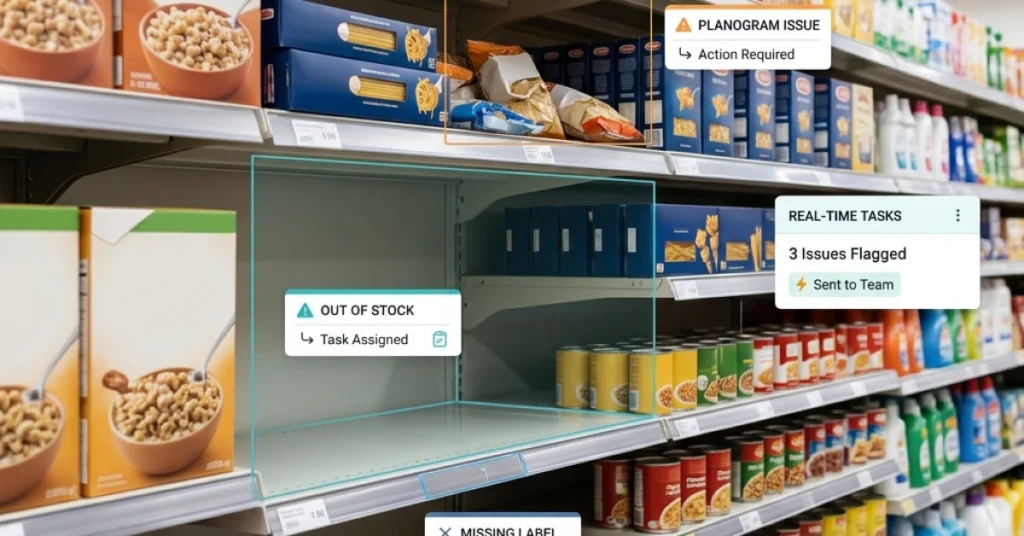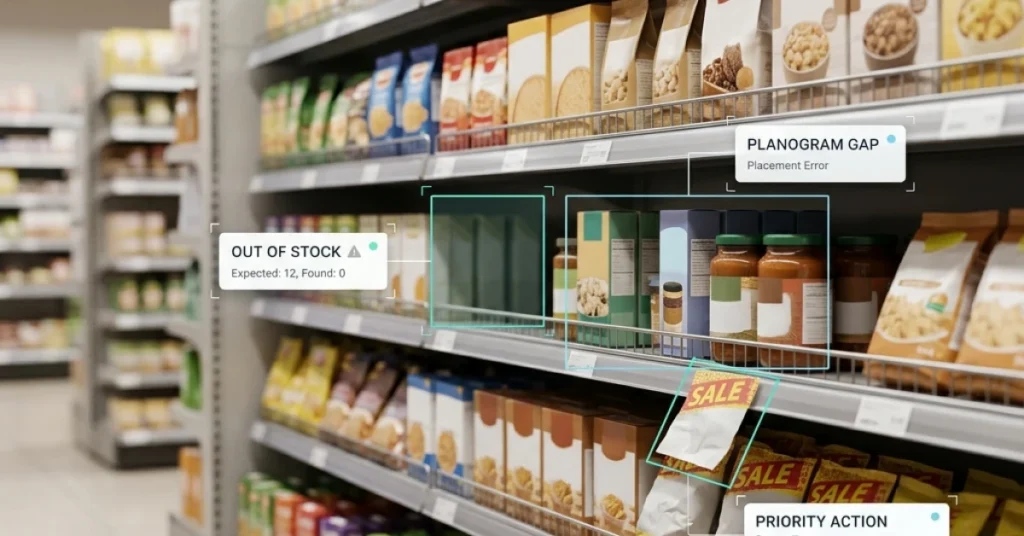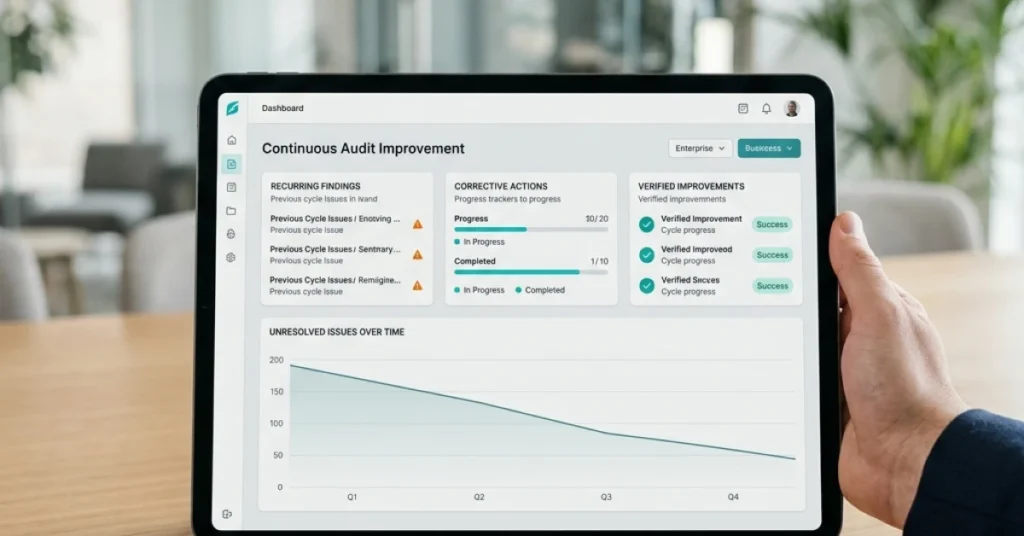
Continuous improvement in merch operations helps teams reduce recurring stock errors, improve store execution, and build more consistent workflows. This guide covers practical improvement methods, five implementation steps, and KPIs to measure progress.
✦ Key Takeaways · 6 min read
61% of manufacturers already back continuous improvement, yet most merch operations teams still run without a single structured CI system.
→ Broken merch workflows silently drain team capacity and revenue.
→ Choosing the right CI methodology transforms chaotic ops into predictable systems.
→ A strong CI culture makes your merch team own every improvement.
In this article:
Why Merch Operations Break Down Without a CI System
Which CI Methodology Fits Your Merch Team?
How to Implement CI in Merch Ops: 5 Clear Steps
What KPIs Prove Continuous Improvement Is Working?
Build a CI Culture Your Merch Team Will Actually Adopt
Conclusion
Key takeaway: Merch operations teams that commit to continuous improvement outcompete every team that merely reacts.
Why Merch Operations Break Down Without a CI System

Why Merch Operations Break Down Without a CI System
Most merch teams spend their days putting out fires: a shipment arrives late, a planogram gets skipped, a display goes up wrong. Every fix feels urgent, but nothing actually changes because the team is reacting to symptoms instead of addressing the root cause. That cycle is what the absence of continuous improvement in merch operations looks like in practice.
The deeper problem is that merch ops runs on a human feedback loop, not a machine one. Buyers make calls, fulfillment staff execute them, and customers respond at the shelf. When that loop has no structure, signals get lost, and the same mistakes repeat week after week.
Top 3 Operational Pain Points CI Solves
Without a structured improvement process, three problems show up constantly in merch agency operations: stock errors that compound over time, inconsistent execution across locations, and slow response when something breaks down. Each one costs margin, and each one gets worse the longer a team waits to build a reliable fix.
Say your team notices a product keeps going out of stock on Fridays. Without CI, someone sends a one-off email and moves on. With CI, that pattern triggers a documented review, a root-cause check, and a process adjustment that prevents it next week and every week after.
Cost of Standing Still in Merchandising
Operational excellence in merchandising doesn’t happen by accident, and the cost of skipping it is real. Teams that rely on informal fixes build institutional knowledge that lives in one person’s head, and when that person leaves, the fixes leave with them.
Standing still doesn’t mean staying even; it means falling further behind teams that do build that structure. The real question isn’t whether your team needs a CI framework. It’s which one actually fits the way your merch team works.
Which CI Methodology Fits Your Merch Team?
That broken feedback loop doesn’t fix itself just by adding effort. The real problem is that most merch teams grab a CI framework off the shelf without checking whether it actually matches how their team works.
Continuous improvement in merch operations only sticks when the method fits the human loop connecting buyers, fulfillment staff, and customers, not when it mirrors a factory floor.
Think of it this way: Lean, Kaizen, and Six Sigma each solve a different kind of problem. Picking the wrong one is like using a torque wrench to hang a picture frame. You’ll work hard and still get a crooked result.
PDCA cycle applied to merchandise planning
The PDCA cycle (Plan, Do, Check, Act) is the most practical starting point for merch teams new to structured improvement. Say your team notices stockouts spiking every Friday afternoon. You plan a fix (adjust reorder triggers), run it for two weeks, check the stockout data, then act on what you learned. That loop is short, visible, and built around real signals from real people.
PDCA works well here because merchandise territory alignment and planning cycles already follow a natural rhythm. You’re not forcing a new structure onto the team. You’re giving their existing habits a repeatable shape.
Kaizen vs. lean: picking the right fit
Lean targets waste: excess inventory, slow handoffs, redundant approval steps. It works best when your merch process has clear, repeatable steps you can map and trim. Kaizen, by contrast, runs on small daily improvements suggested by the people doing the work, which makes it a natural fit for teams where frontline staff spot problems before managers do.
If your team’s biggest drag is slow decisions and bloated workflows, start with Lean. If your team has good instincts but no channel to act on them, Kaizen gives those instincts a structure.
Choosing between them isn’t a philosophy debate. It’s a practical question about where your friction actually lives.
Knowing which framework fits your team is only half the answer. The harder part is building the step-by-step process that makes operational excellence in merchandising a daily habit rather than a one-time project sprint.
How to Implement CI in Merch Ops: 5 Clear Steps
Once you know which framework fits your team, the real work begins: building the system into your daily merch workflow. Most teams skip this part and jump straight to tools, which is why the effort stalls inside a month. Continuous improvement in merch operations only sticks when it follows a clear sequence. That sequence has to respect the human feedback loop between buyers, fulfillment staff, and customers.
That loop is what makes merch ops different from a factory floor. A machine runs the same cycle every time. A buyer’s call, a store associate’s observation, and a customer’s return all carry information that no process chart captures on its own. Your CI structure has to pull that information in deliberately, or it misses the most valuable signals your operation produces.
Step 1: Map your current merch workflows
Before you fix anything, write down exactly how work moves through your team right now, not how it’s supposed to move. Walk one purchase order from approval to shelf and note every handoff, delay, and workaround you find along the way.
This step feels slow, but it prevents the most common CI mistake: solving a symptom instead of the actual bottleneck. A visual workflow map, even a simple whiteboard sketch, makes the real problem visible to everyone at once.
Step 2: Identify waste in planning and allocation
Look at your map and flag every step that does not add value for the customer. Common culprits in merch ops include duplicate data entry, manual reorder approvals, and allocation decisions made without current sell-through data.
Say your team re-enters vendor lead times into three different spreadsheets each season. That’s waste you can cut immediately, and cutting it frees up time for the judgment calls only your buyers can make.
Step 3: Set a baseline with the right KPIs
You can’t improve what you don’t measure, and in merchandise operations, the wrong metrics send teams chasing the wrong problems. Pick three to five KPIs that directly reflect the waste you found in Step 2. Good options include sell-through rate, stock-out frequency, or order cycle time.
Record your current numbers before you change anything. That baseline is your proof point later, and it keeps the team honest about whether changes are actually working.
Step 4: Run small, measurable improvement cycles
Pick one problem from your waste list and run a focused two-week test. Change one variable, measure the KPI tied to it, and decide whether to keep, adjust, or drop the change before moving to the next problem.
This is the core of a retail continuous improvement cycle: small bets, fast feedback, clear decisions. Teams that try to fix five things at once rarely know which change moved the needle, and that uncertainty kills momentum fast.
Step 5: Loop in vendors and supply chain partners
Your CI process breaks down at the edges of your organization if vendors aren’t part of it. Share your baseline KPIs with key suppliers and agree on shared targets, like lead time windows or fill rate floors. That way both sides work toward the same outcome from the start.
This is where merchandiser productivity improvements compound fastest. When vendors flag delays early, buyers can adjust allocations in response. The whole supply chain gets smarter with each cycle instead of repeating the same firefights season after season.
That gain doesn’t come from working harder; it comes from removing the friction that was slowing the team down all along. Operational excellence in merchandising is built one small, deliberate cycle at a time.
📊 By the Numbers
Organizations that implement this approach typically report 20-30% improvement in productivity across their operations. 6sigma
Once your cycles are running, a key question surfaces fast: are the numbers you’re tracking actually the right ones to watch? That question deserves a direct answer before you go further.
What KPIs Prove Continuous Improvement Is Working?

What KPIs Prove Continuous Improvement Is Working?
Once you’ve mapped that human feedback loop, you need a way to tell whether your changes are working. Are they moving the needle, or just keeping people busy? The right KPIs for continuous improvement in merch operations don’t just count outputs. They track whether your buyers, fulfillment staff, and customers are moving in sync. Without that signal, you’re guessing.
Say your team starts a new restocking process. A good KPI asks more than “did we restock faster?” It also asks “did fewer customers find empty shelves, and did fulfillment staff flag fewer last-minute scrambles?” That distinction matters because merchandiser productivity gains only stick when the whole loop improves, not just one handoff.
Leading indicators vs. lagging indicators
Lagging indicators, like total sales or end-of-month shrink, tell you what already happened. Leading indicators tell you what’s about to happen so you can act before the damage is done. Take the rate at which staff flag shelf gaps during a shift: that number shows you trouble while you can still fix it. Tracking both gives you a complete picture of your continuous improvement process.
A practical rule of thumb: review your leading indicators every week and your lagging indicators every month. If your leading numbers improve but your lagging ones don’t follow within a quarter, the process change isn’t reaching the customer. That’s your signal to look upstream at the buyer or fulfillment stage.
How AI and data analytics sharpen CI tracking
AI tools like demand forecasting software can surface patterns that weekly check-ins miss entirely. Instead of waiting for a buyer to spot a slow-moving SKU, the system flags it early. The team can then adjust before overstock turns into a write-off. That speed is what separates reactive merchandise operations optimization from genuine operational excellence in merchandising.
The catch is that data tools only work if the people reading them trust what they see. A dashboard no one checks is just noise dressed up as progress.
KPIs show the system is working, but numbers alone won’t make your team care enough to keep it alive. Sustaining that commitment is the problem the next layer of retail continuous improvement has to solve.
Build a CI Culture Your Merch Team Will Actually Adopt
Knowing which KPIs to track is only half the battle. The harder part is getting your team to actually care about the numbers and change how they work because of them. A CI system only survives if the people running it believe it serves them, not just the spreadsheet on a manager’s screen.
Most CI rollouts fail because they treat merch teams like machines to be optimized rather than people with real feedback to give. Buyers, fulfillment staff, and store-level reps each see a different slice of the problem, and a process that ignores their input will get quietly ignored in return. That human feedback loop is what makes continuous improvement in merchandising stick or fall apart.
Getting buyer and planner buy-in early
Don’t announce a new process and expect enthusiasm. Instead, pull buyers and planners into the design phase before anything is finalized. Say your team runs a weekly sell-through review: invite a buyer to help define what a “bad week” actually looks like, so the threshold you set reflects real business judgment, not a number someone picked from thin air.
When people help build the rules, they defend the rules. Early involvement turns skeptics into advocates, and that shift matters more than any framework you choose. Operational excellence in merchandising depends on this kind of ownership at every level of the team.
Your 90-day CI momentum plan
A 90-day window gives your team enough time to see real results without losing focus. Structure it in three phases: spend the first month mapping one broken process with your team’s input, spend the second month testing one fix and tracking its effect on a single KPI, and spend the third month reviewing what changed and deciding what to tackle next.
Days 1-30: Pick one recurring problem your team already complains about. Map it out together on a whiteboard or shared doc.
Days 31-60: Run one targeted fix. Track a single KPI weekly so the signal stays clean and readable.
Days 61-90: Hold a short team review. Celebrate what improved, name what didn’t, and pick the next process to work on.
FieldPie’s field operations platform supports this cycle by giving merch teams a single mobile tool to log audit findings, flag execution gaps, and surface patterns that would otherwise stay buried in email threads. That kind of visibility keeps the retail continuous improvement process grounded in what’s actually happening on the floor, not what a report says happened last quarter.
“CI doesn’t need a perfect system on day one.
Teams that repeat this 90-day loop build a rhythm that outlasts any single manager or initiative. The question isn’t whether your merch operation can improve, it’s whether your team will still be running that loop six months from now.
Conclusion
When the people doing the work trust the process, continuous improvement in merch operations stops being a management initiative. It becomes a daily habit instead, and that shift is the whole point.
Picture your team reviewing shelf compliance data every Monday morning. They flag the top three recurring gaps and assign a fix owner before the meeting ends. That simple loop, repeated week after week, is what operational excellence in merchandising actually looks like.
Most merch chaos isn’t inevitable. It’s what happens when fixes never get followed up and feedback never gets acted on. Merchandise operations optimization works best when the process is built around the people closest to the work. A chart on a wall won’t make it stick.
You can learn more about merchandising agency operations to see how structure and field input work together.
Teams that firefight every week often do so because their process never forces a pause. Without that pause, no one asks why the same problems keep coming back. Root causes stay hidden and the cycle repeats. A solid retail continuous improvement process builds that check-in in from the start.
FieldPie’s audit and field tracking tools capture rep-level data in real time, so managers can spot patterns before they become recurring fires. FieldPie offers an AI-powered field operations platform that handles scheduling, routing, audits, sales, merchandising, and team tracking. Everything runs from a single mobile-friendly tool.