


✦ Key Takeaways
Retailers using digital twins report up to 30% reduction in operational costs within the first year of deployment.
→ Virtual store models expose hidden inventory bottlenecks instantly.
→ Real-time shopper behavior data reshapes layout decisions overnight.
→ Predictive simulations prevent stockouts before they cost a single sale.
In this article:
What Is a Digital Twin in Retail?
How Does a Digital Twin in Retail Work?
What Can a Digital Twin Monitor in a Retail Store?
Key takeaway: Digital twins give retailers an unfair competitive advantage that static data analysis never will.
What Is a Digital Twin in Retail?
Retailers lose billions every year making decisions based on yesterday’s data. A digital twin in retail is a live, virtual copy of a physical store. It updates in real time as shoppers move, shelves empty, and conditions shift.
Think of it as a mirror that never lies. Today’s store already has an invisible copy running behind the scenes. That copy works quietly to make your visit feel effortless.
How a Retail Digital Twin Represents a Physical Store
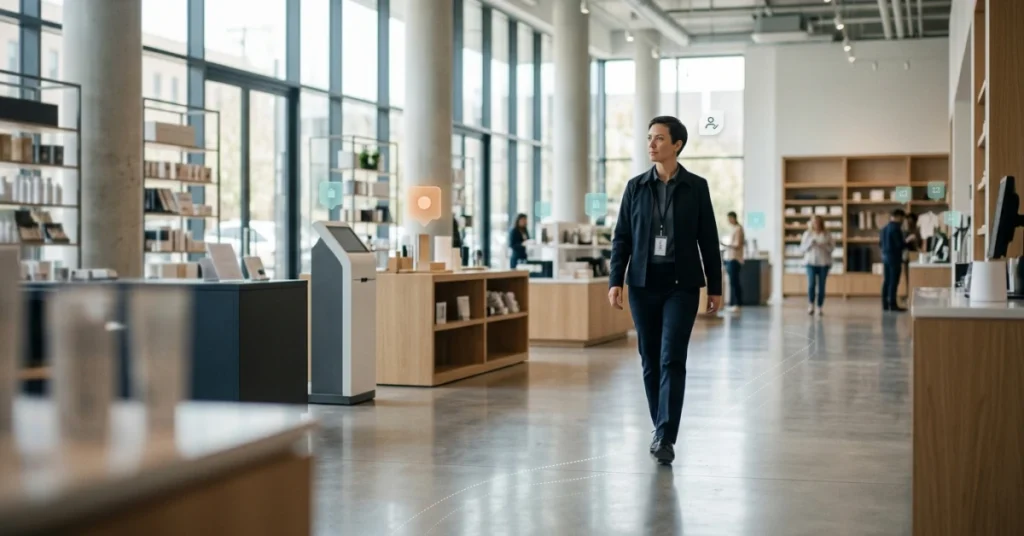
A virtual replica retail store takes every physical element — shelves, aisles, checkout lanes, stockrooms — and builds them into a digital model. That model updates the moment anything changes in the real store. Managers always see a true picture.
This is not a static floor plan or a spreadsheet. It is a living model that breathes with the store’s activity, second by second.
What Data Does a Retail Digital Twin Use?
The twin pulls from sensors, cameras, POS systems, RFID tags, and foot-traffic counters — all feeding one unified model. Good retail stock rotation practices become far easier when the twin flags gaps before a customer ever notices them.
Every data stream adds a layer of clarity. The more inputs the twin receives, the sharper and more useful its picture becomes.
How Digital Twins Differ From Traditional Retail Analytics
Traditional analytics tells you what happened last week. A retail digital twin shows you what is happening right now — and simulates what will happen next.
Over 70% of retail decisions still rely on batch reports that are hours or days old (McKinsey). That lag is exactly the gap digital twin store planning is built to close.
Why Retailers Are Using Digital Twins for Store Operations
Digital twin retail use is growing fast. Future of Retail projects the retail digital twin market will exceed $5 billion by 2028.
Retailers are not adopting this technology to impress investors. They use it because shoppers now expect stores to feel frictionless.
The stores that feel most intuitive are not lucky. They run a twin that quietly solves problems before you ever bump into them.
The real question is not what a digital twin is. It is how data flows from a physical shelf to a virtual model in real time.
How Does a Digital Twin in Retail Work?
That live virtual copy doesn’t build itself. It pulls from dozens of real-time data streams flowing through your store every second.
The moment conditions shift on the floor, the digital twin shifts with them. The technology stack is more layered than most people expect.
Sensors, cameras, POS systems, and inventory scanners all feed one unified model. They don’t feed separate dashboards — one model holds it all.
Connect Physical Store Data With a Digital Model
IoT sensors and RFID tags act as the store’s nervous system. They send live signals to the virtual replica retail store.
Every footstep, scan, and sale becomes a data point the model can read. This is what separates a digital twin from a static floor plan or a weekly report.
The model sees the store as it actually is — right now.
Combine Store Layout, Product, Inventory, and Customer Data
The twin merges four data layers at once: physical space, product placement, stock levels, and shopper movement. No single system could hold all of that before.
Now one model does. Good retail stock rotation decisions depend on seeing inventory and traffic data together — not in separate reports filed days apart.
Update the Digital Twin With Real-World Store Conditions
The virtual replica updates continuously — not once a day, not once an hour. A shelf goes empty at 2 p.m., and the twin flags it at 2 p.m.
This real-time sync is the core promise of digital twin store planning. Retailers stop reacting to yesterday’s problems and start fixing today’s.
Analyze Changes and Identify Operational Issues
The twin doesn’t just collect data — it spots patterns humans miss. According to Dataintelo, the global retail digital twin market will grow at over 23% annually through 2032.
That growth is driven largely by demand for faster operational problem-solving. Retailers need answers now — not next week.
Checkout bottlenecks, dead zones in the aisle, cold spots near the entrance — the model surfaces all of it fast. It catches these issues before a manager even notices them.
Use Insights to Improve Store Decisions
Digital twin retail applications turn raw analysis into clear action — move this display, restock that shelf, open another register. Neurolabs notes that retailers using digital twins can simulate layout changes before touching a single fixture, cutting costly trial-and-error in half.
The result isn’t just a smarter back office. It’s a store that feels easier, faster, and less frustrating to shop in.
That’s the part most shoppers never see working.
📊 By the Numbers
The retail digital twin market is forecast to grow at 23%+ per year through 2032 (Dataintelo).
The mechanics explain the how. The real question is what this invisible model is watching inside your store right now.
What Can a Digital Twin Monitor in a Retail Store?
That unified model isn’t just a pretty dashboard — it watches the entire store, all at once, in ways no human team ever could. Retail digital twin technology turns raw sensor data into a living map of everything happening on the floor right now.
Most shoppers never notice the invisible work keeping their favorite store running smoothly. That effortless experience — the full shelf, the clear aisle, the display that’s actually where it should be — is increasingly the result of a virtual replica retail store working silently in the background.
Store Layout and Space Utilization
A digital twin in retail tracks how every square foot of floor space performs — not just whether it looks good on a blueprint. It flags dead zones where shoppers rarely go and high-traffic corridors that cause bottlenecks.
Retailers lose real revenue when space is misallocated. The twin makes those losses visible before they compound.
Product Placement and Shelf Conditions
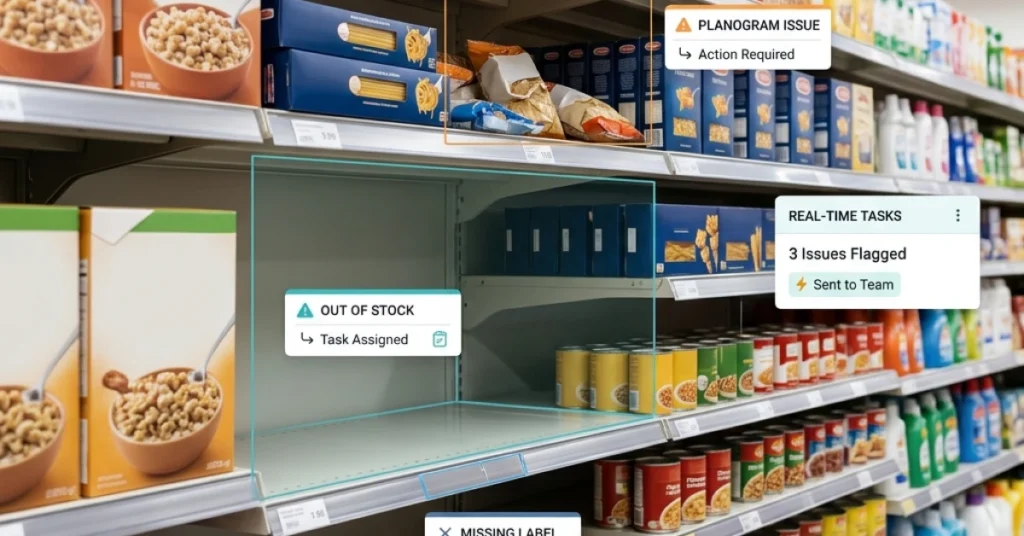
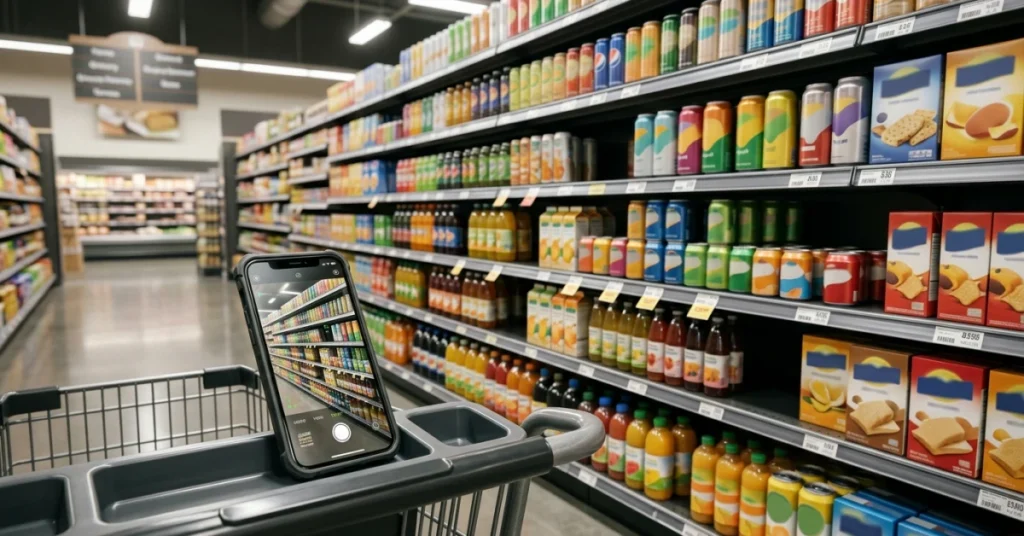
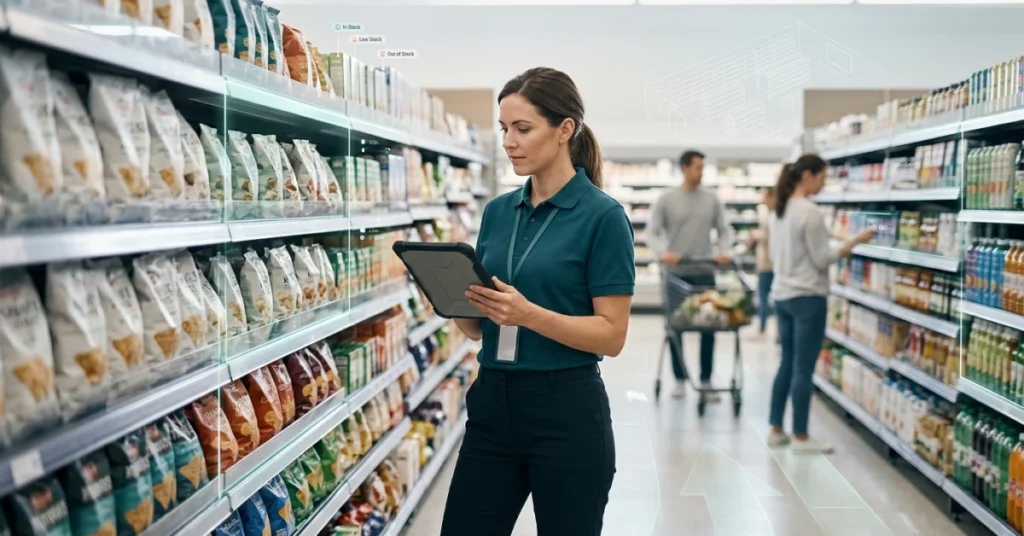
The twin monitors shelf fill levels, facing counts, and product positioning in real time. A misplaced item or a leaning shelf tag stops being a mystery — it becomes an alert.
This is exactly why AI shelf audit tools are gaining traction alongside digital twin platforms — both aim to close the gap between what the planogram says and what shoppers actually see.
Inventory and Product Availability
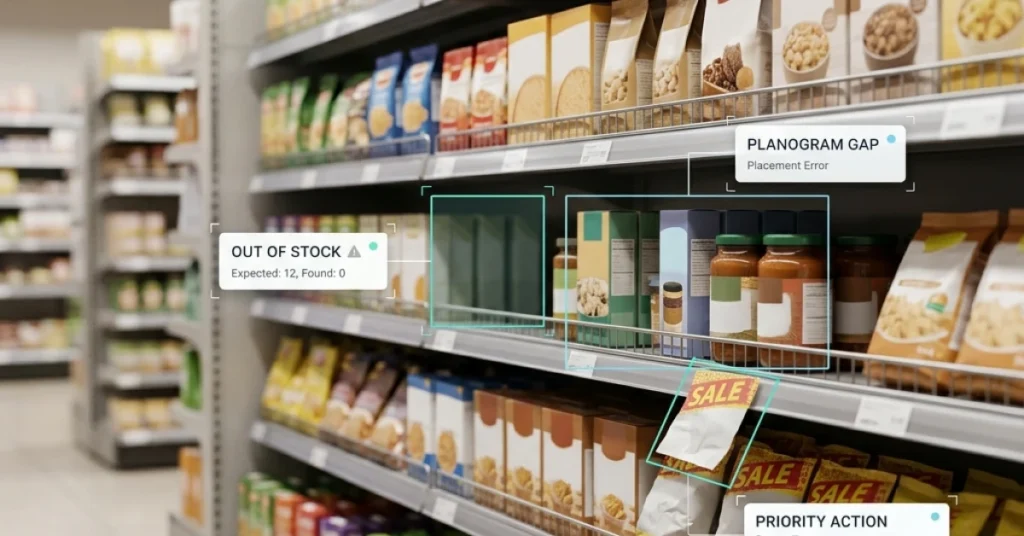
Out-of-stocks cost global retailers over $1 trillion annually — and most are invisible until a shopper gives up and leaves (Researchgate). The twin syncs RFID and POS data to catch stock gaps the moment they open.
It doesn’t wait for a nightly count. It knows a shelf is running low before the last unit sells.
Planogram and Merchandising Execution
A planogram tells staff where every product should live. The digital twin store planning layer checks whether that plan is actually being followed — aisle by aisle, hour by hour.
Execution gaps that once took weeks to surface in audit reports now appear within minutes. That speed is the difference between a fixable problem and a lost sale.
Customer Traffic and Store Flow
The twin maps how shoppers move — which paths they take, where they pause, and where they turn back. Lowe’s Innovation Labs used exactly this capability to redesign store navigation and reduce shopper frustration in real locations.
Understanding foot traffic at this level lets retailers reshape the store around how people actually behave — not how planners assumed they would.
Promotional Displays and In-Store Execution
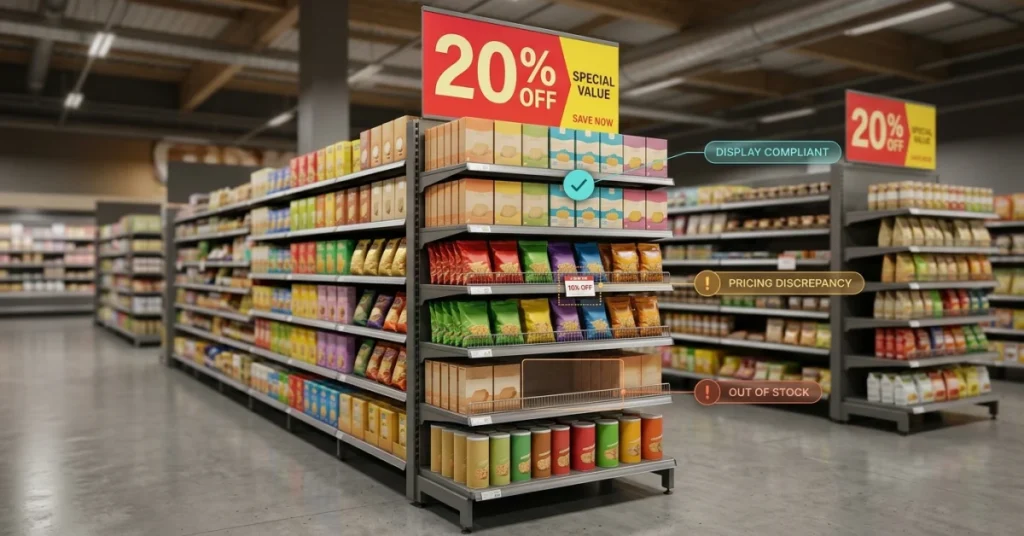
Promotional displays are only valuable when they’re in the right place, fully stocked, and set up correctly. The twin monitors all three conditions and flags any display that falls short of the campaign brief.
Digital twin retail applications turn promotional compliance from a guessing game into a measurable, real-time metric. Brands and retailers finally see the same truth at the same time.
📊 By the Numbers
Out-of-stock events cost global retailers over $1 trillion each year — most go undetected until the shopper walks away.
The store that feels effortless to shop in isn’t running on luck — and understanding what the twin monitors is only half the story of why that matters.
Conclusion
That silent virtual replica is not a back-office experiment. It is already reshaping the stores you walk into today.
Retailers using digital twin in retail environments report up to 25% fewer stockouts and shorter checkout lines (McKinsey).
The real shift is not operational — it is personal.
McKinsey tracks how retailers use virtual replica store technology. The clearest wins show up in shopper experience. Think faster restocks, smarter layouts, and displays built just for you.
Most retail teams still lose sales because they cannot see the floor in real time.
FieldPie captures live field data the moment your team touches the store. That includes shelf photos, audit results, and execution reports — all in one place.
Better retail shelf audit insights mean fewer gaps and faster fixes. Your store performs the way your digital twin store plan intended — see FieldPie’s core capabilities.