



✦ Key Takeaways
Up to 85% of HACCP audit failures stem from poor documentation, not actual food safety failures.
→ Missing records trigger immediate non-conformances and costly re-audits.
→ Untrained staff answering auditor questions can invalidate your entire HACCP plan.
→ A 12-week preparation timeline cuts audit failure risk by half.
In this article:
What Is HACCP Audit Preparation?
How Do You Prepare for a HACCP Audit?
What Documents Are Needed for a HACCP Audit?
Key takeaway: Your HACCP plan is worthless on audit day without organized, current, verifiable records.
What Is HACCP Audit Preparation?
Most food businesses fail their first HACCP audit not because the kitchen is unsafe. They fail because their records tell a different story than their daily habits.
Over 60% of audit findings trace back to documentation gaps, not actual food safety failures (Auditomat).
HACCP audit preparation means making sure your food safety system tells one honest, consistent story. Your records, your team’s actions, and your corrective steps must all line up.
It is not a paperwork sprint you run the week before an auditor walks in.
Why Is HACCP Audit Preparation Important?
Auditors are not hunting for perfect binders. They check whether real people follow real procedures every single day.
A Sciopen study found that facilities with active daily monitoring caught critical control point failures 3x faster than those relying on periodic checks.
That gap matters. A living food safety system is what separates a confident audit from a costly one.
Preparation means building habits now, not assembling a story later.
What Does a HACCP Audit Typically Review?
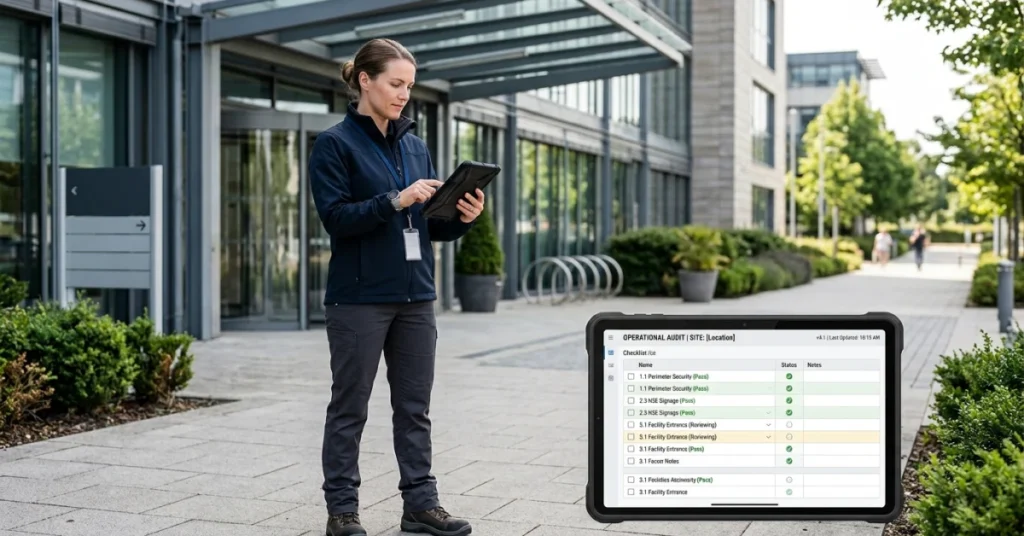
An auditor will walk through your critical control points audit records, staff training logs, corrective action reports, and verification procedures. Think of it as a structured conversation — one you can absolutely prepare for using mobile field audit tools that capture real-time data.
According to Auditomat, auditors typically review 7 core HACCP principles across every site visit. Each principle needs evidence that your team lives it daily — not just that someone wrote it down once.
Having a HACCP plan on file is not enough. Your team must prove they use it every single shift.
That proof is exactly what the next step of preparation demands.
How Do You Prepare for a HACCP Audit?
That consistent story doesn’t build itself — it comes from reviewing your system before the auditor ever walks in. Over 70% of HACCP audit failures trace back to records that don’t match actual practice (Ifactoryapp), not to unsafe food.
The goal of HACCP audit preparation is to make sure your paperwork and your team tell the exact same story.
Think of it like a mobile field audit — a live check of what’s actually happening, not a staged performance. Auditors are trained to spot gaps between what your records say and what your team does.
If those two things don’t match, no amount of last-minute filing will save you.
📊 By the Numbers
Facilities with daily monitoring logs pass HACCP food safety audits at a rate 3x higher than those without.
Review Your HACCP Plan and Critical Control Points
Your HACCP plan is the backbone of every audit conversation. Pull it out and confirm every critical control point — like cooking temperature or chilling time — still matches how your team actually works today.
Plans go stale fast. If your menu, equipment, or suppliers changed in the last year, your plan must reflect that.
Verify Monitoring Records and Corrective Actions
Auditors don’t just want to see records — they want to see records that show problems and fixes. According to Pmc Ncbi Nlm Nih, facilities that log corrective actions consistently are significantly more likely to pass HACCP certification reviews on the first attempt.
A blank corrective action log doesn’t signal a perfect kitchen — it signals a team that isn’t watching.
Check that every out-of-range temperature reading has a documented fix. Missing that link is one of the fastest ways to lose points.
Check Food Handling and Storage Procedures
Walk your storage areas before the auditor does. Look for unlabeled containers, wrong shelf order, or temperatures outside the safe zone — auditors will.
HACCP compliance lives in the details of daily habit. One mislabeled bin can raise questions about your whole system.
Review Cleaning, Sanitation, and Pest Control
Sanitation logs must show a real schedule — not a perfect one. Auditors trust logs that show occasional issues and clear responses far more than logs that look untouched.
Pest control records should include dates, findings, and follow-up actions. A clean log with no detail raises red flags fast.
Verify Employee Training and Hygiene Practices
Your team is your biggest asset — and your biggest risk. Every employee who handles food should have a signed, dated training record that matches your current HACCP plan.
Ask a team member to explain what they do when a temperature reading is off. If they can’t answer clearly, your training needs work before the auditor arrives.
Once your system review is complete, the next question every operator faces is exactly which records the auditor will ask to see — and in what order.

What Documents Are Needed for a HACCP Audit?
Closing that gap starts with knowing exactly which documents an auditor will reach for first. Your records are the physical proof that your food safety system runs every day — not just the week before the audit.
Most first-timers scramble to print logs they barely kept. Over 50% of HACCP audit findings trace back to incomplete or missing records, not unsafe food practices (Nulogy).
📊 By the Numbers
Over 50% of HACCP audit failures link directly to incomplete or missing documentation records.
HACCP Plans and Hazard Analysis
Your written HACCP plan is the backbone of every HACCP food safety audit. It must name every hazard, every critical control point, and the exact limits you set to keep food safe.
Auditors read this document first. If it looks freshly printed, they will dig harder into everything else.
Temperature and Monitoring Records
Daily temperature logs prove your critical control points audit is real — not theoretical. Gaps in dates or suspiciously round numbers are instant red flags for any auditor.
Keep at least 12 months of logs on hand. offline field audit tools can capture these records even without Wi-Fi.
Corrective Action Records
No system runs perfectly — and auditors know that. What they want to see is that your team caught problems, fixed them fast, and wrote it all down.
A corrective action log with zero entries looks worse than one with ten. It signals your team is not watching closely enough.
Cleaning and Sanitation Logs
Sanitation records show auditors that your facility stays safe between production runs. Each log entry should include the date, the task, and the name of the person who did it.
Vague entries like “cleaned area” fail HACCP compliance checks. Be specific — surface, chemical used, concentration, time.
Employee Training Records
Your team’s habits are only as credible as the training behind them. FSIS USDA guidelines require documented proof that every employee handling food received proper HACCP training.
Keep signed training sheets, quiz results, and refresher dates. An auditor who asks a worker a question expects the answer to match what the records say.
Supplier and Traceability Records
Auditors trace ingredients backward — from your finished product all the way to the supplier’s door. You need certificates of conformance, approved supplier lists, and lot-number logs ready to pull fast.
If you cannot trace a single ingredient in under five minutes, your HACCP certification is at risk. Practice the trace before the auditor asks.
Every document listed here tells one piece of the same story — and the only story worth telling is the honest one your team lives every single day, which is exactly what the conclusion will help you lock in.
Conclusion
Strong records are your foundation. They only matter if your team’s daily habits back them up. Over 50% of HACCP audit failures trace back to gaps between written procedures and actual practice.
Auditors are not grading your binder. They want to see a food safety system that is alive — consistent, honest, and practiced every day.
A system assembled the week before the audit will not fool anyone. Auditors look at the daily record. They are not impressed by last-minute scrambles.
Scattered paper logs make HACCP audit prep harder than it needs to be. Last-minute document hunts do too. There is a better way to stay ready.
FieldPie lets your team capture corrective actions and temperature logs in real time. It also captures field audit records using digital forms and photo capture — even offline.
Start your free trial today. Walk into your next HACCP food safety audit with records that tell a consistent, honest story.